Honiara · Oceania

The Solomon Islands are a South Pacific archipelago east of Papua New Guinea. They sit in the sea routes between the South Pacific Ocean, the Solomon Sea, and the Coral Sea. There are six major islands and over 900 smaller islands. The Solomons offer all the great attractions of Melanesia. Idyllic island scenery with perfect sandy beaches and splendid nature —in their rainforest, lagoons and waterfalls. For those who like to dive, underwater life is as stunning as that above. There's an abundance of wildlife to discover and amazing, colourful cultural traditions to see.
The Solomon Islands are believed to have been inhabited by Melanesian people for thousands of years. It is believed that Papuan-speaking settlers began to arrive around 30,000 BC. Austronesian speakers arrived circa 4,000 BC, bringing cultural elements such as the outrigger canoe. It is between 1,200 and 800 BC that the ancestors of the Polynesians, the Lapita people, arrived from the Bismarck Archipelago with their characteristic ceramics.
The first European to visit the islands was the Spanish navigator Álvaro de Mendaña de Neira, coming from Peru in 1568. The people of Solomon Islands were notorious for headhunting and cannibalism before the arrival of the Europeans. Missionaries began visiting the Solomons in the mid-19th century. They made little progress at first, because "blackbirding" (the recruitment of labourers through coercion, deception, or kidnapping for plantations in Queensland or Fiji, where they were paid poorly, if at all) led to a series of reprisals and massacres. The evils of the labour trade prompted the United Kingdom to declare a protectorate over the southern Solomons in June 1893.
Fierce fighting between the Americans and the Japanese took place in the Solomon Islands during World War II, including notably the Battle of Guadalcanal. Some of the most bitter fighting of World War II took place on the islands between 1942-45. The impact of the war on islanders was profound. The destruction caused by the fighting and the longer-term consequences of the introduction of modern materials, machinery and western cultural artefacts, transformed traditional isolated island ways of life. The reconstruction was slow in the absence of war reparations and with the destruction of the pre-war plantations, formerly the mainstay of the economy. Significantly, Solomon Islanders' experience as labourers with the Allies led some to a new appreciation of the importance of economic organisation and trade as the basis for material advancement.


American Samoa is a U.S. territory in the South Pacific Ocean that lies about 100 km (60 mi) east of its neighboring country of Samoa, which is part of the same archipelago. American Samoa consists of five main islands and two coral atolls; the largest and most populous island is Tutuila, with the Manuʻa Islands, Rose Atoll and Swains Island also included in the territory. American Samoa is not


Self-government was achieved from the British Protectorate in 1976, and independence granted two years later on 7 July 1978. The Solomon Islands is a constitutional monarchy with the British monarch, Charles III, as the head of state, and a governor-general representing the King in his absence, as well as a locally elected Prime Minister.
In 1998, rising civil unrest, violence, crime, and governmental corruption upended the stability of society. Waring groups fought for political power, access to jobs, land, and other resources centered in Honiara. In early 1999 long-simmering tensions between the local Guales (people from Guadalcanal) and more recent migrants from the neighbouring island of Malaita erupted into violence. In June 2003, an Australian-led multinational force, the Regional Assistance Mission to Solomon Islands (RAMSI), arrived and restored peace, disarmed ethnic militias and attempted to improve civil governance. Australia committed the largest number of peacekeeping personnel, but substantial numbers also came from other South Pacific countries such as New Zealand, Fiji, and Papua New Guinea. The military part of RAMSI began to withdraw in 2013, however, RAMSI only finalized their operations in the Solomon Islands as of 30 June 2017.
The bulk of the population depends on agriculture, fishing, and forestry for at least part of their livelihood. Most manufactured goods and petroleum products must be imported. The islands are rich in undeveloped mineral resources such as lead, zinc, nickel, and gold. However, severe ethnic violence, resource mismanagement, the closing of key business enterprises, and an empty government treasury, and corrupt Ministers have led to serious economic disarray, nearing collapse. Tanker deliveries of crucial fuel supplies (including those for electrical generation) have become sporadic due to the government's inability to pay and attacks against ships. Telecommunications are threatened by the nonpayment of bills and by the lack of technical and maintenance staff, many of whom have left the country.
In 2019, the Solomon Islands severed diplomatic relations with Taiwan and recognised the People's Republic of China instead. This has re-ignited inter-island tensions, with the strongly pro-Taiwan province of Malaita declaring their intention to secede. Things came to a head in 2021 when pro-Taiwan protesters from Malaita rioted and burnt down Honiara's Chinatown, with the Australian military having to be called in to restore order. In 2022, in a move strongly opposed by the United States and Australia, the Solomon Islands signed a security agreement with China that allowed China to deploy their military at the request of the Solomon Islands government to perform policing duties.
The Solomon Islands is a wide nation: distance between the westernmost and easternmost islands is about 1,500 km (930 mi). The Santa Cruz Islands (of which Tikopia is part), are situated north of Vanuatu and are especially isolated at more than 200 km (120 mi) from the other islands. Bougainville is geographically part of the Solomon Islands, but of Papua New Guinea for now, although it is set to become independent by 2025.
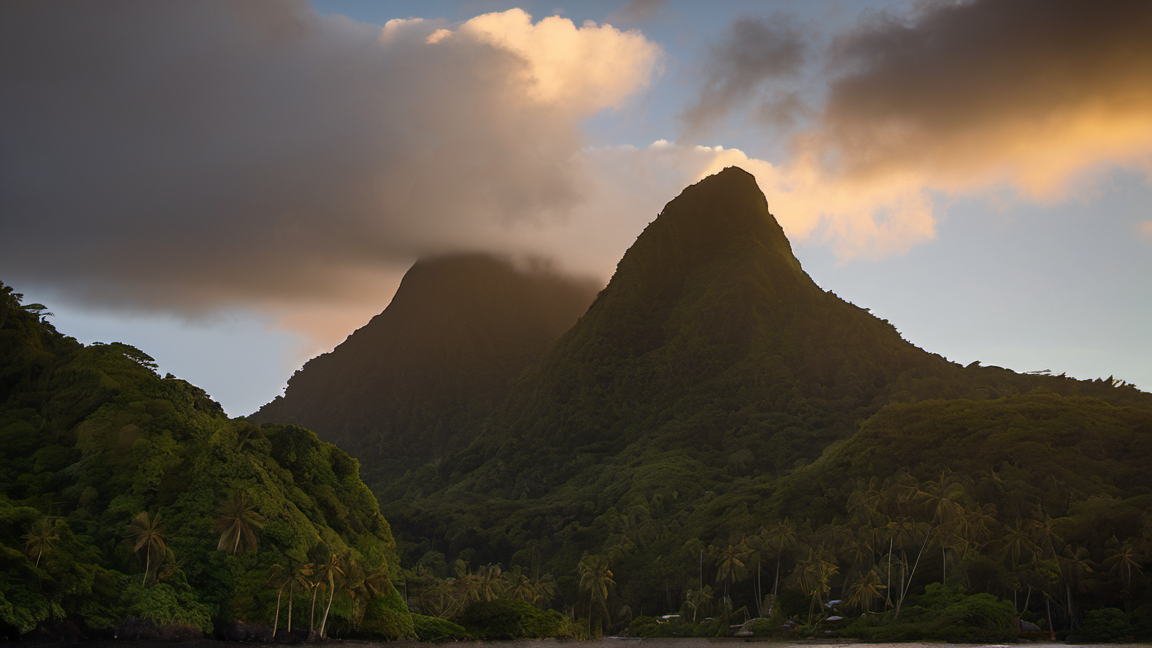
The Solomon Islands archipelago is part of two distinct terrestrial ecoregions. Most of the islands are part of the Solomon Islands rain forests ecoregion. These forests have come under great pressure from forestry activities. The Santa Cruz Islands are part of the Vanuatu rain forests ecoregion, together with the neighboring archipelago of Vanuatu. More than 230 varieties of orchids and other tropical flowers brighten the landscape. The islands contain several active and dormant volcanoes with Tinakula and Kavachi being the most active. The highest point is Mount Makarakomburu, at 2,447 metres. Many low lying coral atolls dot the region.
The country is situated on the Pacific Ring of Fire, at the point of collision of several tectonic plates. There are a number of active volcanoes, and eruptions are frequent. Earthquakes are relatively common, sometimes accompanied by tsunamis.
The islands' ocean-equatorial climate is extremely humid throughout the year, with a mean temperature of 27 °C (80 °F) and few extremes of temperature or weather. June through August is the cooler period. Though seasons are not pronounced, the northwesterly winds of November through April bring more frequent rainfall and occasional squalls or cyclones. The annual rainfall is about 3050 mm (120 in).
Visit Solomon Islands website
The islands are home to roughly 68 indigenous Melanesian languages, with most citizens speaking Pijin as a lingua franca. English is the official language, but spoken by only 1 or 2% of the population.
Everyone needs a passport, onward ticket, and sufficient funds to cover their stay in the Solomon Islands. Since October 2016, EU citizens do not require a visa.
Citizens of the following nationalities can get visitor's visas on arrival:
American Samoa, Andorra, Anguilla, Antigua and Barbuda, Argentina, Aruba, Australia, Bahamas, Barbados, Belize, Bonaire, Brazil, British Virgin Islands, Brunei, Canada, Cayman Islands, Chile, Cook Islands, Curaçao, Dominica, Dominican Republic, Fiji, French Polynesia, Grenada, Guadeloupe, Guam, Guyana, Iceland, Israel, Japan, South Korea, Kuwait, Liechtenstein, Malaysia, Maldives, Marshall Islands, Martinique, Federated States of Micronesia, Monaco, Montserrat, Nauru, New Caledonia, New Zealand, Niue, Norfolk Island, Northern Mariana Islands, Norway, Palau, Papua New Guinea, Paraguay, Peru, Pitcairn Islands, Puerto Rico, Saba, Saint Kitts and Nevis, Saint Lucia, Saint Vincent and the Grenadines, Samoa, San Marino, Singapore, Suriname, Sweden, Switzerland, Taiwan, Thailand, Tonga, Trinidad and Tobago, United Kingdom, United States, Uruguay, Vanuatu, Wallis and Futuna.
Citizens of China (mainland only) may visit the Solomon Islands without a visa for up to 30 days, and may spend no more than 90 days in total
in the Solomon Islands in any 180-day period.
Citizens of other countries except Belarus, Burundi, Ethiopia, Ghana, Montenegro, Palestinian Territories, Serbia, South Africa, South Sudan, Timor-Leste, Vatican, Zimbabwe can obtain a visa on arrival if they have a confirmation that a visa has been approved before departure.
If you have a visitor's permit, you are not allowed to engage in work, business, religious vocations, or professional research. If you wish to do any of those things, you must get a business permit.
The Solomon Islands has two major airports. Honiara International Airport HIR IATA is 11 km (7 miles) east of the capital, Honiara. Scheduled flights depart from Brisbane, Australia most days. There are also flights between Port Vila, Nadi, Port Moresby, and Sydney.
There is also Munda Airport MUA IATA in the Western Province, next to the town of Munda.
Cruise ships occasionally visit Honiara.
It is also possible to travel from southern Bougainville in Papua New Guinea by boat into the Solomon Islands western province, as locals routinely travel between the Solomons' Shortland Islands and Bougainville.
This runs most days from Honiara Wharf to Auki on the island of Malaita across the Slot from Honiara. In 2012 the fare as SI$300 one way or SI$580 return. The ferry travels through the Florida Islands channel which is worth seeing and there's a high chance you'll see plenty of flying fish if you look off the front or sides of the boat. The catamaran ferry is a former Auckland Harbour ferry so is not designed to be ocean-going. This means that when it's rough, it's rough so be prepared. The ferry has plenty of comfortable seating, air conditioning and a big flat screen which shows films during the journey. You can buy drinks and snacks on the ferry although it's best to buy this on the way out from Honiara as supplies run low once the boat is heading back. There is a toilet.
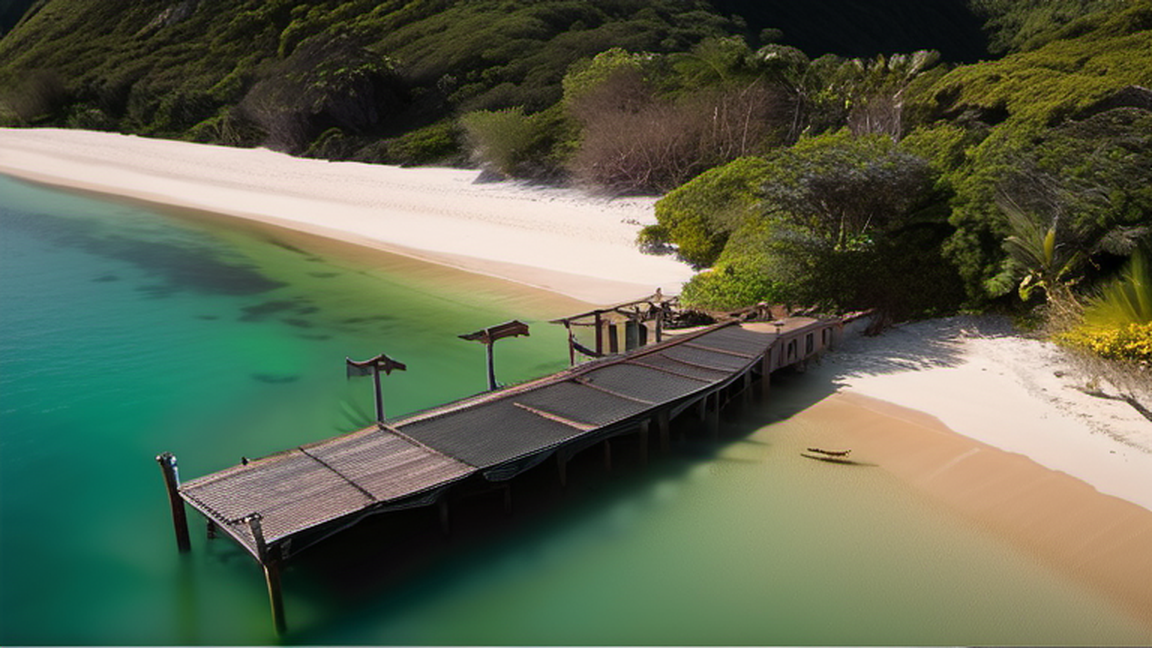
Boarding is at 07:30 for an 08:00 departure. Buy your ticket from a vehicle parked outside the jetty gate in the wharf car park. It'll be the one swamped with people getting tickets at 07:30. Boat stops in Tulagi (09:30) in Florida Islands and leaves ten minutes later for Boromole (arr. 10:30) which has a beautiful beach and water. It reaches Auki at 12:30 and leaves to return to Honiara via the same route at 14:00 (boarding from 13:30). Return to Boromole is 15:30 and Tulagi at 04:30 before arrival in Honiara at sunset or around 18:00.
Solomon Airlines offers numerous flights around the islands.
Highlights include the lovely and huge Lake Te'Nggano, dramatically surrounded by high cliffs, once the reefs around this old lagoon.
Even more famous is the Langa Langa Lagoon, whose waters are brown rather than bright blue, life here is slow and peaceful, with locals working on their traditional handicrafts and classic canoes making their silent way through the water.
It's also one of the places where you can see the artificial islands this country is known for. Some date back to the 16th century, but new ones are created even now, using stones and coral materials.
Follow the slightly challenging but beautiful path to the bubbling mud of the Reoka hot springs or, for serious hikers, consider a 2-day hike to the top of the volcano Kolombangara. Easier but more beautiful is the path to the Mataniko Falls, with underlying caves that served as a hide-out for soldiers in World War II, and the Tenaru Falls. They are close to Honiara, the country's capital, and also home to the National Museum and Culture Centre.
East Rennell is the largest raised coral atoll in the world and a UNESCO World Heritage Site.
Skull Island is a tiny islet is accessible from Lola Island, which is one of the most sacred areas in the Solomon Islands. It is visited by tourists, and offers an insight into the history of headhunting. It also has a shrine which houses the skulls of vanquished Rendovan chiefs.
The Solomon Islands were used as a battleground between Japanese and American forces during the Pacific War. Most of its war relics can still be seen on land and underwater, including tanks, plane wrecks, shipwrecks and guns.
Ontong Java Atoll.
The currency of the country is the Solomon Islands dollar, denoted by the symbol "SI$" (ISO currency code: SBD). The currency is divided into 100 cents. Banknotes are issued in denominations of $5, $10, $20, $50 and $100, and coins issued in denominations of 10, 20 and 50 cents, $1 and $2, with only the 5 cent coin being absent.
ATMs are available in Honiara. Australian dollars are accepted at some hotels and resorts, and in some cases, preferred as it was once the official currency before 1977.
Allow SI$35 for a meal in the basic restaurant. Tips are not customary.
The archipelago's food differs little from that of other South Pacific islands. There's poi, fermented taro and the usual tropical fruit mix. An important source of starch is cassava. The tuna caught here, also an important export product, is often served with chillies and pasta or rice. Especially in the shops in the country you often only find canned spam or tuna.
The local brewery is Solbrew, which is made near the capital.
Accommodation ranges from international-standard hotels and self-contained apartments in Honiara to small resorts, eco-lodges, guesthouses and village homestays scattered throughout the outer islands. Honiara has the widest selection and is the easiest place to find air conditioning, reliable internet, restaurants, conference facilities and swimming pools. Outside the capital, accommodation is generally smaller, simpler and more closely connected to the surrounding village or natural environment.
Many outer-island properties are reached by domestic flight followed by a boat transfer. Ask the accommodation to arrange the final journey and confirm whether transfers are included in the quoted price. Boat schedules, fuel availability and weather can affect arrival times, so avoid planning tight connections.
Remote lodges and homestays often include meals because there may be no nearby restaurants or shops. Before reserving, confirm whether the rate includes breakfast, full board, drinking water, activities and airport or wharf transfers. Visitors with allergies or special dietary requirements should give advance notice.
Facilities vary considerably outside Honiara. Ask about electricity hours, fans or air conditioning, private bathrooms, mosquito nets, hot water, mobile reception and Wi-Fi before booking. Some village stays consist of basic timber or leaf bungalows with shared washing facilities, while specialist dive and fishing resorts may provide comfortable private bungalows and fully catered packages.
Book well ahead when visiting remote islands, as properties may have only a few rooms and supplies must be brought in by boat or aircraft. Carry sufficient Solomon Islands dollars: international cards are accepted mainly by larger hotels and businesses in Honiara, while cash remains essential in the provinces.
Independent camping is uncommon. Beaches, forests and unoccupied-looking islands may be customarily owned, so never establish a campsite without permission from the appropriate landowner, village chief or local host. Tourism Solomons advises visitors to obtain permission from the relevant chief before exploring onshore.
Foreign visitors should obtain employment before travelling rather than expecting to find casual work after arrival. A tourist visa does not permit any form of work, whether paid or unpaid, so travellers considering volunteering, consultancy or temporary assignments should verify the correct permit and visa category beforehand.
Most foreign nationals require a work permit issued through the Commissioner of Labour. Applications generally require an employment contract, evidence of qualifications and experience, information about the employer and proof that no suitably qualified local worker is available. Applicants should normally remain outside the Solomon Islands while the initial application is being considered.
Temporary employees, consultants and technical specialists require a short-term employment visa supported by an approved work permit. Longer appointments require a long-term employment visa, whose validity and conditions are tied to the work permit. Changing employer or occupation may require fresh approval.
Employers normally guide foreign recruits through the application process. Do not begin working while waiting for approval, and do not assume that entering on a tourist or business visa allows employment. Current forms, fees and requirements should be confirmed with the Ministry of Commerce, Industry, Labour and Immigration before making travel arrangements.
Earthquakes
The Solomon Islands are located along the Pacific "Rim of Fire" and prone to earthquakes—including some rather large quakes! An 8.1 magnitude quake in 2007 off Ghizo Island (in the New Georgia Islands) resulted in a tsunami up to 12 m, killing 52. An 8.0 magnitude quake in 2013 near the Santa Cruz Islands resulted in a 1 m tsunami (fortunately, the epicenter was deep enough underground that a large tsunami wasn't generated) that killed fewer than 10 people. Quakes above a magnitude 7.0 occur rather frequently (every year or two). Should you experience an earthquake, immediately seek higher ground.
Crime
While not as bad as neighbouring Papua New Guinea, crime rates in the Solomon Islands are high. Travel after dark is dangerous, especially in Honiara. Muggers have been known to target tourists at the Japanese War Memorial on Mt Austin even in broad daylight.
Ethnic tension between Guales (residents of Guadalcanals) and Malaitans, as well as between Islanders and the Chinese, continues to simmer. Australian troops have been in place since 2003 to keep things in check, but this did not prevent violent rioting in Honiara in 2006 from destroying large parts of the city.
Malaria is the biggest health issue in the Solomon Islands. Travellers to the area should take anti-malarial pills before, during and after their stay.
Saltwater Crocodiles are relatively common (in comparison to other islands in the South Pacific) in the Solomon Islands and great care should be taken while in or near any body of water. Knowledge is the best defense for yourself and for the protection of the crocs themselves. While by no means anywhere even close to crocodile levels in Northern Australia and New Guinea, the population is still considered relatively healthy on the Solomons in comparison to much of the species' Southeast Asian range. This is especially true of the islands closest to New Guinea, which hold the highest populations in the Solomons.
Visitors are advised not to drink the water straight from the tap. Boil it first or drink bottled water.
Solomon Islands society is culturally diverse, and traditions can differ substantially between islands, clans and villages. The Pijin word kastom refers to traditional customs and accepted ways of doing things, while wantok describes the strong obligations connecting relatives, clan members and people who share a language or community. Both remain central to social and village life.
Ask permission before entering a village, going ashore on a locally owned island, following a trail or visiting a beach, reef, shrine or cultural site. Your accommodation or guide can identify the appropriate chief, elder or landowner and explain whether an access or kastom fee is expected. Do not assume that an apparently empty beach or forest is public land.
Always ask before photographing people, homes, ceremonies, graves, sacred places or cultural objects. Customs vary by province, and a place that appears ordinary to a visitor may have spiritual, ancestral or historical importance to the local community.
Dress modestly away from resorts and designated swimming beaches. Tourism Solomons advises covering the thighs to at least the knee when visiting towns or villages; carrying a sarong or loose skirt is useful after swimming. Conservative clothing is particularly appropriate when entering churches or attending community events.
Solomon Islanders are generally friendly and welcoming, but society is conservative. Avoid loud arguments, swearing, public drunkenness and conspicuous displays of affection. Listen to local guidance, greet people politely and show particular respect to chiefs, elders and community hosts.
Do not touch, move or remove war relics, human remains, shell valuables, carvings or objects from cultural sites. Buy handicrafts through recognized artisans or community sellers, and ask before offering gifts or money directly to children.
There are 2 cellular providers on the island Our Telekom and Bmobile. More info here. Since it's a nation of islands all internet is routed through satellite making connections slow. There is Wi-Fi at some hotels and restaurants.