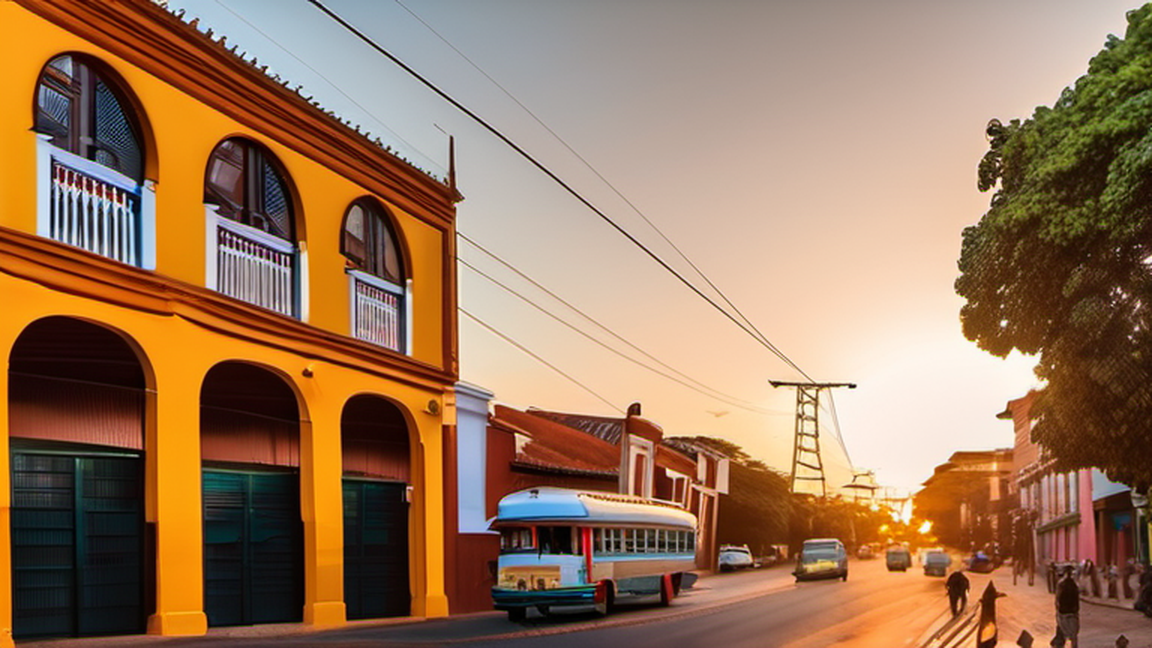
Asunción is the capital and largest city of Paraguay. Unlike other capitals of South America such as Buenos Aires, Quito or Lima, Asunción is off the beaten path as it lacks well known tourist attractions. However, the number of visitors is on the rise and those who visit the Paraguayan capital will discover an authentic Latin American city which has managed to keep a quiet atmosphere and preserves interesting sights and monuments of its rich history and colonial past. Asunción is nonetheless a thriving city with an important commercial activity, a rich cultural scene with interesting museums, theaters and art galleries, an active nightlife and some excellent hotels and restaurants.
The Asunción metropolitan area is home to 2.2 million of Paraguay's 6.9 million inhabitants. It is a cosmopolitan and demographically young city with 65% of its residents under the age of 30.
Many landmarks and historical buildings in the old city centre have recovered their past splendour thanks to Paraguay's bicentennial independence celebrations that took place during 2011 and demanded a lot of restoration works throughout the city. In 2012, a new riverside promenade (costanera) was opened along the Bay of Asunción which added a much needed space for running, walking and family recreation. Around the city tree-lined avenues, small parks and shady squares break up the rigid grid system of streets in the downtown area. From July to September the whole city is drenched in colour with the prolific pink and yellow bloom of lapacho trees, which grow everywhere.
Asunción was founded in 1537 by Juan de Salazar y Espinosa, a Spaniard and member of the Pedro de Mendoza expedition which was set to colonize the Rio de la Plata basin, on 15th August the day of the feast of the Assumption of Mary, that is why is so named. It is the longest continually inhabited settlement in the Río de la Plata basin and in early colonial times it was referred to as Madre de Ciudades (mother of cities) because it was from here that numerous expeditions and missionaries set off to colonize the region founding many other settlements like Corrientes, Santa Fe, Buenos Aires and Santa Cruz de la Sierra. Asunción was established on the eastern bank of a calm bay in the river Paraguay, rendering it a good lookout post. In 1541 the first Cabildo (town council) was created transforming Asunción from a military fort to a civilian town with a local government.
The first president after independence, José Gaspar Rodríguez de Francia, who ruled Paraguay from 1814 to 1840, began to put some town planning. Under his successor, Carlos Antonio López, the railway was inaugurated, and some of the handsome 19th century buildings went up. The following president, Mariscal Francisco Solano López, in the short period before he embarked on his catastrophic War of the Triple Alliance, built the grandest of the city's buildings, his own residence, known today as the Palacio de López. The city centre is an old testament to 19th century historic ideals, with names reflecting local heroes and battles. During the Chaco War against Bolivia of 1932-35 many buildings in the city were improvised as hospitals and military barracks.
Since the 1970-80s internal migration from the countryside to Asunción has made the city to increase in size and population until becoming one continuous urban spread comprising more than a dozen different cities that form the Greater Asunción metro area. The most interesting for tourists to visit are Luque, San Lorenzo, Capiatá, Itauguá and Villa Hayes among others.
Today Asunción is a bustling, chaotic city with some 600,000 inhabitants within its city limits, and around 2.5 million people in its metro area. However, behind the new tall glassy buildings, corporate headquarters and shopping malls, Asunción retains a laid back atmosphere. When visiting the city a mix of three different architectural styles will be present: colonial style (present in the oldest houses and buildings of the city centre); italianate public buildings and manors (with beautiful gardens) and modern Latin American architecture (including a large shopping malls next to residential houses).
Tourism has become important for Asunción and it is specially visible in the Business District and Villa Morra neighbourhoods where economic growth has resulted in a plethora of new hotels and shops, as well as innovative new bars and restaurants. The majority of visitors are businessmen of neighboring Latin American countries and day trippers from Argentina. They come to enjoy low prices on practically all goods and services from restaurant meals to electronics and even car tyres.
1 Senatur (National Tourism Board), Palma 468, ☏ +595 21 441530, toll-free: 0800 113030, fax: +595 21 491230. The main national tourist information office also called Turista roga (visitors house). It has a visitors information centre and an exhibition hall for sale of traditional arts, crafts and books. Additional information booth at Silvio Pettirossi International Airport.
2 Centro de Información Turística (Tourist Information Centre), Avenida Costanera. Municipal tourist office on the riverside promenade.
Asunción is just south of the Tropic of Capricorn so the climate is subtropical. That means hot weather, especially in the South American summer (winter in the Northern Hemisphere). Between November and March, the temperature can consistently climb over 38 °C (100 °F) and the humidity can be high and uncomfortable. Nevertheless, the weather changes frequently from one week to another. When the sun shines you bake and it can be very dry when the rains hold off for just a few days. Rains can be heavy and make the temperature drop precipitously. Then the clouds build and it becomes cold.
The city, as the whole country, is officially bilingual, with 79% of people speaking Spanish as their first language, and 20% have Guaraní as their first tongue. English is not widely spoken outside of hotels and tour operators so without some basic Spanish phrases it might be hard to get by. Public transportation, street signs and all road signalization are in Spanish. Business people and the younger generations have some knowledge of English. Although locals will appreciate an effort to say a few words in Spanish, they will try to communicate in English if they can. The majority of restaurants have Spanish-only menus and waiters seldom speak other languages than Spanish or Guaraní.
1 Silvio Pettirossi International Airport (ASU IATA) (17 km (11 mi) northeast of Asunción.).
International flights are available to:
Europe – Madrid with Air Europa
Argentina – Buenos Aires with Aerolíneas Argentinas, LATAM and Paranair, and Córdoba with Air Europa
Brazil – São Paulo-Guarulhos with LATAM, Gol and Paranair
Uruguay – Montevideo with Paranair
Chile – Santiago with LATAM
Bolivia – Santa Cruz de la Sierra with Amaszonas
Perú – Lima with LATAM
Colombia – Bogota with Avianca
Panamá – Panamá City with Copa Airlines
United States – Miami with Eastern Airlines (not around since 1991)
Domestic flights are available to:
Ciudad del Este with Paranair and Sol del Paraguay
Encarnación and Pedro Juan Caballero with Sol del Paraguay
Concepción, Vallemí, Fuerte Olimpo and Bahia Negra with Setam.
Ground transportation from the airport to the city centre takes 30–45 minutes by taxi, and they charge a fixed rate of about USD$25.
There is a bus stop 200 m outside the airport terminal where you can catch city bus 30-A that will take you into the city in 1 hour and the fare is GS.3,300. There are no signs to point the way to the stop, but just walk out of the terminal and turn right. Local buses are not suited for carrying big pieces of luggage, and they don't run during the night from 23:00 to 05:00 when many flights arrive and depart.
Car rental is available at the airport and many companies have offices on the arrivals floor. Also, some major hotels have their own private minibuses.
2 Terminal de Omnibus de Asunción (bus terminal) (about 5 km (3 mi) southeast of the city centre). Take a taxi or bus (city buses N°8, N°38, among many others) to go downtown. The terminal is at the junction of two main city avenues. The Avenida Fernando de la Mora in front of the bus terminal leads west to the city centre. The Avenida República Argentina at the side of the terminal goes north to Villa Morra, Carmelitas, the Business District and the airport. (updated Dec 2023)
Ticket offices for all bus companies are inside the terminal on the first floor. It's also possible to buy tickets for some national long-distance destinations and international destinations at travel agencies and online at the corresponding bus company website.
There are normally two types of bus services to the largest cities in Paraguay: común and directo. While the first are cheaper, they also stop in every town or bus stop along the way to pick up and drop off passengers and take longer time than the directo which runs direct or with fewer or no stops to reach their destination in less time. Directo buses are less frequent having only a couple of services a day generally at midnight or early in the morning or late afternoon.
Encarnación, común: 7–8 hr, several daily, GS.120,000; also directo: 5 hr, GS.130,000
Ciudad del Este, several daily, 5–7 hr, GS.40,000–70,000
Concepción, about 5-6 hr, several daily, GS.90,000 (possible to negotiate to GS.80,000 depending on your arguments)
Cities in the Chaco: Loma Plata, Filadelfia, Neuland, Mariscal Estigarribia, about 8 hr, 1 or 2 daily to each destination, GS.90,000 (NASA, Golondrina).
If time is an issue and money not, it is wise to spend extra to get the better service (e.g. the GS.70,000 bus to Ciudad del Este takes 2-3 hr less than the GS.40,000 services). Food and drink is often served on the more expensive long-distance services, and almost all will stop en route to let someone on selling chipa and cocido.
There are several connections between Asunción and Argentina, Brazil, Uruguay, Bolivia, Chile and Peru.
Buenos Aires, ~17 hr, several daily, GS.300,000 (Crucero del Norte, Nuestra Señora de la Asunción/Chevallier)
From Formosa (Argentina):
Direct bus: 12:30; AR$350; 2 hr.
Exchanging bus at the border (cheaper and faster):
Take a bus from Formosa to the border (San Ignacio de Loyola International Bridge): 07:30, 10:00, 12:20, 15:45, 19:15, 22:10 - AR$150 - 1.5 hr.
Cross the border. Do not change money with the vendors standing around right at the border control, their rate is about 10% off the actual/interbank exchange rate. There is an 1 official money exchange a few 100 m further. Get back to the border control building. The bus to Asunción leaves directly 3 next to this building.
Take the bus from the border building to the Asunción Bus Terminal (get off early depending on you accommodation): Every hour or so - GS.6,000 - 30-45 min.
(Note that some buses from Formosa just go to the 4 Clorinda Bus Terminal (Argentina) without a stop at the Loyola International Bridge, and others go to Loyola, including Clorinda. But there is also a pedestrian crossing across the river into Nanawa (Paraguay) directly from the center of Clorinda near the bus terminal. Formalities should be similar as just explained. The bus stop on the Paraguayan side is 100 m left after the crossing.)
Santa Cruz de la Sierra (Bolivia) – One bus daily departing from Asunción at night - meaning that you miss out on any views of the Chaco. The bus is extremely slow and occasional roadblocks on the Bolivian side of the border can cause your journey time to double. The trip takes 21-24 hr and costs about US$80 (Oct. 2025). Consider that a flight might only be marginally more expensive, depending on the time of booking. Any intermediate exit or boarding (like Mariscal Estigarribia or Villamontes) will likely cost the same as the complete trip. But if your nerves are strong, you will get the price down bargaining directly with the bus driver.
Asunción is very well connected to all the major cities of Paraguay; moreover, as the capital, it is the beginning and terminus of the country's main highways. Route 1 goes southeast for 362 km (225 mi) to Encarnación. Route 2 (which then becomes Route 7 at Coronel Oviedo) goes east for 325 km (202 mi) to Ciudad del Este. Route 3 goes northeast for 460 km (286 mi) to Pedro Juan Caballero. Route 9, better known as the Transchaco Highway, goes northwest for 740 km (460 mi) to the Paraguay/Bolivia border. After 15 km (9 mi) on this route just after leaving Asunción and crossing the bridge over the river Paraguay, a side road goes southwest for 20 km (12 mi) to Puerto Falcón at the Paraguay/Argentina border.
Copanatra car ferries link Asunción to Argentina crossing the river Paraguay between the 5 Port of Ita Enramada at the end of Avenida Perón on the southern edge of the city with Puerto Pilcomayo, on the Argentinian side, every 30 min M-F 06:30-17:30, and Sa and holidays 07:00-13:30.
There is no longer any train service to Asunción. The beautiful 19th-century train station building next to Plaza Uruguaya is now a museum and cultural events venue.
The historic centre of Asunción is small enough to be explored by foot. However, some of the attractions, such as the Jardín Botánico (Botanical Garden) are a bit outside. In addition to the city's historical core - which is essentially between the streets Colón and Antequera - the Carmelitas area has become a hub for retail and entertainment, containing several large shopping centres and North American-style bars and restaurants. East-west street names change at Independencia Nacional, and North-South ones at Avenida Mariscal López.
Buses are ubiquitous, cheap and an experience in themselves (be careful while exiting, since many only slow down rather than stop for passengers to get off). They go more or less everywhere in the city: destinations are displayed on boards on the front window, if in doubt just shout your intended destination at the driver when he stops and he'll tell you yes or no. There are sometimes a few different versions of each bus number: 16, 16.1, 16.2 etc. which often have different routes from each other, so watch out not to accidentally get on the wrong one. There aren't many official bus stops in Asunción, you can just stick your arm out and flag down a bus pretty much anywhere, except in intersections of any size. No official bus schedules or maps are available (except the apps Moovit and Google Maps), but the locals know which buses go where, so just ask. (You'll need some knowledge of Spanish to do that.) The fare is GS.3,400 if the bus is air-conditioned (con aire), GS.2,300 if it isn't (as of 2026). Fares are paid with a JAHA or Más card which can be bought at supermarkets, kioskos and drugstores.
Some useful bus routes:
Centre (Oliva) to Shopping del Sol: 28, 30
Centre to Shopping Mariscal Lopez/Villa Morra: 18, 26, 28, 30.2 (from Oliva), 56 (from Haedo)
Centre (Oliva) to the Botanical Gardens: 1, 13
Centre (Oliva) to the Bus Terminal: 8, 36
Centre (Haedo) to Mercado 4: 2, 21, 25, 27, 29, 133
Centre (Oliva) to the airport: 30A
On OpenStreetMap (which is used by mobile apps like OsmAnd or Mapy.cz), many bus stops are marked with the number of the buses passing by. This can give you a pretty good feeling about bus routes by searching for a bus number. Or just look up a destination and which bus numbers go there, then search for your nearest bus stop with any of the identified numbers.
Taxis are also available and reasonably inexpensive. Many of the taxis are old, lumbering diesel Mercedes, which can be a fun throwback. A 30% surcharge is added on late at night (after around 22:00) and on Sundays. Tipping isn't expected. Make sure that drivers use the meter, or arrange a fare beforehand.
Walk up the stairs marked "SALIDA", then down the stairs into the car park. Ignore the taxi touts and catch a taxi from the rank. A taxi into the city centre during the day should cost around GS.40,000.
Taxis in front of the terminal charge a flat, non-negotiable rate of GS.100,000 to the centre. It is possible to get a cheaper fare by walking up to the main road and taking a yellow cab from there, though you're unlikely to save any more than about GS.20,000.
Driving a car is an excellent way to explore the city and visiting the sights as many of them are off the downtown area (microcentro). It's strongly recommended using a GPS when renting a car since the city streets and avenues lack good signaling and finding your way around can be challenging. Traffic in Asunción has become chaotic, especially during the rush hours from 06:30 to 09:00, at 12:00, and from 15:30-19:30 on weekdays. Consider that going into/out of the city can take no less than 1 hour. Highways to places nearby are in good condition. Car rental companies can also provide drivers.
Parking in the city centre is signposted on every block, although it could be hard to find a free place to park the car in the mornings. Parking costs US$0.40 per hour in the microcentro streets but only in the mornings (from 08:00 to 13:00) and only on weekdays. In the afternoons and on weekends parking is free. A special situation comes up when you are parking your car on the street, some people called cuidacoches (car watchers) (men and women, young and old) will approach you and offer you to look after your car when you leave it parked, after that they would expect you to tip them (no more than US$2) when you return to your car. This is a common situation throughout the city, especially around major sights (including city parks) and restaurants. It could be annoying at first, but locals are accustomed to this practice and it will be better for you to accept the offer and, by doing so, avoid any kind of trouble. If you prefer not being bothered leave your car in a parking lot. There are many of them scattered around the city centre. Major shopping malls offer valet parking.
The old 6 Port of Asunción is at the riverside end of calle Colón and El Paraguayo Independiente, where small motor boats and car ferries make the 25-minute river crossing to Chaco'í, a small town on the other side of the river where good views of Asunción can be observed. Make sure to return by sunset as there are no accommodation facilities or reasonable places to eat in Chaco'í.
The catamarán Aguas del Paraguay offers one and two-hour touristic trips along the bay of Asunción and the river Paraguay. It departs from and returns to the same point in the costanera and only on weekends.
1 National Congress of Paraguay (Palacio Legislativo), ☏ +595 21 414-5198. One of the more impressive new buildings in the city. It was built in 2002 with $20 million donation from the Republic of China (Taiwan) government. Paraguay is one of the few countries and also the only country in South America that recognizes the Republic of China (Taiwan) as opposed to mainland China (People's Republic of China). Most striking is its mirrored façade, which reflects the nearby slums along the bank of the river. You can ask for a tour in English; and maybe get one. Arrive by 13:00, so that you will be able to visit the small museum inside. (updated May 2026)
2 Metropolitan Cathedral (Catedral Metropolitana). The national cathedral. Next to the broad and picturesque plaza Independencia. (updated May 2017)
3 Panteón Nacional de los Héroes, Palma esquina Chile. Houses the tomb of the unknown soldier along with other national heroes from Paraguay's history, also commemorative plaques for heroes of the Triple Alliance and Chaco War. Changing of the guard occurs every other day. (updated May 2026)
4 Centro Cultural El Cabildo, Avenida República y Alberdi (at one edge of Plaza de la Independencia), ☏ +595 21 443 094, contacto@cabildoccr.gov.py. Tu-F 09:00-20:00; Sa Su 10:00-17:00. One of the few museums that open on weekends it's in an old colonial building that was the Congress Palace until 2003. Near the riverside costanera it has various exhibition spaces. The Sala Museo del Barro is one of the sections which presents pieces of indigenous art from native groups of Paraguay and Latin America. Another permanent exhibition space is the Sala Agustín Pío Barrios - Mangoré, which treasures the life and work of the great composer of the Paraguayan guitar. Another section is the Sala de la Escena Paraguaya - Edda de los Ríos which aims to disseminate everything related to the performing arts in Paraguay. There are also works from potter artist Julia Isídrez exhibiting a variety of clay works, in dark tone, with designs of faces, animals and nature figures. The Cabildo also incorporates works from traditional Christmas cribs by local artists such as Lucy Yegros, Gabriela Zuccolillo and Carlo Spatuzza. Free. (updated Apr 2018)
5 Casa de la Independencia, 14 de Mayo esquina Presidente Franco (one block down from Palma Street), ☏ +595 21 493918, info@casadelaindependencia.org.py. M-F 08:00-18:00; Sa 08:00-13:00. Historic house built in 1772 where the independence of Paraguay was secretly planned in 1811. Well preserved historic museum furnished with items of historic and artistic interest. Free.
There are many interesting sights within reach of 1 or 2 days tours from Asunción. Check out the Southern Paraneña region for these.
Trade fair. Every July. An exhibition booths, food, music and liquor. This is a good way to learn about what goes on in the country, the exhibitors range from agricultural suppliers to liquor manufacturers. Keep an eye out for the many free samples of food, soap, drinks, etc. (updated Jun 2018)
1 Ñu Guazu. Spend the day or enjoy a picnic at Ñu Guazu, Asunción's biggest park. Full of ponds, and people playing sports.
2 Running, Parque Ñu Guazú. Lots of elite Asunceños work off the stresses of their days at Parque Ñu Guazú, just outside Asunción in the city of Luque, on the way to the airport. There's a great paved 9-km loop for jogging or walking.
3 Jardín Botánico y Zoológico, Av Primer Presidente, ☏ +595 21 281 389. Visit the botanical garden and zoo - it's a very peaceful place filled with trees and nice paths. Find a nice shady spot and enjoy a picnic lunch. Inside the park you can visit Madame Lynch's house, very beautiful example of Paraguayan colonial architecture. (updated May 2017)
Dusk walk. Walk the main roads of the center in Asunción between 15-17:00 for beautifully illuminated alleys and colored buildings for some great pictures. (updated Jun 2018)
Watch a soccer match at one of Asunción's stadiums. The classic rivals are Cerro Porteno and Olimpia.
4 Estadio Defensores del Chaco, Sajonia. 42,354 capacity stadium which is home of the Paraguay national football team, Club Guaraní and Club Olimpia. (updated Sep 2023)
5 Estadio General Pablo Rojas. 45,000 capacity stadium home to Cerro Porteño. (updated Sep 2023)
To start walking the microcentro of Asunción go to the bottom of Calle Colón, just before it corners El Paraguayo Independiente, are the colonial façades of La Recova, an array of shops selling local arts and crafts. The river port and Aduana (customs) building are just in front. Continue east along Calle El Paraguayo Independiente to the Palacio de López (government palace) from 1857. It was built in the style of Versailles by Alan Taylor as a palace for Francisco Solano López. Directly opposite the palace is the Manzana de la Rivera, a museum and cultural centre complex comprising ten colonial-era houses, some of which date back from the 1700s and have been nicely restored. They include the Casa Viola, reportedly the oldest house of Asunción, which now houses the Museo Memoria de la Ciudad with historical photos and city information. Casa Clari with exhibition halls and a nice bar which has the best views over the government palace. Other spaces in the complex are the Miguel Acevedo Cultural Centre, the Ruy Díaz de Guzmán Auditorium, and Casa Vertúa, which houses the municipal library.
A block away east from the government palace is the Congreso Nacional, built in 2013 in steel and glass representing a huge ship moored on the river bank and incorporating part of the old congress building. Next to it, on Plaza de la Independencia there is a small memorial to those who died in the struggle for democracy in 1999. On the other sides of the plaza are the old Cabildo building (1844-54) now the Centro Cultural de la República with permanent exhibitions of indigenous and religious art, the Catedral Metropolitana (mid-17th century, rebuilt 1842-49) with an altar decorated with Jesuit and Franciscan silver. From the plaza turn right onto Alberdi and to your right is the Correos (post office) building, known previously as the Palacio Patri. It has a beautiful inside courtyard and a small philatelic museum. One block south at Alberdi and Presidente Franco is the Teatro Municipal fully restored to its belle époque glory. Walk east on Presidente Franco for six blocks and there will be the Estación del Ferrocarril (old railway station) at Eligio Ayala and Mexico. It was built in 1861-64 with British assistance. Paraguay had one of the first passenger railways in South America. There are no more trains running but there is a small museum featuring the old ticket office, machinery from Wolverhampton and Battersea and the first steam engine in Paraguay, the Sapucai from 1861. In front is the Plaza Uruguaya with its shady trees and a handful of bookstores. From here take Calle Mariscal Estigarribia west towards the Plaza de los Héroes where there will be the Panteón Nacional de los Héroes at the corner of Palma and Chile, which is based on Les Invalides of Paris and finished in 1937. It contains the remains of former presidents, national war heroes and the unknown soldier. Plaza de los Héroes is actually made up of four separate squares with different names. These include Plaza Libertad and Plaza de la Democracia.
If you are particularly interested in architecture, the following are some important highlights:
16 Loma San Jerónimo
Mirador Ita Pyta Punta (see above)
17 Colégio Experimental Paraguay‑Brasil (CEPB) – by Affonso Eduardo Reidy
18 Cultural Center of Spain Juan de Salazar
19 Fundacion Texo – (open Thursdays)
Museo del Parro (see above) – (open Wednesdays)
20 Teletón Children’s Rehabilitation Center – by Solano Benítez, in Lambaré (Asunción)
21 Paraguayan Association of Golf (APG) – by Javier Corvalán (near the airport)
IDIPAR, Manduvirá 963 between Colón and Montevideo, ☏ +595 21 44 78 96, idipar82@gmail.com. Offers courses in Spanish and Guarani for foreigners and several other services. (updated Mar 2017)
Teaching English is a possibility, but without a visa it can be difficult and wages are low. In a country such as Paraguay with widespread underemployment, obtaining paid work is almost impossible for foreigners. Volunteer work in poorer areas of the city is easy to come by.
The cost of buying goods and services is amazingly cheap, especially electronics. Some goods may be refurbished items, or cheaply made, or could be pirated or smuggled items. Always ask for a legitimacy or warranty certificate and if you have any doubt or do not trust the vendor, just go to another store. Commercial activity in the city centre closes from Saturday afternoon to all Sunday and the city may appear fairly deserted, but the bustle is in the neighbourhoods of Villa Morra, Carmelitas and the Business District where the main shopping centers, department stores, boutiques, cafés, fast food, restaurants and cinemas are, and they don't close on weekends.
Indigenous crafts and artisan work are available such as tooled leather, carved wood, pottery and a particularly Paraguayan lace based on a spider's web called "Ñandutí". Check out the artisan shops in Plaza de los Heroes. Most goods are in fact locally made.
There are two main malls in Asuncion: Shopping del Sol on Aviadores del Chaco and Shopping Mariscal López on Avenida Mariscal Lopez, exist in the suburbs of Villa Mora and Carmelitas. Take buses 28 or 30 to reach them.
Mall Excelsior on Chile, and the more basic Asuncion Supercentro on the western end of Oliva are both in the centre. These "Shoppings" are useful as places to eat on Sunday evenings, when many more central places are closed.
2 Shopping del Sol (delSol Shopping & Lifestyle), ☏ +595 21 606 909. (updated Apr 2023)
3 Shopping Mariscal López, Quesada 5050. (updated Apr 2023)
4 Mall Excelsior, Manduvira, ☏ +595 21 443 015. (updated Apr 2023)
5 Asuncion Super Centro, ☏ +595 21 493 333. (updated Apr 2023)
6 Palma Street, Calle Palma. The main shopping street. Pretty much everything you can buy here, you can get cheaper in one of the parallel streets.
7 Mercado 4, along Avenida Sivio Pettirossi. A chaotic market where you can buy just about anything very cheaply, it is particularly good for counterfeit clothing and pirated CDs and DVDs (of varying quality). Most Paraguayans still shop at local produce markets, but you can buy everything at great prices. Good street food and some foreign, mostly Chinese, restaurants.
Sunday flea market, along calle Palma. From early morning until noon approximately. Several old men set up their tables selling trinkets, photographs and books. (updated May 2017)
Typical souvenirs from Asunción would include guampas/bombillas, T-shirts, traditional lace, or leather goods.
American Express traveller's cheques can be changed at Banco de la Nacion Argentina (at Plaza de los Heroes). Above average exchange rate, US$3 commission. It will take a while though - time to experience the place which could be a sight in itself. BBVN supposedly does as well. Casa de Cambios don't. All banks close by 13:30. Also can be changed at Maxicambios which are in all main shopping malls.
At lunchtime there is no shortage of cheap restaurants to dine in or take away – you can't miss them. The places where you help yourself and pay by weight are usually very cheap and a decent option besides the slightly more expensive restaurants with their daily menu. At dinner time only very few eating places are still open and finding a good deal – especially if you are budget-conscious – is a lot harder.
Most shopping malls have decent food courts with a variety of restaurants, however, they are away from the centre. Bigger supermarkets often have cheap self-service restaurants inside.
Eat a streetside lomito- these vendors are found throughout the city, with high concentrations near Casa Rica and the Ñu Guazu. It is a sandwich, with mayo, veggies, cheese and a fried egg. You can choose between beef or chicken. Some also offer lomito arabe (shawarma), hamburgers and chorizo. It is a popular hang out place at nights and after a night of heavy drinking.
Don Vito is Paraguayan fast food at its best. Home of the Paraguayan empanada, they have been in business for over 30 years. The original spot is just behind the Iglesia de San Jose, and if you are lucky enough to be in Paraguay around May–June, you can order a pastel mandi'o, which is made of mandioca and beef. Best enjoyed with a cold pulp, a Paraguayan soft drink made with natural fruit juice.
1 Burger King, Palma between 14 de Mayo and 15 de Agosto. If you fancy something you know. Also, open in the evening.
2 Ña Eustaquia, 421 Palma, past Lido's and the hall of martyrs, near Burger King. Very busy for lunch, you may need to wait for a table. Main lunches cost GS.15,000–GS.25,000. Great juice bar there too.
3 Seoul, Chile, near the intersection with Oliva (Plaza de los Heroes) and opposite an Esso petrol station. Open for lunch and dinner (19:30). Korean buffet, with many vegetarian options where you fill your plate and pay per weight.
4 El Bolsi, corner Estrella and Alberdi, ☏ +595 21 491841, info@bolsi.com.py. Daily 24 hours. Opened in 1960, it's one of the oldest restaurants in town. It has a café and pastry section, and a separate restaurant section. Also, an outdoor section on the sidewalk is pleasant in the evenings. International and local dishes. Very popular among locals and tourists. (updated May 2018)
5 Lido Bar, corner of Palma and Chile (opposite Panteón del los Héroes), ☏ +595 21 447332. 06:30-01:30. Established 1954 in the style of a contemporary American cafe-bar, Lido Bar has hardly changed. It was the first place Anthony Bourdain visited when he made his tv program on Paraguayan food. All the customers sit around a big circular bar. The menu offers Paraguayan foods, pasta, meat and a selection of desserts and fruit juices. The fish soup (sopa pescado) is famous and recommended. Very popular during peak times, particularly lunch and dinner.
6 Hacienda Las Palomas, Senador Long 1481 (100m from Shopping Villa Morra in Villa Morra neighbourhood), ☏ +595 21 605-111. Really good Mexican food (not "chips & salsa Tex-Mex"). The margaritas are particularly good, but the food is even better.
7 Shangri-La, Aviadores del Chaco c/ San Martín (near Shopping del Sol), ☏ +595 21 661618, info@shangri-la.com.py. Good Chinese food.
8 Bar San Roque, corner of Eligio Ayala and Tacuary (near Plaza Uruguaya Green building.). Open all day. One of the oldest restaurants in town. A mix of traditional and fine cuisine. Excellent food and service in a very traditional feeling atmosphere. Really fantastic beer on tap served in their chilled Oktoberfest steins.
For a traditional Paraguayan meal, visit "La Paraguayita."
Don't miss a Brazilian steak house called a "churrasqueria."
9 Acuarela, Avenida Mariscal López 4049, near Avenida República Argentina (in Villa Morra neighbourhood), ☏ +595 21 609 217. Brazilian-style barbecue and steak restaurant.
1 Britannia Pub, Cerro Corá 851 (next to Hotel Crowne Plaza), ☏ +595 21 443 990, britpub@rieder.net.py. Tu-F from 19:30, Sa-Su from 20:00. Popular hangout for locals and foreigners. Try their microbrewed Britannia Beer and the chicken platter.
2 904 Bar, Cerro Corá 904 (in front of Hotel Crowne Plaza), ☏ +595 986 230963. M-Th from 18:00, F from 17:00, Sa from 19:00. A lot like Britannia: similar food, similar drinks, similar prices. Has a pool table, and occasionally puts on live-music shows.
3 Coyote, Sucre 1655 (100m from Avenida San Martín), ☏ +595 21 414 111. Dance club, fashionable but loud (updated Oct 2017)
4 Hollywood Dance, Independencia Nacional and Teniente Fariña (One block away from Mall Excelsior), ☏ +595 981 906494. F and Sa from around midnight. Dance venue for mostly gay people.
5 Paseo Carmelitas, ☏ +595 21 608226. from morning till late. Food plaza with a selection of bars and restaurants to go at noon for lunch and after office until late at night. One of the most popular places in Asuncion during the night and on weekends.
6 La Tabernita, Chila 1179 between Avenida Ygatimí and Jejuí (near Plaza Italia), ☏ +595 21 453620, latabernacafe97@gmail.com. 07:00-15:00 and 18:30-late. A cafe bar with good atmosphere, good music, drinks and very friendly staff (if you like 1970s, 80s, 90s rock & pop).
7 Casa Clari, Ayolas and Benjamin Constant (inside Manzana de la Rivera complex in front to Palacio de López), ☏ +595 21 496 476. Really nice views of the López Palace. Good food/drink menu, but slightly pricier than other bars in the centre.
The lodging scene in Asunción has greatly improved. The hostel range, previously nonexistent, started business in the past decade and since then has seen a lot of new openings, especially in old houses of the historic city centre. On the other hand, many new modern hotels, including some luxury properties of international brands, have opened their doors in the new business district of Avenida Aviadores del Chaco and Avenida Santa Teresa. Finding a bed should not be difficult for the common traveller. The highest concentration of hotels from budget to splurge can be found in the historic city centre and the new business district. There are also quite a number of cheap places near the bus terminal, though you normally get better values in the city centre.
The centro histórico is where the traditional hotels are found, some of them occupying beautiful buildings from the 1960s and even from the 19th century. This is also where the hostels are, so backpackers and budget travellers are normally found in this area.
1 Black Cat Hostel (temporarily closed, momentarily we only offer tourist advice), Eligio Ayala 129 casi Independencia Nacional (At the heart of city centre. One block north from main square. One block south from cathedral.), ☏ +595 21 449827. The first hostel for backpackers in Asunción. Breakfast included in room rate, fully equipped kitchen for the guests and WiFi Internet, luggage storage and safety deposit. Swimming pool and a beautiful terrace with a grill for cookouts. Single private room with a/c US$20; double private room with a/c (double bed or twin) US$35; double private room en suite with a/c (double bed) US$45; 8-bed mixed dorm with a/c US$12 per person; 14-bed mixed dorm US$9 per person. (updated Jul 2022)
2 El Viajero Asuncion Hostel & Suites, Alberdi 734 casi Humaitá, ☏ +595 21 444563. Check-in: 14:00, check-out: 10:00. Single US$26, double US$30, bed in dormitory room US$9. (updated Jul 2022)
3 Giuseppe Hostal & Suites, Eligio Ayala 1037 (near downtown), ☏ +595 21 211479, +595 21 200397, contactos@giuseppehostalandsuites.com. Check-in: 14:00. Breakfast included. double US$41 w/private bathroom. (updated Jul 2022)
4 Hostal El Jardin, Azara 941 between Estados Unidos and Tacuary, ☏ +595 985 807007, eljardinhostal@hotmail.com. Check-in: 12:00, check-out: 12:00. Situated in a historical building in downtown Asuncion. Clean, comfortable dorms as well as privates rooms. Toilets and showers separated for men and women w/ 24h hot water. Common area w/ cable-TV, rustic fully equipped kitchen, free breakfast and free Internet/WiFi. Double rooms comes with a double bed and a/c. 4 bed dorms come with a/c or fan. Standard double bed (shared bathroom) US$32. Standard 6 bed mixed dorm US$10. (updated Jul 2022)
5 Hotel La Española, Herrera 142 casi Yegros (At city centre. Three blocks from main square.), ☏ +595 21 447312, hotellaespanolaasuncion@gmail.com. Air conditioning, cable TV, free WiFi, parking. Continental breakfast included. US$30 doubles.
6 Hotel Rosa II, 25 de Mayo 352 casi Caballero (between the Plaza de los Héroes and the Plaza Uruguaya), ☏ +595 21 446 093. No breakfast. Big patio with trees. The rooms are basic but spacious with private bathroom. US$20 doubles.
7 Hotel San Diego, Colon 356 entre Palma y Estrella (in downtown), ☏ +595 21 490786. Check-in: 12:00, check-out: 10:00. Single US$30; double US$36. (updated Mar 2017)
8 Posada Colonial, Pai Pérez 637 entre Herrera y Azara, ☏ +595 21 200821, colonialposada@gmail.com. Check-in: 14:00, check-out: 12:00. No sign outside of the hotel Single US$20, double US$30. (updated Feb 2017)
9 Aspen Hotel & Apart, Ayolas 581 esquina General Díaz, ☏ +595 21 496066, +595 21 493097, aspen@aspen.com.py. Single US$60, double US$70.
10 Asunción Palace Hotel, Colon 415 esquina Estrella, ☏ +595 21 492151, aphotel@yahoo.com. Check-in: 11:00, check-out: 10:00. In a historic building dating from 1858. Single US$40, double US$50, triple US$66,. (updated Feb 2017)
11 Excelsior Inn, Manduvirá and Alberdi (one block from Mall Excelsior), ☏ +595 21 496 743, reservas@excelsior.com.py. Check-in: 13:00, check-out: 11:00. double US$57, triple US$90.
12 Gran Hotel Armele, Palma esquina Colón (in downtown), ☏ +595 21 444455, reservas@hotelarmele.com.py. Check-in: 12:00, check-out: 10:00. Single US$43; double US$49; triple US$73; quad US$97. (updated Mar 2017)
13 Gran Hotel Paraná, Caballero 421 esquina 25 de Mayo, ☏ +595 21 444236, info.hotelparana@gmail.com. Check-in: 14:00, check-out: 12:00. Single US$54.50 double US$63.60 triple US$72.70. (updated Mar 2017)
14 Hotel Amalfi, Caballero 877 casi Manuel Domínguez, ☏ +595 21 441162, amalfi@hotelamalfi.com.py. Check-in: 12:00, check-out: 11:00. Single US$49, double US$59, quad US$79. (updated Feb 2017)
15 Hotel Bristol, 15 de Agosto 472 casi Oliva (In historic downtown), ☏ +595 21 494254, reservas@hotelbristol.com.py. Check-in: 13:00, check-out: 11:30. Single US$45, double US$53, triple US$60, quad US$70. (updated Feb 2017)
16 Hotel Cecilia, Estados Unidos 341 esquina Mariscal Estigarribia, ☏ +595 21 210365, reservas@hotelcecilia.com.py. Check-in: 13:00, check-out: 11:00. Single US$65.45, double US$72.27. (updated Feb 2017)
17 Hotel Chaco, Caballero 285 esquina Mariscal Estigarribia (on main street, near Plaza Uruguaya), ☏ +595 21 492 066, info@hotelchaco.com.py. double from US$63.
18 Hotel Palmas del Sol, Avenida España 202 casi Tacurary, ☏ +595 21 609 395, info@hotelportaldelsol.com. Near downtown and Plaza Uruguaya. Breakfast included. Swimming pool. Free Internet and WiFi. Car parking. double US$37, triple US$46, quad US$57.
19 Hotel Preciado, Azara 840 casi Tacuary, ☏ +595 21 447661, +595 21 453937, hotelpreciado@yahoo.es. In a 19th-century building, close to the centre. Doubles around US$40. (updated Feb 2017)
20 Hotel Zaphir, Estrella 955 casi Colón, ☏ +595 21 490258, zaphir@pla.net.py. (updated Feb 2017)
21 Mandua'ra Hotel & Suites, Mexico 554 casi Azara (150 mts from Plaza Uruguaya), ☏ +595 21 490 223, reservas@manduara.com.py. Check-in: 10:00, check-out: 10:00. Single US$62; double US$72; triple US$90. (updated Mar 2017)
22 Hotel Crowne Plaza Asunción, Cerro Corá 939 (In downtown, on Cerro Corá between Estados Unidos and Tacuary), ☏ +595 21 452 682, fax: +595 21 452 683, reservas@crowneasuncion.com.py. Check-in: 15:00, check-out: 12:00. double US$110 incl. breakfast.
23 Hotel Guaraní, Oliva entre Independencia Nacional y Nuestra Señora de la Asunción (in front of Plaza de los Héroes), ☏ +595 21 452099, reservas@hotelguarani.com.py. Check-in: 15:00, check-out: 12:00. A landmark. Most centrally located hotel in Asunción. Single US$86, double US$98, suite US$127. (updated Feb 2017)
24 Hotel Internacional, Ayolas 520, ☏ +595 21 494114, reservas@hotelinternacional.com.py. Check-in: 12:00, check-out: 13:00. double US$65 incl. breakfast.
25 Hotel Las Margaritas, Estrella esquina 15 de Agosto, ☏ +595 21 448765, reservas@lasmargaritas.com.py. Check-in: 13:00, check-out: 11:30. double US$80, executive suite US$115, junior suite US$130. (updated Feb 2017)
26 Hotel Premier Hill, 25 de Mayo esquina Curupayty, ☏ +595 21 215005, comercial@premierhill.com.py. On top of one of the seven hills of Asunción, it offers good views of the city. Twin double US$64, double US$84, executive room US$96.80, suite w/balcony US$103. (updated Feb 2017)
27 Sabe Center Hotel (Hotel Sabe), 25 de Mayo esquina México (next to Playa Uruguaya), ☏ +595 21 450093, reservas@sabecenterhotel.com.py. Check-in: 12:30, check-out: 12:00. Single US$86, double US$99, suite US$190. (updated Feb 2017)
28 Gran Hotel del Paraguay, De la Residenta 902 esquina Padre Pucheau, Barrio Las Mercedes (1½ km east of downtown), ☏ +595 21 200051, reservas@granhoteldelparaguay.com.py. Check-in: 12:00, check-out: 10:00. double US$78; triple US$110; suite US$115. (updated Mar 2017)
29 Hotel Le Moustier Suites, Teniente Insaurralde 347, Barrio Virgen del Huerto (3 km east of downtown), ☏ +595 21 283740, +595 21 283727, reservas@lemoustier.com.py. Check-in: 13:00, check-out: 11:00. Single US$78; double US$87. (updated Mar 2017)
30 La Morada Posada Boutique, Patria 777 esquina Enrique Solano López, Barrio Jara (100 m from Avenida Brasilia, midway between City Centre and Carmelitas, Business District.), ☏ +595 21 212170, info@lamorada.com.py. Check-in: 14:00, check-out: 12:00. Residential-style property in a quiet neighbourhood. Swimming pool. Single US$55, double US$66, junior suite US$100. (updated Mar 2017)
31 Hassler Hotel Villa Morra, Hassler 5675 casi Nudelman, Barrio Villa Morra, ☏ +595 21 664 253, hasslerhotel@gmail.com. Check-in: 14:00, check-out: 11:00. Single US$56; double US$66; triple US$78. (updated Mar 2017)
32 Hotel Bavaria, Avenida Choferes del Chaco 1010 (1 km south from Recoleta church and Avenida Mariscal López), ☏ +595 21 600966, info@hotel-bavaria-py.com. double US$65. (updated Feb 2017)
33 Hotel Casa Suiza, Senador Long 389 between Andrade and Del Maestro, Barrio Villa Morra (three blocks north from Avenida Mariscal López and Shopping Villa Morra), ☏ +595 21 603 492, reservas@hotelcasasuiza.com. Check-in: 12:30, check-out: 11:30. double US$47, triple US$55. (updated Feb 2017)
34 Hotel Los Alpes - Villa Morra, Del Maestro 1686 (in Villa Morra 100 m from Avenida San Martín), ☏ +595 21 606-286, +595 984 737644, losalpesvillamorra@hotmail.com. Check-in: 11:00, check-out: 14:00. Breakfast included in room rate. Free WiFi. Swimming pools and gym. Single US$47, double US$50, triple US$128, quad US$142.
35 Hotel Maison Suisse, Malutín 482 entre Bertoni y Del Maestro, Barrio Villa Morra, ☏ +595 21 600003, reservas@hotelcasasuiza.com. Check-in: 12:00, check-out: 11:30. Single US$50, double US$66, triple US$70. (updated Feb 2017)
36 Ross Char Hotel, Avenida Choferes del Chaco 1478 esquina Cerro Corá, Barrio Mburicaó (from Recoleta cemetery go south 1.6 km), ☏ +595 21 608598, rosscharhotel@hotmail.com. Check-in: 14:00, check-out: 11:00. Doubles from US$56. (updated Mar 2017)
37 Hotel Villa Morra Suites, Avenida Mariscal López 3001, Barrio Villa Morra, ☏ +595 21 612715, reservas@villamorrasuites.com.py. Check-in: 12:00, check-out: 10:00. Single US$127.50 double US$144.50. (updated Feb 2017)
38 Hub Hotel Asunción, J. Eulogio Estigarribia esquina Teniente Zotti, Barrio Villa Morra (behind Shopping Mariscal), ☏ +595 21 608301, reservas@thehub.com.py. Check-in: 13:00, check-out: 11:00. double studio US$103, superior studio US$135, deluxe studio US$151, suite US$176. (updated Feb 2017)
39 Factoria Hotel, Dr. Francisco Morra 813, ☏ +595 21 612 100, reservas@factoriahotel.com.py. Check-in: 14:00, check-out: 10:00. double US$162, suites from US$234. (updated Apr 2017)
40 La Casona Hotel Boutique, Mac Arthur 444 entre Dr. Hassler y Campos Cervera, Barrio Villa Morra, ☏ +595 21 662458, +595 982 168000, reservas@lacasonahotel.com.py. Check-in: 13:00, check-out: 12:00. King suite US$99. (updated Mar 2017)
41 La Misión Hotel Boutique, Dr. J. Eulogio Estigarribia esquina San Roque González de Santacruz, Barrio Villa Morra (behind Shopping Mariscal), ☏ +595 21 621800, reservas@lamision.com.py. Check-in: 13:00, check-out: 12:00. Executive double US$176, junior suite double US$224, senior suite US$272, flat suite US$301. (updated Feb 2017)
42 Villa Floreal Hotel Boutique, Cruz del Chaco 5160 esq. Alfredo Seiferheld, Barrio Villa Morra, ☏ +595 21 608522, info@villafloreal.com.py. Check-in: 14:00, check-out: 12:00. double US$90. (updated Mar 2017)
43 Apart Hotel Porta Westfalica, Dr. Camacho Duré 555, ☏ +595 971 208572, pw@suncion.de. double from US$56 weekly and monthly rates also available.
44 Casa Sucre 1874, Sucre 1874 casi José Ocampos Lanzoni, Barrio Villa Morra, ☏ +595 983 471 111, +595 21 328 5534. Check-in: 14:00, check-out: 12:00. Bed and breakfast in a renovated residential house. double US$60. (updated Mar 2017)
45 Danieri Hotel, Capitán Domingo Ortiz 1231 casi Julio Correa (near Centro Paraguayo Japonés), ☏ +595 21 338 2999, didanierihotel@gmail.com. Check-in: 13:00, check-out: 11:00. Single/double US$62. (updated Mar 2017)
46 Hotel Los Alpes - Santa Teresa, Avenida Santa Teresa 2855 (A few blocks away from business district.), ☏ +595 21 607348, +595 981 552066, losalpessantateresa@gmail.com. Owned by the same people who own the Los Alpes - Villa Morra. The Los Alpes - Santa Teresa is larger and has better swimming pools. Wi-Fi, breakfast included. This location is better except for the fact that it's harder to catch a bus from here since they don't pass down Santa Teresa. double from US$45.
47 Hotel Portal del Sol, Denis Roa 1.455 (near Avenida Santa Teresa), ☏ +595 21 609 395, fax: +595 21 662 910, info@hotelportaldelsol.com. double US$47, triple US$55 incl. breakfast.
48 Le Pelican Hotel, Avenida Santa Teresa 2489 esquina Gumercindo Sosa (1 block from Paseo La Galería), ☏ +595 21 661436, reservas@hotellepelican.com. Single US$55; double US$58; triple US$80. (updated Mar 2017)
49 Arthaus Boutique Hotel, Cáceres Zorrilla 1325, Barrio Las Lomas (250 mts behind Shopping del Sol), ☏ +595 21 604550, +595 986 233740, info@arthaushotel.com. Check-in: 15:00, check-out: 11:00. Double/triple US$90, quad US$120. (updated Feb 2017)
50 Dazzler Asunción, Avenida Aviadores del Chaco esquina Vasconcellos, ☏ +595 21 6594600, reservas@dazzlerasuncion.com. Check-in: 15:00, check-out: 12:00. Standard double US$89, superior double US$97.50, triple US$115. (updated Feb 2017)
51 De Las Torres Hotel, Paseo La Galería, Torre 1, 9th floor, ☏ +595 21 600399, reservas@delastorreshotel.com. Check-in: 15:00, check-out: 12:00. Double US$95. (updated Nov 2017)
52 Esplendor Asunción Wyndham Grand Hotel, Avenida Aviadores del Chaco 2822 casi Avenida Molas López, ☏ +595 21 601626, reservas@esplendorasuncion.com. Check-in: 15:00, check-out: 12:00. Single US$87, double US$93, triple US$121.80. (updated Feb 2017)
53 Hotel Aloft Asunción, Avenida Aviadores del Chaco 1761 (in front of World Trade Center Asunción), ☏ +595 21 247 7000, reservas.asuncion@alofthotels.com. Check-in: 15:00, check-out: 12:00. double US$105. (updated Mar 2017)
54 Hotel Westfalenhaus, Sargento 1° Manuel Benítez 1577 between Kuarajhy and Prof. Fernández (in Santisima Trinidad neighbourhood), ☏ +595 21 292 374, hotel@westfalenhaus.com. Breakfast included. Restaurant is renowned in town. Single from US$90, double from US$123.
55 Las Lomas Casa Hotel, Narciso R. Colmán 1909, Barrio Las Lomas (near Shopping del Sol), ☏ +595 21 621700, info@laslomascasahotel.com. Check-in: 14:00, check-out: 11:00. (updated Mar 2017)
56 Paramanta Lifestyle Hotel, Avenida. Aviadores del Chaco 3198 casi Avenida Santísima Trinidad, ☏ +595 21 607053, gerencia@paramantahotel.com.py. Single US$90, double US$99, triple US$154. (updated Feb 2017)
57 Sheraton Asunción Hotel, Avenida Aviadores del Chaco 2066 casi Avenida Santa Teresa, ☏ +595 21 617-7000, fax: +595 21 617-7001, reservas.asuncion@sheraton.com. Check-in: 15:00, check-out: 12:00. Business oriented hotel at the heart of the Asuncion business district. Surrounded by Asuncion's largest shopping malls. double US$163 incl. breakfast.
58 Hotel San Pablo, Alcides González 1578 entre Tavapy y Alto Paraná, Barrio Nazareth (near bus terminal), ☏ +595 21 552 149, +595 972 446010, rioparaguay@hotmail.com. Doubles around US$25. (updated Mar 2017)
59 Hotel Santo Domingo, Alcides Gonzalez esquina Osvaldo Kalsen (near bus terminal), ☏ +595 21 550130, hdomingo@highway.com.py. Check-in: 10:00, check-out: 10:30. Doubles around US$50. (updated Mar 2017)
60 Los Jazmines B&B, Prof. Sofía Mendoza 160 (near bus terminal), ☏ +595 21 326 5393, info@losjazmines.com.py. Check-in: 12:00, check-out: 10:30. Single US$36, double US$48. (updated Mar 2017)
61 Hotel Mabel, Ruta Transchaco esquina Corrales, Mariano Roque Alonso, ☏ +595 21 753823, reservas@hotelmabel.com.py. 17 km from Asuncion city centre in the northern suburb of Mariano Roque Alonso. Single US$36, double US$54, triple US$72. (updated Feb 2017)
62 Bourbon Conmebol Convention Hotel, Avenida Sudamericana, Luque (1½ km from airport, in front of Conmebol headquarters), ☏ +595 21 659 1000, reservas.conmebol@bourbon.com.py. Check-in: 14:00, check-out: 12:00. Single US$139, double US$160. (updated Mar 2017)
63 Resort Yacht & Golf Club Paraguayo (Hotel del Yacht), Avenida del Yacht, Lambaré, ☏ +595 21 906121, resort@resortyacht.com.py. 14 km from downtown in the suburb of Lambaré. It has a private beach on the River Paraguay. Various restaurants and cafés. Two swimming pools. Golf, tennis, aquatic sports. Single US$110, double US$132, executive suite US$167.50, deluxe room US$288. (updated Feb 2017)
The National Police has a highly visible presence. Under the dictatorship of Alfredo Stroessner crime in any form was not tolerated. Crime is not prevalent, although the perception of crime is that it has been high since Stroessner's fall in 1989. Some houses are protected by 20 ft (6.1 m) high walls topped by barbed wire and electric fence or razor wire, and those who can afford it have a full-time guard on their grounds. Despite the locals' rather high perception of crime, Asunción is one of the safer capitals in South America and violent crime is very uncommon. Because there are few tourists in Paraguay, visitors are not likely to be specifically targeted by criminals. Key things to watch out for are petty thieves (watch your pockets on crowded buses) and taxi drivers trying to rip you off (make sure they use the meter). Pickpocketing is said to be prevalent in crowded downtown streets near expensive hotels.
After dark, some of the main outskirt avenues and parts of the oldest city center near the port can be unsafe and are best avoided. Female travellers should be aware that unwanted attention from men is common — usually in the form of catcalling, but occasionally involving touching, particularly in clubs. Being firm and ignoring such attention is generally the most effective response. Alcohol is widely available; street drunks can be encountered in some areas but are generally harmless.
Be extremely careful when crossing streets in Asunción. Most drivers consider stop signs and traffic lights to be merely suggestions, even if police are nearby. Buses will stop for almost nothing, so be very careful.
The United States Centres for Disease Control recommends that all visitors to Asunción receive a typhoid vaccination prior to travel. Dengue fever is frequently a risk one takes when travelling to Asunción; there is no vaccine for this. To avoid insect-spread diseases, ensure that you use bug spray at all times of the day, without exception.
The "Chacarita" area by the river, next to the Palace is an extremely impoverished and dangerous part of the city, and is definitely not a place to go exploring.
Many restaurants, shopping malls and some public squares have free Wi-Fi.
Flies, ants and especially mosquitoes (but no large, creepy bugs) are everywhere. There are no screens, windows and doors are simply flung open for ventilation. Air conditioners do exist but most people depend on less expensive fans. Heaters do not exist, though on the chilliest days they would be welcomed. The soil is bright red and as many streets are unpaved dust becomes a problem. There are trees (some in the middle of roads!) for shade, but palm trees are planted everywhere.
It is brutally hot in Paraguay's summer. If you've ever wondered why Latin culture has a "siesta" where everything closes down at noon for a few hours, you'll soon know why if you spend time in Asunción during the summer. You'll also understand why people eat dinner so late and stay out partying all night: it's too hot during the day to enjoy being outside.
3 Argentina, Avenida España esq. Avenida Perú, ☏ +595 21 212-320, +595 21 212-324, fax: +595 21 211-029, contacto_epara@cancilleria.gob.ar.
4 Bolivia, Israel 309 esq. Río de Janeiro, ☏ +595 21 211-430, +595 21 211-331, fax: +595 21 211-217, emboliviapy@tigo.com.py.
5 Brazil, Coronel Irrazábal esq. Eligio Ayala, ☏ +595 21 248-4000, fax: +595 21 212-693, brasemb.assuncao@itamaraty.gov.br.
6 Chile, Capitán Nudelmann 351 esq. Campos Cervera, ☏ +595 21 662-756, +595 21 613-855, fax: +595 21 662-755, echilepy@tigo.com.py. 08:30-17:00.
7 Colombia, Papa Juan XXIII esq. Cecilio Da Silva. Edificio Juan XXIII, 4to. piso, ☏ +595 21 661-146, +595 21 661-147, eparaguay@cancilleria.gov.co. 08:00-14:00.
8 Ecuador, Doctor Bestard 861 esquina Juan XXIII, Barrio Manorá, ☏ +595 21 665-060, +595 21 614-814, fax: +595 21 614-813, eecuparaguay@cancilleria.gob.ec.
9 France (Embajada Francesa), Avda. España 893 esq. Padre Pucheu, ☏ +595 21 212269 212449, fax: +595 21 211-690.
10 Germany (Embajada Alemana), Venezuela 241 entre Avenida Mariscal López y Avenida España, ☏ +595 21 214-009, +595 21 214-010, +595 21 214-011, fax: +595 21 212-863, info@asuncion.diplo.de. M-F 08:00-11:00.
11 Israel (Embajada Israelita), Avenida Aviadores del Chaco 2050, Edificio World Trade Center, Torre 4, Piso 19, ☏ +595 21 659-6500, fax: +595 21 659-6555, publicdiplomacy@asuncion.mfa.gov.il. M-F 09:30-12:30.
12 Italy (Embajada Italiana), Quesada 5871 casi Belgica, ☏ +595 21 615620, +595 21 615621, fax: +595 21 615622. M-Th 09:00-12:00.
13 Japan, Avenida Mariscal López 2364, ☏ +595 21 604616, fax: +595 21 606901, japon.embajada@as.mofa.go.jp. 08:00-12:00 and 13:00-16:45.
14 Mexico, Avenida España 1428 casi San Rafael, ☏ +595 21 6182000, embamex@embamex.com.py.
15 Panama, Carmen Soler 3.912 esquina Radio Operadores del Chaco, Barrio Mburicaó, ☏ +595 21 211-091, fax: +595 21 211-091, embapana@gmail.com.
16 Peru (Embajada Peruana), López Moreira 812 esquina Nuestra Señora del Carmen, Barrio Carmelitas, ☏ +595 21 607-431, +595 21 606-460, fax: +595 21 607-327, embperu@embperu.com.py.
Romania, Río Tebicuary Nº 2011-21 esq. Genaro Romero (Bº Stma.Trinidad), ☏ +595 21 297440, fax: +595 21 297 441, consrom_asu@click.com.py. Honorary Consulate (Does not provide consular services. Instead, Romanian citizens in need of assistance should contact the embassy in Buenos Aires, Argentina, or the embassy of another European Union member state.)
A visit to an Estancia makes a good day off or so from Asunción (some are within easy reach of public transport). Horseriding, fishing, swimming, guided nature walks are among the activities offered. Those who participate in APATUR (get the booklet from the tourist information) have generally a high standard. Some can only be visited during the day others have accommodation (expect about 80 US$ per night including all food and activities). Bookings can be made through TACP (021-210 550) or by contacting the Estancias directly. Travel agencies also offer trips to Estancias and typically include private transport back and forth.
Circuito de Oro (Golden Circuit). A day-trip itinerary to a series of historical towns in the vicinity of Asunción, such as: San Lorenzo, Yaguarón, Caacupé, Pirayú, Sapucai. (updated Sep 2023)
1 Areguá. A lakeside town about 20 km from Asunción and makes a good day trip. There are buses going there costing the standard fare, e.g. GS.3,300, from the Bus Terminal passing by the Shopping del Sol. There are a series of art galleries and museums to visit. (updated Sep 2023)
2 San Bernardino. Paraguay's liveliest balneario, a summer destination for the young and beautiful. Originally settled by German immigrants, you can still see some houses remaining from that period. The Lago Ypacarai used to be known as the blue lake, is no longer blue, but filled with people doing water sports from December–February. (updated Sep 2023)
3 San Lorenzo. Museo Etnografico Guido Bogiani- indigenous wood carvings and feather pieces. A nice and cheap store selling indigenous handicrafts. Call before going. It's in nearby San Lorenzo: be sure to take a taxi driver who knows the place, as most people in San Lorenzo do not know of its existence. (updated Sep 2023)
4 Encarnación. On the way, stop at ruins and churches along the Jesuit trail. Santa Maria de Fe is a small town where you can see women embroidering in a sisterhood community. (updated Sep 2023)
5 Pilar. This riverside city is the country's biggest cotton manufacturing industry and with a very relaxed atmosphere. (updated Sep 2023)

Asunción’s position on the western bank of the Paraguay River grants it a subtle, river‑driven tempo that many travellers overlook. Early mornings see locals gathering at the Costanera for a quiet jog or a cup of tereré, while the river itself becomes a conduit for lively weekend catamarans ferrying small‑scale artisans to markets across the water. Rather than confining yourself to the city centre, weave a brief detour into the neighbourhood of Villa Morra, where boutique cafés line the river’s edge and the sound of passing barges punctuates conversations. The river’s currents also shape the city’s micro‑climate, delivering a gentle cooling breeze in summer and a misty veil in winter, making the riverside an ideal spot for reflective walks at any season.
While the historic Plaza de la Independencia anchors most guidebooks, the real pulse of Asunción pulses through its side streets. In the districts of San Lorenzo and Loma San Jerónimo, food stalls operate from modest wooden carts, serving chipa guasu, empanadas, and freshly pressed juice from local orchards. These venues are more than culinary stops; they are communal hubs where retirees discuss football and youths exchange stories in a blend of Spanish and Guaraní. Visiting during the evening rush offers a chance to observe how the city’s informal economy thrives, providing insight into the resilience of its inhabitants and a flavour profile that is markedly richer than any restaurant menu.
6 Palacio de López (Government Palace). Houses the Paraguayan executive branch government. Very well lit at night. The interior is not open to the public.
7 Estación Central del Ferrocarril (Central Railway Station). Paraguay was the first country in South America to have a steam-powered train. It now houses a museum, but more impressive is the building itself and old wagons. free.
8 Teatro Municipal. Renovated; check for regular shows. Nice cafe at one of theater's corners.
9 Manzana de la Rivera. Cultural and exhibition complex in a series of interconnected old colonial houses comprising an entire square block. Has a nice outdoor cafe overlooking the Palacio de López. free.
10 Iglesia de la Encarnación. Big church with a big pipe organ, the only one in the country.
11 Mburuvicha Roga. The name translates as "the chief house" in Guarani language. It's where the presidential family lives. Not open to the public. Only the exterior is visible from its main entrance on Avenida Mariscal López.
12 Museo del Barro. Best museum in town. Displays of Paraguayan art, dating from pre-colonial ceramics and textiles to avant garde contemporary art.
13 Parque Seminario. 07:00-22:00. Lively park where people perform jogging and walking. It belongs to the Archdiocese of Asunción and it has a nice brick church, the Capellanía del Migrante, with English services. US$0.50 pedestrians, US$1.50 cars.. (updated May 2026)
14 Plaza Uruguaya, between 25 de Mayo, México, José de Antequera y Castro, and Doctor Eligio Ayala. A nice shady park with bookstores and some old buildings around it. Free wifi. (updated May 2017)
15 Mirador Ita Pyta Punta, At the end of Calle Doctor Montero in Ita Pyta Punta neighbourhood (Few blocks away from final stops of Bus 56 and Bus 36). The name means red stone rock in Guaraní. Pleasant small park at one of the edges of the city. Attractive lookout over the river Paraguay with nice views of sunsets in the afternoons. Officially the lookout is "temporarily" closed and fenced off, but locals opened the doors through it. Ita Pyta Punta is not the safest neighbourhood at night. Maybe better accessible by taxi if you're alone. (updated Jan 2024)
On Plaza Libertad, there are covered market stalls selling traditional Paraguayan arts and crafts in wood, cotton and leather. Along Palma, indigenous women sell colourful woven bags, beads and baskets. A few blocks further along Palma turn right at 14 de Mayo to reach the Casa de la Independencia (independence house) built in 1772 with a historical collection; it was the place where the 1811 independence revolution was plotted. The huge Iglesia de Encarnación is three blocks up 14 de Mayo at its intersection with Víctor Haedo, where the Museo Papa Francisco is. A small museum with all the relics related to the Pope Francis visit to Asunción in 2015.
17 Russia (Embajada Rusa), Avenida Molas López 689, Barrio Carmelitas, ☏ +595 21 623-733, +595 21 623-734, fax: +595 21 623-735, embruspar@ya.ru. M-Th 08:00-12:45, 16:00-19:00; F 08:00-13:00.
18 South Korea (Embajada de Corea), Avenida República Argentina 678 esq. Pacheco, ☏ +595 21 605 401, +595 21 605 419, +595 21 605 606, fax: +595 21 601376, paraguay@mofa.go.kr. 08:30-17:00.
19 Spain (Embajada Española), Yegros 437, edificio San Rafael, 5th. floor, ☏ +595 21 490686, +595 21 490687, fax: +595 21 445394, emb.asuncion@maec.es. M-F 08:00-12:00.
20 Taiwan (Republic of China) (Embajada de la República de China), Avda. Mariscal López 1133 casi Vicepresidente Sánchez, ☏ +595 21 213361, fax: +595 21 212373, embroc01@rieder.net.py. 08:00-12:30 and 14:00-17:30. Not to be confused with the People's Republic of China as Paraguay is one of a handful of countries in the world to officially recognize the Republic of China (commonly known as Taiwan).
21 United Kingdom (Embajada Británica), Avenida Mariscal López esquina Cruz del Chaco, Edificio Citicenter, Piso 5, Barrio Villa Morra, ☏ +595 21 614-588, BE-Asuncion.Enquiries@fco.gov.uk. M-Th 09:00-17:30, 16:00-19:00; F 09:00-13:00.
22 Uruguay, Avenida Boggiani 5832 entre Alas Paraguayas y R.I.6 Boquerón, Edificio María Luisa, ☏ +595 21 664244, +595 21 664245, +595 21 664246, fax: +595 21 601335, uruasun@embajadauruguay.com.py.
23 United States (Embajada Americana), Avenida Mariscal Lopez 1776 esq. Avenida Kubitschek, ☏ +595 21 213-715 248-3000, fax: +595 21 213728, paraguayusembassy@state.gov. M-Th 07:30-17:30; F 07:30-11:30.
Travelers familiar with Montevideo’s coastal charm often find Asunción’s inland character a compelling contrast. Both capitals share a colonial heritage and a love of riverfront promenades, yet Asunción’s urban spread feels denser and its public spaces more intimately woven into daily life. Where Montevideo offers wide‑spanning beaches, Asunción compensates with a network of shaded plazas that double as weekend markets and impromptu music sessions. The pace in Asunción is slower, encouraging longer lunches and lingering conversations, allowing visitors to experience a more relaxed rhythm of South American city living without the tourist saturation typical of larger coastal hubs.
Capital and most populous city of Paraguay This article is about the capital city of Paraguay. For other uses, see Asunción (disambiguation). Capital city and district in Capital District, ParaguayAsunción Paraguay (Guarani)Nuestra Señora Santa María de la AsunciónCapital city and districtSkyline of Old town AsunciónPalace of the LópezNational Pantheon of the HeroesAerial view of the corporate-residential axisMonument of the Paraguayan harpHéroes del Chaco Bridge FlagCoat of armsNicknames:  Madre de Ciudades (The Mother of Cities) Capital Mundial de la Amistad (The World's Capital of Friendship) Cuna de la Libertad de América (Cradle of the Freedom of America)The Capital District in ParaguayAsunciónLocation in ParaguayShow map of ParaguayAsunciónAsunción (South America)Show map of South AmericaCoordinates: 25°16′48″S 57°38′4″W / 25.28000°S 57.63444°W / -25.28000; -57.63444Country ParaguayDistrictCapital DistrictFounded15 August 1537; 488 years ago (1537-08-15)Named afterAssumption of MaryGovernment • IntendantLuis BelloArea • Capital city and district117 km2 (45 sq mi) • Metro1,035 km2 (400 sq mi)Elevation120 m (390 ft)Population (2022) • Capital city and district462,241 • Rank1st in Paraguay • Density3,950/km2 (10,200/sq mi) • Metro2,480,616Demonym(s)Asunceno, -aGDP (PPP) • Year2026 • Total (Metro)$69.386 billion • Per capita$27,978Time zoneUTC−03:00 (PYT)Postal codes001001–001535Area code+595 (21)ISO 3166 codePY-ASUClimateCfaWebsitewww.asuncion.gov.py (in Spanish) Asunción (English: /ɑːˌsuːnsiˈoʊn, ˌɑːsuːnˈsjoʊn/, Spanish: [asunˈsjon] ⓘ; Guarani: Paraguay) is the capital and the largest city of Paraguay. The city lies on the eastern bank of the Paraguay River, immediately north northeast of the confluence where it is joined by the Pilcomayo River. The Paraguay River separates Asunción from the Occidental Region of Paraguay to the northwest, and from Argentina to the southwest. The eastern part of the city is surrounded by the Central Department. Asunción is one of the oldest cities in South America and the longest continually inhabited area in the Río de la Plata Basin; for this reason it is known as "the Mother of Cities". From Asunción, Spanish colonial expeditions departed to found other cities, including the second foundation of Buenos Aires, that of other important cities such as Villarrica, Corrientes, Santa Fe, Córdoba, Santa Cruz de la Sierra and 65 more. According to the 2022 Paraguayan Census, Asunción has 462,241 inhabitants, while its metropolitan area (known as Greater Asunción) exceeds 2.3 million inhabitants, making it the most densely populated area in Paraguay, and also the most productive as it concentrates 70% of the National GDP. Asunción is the third most populous "jurisdiction" or "political division" in the country, after the Central and the Alto Paraná. Administratively, the city forms an autonomous capital district, not a part of any department. The metropolitan area, called Gran Asunción, includes the cities of San Lorenzo, Fernando de la Mora, Lambaré, Luque, Mariano Roque Alonso, Ñemby, San Antonio, Limpio, Capiatá and Villa Elisa, which are part of the Central Department. The Asunción metropolitan area has around two million inhabitants. The Asunción Stock Exchange lists the Municipality of Asunción as BVPASA: MUA. Asunción has been named as one of the best cities for investments, both in construction and services, thus being one of the cities in the region with the highest economic growth, nowadays. It is the headquarters of the three state powers (executive, legislative and judicial), the cultural center of the republic and the different agencies and entities of the state. It used to be the main river port of the country, a function that Villeta occupies today. Despite the situations throughout its history, Asunción continues to be the center of national and cultural activities. From the capital, the main state resolutions and projects are issued, and the banking, economic, cultural, diplomatic, social, union and industrial entities of the country are centralized. Most of the main routes to the main cities of the country begin here. It is the headquarters of the Permanent Review Court of Mercosur. In the metropolitan area of Asunción, the district of Luque is the headquarters of the South American Football Confederation (CONMEBOL). Asunción will host the 2031 Pan American Games. It is located in a strategic area for Mercosur, in the center-north of the Southern Cone, close to cities such as Buenos Aires, Montevideo, Córdoba, Rosario, Curitiba, São Paulo, Porto Alegre and Santa Cruz de la Sierra. It is located about 1,300 km (810 mi) from the Pacific Ocean and about 1,000 km (620 mi) from the Atlantic Ocean, being relatively equidistant between both oceans, a factor that promotes economic growth and disposes it to becoming a regional hub. The Globalization and World Cities Research Network classifies Asunción as a "Gamma City". It is the home of the national government, principal port, and the chief industrial, political, economic and cultural center of Paraguay. Asunción ranks as one of the cheapest cities in the world for foreign visitors, and the third-safest capital in Latin America, behind Buenos Aires and Santiago, according to InSight Crime.
[edit] The official name of the city is "Nuestra Señora de la Asunción" (Our Lady of the Assumption), according to the founding document of the Cabildo, dated 16 September 1541. The fort that preceded it was established with the same name on 15 August 1537, by Juan de Salazar de Espinosa, the day on which the Catholic Church commemorates the Assumption of Mary. Asunción comes from the Latin noun, of ecclesiastical use, assumptīō, defined as: "the Virgin Mary being elevated body and soul to heaven" and must be distinguished from the Ascension of Jesus. Although the dogma was not proclaimed until 1950, the festival dates back to the 9th century and was especially celebrated in Spain and America. Its name in Guarani is Paraguay: Paraguái in Guarani. The name was later used to refer to the whole nation.
[edit] Early history[edit] The Spanish conquistador Juan de Ayolas (died c. 1537) may have first visited the site of the future city on his way north, up the Paraguay River, looking for a passage to the mines of Upper Peru (present-day Bolivia). Later, Juan de Salazar y Espinosa and Gonzalo de Mendoza, a relative of Pedro de Mendoza, were sent in search of Ayolas, but failed to find him. On his way up and then down the river, de Salazar stopped briefly at a bay in the left bank to resupply his ships. He found the natives friendly, and decided to found a fort there in August 1537. He named it Nuestra Señora Santa María de la Asunción (Our Lady Saint Mary of the Assumption – the Roman Catholic Church celebrates the Feast of the Assumption on 15 August). The relations between the Spanish settlers and the Guaraní shaped the city's early character. Through the cuñadazgo—a Guaraní institution by which caciques gave women to newcomers to seal alliances—and later through violent mass seizures of women known as the rancheadas, Asunción became the demographic and economic centre of the colony. The licentious life of the colonists led a priest to describe it in 1545 as the "paradise of Muhammad", a phrase that became one of the city's enduring historical epithets.[citation needed] The mestizo population that emerged from these unions gave rise to Paraguay's predominantly mixed-race society. Asunción's Downtown in 1872 In 1542 natives destroyed Buenos Aires, and the Spaniards there fled to Asunción. Thus the city became the center of a large Spanish colonial province comprising part of Brazil, present-day Paraguay and northeastern Argentina. In 1603 Asunción was the seat of the First Synod of Asunción, which set guidelines for the evangelization of the natives in their lingua franca, Guaraní. In 1731 an uprising under José de Antequera y Castro was one of the first rebellions against Spanish colonial rule. The uprising failed, but it was the first sign of the independent spirit that was growing among the criollos, mestizos and natives of Paraguay. The event influenced the independence of Paraguay, which subsequently materialized in 1811. The secret meetings between the independence leaders to plan an ambush against the Spanish Governor in Paraguay (Bernardo de Velasco) took place at the home of Juana María de Lara, in downtown Asunción. On the night of 14 and 15 May 1811, the rebels succeeded and forced governor Velasco to surrender. Today, Lara's former home, known as Casa de la Independencia (House of the Independence), operates as a museum and historical building. Post-independence period[edit] A tram in the city centre in 1986. The tram system closed in the late 1990s After Paraguay became independent, significant change occurred in Asunción. Under the rule of Gaspar Rodríguez de Francia (in office 1813–1840) roads were built throughout the city and the streets were named. However, during the presidency of Carlos Antonio López (President 1844–1862) Asunción (and Paraguay) saw further progress as the new president implemented new economic policies. More than 400 schools, metallurgic factories and the first railroad service in South America were built during the López presidency. After López died in 1862, his son Francisco Solano López became the new president and led the country through the disastrous Paraguayan War that lasted for five years (1864–1870). On 1 January 1869, the capital city Asunción fell to Brazilian forces led by Gen. João de Souza da Fonseca Costa. After the end of the armed conflict, Brazilian troops occupied Asunción until 1876. Many historians[which?] have claimed that this war provoked a steady downfall of the city and country, since it massacred two-thirds of the country's population. Progress slowed down greatly afterwards, and the economy stagnated. After the Paraguayan War, Asunción began a slow attempt at recovery. Towards the end of the 19th century and during the early years of the 20th century, a flow of immigrants from Europe and the Ottoman Empire came to the city. This led to a change in the appearance of the city as many new buildings were built and Asunción went through an era more prosperous than any since the war. A tramway in Asunción opened in 1871, initially using horse-drawn trams and steam-powered trams, with electric trams being introduced in 1913. The last tram service was discontinued around 1995, followed by formal closure in November 1997. 20th century to the present[edit] Calle Palma, in the old town Between 1932 and 1935, Paraguay faced a war with Bolivia in the Chaco War and at that time Asunción became a place of relief and help for the wounded in the conflict. The Defensores del Chaco stadium located in the Sajonia neighborhood owes its name precisely to the fact that the army that would go to fight against the Bolivians in defense of the Chaco was recruited in this place. Asunción has been the first completely urban city in Paraguay since approximately the middle of the 20th century. On the other hand, until the early 1980s, Asunción was the only city in Paraguay with more than 100,000 inhabitants, taking into account that the rural population has always predominated in Paraguay. At the end of the 1980s, the rural exodus began, contributing to the demographic increase —especially urban— of Central Department (part of current Greater Asunción). Consequently, the population of Asunción remained practically stagnant since then. In March 1991, just two years after the coup d'état against the government of Alfredo Stroessner —which lasted almost 35 years— the Treaty of Asunción was signed with the presidents of Argentina, Brazil, Uruguay, and Paraguay. This treaty gave rise to the Southern Common Market (Mercosur), a regional integration organization. Since 1993, Asunción has become an autonomous municipality administered as a capital district and is not formally integrated into any department. Before 1993, it managed the Central Department —although had not been part of it since 1973—. Later, Areguá —a city with a colonial feel— began to be the capital, and therefore, to administer the department until today. Road corridor of the Botanical Garden (left); on the right, the Jade Park towers are shown In May 2000, the Congress building was attacked by tanks in the midst of a failed coup d'état, which led to the president declaring a state of exception at the national level. In August 2004, Asunción suffered the greatest tragedy in the history of the country, after the Chaco War, with the infamous blaze at Ycua Bolaños, a supermarket fire that claimed more than 400 lives, with three hundred more injured. Due to the unbridled growth and lack of urban planning and infrastructure in the capital and its surrounding areas —in recent years—, Asunción is becoming a city with problems similar to the large metropolises of the world (e.g.: intense traffic during rush hours, insufficiency of services, among others). However, at the same time, there are dozens of investments in the city, making it one of the cities with the most economic growth in the region. To improve the transportation situation, several alternatives are planned, such as the metrobus or the electric train, among others. Also the construction of more viaducts and tunnels. Likewise, Asunción has been the meeting point of the largest demonstrations in Paraguay, the most recent being the Paraguayan March of 1999 (in which 8 protesters were shot dead, causing the resignation of then-president Cubas), the impeachment of President Lugo in 2012 (which caused the suspension of Paraguay in Mercosur), or the political crisis of 2017 (protesters set fire to the Congress building), among others.
[edit] Lambaré Hill with the South Riverfront Being at the Argentina–Paraguay border, Asunción is located between the parallels 25° 15' and 25° 20' of south latitude and between the meridians 57° 40' and 57° 30' of west longitude. The city sits on the left bank of the Paraguay River, almost at the confluence of this river with the River Pilcomayo. The Paraguay River and the Bay of Asunción in the northwest separate the city from the Occidental Region of Paraguay and Argentina in the south part of the city. The rest of the city is surrounded by the Central Department. The Paraguay River is the most important hydrographic body of the city since river commerce develops through it, and it is also a tourist attraction. Asunción Bay is separated from the great Paraguay River by the San Miguel Bank, a narrow lowland peninsula where two geographical and ecological regions of Paraguay converge: the Humid Chaco and the Alto Paraná Atlantic forests. Some important bodies of water are the Pozo Colorado, De Los Patos, Ycuá Satí, and Jaén streams. All of these run hidden under the pavement of Asunción and flow into the river. The orography of the city is characterized by being irregular, partly because of "the seven hills" that could be seen from the river upon reaching the city. The old town sits on a hill and preserves the characteristic plan of the towns of the colonial era, while the Church of La Encarnación is actually located at the highest point in the downtown. One of the highest and most characteristic points of the city is Cerro Lambaré, at 160 meters (520 ft) meters above sea level; however, strictly speaking, the highest point in Asunción is Colina Alta Street, in the Nazareth neighborhood, at 170 meters (560 ft) meters above sea level (located near the Copetrol station on República Argentina Avenue). The 7 hills of Asunción are: Loma Cabará, the founding area of Asunción. Loma San Jerónimo, where there was once a hermitage dedicated to said saint. Loma Clavel, where the Marine Infantry barracks are currently located. Loma Cachinga, where the Hospital de Clínicas is currently located. Loma del Mangrullo, where Carlos Antonio López Park is currently located. Loma de la Encarnación, where the Church of the Encarnación is currently located. Loma de las Piedras de Santa Catalina, where the Escalinata Antequera is currently located. Another important elevation was Mount Tacumbú, but in the 1950s began its exploitation in order to pave the streets of Asunción. Today only a lagoon remains as a result of the impossibility of suctioning the waters by the rocks that were left there. The quarry stopped working due to the urbanization of the area. Its current height is 91 meters (299 ft). Biogeography[edit] Héroes del Chaco Bridge over the Paraguay River, which connects Asunción with Nueva Asunción Asunción has two main biogeographical areas: the interior area and the bay area. The interior area was once covered with lush forests that made up part of the Humid Chaco, containing trees that often exceeded 40 meters (130 ft) in height. Among the common plant species found here are the tree fern or chachi, the pink lapacho (Tabebuia heptaphylla), the yvyra pytä (Peltophorum dubium), the guatambú or yvyra ñeti (Balfourodendron riedelianum), and the cedar or ygary (Cedrela fissilis). Large animals that once lived in the area that is currently Asunción were the jaguar (Panthera onca), the tapir (Tapirus terrestris), the harpy eagle (Harpia harpyja), and the capuchin monkey (Cebus apella). The last remnants of this great ecosystem can be seen in the Botanical Garden and Zoo of Asunción and in the surroundings of Cerro Lambare; medium and small animals that can still be found here include the toco toucan (Ramphastos toco), the gold tegu (Tupinambis teguixin), the opossum (Didelphis albiventris), the Paraguayan magpie (Cyanocorax chrysops), and the masakaragua'i or cucucucha (Troglodytes aedon). Small birds—such as the cardinal (Paroaria coronata), the turtle dove (Zenaida meloda), the chingolo or cachilito (Zonotrichia capensis), the golden goldfinch (Sicalis flaveola), and the saijovy or common celestine (Thraupis sayaca)—coexist in the densely populated areas of the city along with the domestic pigeon—an invasive species that is reproducing at an accelerated rate, causing damage to the facades of buildings and in some cases displacing the local birdlife. Bust of Gandhi on the banks of the Paraguay River The bay area has an approximate area of 375 hectares (930 acres) and is located just 2 km (1.2 mi) from the old town. It is one of the most important stopping places during the journey of Nearctic and Southern migratory birds. Asunción Bay has a wide variety of habitats, yet their availability changes throughout the year due to large seasonal fluctuations in the water level of the Paraguay River, which make the depth and extent of bay flooding vary considerably. During the southern winter, when the water is abundantly high, the bay is largely underwater, but towards the end of the season when the water level drops, sandy and clay beaches (tidal marsh) appear. If the waters continue to recede, most of the marshes dry out and become grasslands, some of which remain wet. A total of 258 bird species have been recorded, including 7 globally endangered species and 28 species that nest in North America and migrate to southern South America. More than 3% of the global population of one of them, the cinnamon sandpiper (Tryngites subruficollis), passes through the bay during its migration to the south, turning Asunción Bay into an Important Bird Area (IBA). Climate[edit] View of the city's greenery from Jade Park Asunción features a humid subtropical climate (Köppen: Cfa, Trewartha: Cfhl) characterized by very hot, humid summers (average of 28 °C or 82 °F in January) and mild winters (average of 17 °C; 63 °F in July). Relative humidity is high throughout the year, so the heat index is higher than the true air temperature in the summer, and in the winter it can feel cooler. The average annual temperature is 23 °C (73 °F). The average annual precipitation is high, with 1,400 millimeters (55 in) distributed in over 80 days yearly. The highest recorded temperature was 43.0 °C (109.4 °F) on 17 October 2023, while the lowest recorded temperature was −1.2 °C (29.8 °F) on 27 June 2011. The highest rainfall accumulation within 24 hours was 222 mm (8.74 in) on 26 February 2014. Summers are very hot and humid, with temperatures that can eventually exceed 40 °C (104 °F), due to ambient humidity. The average temperature in January is 28 °C (82 °F). Hours of sunshine abound, as do isolated showers and short summer storms. In Asunción itself, the heat is even more accentuated than in the surrounding area, due to the urban heat island effect. The warm north wind that blows from Brazil is the predominant one in the season, although sometimes winds from the south bring more pleasant precipitation and temperatures. Winters are mild and quite irregular because throughout the season there can be cold days —minimums around 0 °C (32 °F)— as well as quite warm days —maximums around 30 °C (86 °F)—. Generally, a typical winter day includes mild afternoons, as well as cool mornings and evenings. The average temperature in winter is 17 °C (63 °F). Ground frost may usually occur throughout the season, especially in the suburban and rural areas of Greater Asunción. The fresh south wind that blows from Argentina is the predominant one in the season, although sometimes winds from the north bring warmer temperatures. Snow is unknown in modern times, but it fell during the Little Ice Age, the last time being in June 1751. Precipitation is abundant throughout the year, as storms or showers usually develop quite frequently; except for the winter months, when weak but continuous drizzles are more common. The relative humidity in the environment remains high all year round (averaging 70%). Asunción generally has a very short dry season between May and September, but the coldest months are June, July and August. During the wet season, Asunción is generally hot and humid though towards the end of this season, it becomes noticeably cooler. In contrast, Asunción's dry season is pleasantly mild. Asunción's annual precipitation values observe a summer maximum, due to severe subtropical summer thunderstorms which travel southward from northern Paraguay, originating in the Gran Chaco region of the northwestern part of the country. The wettest and driest months of the year are April and July, on average receiving respectively 166 and 39 mm (6.54 and 1.54 in) of precipitation. Climate data for Asunción (1991–2020, extremes 1991–present) Month Jan Feb Mar Apr May Jun Jul Aug Sep Oct Nov Dec Year Record high °C (°F) 42.2(108.0) 40.8(105.4) 41.6(106.9) 37.8(100.0) 35.4(95.7) 33.6(92.5) 35.6(96.1) 39.4(102.9) 42.2(108.0) 43.0(109.4) 41.2(106.2) 41.7(107.1) 43.0(109.4) Mean daily maximum °C (°F) 34.0(93.2) 33.0(91.4) 31.9(89.4) 29.2(84.6) 24.9(76.8) 23.5(74.3) 21.9(71.4) 26.2(79.2) 27.9(82.2) 30.1(86.2) 31.2(88.2) 32.8(91.0) 29.0(84.2) Daily mean °C (°F) 28.0(82.4) 26.9(80.4) 25.9(78.6) 23.2(73.8) 19.4(66.9) 18.3(64.9) 17.1(62.8) 19.6(67.3) 21.5(70.7) 24.1(75.4) 25.2(77.4) 26.9(80.4) 23.0(73.4) Mean daily minimum °C (°F) 23.1(73.6) 22.5(72.5) 21.5(70.7) 18.9(66.0) 15.5(59.9) 14.2(57.6) 13.6(56.5) 14.6(58.3) 16.5(61.7) 19.5(67.1) 20.3(68.5) 22.2(72.0) 18.5(65.3) Record low °C (°F) 12.5(54.5) 12.4(54.3) 9.4(48.9) 6.5(43.7) 2.6(36.7) −1.2(29.8) −0.6(30.9) 0.0(32.0) 2.6(36.7) 7.0(44.6) 7.8(46.0) 10.0(50.0) −1.2(29.8) Average precipitation mm (inches) 132.6(5.22) 146.4(5.76) 131.3(5.17) 151.7(5.97) 134.1(5.28) 70.7(2.78) 48.2(1.90) 38.7(1.52) 79.2(3.12) 157.9(6.22) 195.0(7.68) 176.5(6.95) 1,462.3(57.57) Average precipitation days (≥ 1.0 mm) 8 7 7 8 7 7 4 5 6 8 8 8 83 Average relative humidity (%) 68 71 72 75 76 76 70 70 66 67 67 68 70 Mean monthly sunshine hours 276 246 254 228 205 165 195 223 204 242 270 295 2,803 Source 1: World Meteorological Organization (precipitation days 1971–2000) NOAA (extremes) Source 2: NOAA updated to 9/2012 (humidity, record 1961–1990), Danish Meteorological Institute (sun only)
[edit] Headquarters of the Municipality of Asunción in the neighborhood Villa Aurelia The Municipal Government is exercised by the Municipal Board and the Municipal Intendance, in accordance with the provisions of Article 20 of the Municipal Organic Law (MOL). Those who make up the mayor's office are the Intendant and the administrative departments of the municipality. The Mayor is the general administrator of the district, who is elected directly by the citizens to operate for a period of 5 years, while The councillor integrated into the municipal board last 5 years in their functions, with the possibility of being re-elected, and whose function is limited to that of a deliberative and legislative body of the government municipal. According to article 24 of the aforementioned law, the number of councilors that a municipality requires varies according to the budget amount that the State issues to the jurisdiction. The city is governed by the municipality in similar instances to the national level: the Mayor would be equivalent to an executive body, and the Municipal Board a legislative and regulatory body. The municipal board is responsible for issuing laws or ordinances, which are municipal legal regulations whose mandatory force applies within the limits of the district. There are three types of government acts that give rise to the dynamics of municipal functioning: Ordinance, Regulation and Resolution municipal. The ordinances are general regulations for the community, sanctioned by the Board and promulgated by the Municipality, and serve to establish rights, obligations and prohibitions for the inhabitants of the district and for the inhabitants of the country who for some reason are in the jurisdiction. The initiative of the ordinance projects is agreed upon by the members of the Board, the Intendant, and the citizens by popular initiative. They have the force of local law, that is, within the municipality, but they must comply with the law dictated by the National Congress. The regulations are general internal rules issued by the Board or the Intendant and serve to organize the administrative divisions of the municipality. Resolutions are rules applied to specific or particular cases, whether to a specific individual or group, and can be issued either by the Board or the Intendant. Asunción is an autonomous municipality administered as capital district and is not formally integrated into any departments, so in addition to bringing together the three powers of the nation, it also has its own Judicial District and its own municipal police, apart from the traffic police. Municipal mayors[edit] Government Designations of Asunción (since 1960) Period Name Designation Political affiliation 1961 Marcos Arellano Elizeche Designated Intendant NRA 1961–1964 César Gagliardone Designated Intendant NRA 1964–1972 Manuel Brítez Borges Designated Intendant NRA 1972–1976 Guido Kunzle Designated Intendant NRA 1976–1989 Porfirio Pereira Ruiz Díaz Designated Intendant NRA 1989–1991 José Alder Ibáñez Designated Intendant NRA 1991–1996 Carlos Filizzola Elected Intendant Asunción Para Todos 1996–2001 Martín Burt Elected Intendant ARLP 2001–2006 Enrique Riera Escudero Elected Intendant NRA 2006–2010 Evanhy de Gallegos Elected Intendant NRA 2010 Hugo Piccinini Acting Intendant NRA 2010–2015 Arnaldo Samaniego Elected Intendant NRA 2015 Omar Pico Insfrán Acting Intendant NRA 2015–2019 Mario Ferreiro Elected Intendant RFP 2019–2021 Oscar Rodríguez Acting Intendant NRA 2021 César Ojeda Acting Intendant NRA 2021–2025 Óscar Rodríguez Elected Intendant NRA
[edit] Central Bank of Paraguay National Development Bank The economic development of the country is reflected in the city by how in recent years construction (infrastructure) has grown rapidly due to the great demand for foreign investment. In addition, Asunción ranks sixth as the most profitable city in Latin America. The most important companies, businesses, and investment groups have their headquarters in Asunción. Commerce has expanded considerably in recent years stretching towards the suburbs where shopping malls and supermarkets have been built. Paraguay's only stock exchange, the BVPASA, is located here. The city is the economic center of Paraguay, followed by Ciudad del Este and Encarnación. The attractiveness of the city has been attributed to its lax tax policies. Asunción has unrestrained taxes on the investments and movements of capital. There is also no income tax for investors in Bonds of Asunción Stock Exchange. Incentives like these attract significant foreign investment into the city. According to experts, Paraguay is tapped as one of the top three countries with the best investment climate in Latin America and the Caribbean. As well it remains the most attractive nation in the hemisphere in doing business and is equipped with a series of laws that protect strategic investments and guarantee a friendly environment for the development of large industrial plants and infrastructure projects[AI-generated?] The distribution of the economically active population varies according to the economic sectors. Actually indicates that the population fundamentally participates in the tertiary sector (commerce and services), employing 8 out of every 10 individuals. The secondary sector (industry and construction) concentrates 16% of the economically active, while participation in the primary sector (agriculture and livestock) is practically zero since Asunción is a strictly urban area. Regarding commerce, it should be pointed out that this sector has developed considerably in recent years, moving from the old town to residential neighborhoods, where shopping malls, shopping centers, and commercial promenades are spread. This trend is still increasing. Important international banks have their headquarters in the capital, among them are Citibank, Itau Bank, GNB [es], BBVA, etc. Among the Paraguayan capital banks, there are the National Development Bank, the Family Bank, the Amambay Bank, the Regional Bank, the Visión Banco, etc. At the same time, the Central Bank of Paraguay has its headquarters in this city. Its mission is to preserve and ensure the stability and value of the currency, promote the effectiveness and stability of the financial system, and fulfill its role as a bank of banks and financial agent of the State. To this end, it has various powers in monetary, financial, credit, and international exchange matters. According to the 2022 Cost of Living ranking prepared by ECA International, the price of products and services in about 200 cities around the world was compared. The study revealed that Asunción is the third cheapest city in Latin America for a foreigner. Real estate growth and expansion[edit] Further information: List of tallest buildings in Paraguay Regional Real Estate focuses on Asunción due to low inflation, exchange rate stability, high rental income, and lower taxes. Most of the buildings are intelligent and have cutting-edge technology, like others that combine mixed uses. Between 2015 and 2020, real estate developments demanded an investment of more than US$1 billion, and the place in Asunción where this impact received the most was on Aviadores del Chaco Avenue and Santa Teresa Avenue. Much of this achievement was due to the change in customs that citizens have been presenting, in relation to the fact that many owners changed their way of living and are more demanding with comfort, especially with technology, which enhances the possibility of moving to apartments to acquire comfort, location, security, price, quality, among other issues. Another factor is that Paraguay in recent years has noticed the rise in the purchasing power of the middle and upper-middle classes (young professionals, with an average age of 35 years), and this situation has led them to search and buy a home in the departments, to work in the offices that were opened from 2014 to the present. Miranda Tower The Tower Sky Tower World Trade Center Asunción Eminent Towers The Top Palacio de los Patos Paseo La Galería
[edit] Universidad Nacional de Asunción Schools[edit] The city has a large number of both public and private schools. The best-known public schools are the Colegio Nacional de la Capital (which is one of the oldest schools in the city, founded in 1877), Colegio Técnico Nacional, Colegio Nacional Presidente Franco, and Colegio Nacional Asunción Escalada. The best-known private schools are, American School of Asunción, Colegio San José, St. Annes School, Colegio del Sol, Colegio Santa Clara, Colegio Goethe and Colegio de la Asunción, Colegio Las Almenas, Colegio Campoalto, Colegio Dante Alighieri, Colegio San Francisco, Colegio San Ignacio de Loyola, Colegio Santa Teresa de Jesús, Colegio Inmaculado Corazón de María, Salesianito, Colegio Cristo Rey, Colegio Internacional. Universities[edit] The main universities in the city are the Universidad Americana and the Universidad Nacional de Asunción (state-run). The Universidad Nacional de Asunción was founded in 1889 and has an enrollment of just over 40,000 students. The Universidad Católica Nuestra Señora de la Asunción was founded in 1960 and has a current enrollment of around 21,000 students. The Católica has a small campus in the downtown area next to the cathedral and a larger campus in the Santa Ana neighborhood, outwards toward the adjoining city of Lambaré, while the Universidad Nacional has its main campus in the city of San Lorenzo, some 5 km (3 mi) eastward from Asunción. There are also a number of smaller, privately run universities such as Uninorte, Universidad Católica Nuestra Señora de la Asunción and Universidad Autónoma de Asunción, among others.
[edit] Santa Teresa Avenue According to the last 2022 census the city has 462,241 inhabitants and a density of 3951/km2, which represents 8% of the population of Paraguay. The Metropolitan Area of Asunción exceeds 2.4 million people, around 40% of the Paraguayan population. It is the most populated city in the country, with the greatest traffic of people and vehicles, since it is estimated that around 1.5 million people and 600,000 vehicles of all types circulate daily in Asunción. Between 1962 and 1992, the capital city registered a more than double increase in inhabitants and is currently the only city in Paraguay to have almost 500,000 inhabitants, surpassing other large urban centers such as Ciudad del Este and San Lorenzo. Since the late 1990s, there has been demographic stagnation in the city because the peripheral cities belonging to Greater Asunción have recently absorbed most of the "new" population due to the low cost of land, lower taxes, easy access to the capital, among others. The population has increased greatly during the last few decades as a consequence of internal migration from other Departments of Paraguay, at first because of the economic boom in the 1970s, and later because of economic recession in the countryside. The adjacent cities in the Gran Asunción area, such as Luque, Lambaré, San Lorenzo, Fernando de la Mora and Mariano Roque Alonso, have absorbed most of this influx due to the low cost of the land and easy access to Asunción. The female population predominates in the city, as is characteristic in urban areas, which are poles of attraction due to the better employment opportunities offered to women. In Asunción, for every 100 women, there are only 89 men. The demographic structure by age group reveals that the group of people between 15 and 29 years old prevails, followed by the group of people between 30 and 59 years. The average age of Asunción is 31 years old, above the national average of 27 years. Asunción is considered a multicultural city. Religion[edit] Approximately 90% of the population of Asunción professes Catholicism. The Roman Catholic Archdiocese of Asunción covers an area of 2,582 square kilometers (997 square miles) including the city and surrounding area and has a total population of 1,780,000, of whom 1,612,000 are Catholic. The Catholic Archbishop is Eustaquio Pastor Cuquejo Verga, C.SS.R. In Paraguay's capital there are also places of worship of other Christian denominations, the Church of Jesus Christ of Latter-day Saints, as well as of other religions including Islam, Buddhism and Judaism. [citation needed] Language[edit] Most people in Asunción speak one of two languages as their principal language: Paraguayan Spanish (spoken by 56.9% of the population) and Guaraní (spoken by 11.2%). 27.4% of the population speaks the Jopará dialect, a mix of Guaraní with loanwords from Spanish (Creole). Other languages are represented by 4.5% of the population. [citation needed] Historical populationYearPop.±%1950206,634—    1962288,882+39.8%1972388,958+34.6%1982454,881+16.9%1992500,938+10.1%2002512,112+2.2%2012529,433+3.4%2022462,241−12.7% Population by sex and age according to the 2002 census Age Quantity (census 2002) Male Female 0–4 years 45,382 23,058 22,374 5–9 years 46,120 23,330 22,324 10–14 years 46,272 22,985 23,287 15–29 years 155.675 71,885 83,790 30–59 years 164,367 75,871 88,496 60+ years 54,296 21,686 32,610 Total 512,112 238,815 273,297 Districts and neighborhoods[edit] Asunción is organised geographically into districts and these in turn bring together the different neighbourhoods. Districts of Asunción Neighborhoods of Asunción The 68 neighborhoods of Asunción N.º Neighborhood District N.º Neighborhood District N.º Neighborhood District N.º Neighborhood District 1 Banco San Miguel San Roque 2 Bañado Cará Cará Trinidad 3 Bella Vista Trinidad 4 Botánico Trinidad 5 Cañada del Ybyray Trinidad 6 Carlos A. López La Encarnación 7 Carmelitas Trinidad 8 Catedral La Catedral 9 Ciudad Nueva San Roque 10 Dr. Francia La Encarnación 11 La Encarnación La Encarnación 12 Gral. Caballero San Roque 13 Gral. Díaz La Catedral 14 Herrera La Recoleta 15 Hipódromo La Recoleta 16 Itá Enramada Santa María 17 Itá Pytã Punta La Encarnación 18 Jara San Roque 19 Jukyty Santa María 20 Los Laureles La Recoleta 21 Loma Pytá Trinidad 22 Madame Lynch Trinidad 23 Manorá Trinidad 24 Mcal. Estigarribia La Recoleta 25 Mcal. López San Roque 26 Mbocayaty Trinidad 27 Mburicaó San Roque 28 Mburucuyá Trinidad 29 Las Mercedes San Roque 30 Nazareth La Recoleta 31 Ñu Guazú Trinidad 32 Obrero La Catedral 33 Pinozá San Roque 34 Recoleta La Recoleta 35 Republicano Santa María 36 Ricardo Brugada San Roque 37 Roberto L. Pettit La Catedral 38 Sajonia La Encarnación 39 Salvador del Mundo Trinidad 40 San Antonio La Encarnación 41 San Blas Trinidad 42 San Cayetano La Catedral 43 San Cristóbal La Recoleta 44 San Jorge La Recoleta 45 San Juan San Roque 46 San Pablo La Recoleta 47 San Roque San Roque 48 San Vicente San Roque 49 Santa Ana La Catedral 50 Santa Librada Santa María 51 Santa María La Recoleta 52 Santa Rosa Trinidad 53 Trinidad Trinidad 54 Santo Domingo Trinidad 55 Silvio Pettirossi San Roque 56 Tablada Nueva Trinidad 57 Tacumbú La Encarnación 58 Tembetary La Recoleta 59 Terminal La Recoleta 60 Villa Aurelia La Recoleta 61 Villa Morra La Recoleta 62 V. de Fátima Trinidad 63 V. de la Asunción Trinidad 64 V. del Huerto San Roque 65 Vista Alegre San Roque 66 Ycuá Satí La Recoleta 67 Ytay La Recoleta 68 Zeballos Cué Trinidad
[edit] Asunción has the main political, economic, social, recreational, and cultural infrastructure of the country. Its urban development began at the end of the 19th century, when the significant presence of Europeans brought with it an urban and aesthetic remodeling of the city, with the construction of numerous buildings and mansions, maintained to this day under the protection of a municipal ordinance that prevents major changes or demolitions. Drinking water and electricity coverage reaches almost 100% of the city. Roads and highways[edit] Ñu Guazú highway Costanera Sur The road infrastructure has been maintained for various periods of time without significant changes. The main access routes to the city are avenues and to a lesser extent highways and viaducts. Previously, the electric tram existed as a means of transportation until the end of the last century, but it was replaced by new fleets of buses. The construction of the metrobus and the local train was planned, which will connect the capital with the rest of the metropolitan area, but it was interrupted due to various irregularities. Mariscal López Avenue connects the capital with the neighboring city of Fernando de la Mora and passes through two large areas: the Villa Morra neighborhood and the Old town; General Santos Avenue is an important access route to the capital, it is mostly used by the inhabitants of neighboring Lambaré; while Eusebio Ayala Avenue is mainly used by buses during peak hours, due to the large number of lanes available. The Acceso Sur viaduct connects with the Mercado de Abasto, an important supply center. Madame Lynch Avenue borders practically the entire eastern area of the city, being a quick route to cross from one side to the other. Aviadores del Chaco Avenue is an important access road from Luque and also serves as a highway for access to the Conmebol building complex and the international airport, among other important places. Ñu Guazú highway connects the cities of Luque and Mariano Roque Alonso with Asunción. Transportation[edit] Further information: Rail transport in Paraguay Silvio Pettirossi International Airport Because the Paraguay River runs right next to Asunción the city is served by a river terminal in the downtown area. This port is strategically located inside a bay and it is where most freight enters and leaves the country. There is a lesser terminal in the Sajonia neighborhood, and a shuttle port in Ita Enramada, almost opposite the Argentine city of Clorinda, Formosa. Public transportation is used heavily and is served through buses (locally called colectivos, micros or buses) that reach all the regions of the city and surrounding dormitory communities. From 23 October 2020, an electronic card is required to use these buses. There are two cards available from two different providers: "Jaha" (Guarani for Let's Go) and "Más" (Spanish for More). Bays at the long-distance bus terminal The main long-distance bus terminal (TOA, or Terminal de Ómnibus de Asunción) is on the República Argentina Avenue and its bus services connect all of the Departments of Paraguay, as well as international routes to nearby countries such as Argentina, Brazil, Bolivia and Uruguay. Some 115 companies service more than 1,300 departures per day. As many as 55,000 passengers depart on these routes daily, with demand peaking on special occasions like Holy Week and New Year's Day. Silvio Pettirossi International Airport is Paraguay's main national and international gateway, located at Luque, suburb of the capital, Asunción. It is named after Paraguayan aviator Silvio Petrossi and was formerly known as Presidente Stroessner International Airport. As Paraguay's busiest airport, it is the hub of Latam Paraguay and Paranair. Bolt and Uber compete with various taxi companies. Healthcare[edit] Centro Médico La Costa Asunción houses most of the large medical centers throughout the country. There are currently more than 50 places that provide primary health care. Public Health is dependent on the State and completely free. Through a resolution promoted by President Fernando Lugo in December 2009, free treatment applies at the national level. This has made it possible for more people to have access to different health services, ranging from outpatient consultations to highly complex interventions in public hospitals. Important private sanatoriums and highly complex centers offer their services. Some of them are the Medical Emergency Center, the Clinic Hospital, the Military Hospital, the Central Hospital of the Social Security Institute, the Rigoberto Caballero Police Hospital, among others. Security[edit] Asunción previously did not have its own police force. Despite being an independent municipality, Paraguayan legislation does not establish the creation of police forces by districts. All public security was protected by the National Police. However, on 23 December 2010, the former municipal mayor Arnaldo Samaniego promulgated the first ordinance that created the Municipal Police of Asunción, taking into account that one of the priorities of his government program was citizen security. Currently, the Municipal Police of Asunción is made up of 52 police officers.
[edit] Social housing[edit] Aviadores del Chaco Avenue In the construction projects of "Avenida Costanera Norte" and "Parque Bicentenario" a new neighborhood was created with 144 popular homes to resettle families that were directly affected by the plans to improve the infrastructure of the city. The project included a "social component" that cost around $5.8 million to build the houses and infrastructure of the new neighborhood and pay compensation to families who were going to leave the area. Coastal Linear Park[edit] The coastal park of about 13 hectares was built. This park unites the old buildings of the urban area, such as the Palacio de los López, with the Cabildo and Metropolitan Cathedral of Asunción. It was inaugurated in May 2011, within the framework of the celebrations of the bicentennial of the independence of Paraguay. Subsequently, work on the "Parque Lineal Costanera" project continued, the first stage of which was enabled at the end of 2019 with the following characteristics: exclusive bicycle lanes, paths, fair spaces, gym equipment, and a parking lot with capacity for 350 vehicles. The second stage of this linear park will add 10 hectares of new green space, contemplating three key components: a coastal linear park, a component for the National Navy, and a boat ramp. The characteristics of the second stage Linear Park are: 3-meter-wide bike paths, parking spaces, bicycle parking, drinking fountains, toilets, 3 reinforced concrete bridges, soccer fields, playgrounds, outdoor gym areas, first aid, and a police booth. Port axis and government offices[edit] Ministerial axis of the port These are five towers where six ministries of the Executive branch will be installed, located in the port of Asunción. These works culminated at the end of 2020 and constitute the new building corporations built in the old town, which will serve as an anchor for the reconversion of the place. The project of the Master Plan for the Reconversion of the Port of Asunción, promoted by The Ministry of Public Works and Communications (MOPC) was conceived in the 1990s, and has been reconfirmed in each government since then. An example of this is the completion of the Costanera Sur and Costanera Norte works. The construction of the new government offices is the nerve center of Asunción, according to Óscar Stark, manager of the Urban Reconversion Program. The project includes scaffolding to prevent the problems generated by the growth of the Paraguay River, with a level of 64, which refers to a protection of up to 10 meters. Historical data indicate that the highest flood in the last 100 years was at level 63. The construction of a museum is also planned, which is a posthumous work of the architect Carlos Colombino, of which the project has been completed, and whose investment will be financed through the public-private alliance (PPA), which will equip a shopping center, hotel, convention center, and apartment buildings.
[edit] Traditional buildings in Calle Palma Being the third-oldest capital city of South America, after Quito and Lima, Asunción has plenty to offer, culturally speaking, from Spanish colonial-era buildings (Baroque to neo-Gothic), museums or urban parks, this classic city also hosts several symphony orchestras, ballet, opera and theater companies. The best known orchestras are the City of Asunción's Symphony Orchestra (OSCA), the National Symphony Orchestra and the Northern University Symphony Orchestra. Among professional ballet companies, most renowned are the Asunción Classic and Modern Municipal Ballet, the National Ballet and the Northern University Ballet. The main opera company is the Northern University Opera Company. A long-standing theater company is Arlequín Theater Foundation's. Traditional venues include the Municipal Theater, the Paraguayan-Japanese Center, the Central Bank's Great Lyric Theater, the Juan de Salazar Cultural Center, the Americas Theater, the Tom Jobim Theater, the Arlequín Theater and the Manzana de la Rivera. Among the many venues for concerts in the city, the Jockey Club (Asunción) is one of the most important. Asunción is also the center of Architecture in Paraguay. Museums[edit] Museums in and around Asunción are generally small. Museums in Asunción include: National Museum of Fine Arts: Inaugurated in 1909 Museum of Memories "Dictatorship and Human Rights": The relatives of the victims of Alfredo Stroessner's dictatorship began the search for the whereabouts of their loved ones, as the years passed they gathered data, photographs, and reconstructed lives, names and surnames. They then published a book that became a true reference, titled "Semillas de Vida Ñemity Ra." Based on their photos and information, this museum gathers a special collection. Visual Arts Center or Clay Museum: It is aimed at showing popular art, indigenous art, and contemporary art of Paraguay on equal terms. Its rigorously selected artistic heritage has made it, in a very short time, one of the most important references of the arts in Paraguay and one of the most notable ones in South America. The rooms of the clay museum, whose heritage exceeds 4,000 pieces corresponding to mestizo productions from the 17th century onwards, house objects that include wood carvings, fabrics, lace, ceramics and goldsmithing, in addition to including a good number of pre-Columbian ceramic pieces originating from the entire American continent. Manzana de la Rivera: Brings together nine houses built at different times. The oldest one, the "Casa Viola", which dates back to the 18th century (1750–1758), is a colonial construction that corresponds before the times of dictator José Gaspar Rodríguez de Francia. The "Castelvi House" was built in 1804 and shows a typical colonial construction system, and was restored in 1995; since 1996 it has functioned as the City Memory Museum. Green capital[edit] Botanical Garden of Asunción Asunción was declared the "Green Capital of Ibero-America" during the period of former intendant Arnaldo Samaniego (2010–2015) in Lisbon, at the meeting of the Union of Ibero-American Capital Cities (UCCI). The municipal public policy called "Rohayhu Asunción, Green Capital" (Guaraní: I love you Asunción, the green capital of the world) fulfilled seven indicators that must be adequate by the city to opt for the denomination. These indicators are biodiversity or green areas per person, public green areas, number of trees planted, number of bird species, and number of migratory birds; Waste: waste ratio, collectors and proper disposal, waste generated per person, waste recycling and refusal policy; Land use and buildings: population density, green building policy, land use policy and urban planning; Transportation: extension of the mass transportation network, number of cars and motorcycles, urban mass transportation policy, vehicle congestion reduction policy; Water: population with access to drinking water, water sustainability policy; Sanitation: population with access to improved sanitation, sanitation policy, storm drainage works; Air Quality: clean air policy; and Environmental Governance: environmental monitoring and public participation. The seven treasures of cultural heritage material of Asunción[edit] The selection of the seven treasures of cultural heritage material took place in Asunción during the months of April and May 2009. Promoted by the "Organización Capital Americana de la Cultura", with the collaboration of the Paraguayan authorities participating in the election was carried out with the intention to disclose the material cultural heritage of Asunción. A total of 45 candidates have chosen to become one of the treasures of cultural heritage material Assumption. The result of the vote, which involved 12,417 people, is as follows: Palacio de los López, the National Pantheon of Heroes, the Cabildo, the Metropolitan Cathedral, the Guaraní Hotel, the Municipal Theater and the Church of the Holy Trinity.
[edit] Corporate-residential axis in the new center The city is home to the Godoy Museum, the Museo Nacional de Bellas Artes (which contains paintings from the 19th century), the Church of La Encarnación, the Metropolitan Cathedral and the National Pantheon of the Heroes, a smaller version of Les Invalides in Paris, where many of the nation's heroes are entombed. Other landmarks include the Palacio de los López, the old Senate building (a modern building opened to house Congress in 2003) and the Casa de la Independencia (one of the few examples of colonial architecture remaining in the city). Hospitality industry[edit] North Riverfront The Paraguayan hospitality industry has seen significant investments in recent years. This economic sector is contributing strongly to the growth of the country's tourism sector. This brought with it greater capacity and quality of accommodation and, according to Senatur data, between 2013 and 2017 the number of beds grew 34%. In 2017, Paraguay reached record numbers in the arrival of international tourists, with growth three times higher than the world average, a dynamism that has been underpinned by the increase in the number of accommodation establishments in the country. At the country level there are more than 905 accommodation establishments, totaling 33,813 beds. In 2017, approximately 1.6 million foreign tourists arrived, generating foreign exchange earnings of more than US$600 million, especially in Asunción. Places of interest[edit] South Riverfront Plaza Eligio Ayala, in front of the National Congress National Pantheon of the Heroes Paseo de la Guarania, a water organ that plays guarania melodies Metropolitan Cathedral of Asunción Ignacio A. Pane Municipal Theater Old town extends parallel to the bay, between Plaza Uruguaya and the port. Palacio de los López is the headquarters of the Executive Branch. Casa de la Independencia Museum Municipal Theatre Ignacio A. Pane. National Pantheon of the Heroes Cabildo Museum. Asunción Metropolitan Cathedral. Botanical Garden and Zoo of Asunción. Bicentennial Astronomical Center.
[edit] Television[edit] Television TV Channel Logo Channel name Topic Type Canal 4 Telefuturo Variety Free-to-air Canal 5 Paravisión Variety Free-to-air Canal 8 C9N Informative Free-to-air Canal 9 SNT Variety Free-to-air Canal 11 LaTele Variety Free-to-air Canal 12 Noticias PY Informative Free-to-air Canal 13 Trece Variety Free-to-air Canal 14 Paraguay TV Variety and Institutional Free-to-air Canal 18/27/57 América PY Variety Pay television Canal 24 A24 PY Informative Pay television Canal 50 ABC TV Variety Pay television Canal 500 Hei Variety Pay television Canal 507 Tigo Sports Sports Pay television AM and FM radio[edit] Radios AM kHz AM radio name City (Greater Asunción) Topic AM 650 kHz Radio Uno Asunción Variety AM 680 kHz Radio Caritas Asunción Religion AM 730 kHz Radio Cardinal Asunción Informative, Sports AM 780 kHz Radio 1° de Marzo Asunción Culture AM 800 kHz Radio La Unión Asunción Variety AM 920 kHz Radio Nacional del Paraguay Asunción State-owned AM 970 kHz Radio Universo Asunción Informative, Sports AM 1000 kHz Radio Mil Asunción Variety AM 1020 kHz Radio Ñandutí Asunción Variety AM 1080 kHz Radio Monumental Asunción Variety, Sports AM 1120 kHz Radio La Deportiva Lambaré Sports AM 1200 kHz Radio Libre Fernando de la Mora Variety AM 1250 kHz Radio Asunción Asunción Variety AM 1330 kHz Radio Chaco Boreal Asunción Informative, Sports AM 1480 kHz Radio Iglesia Asunción Religion Radios FM MHz FM radio name City (Greater Asunción) Topic FM 87.7 MHz Radio Medalla Milagrosa Fernando de la Mora Religion FM 91.1 MHz Estación 40 Asunción Musical, Magazine FM 91.5 MHz Top Milenium Asunción Musical FM 91.9 MHz HEi Radio Asunción Musical FM 92.3 MHz Radio Los 40 Asunción Musical FM 92.7 MHz Radio Vibras Fernando de la Mora Musical FM 93.3 MHz Radio Coeyú Lambaré Community FM 93.5 MHz Radio Vianney Lambaré Religion FM 94.3 MHz RQP Paraguay Asunción Variety FM 95.1 MHz Radio Nacional del Paraguay Asunción State-owned FM 95.5 MHz Rock & Pop Paraguay Asunción Musical FM 96.5 MHz Radio Disney Paraguay Asunción Juvenile, Magazine FM 97.1 MHz Radio Latina Paraguay Asunción Variety FM 99.1 MHz Radio Corazón Asunción Informative FM 99.9 MHz Radio La 100 Asunción Variety FM 100.1 MHz Radio Canal 100 Villa Elisa Variety FM 100.9 MHz Radio Montecarlo Asunción Culture FM 101.3 MHz Radio Farra Asunción Musical, Magazine, Variety FM 102.7 MHz Radio Aspen Asunción Magazine FM 103.1 MHz Radio Popular Asunción Variety FM 103.7 MHz Radio Exclusiva Lambaré Musical FM 105.1 MHz Radio Venus Asunción Informative FM 106.5 MHz Radio Palma Asunción Musical FM 106.9 MHz Radio Urbana Asunción Musical FM 107.3 MHz Radio María Paraguay Asunción Religion
[edit] Association football clubs include Olimpia, Cerro Porteño, Club Libertad, Club Nacional, Club Guaraní and Club Sol de América, which have their own stadiums and sport facilities for affiliated members. The Defensores del Chaco stadium is the main football stadium of the country and is located in the neighborhood of Sajonia, just a few blocks away from the center of Asunción. Since it is a national stadium sometimes it is used for other activities such as rock concerts. Asunción is also the heart of Paraguayan rugby union. The Estadio General Pablo Rojas of the Cerro Porteño is also located among the main stadiums in the country, being the one with the largest capacity in Paraguay. Asunción hosted the 2025 Junior Pan American Games and will host the 2031 Pan American Games. The Ñu Guasú Park is a recreational park. The Estadio General Pablo Rojas is the largest stadium in Paraguay.
[edit] Attila Sallustro (1908-1983), Italian-Paraguayan footballer José Asunción Flores (1904–1972), composer Augusto Roa Bastos (1917–2005), writer Víctor Pecci (born 1955), tennis player Willi Plett (born 1955), ice hockey player Horacio Cartes (born 1956), former head of state of Paraguay Osvaldo Pangrazio (born 1957), former footballer Sharlene Wells Hawkes (born 1964), Paraguayan-American author, singer and reporter Feliciana Coronel (1964–1996), lesbian rights activist Berta Rojas (born 1966), musician, professor Usha Didi Gunatita (1971-2015), drag artist and activist Enrique Vera (born 1979) Paraguayan footballer Roque Santa Cruz (born 1981), footballer Juan Gabriel Benítez (born 1982), FIFA football referee Paolo Roberto Ortíz (born 1985), footballer Rodrigo Roman (born 1986), Paraguayan footballer Mario Saldívar (born 1990), Paraguayan footballer Miguel Almiron (born 1994), footballer Omar Alderete (born 1996), footballer Diana Vicezar (born 2000/2001) Paraguayan technologist Erik López (born 2001), footballer Joshua Dürksen (born 2003), racing driver Mayeli Villalba, photographer
[edit] Asunción is twinned with: Andorra la Vella, Andorra Argel, Algeria Bogotá, Colombia Brasília, Brazil Brussels, Belgium Buenos Aires, Argentina Campinas, Brazil Canelones, Uruguay Chapecó, Brazil Caracas, Venezuela Chiba, Japan Curitiba, Brazil Florianópolis, Brazil Florida, Uruguay La Paz, Bolivia Lima, Peru Madrid, Spain Medellín, Colombia Mexico City, México Miami-Dade County, United States Montevideo, Uruguay La Plata, Argentina Lyon, France Puebla, México Quito, Ecuador Resistencia, Argentina Río Cuarto, Argentina Rosario, Argentina San José, Costa Rica Santa Cruz de la Sierra, Bolivia Santiago, Chile Santo Domingo, Dominican Republic São Paulo, Brazil São Vicente, Brazil Songpa (Seoul), South Korea Taipei, Taiwan Tarija, Bolivia Vitoria-Gasteiz, Spain Yerba Buena, Argentina Cooperation agreements[edit] Asunción also cooperates with: Mar del Plata, Argentina Viña del Mar, Chile Brussels, Belgium Geneva, Switzerland Lyon, France Lisbon, Portugal European Union