
Antigua Guatemala (Spanish pronunciation: [anˈtiɣwa ɣwateˈmala]), commonly known as Antigua or La Antigua, is a city in the central highlands of Guatemala. The city was the capital of the Captaincy General of Guatemala from 1543 through 1773, with much of its Baroque-influenced architecture and layout dating from that period. Antigua Guatemala serves as the capital of the homonymous municipality and the Sacatepéquez Department.
Because of its outstanding Spanish Baroque-influenced architecture, layout, churches, and ruins, and the city's importance during the early colonial period of the country, Antigua Guatemala was designated as a UNESCO World Heritage Site in 1979.
La Antigua Guatemala is a UNESCO World Heritage Site, and is perhaps Guatemala's most popular tourist destination. It was the colonial Spanish capital of Central America.
Now commonly referred to as just Antigua (or La Antigua), the city was one of the grand colonial capitals of the Spanish Empire in America from the 16th–18th centuries. Under the name Santiago de los Caballeros de Guatemala, it was the original "Guatemala City". A disastrous earthquake in 1773 destroyed or damaged most of the city, and the Spanish crown ordered the capital moved to a new city, what became the modern Guatemala City. In 1776 this old city was ordered abandoned. Not everyone left, but it turned from a bustling capital into a provincial town, filled with the ruins of its former glory. It became known as "Antigua Guatemala", meaning "Old Guatemala".
In the 20th century there was increasing appreciation for the large amount of preserved colonial Spanish architecture here, development to host visitors, and the city was declared a UNESCO World Heritage site in 1979.
Semana Santa ("Holy Week") is the Spanish name for the week of Easter celebrations, which lasts from Palm Sunday to Easter Sunday. The Semana Santa is celebrated in the whole Spanish speaking world with street processions in which religious groups carry life-sized, heavy and holy statues through the streets. Antigua Guatemala, together with Seville (Spain), is one of the most famous and traditional spots in the world to celebrate these Easter processions. First records of Semana Santa processions in Antigua date back to the year 1543.

Antigua rests in the shadow of three towering volcanoes—Acatenango, Agua, and Fuego. Their presence shapes daily life far beyond spectacular backdrops. Residents keep a weather‑ready pantry: sandbags for sudden lahars, and a ritual of checking the civil‑defence radio at dusk when Fuego awakens. This vigilance permeates the streets; you’ll hear the low rumble of ash long before it settles on cobblestones. For travellers, timing a night‑hike up Acatenango to watch Fuego’s eruptions adds a visceral layer to the city’s ambience, but it also demands respect for local alerts. The volcanoes are not just scenery—they are a living part of the urban rhythm.
While Antigua’s cafés serve world‑renowned beans, the city’s relationship with coffee stretches into its backstreets. Small family farms on the periphery still practice “café de olla” processing, hand‑sorting each cherry on wooden tables. The annual Cacao & Coffee Festival, less advertised than the colonial fairs, showcases these micro‑producers alongside experimental roasters. Visiting a rooftop terrace during the harvest season can reveal the scent of drying beans drifting from the hills, a reminder that the city’s colonial splendour is underpinned by a labor‑intensive agro‑economy that rarely appears in guidebooks.
Nowadays, Antigua is particularly famous for its carpets made of colorized sawdust that show and form religious symbols and get decorated with fruits and vegetables. These carpets are displayed in churches and on the streets – the latter as a grounding for the processions to walk over it. The street carpets, however, are of short attraction and although it takes hours to form then they are directly wiped away by the cleaning team after being walked over for the first time.
During Semana Santa, Antigua is the touristic hotspot in Guatemala and it seems like half of the city is involved in the Easter celebrations in one way or the other. If you plan to visit Antigua during this time, book in advance and expect to pay higher prices compared to the rest of the year.
The city's streets are mostly laid out in a rectangular grid aligned with the compass, with the Parque Central as an origin point. North-south roads are avenidas or avenues, numbered from 1st to 8th from east to west. The avenidas are further divided into sur (south) and norte (north). East-west roads are calles or streets, numbered from 1st to 9th from north to south. The calles are further divided into oriente (east) and poniente (west). The street intersection at the northeast corner of the Palace of the Captains-General, i.e. at the southeast corner of Parque Central, is the origin of this division. Avenidas are sur south of 5ª Calle, and norte north of it. Calles are oriente east of 4ª Avenida, and poniente west of it.
Some roads have names that don't follow the avenida/calle numbering scheme, and some roads away from the center don't follow the grid. Most corners do not have signs showing the name of either the street you are on or the one you just came up to. All are paved with cobblestones, and sidewalks are generally not very good.
Addresses are numbered sequentially outwards from the origin point. Even-numbered addresses are on one side of the street and odd numbers are on the other. Street addresses are written with the street or avenue number first, followed by the letter "a" in superscript (because 1ª signifies "primera", 2ª is short for "segunda", 3ª for "tercera", etc.); then "Av." (for avenida) or "Cle." (for calle), then "Ote." (oriente, east), "Pte." (poniente, west), "Sur" (south), or "Nte." (norte, north); then the street address number. For instance:
"5ª Av. Nte. #5" is address #5 on 5th Avenue North. The small number shows it is just a little north of the north-south divider, 5ª Calle.
"3ª Cle. Ote. #28" is address #28 on 3rd Street East. The relatively large number shows it is some ways east of the east-west divider, 4ª Avenida.
It's helpful to memorize that the north and south sides of Parque Central are 4ª and 5ª Calles, and the west and east sides are 5ª and 4ª Avenidas respectively. Parque Central is the reference point for east, west, north, and south in street addresses. "5ª Av. Nte. #5" is north of Parque Central. "5ª Av. Sur #5" is south of Parque Central. Essentially, if you understand which way is north of Parque Central, you can find anything in the city.
1 Inguat Tourist Office, 5ª Calle Oriente #11 (one and a half blocks east of Parque Central between 2ª and 3ª Avenidas), ☏ +502 7832-0787, info-antigua@inguat.gob.gt. M-F 08:00-17:00, Sa Su 09:00-17:00. (updated May 2018)
There is no direct commercial air service to Antigua. The nearest airport is La Aurora International Airport (GUA IATA) in Guatemala City, which is 45 minutes to an hour from Antigua by car.
A taxi from the airport to Antigua is around GTQ350, and can be split among 2 or 3 riders to make it comparable with privately arranged shuttles. For your departure from Antigua, there are numerous travel agencies near Parque Central from which to purchase rides back to the airport. The usual cost is from Q100–130 (quetzales).
There are regular shuttle van directly from the airport to Antigua that cost around Q150 (20 USD, you can pay in local currency, dollars or credit card with 10% surcharge - May 2025) and leave regularly, all day and until 20:00, depending on whether there are 3 or more riders in the queue. You don't need to prearrange, but demand can be high depending on the number of flights arriving at the same time, so pre-purchasing a ticket from a local travel agent is best. To return to the airport, almost all travel agencies in Antigua offer scheduled tourist shuttles to La Aurora, for fares ranging from Q120–150. The earliest buses and shuttles depart at 03:30, in time to arrive at the airport by 06:00 for a 08:00 flight out. The lines at the airport are very long, so arrive at least 2 hours or more before your flight.
You can also pre-arrange a charter tourist van to pick you up at the airport, which for first-time visitors might be the safest and most convenient option. It costs about Q250–350, and the driver will meet you at the airport with your name on a sign.
The 1 Central Bus station (La Terminal) is located in the west side of town, northwest of the intersection of 4a Calle Pte and Alameda Santa Lucia, in the lot behind "El Mercado" (Central market, see below under "buy"). From here the buses go to Chimaltenango, Esquintla, Jesus Santa Maria, San Miguel Dueñas, Ciudad Vieja, San Antonio Aguas Caliente and anywhere around. If going to Quetzaltenango, Huehuetenango or Panajachel by chicken bus take the Chimaltenango bus to the Interamerica Hwy (CA-1) south of Chimaltenango and transfer to a westbound bus going towards the desired destination. Buses going north towards Chimaltenango also pass through Jocotenango, northern 'suburb' of Antigua. 2 Buses to Guatemala City, San Miguel Dueñas and Ciudad Vieja leave from the next street south of the artisan craft market. Buses from Guatemala City leave from Terminal Trebol and stop under the pedestrian bridge at Tikal Futura Mall along Cazalda Roosevelt in Guatemala City.
There are numerous travel agents all over town who offer or arrange shuttles to Panajachel, San Marcos, San Cristobal de las Casas, Monterrico, Quetzaltenango, San Pedro La Laguna, Chichicastenango (market days); The airport, Lanquín y Semuc Champey; and Copan Ruinas. Other destinations such as Flores/Tikal, Puerto Barrios, Tapachula, San Salvador and other cities in Central America are booked through a first class pullman bus company instead. From Antigua they transfer passengers to the pullman bus station(s) in Guatemala City by shuttle or mini-bus. The shuttles are more expensive than chicken buses but are more comfortable, quicker and safer. The shuttle options are offered either as one way transportation or they can be as part of an independent day trip or guided tour with return on the same day. There are day trips to Tikal which are offered with an early shuttle to the airport and a flight to Flores and back the same day/evening. Some of the local travel agents are:
Adrenalina Tours, 2a Calle Poniente, Casa No, 3, Antigua Guatemala 03001, ☏ +502 5308-5532. Operates shuttles between the popular tourist spots within Guatemala and arrange shuttle for onward travel to San Cristobal de las Casas in Mexico; Leon, Nicaragua; Tunco, El Salvador; and La Ceiba, Honduras from Antigua. (updated Jun 2018)
Hedman Alas, 5ª Ave N (Calle del Arco) 19, Antigua 03-001 (Next to La Posada de Don Rodrigo, between 2a Calle & 3a Calle Poniente.), ☏ +502 7832-6162. Operates a 03:00 shuttle from Antigua to their Guatemala City terminal where passengers continue onwards to Honduras. Arrivals from Honduras are approximately 21:30PM. (updated Jun 2018)
LiteGua, 4ª Calle Oriente No. 48, ☏ +502 7832-9850. Offers 3 or 4x daily mini-bus or shuttle connections to/from their Guatemala City bus station. From Guatemala City they go to Caribbean Coast and Eastern Guatemala.
Mayan Kingdom Travel, 6ª Ave Sur No 4, ☏ +502 7832-0398. Authorized agent for TicaBus and Del Norte (FDN), Maya De Oro. (updated Jun 2018)
Maya Travel, 5ª Calle Poniente No 2, ☏ +502 7832-2157. (updated Jun 2018)
Rainbow Travel Center (RTC), 4a Calle Ote. 10 (inside Casa Antigua El Jaulon), ☏ +502 7931-7878, toll-free: +1-866-978-6688 (USA). M-F 08:30-13:00 & 14:30-18:00, Sa 09:00-13:00. Can book onward international flights and research for local hotels. They also offer day trips: One day tour to Lago Atitlan GTQ 520. (updated May 2022)
There are also other travel agents in Panajachel, Copan Ruinas, San Cristóbal de las Casas, Flores and other tourist destinations booking shuttles to Antigua.
Antigua is very compact and easy to walk around, with a layout that follows the typical Spanish colonial design of a main plaza surrounded by governmental and Catholic church buildings. Most of the sites of interest to visitors are contained in an 8x8 block area less than a kilometer across, which you can walk across in 15 minutes. Be careful: the sidewalks are narrow and not always in good repair, you may have to walk in the street with traffic whizzing by you, and at night it's worth being cautious and aware of your surroundings. Standard tourist maps are linear in their drawings and thus are accurate only near the town center. Get a real map with accurate topography if you are seeking locations farther from the town center, as dead ends and curved streets are not portrayed accurately.
If you don't know the city streets too well, and it is past about 23:00, it is best to get a taxi back to your accommodations, especially if you're alone or going more than a few blocks away from the well-lit vicinity of Parque Central.
Chicken buses are good for travelling longer distances. To reach Guatemala City, one simply asks for the main route of the chicken bus. They stop at every corner, honk the horn as early as 05:30, and yell out loud "Guate! Guate!". It is common to see one bus every 4 to 5 minutes leaving from the same corner. Buses to San Pedro, San Juan, and/or Santa Ana leave every 10 to 20 minutes; the best place to find these are at the Mercado or at Iglesia de Santa Lucia as they often do not follow the same set route through town.
Tuk-tuks and taxis can take you to destinations within the city center for Q15 or more. Negotiate the fare with the driver in advance. Otherwise, they will routinely charge 50-100% more than they should. Tuk-tuks usually do not go to Guatemala City, and they stop working at 22:00, so one will need a shuttle or taxi instead. Flag down a cruising tuk-tuk, or pick up a taxi from the queue at Parque Central or along a main route to the city's periphery.
The preserved ruins of the old colonial government buildings and churches are not only Antigua's main tourist draw, but they're also a UNESCO World Heritage Site. Dating from the 17th and 18th centuries, these buildings were damaged in a series of seismic events culminating with the devastating earthquake of 1773. They remained abandoned and crumbling until 1944, when Guatemala's President Jorge Ubico declared them a National Monument. Preservation (and, in some cases, partial reconstruction) of the ruins began soon afterward and continues through to the present day. With the exception of the comparatively affordable Iglesia de San Francisco el Grande, entrance fees for the ruins tend to be steep. Despite the popularity of the ruins with tourists, interpretive signs and plaques (where they exist at all) tend to be in Spanish only. If you're planning to take an organized tour and don't speak any Spanish, try to seek out a bilingual guide.
1 Catedral de Antigua Guatemala (Catedral de San José), 5ª Calle Oriente, ☏ +502 7832-0909. The second church to occupy this site and one of the largest in Central America during its heyday, the Catedral de Antigua Guatemala was built in 1680 to replace its antecessor that dated to 1541. While most of the building was leveled during the earthquake of 1773, the ornate Baroque facade emerged relatively unscathed. While a partial reconstruction beginning in the 19th century has allowed the building to once again be home to a functioning church, other portions of the complex remain in ruins. (updated Jul 2015)
2 Colegio de San Jerónimo, 1ª Calle Poniente. Daily 09:00-17:00. The useful lifespan of the Colegio de San Jerónimo was short indeed: the sixteen years between its completion in 1757 and the earthquake of 1773 that destroyed it saw the building used first as a secondary school staffed by the Friars of La Merced, then as a royal customs house. Today, though it's quite a bit further afield from the other colonial ruins, San Jerónimo is popular with visitors for the beautifully landscaped gardens in its courtyard, centered on a lovely fountain and playing host frequently to dance performances, festivals, and other cultural events. As for the building itself, you can tour through the crumbling ruins of the old dormitories with their handsome vaulted ceilings, then head to the upper level for a great view of Volcán Agua in the distance. Q30. (updated Jul 2015)
3 Convento de las Capuchinas, 2ª Calle Oriente, ☏ +502 7832-0184. Formally known as the Convento e Iglesia de Nuestra Señora del Pilar de Zaragoza (Convent and Church of Our Lady of the Pillar of Zaragoza), this partially reconstructed building (which is also home to the offices of the National Council for the Protection of Antigua Guatemala) was, from 1736 to the devastating earthquake of 1773, home to a community of cloistered nuns. Today, visitors can explore the ruined remains of the former nuns' dormitories, amble through the desolate tranquility of the convent's still-thriving gardens, and take in a panoramic view of the city from the rooftop terrace. Q40. (updated Jul 2015)
4 Convento de Santa Clara, 2ª Avenida Sur, ☏ +502 7832-0184. One of the largest complexes of colonial ruins in Antigua, the Convento de Santa Clara was built in 1715 as the home of an order of Franciscan nuns founded some years earlier by a group of six sisters from Mexico. Today this ruin is most notable for its facade, which largely survived the earthquake of 1773 that devastated the complex; it's one of the most ornate in all of Antigua, replete with intricate statuary and ornamentation in molded stucco. Interestingly, the facade is located in the rear of the complex: in front is a spacious, well-tended courtyard garden not too different from the one at Colegio de San Jerónimo, ringed by the ruined remains of the former cloisters. Ascend to the upper level for a nice view over the surrounding mountains. Q40. (updated Jul 2015)
5 Iglesia de San Francisco el Grande, 7ª Calle Oriente, ☏ +502 7882-4439. Daily 06:00-18:00. This grand old church is one of the most visited of Antigua's ruins, thanks to its status as final resting place of Hermano Pedro de San José Betancurt: a 17th-century monk who is the first Catholic saint to hail from Guatemala, and was renowned as the "St. Francis of Assisi of the Americas" due to his ascetic lifestyle, charitable generosity, and aid to marginalized groups within colonial Guatemalan society. A multi-domed structure in the Spanish Baroque style, San Francisco el Grande is a classic example of colonial-era architecture. It was partially reconstructed after the earthquake of 1773 and is still an operating church, but there's also a small museum onsite dedicated to Hermano Pedro and the history of the church. Q8. (updated Jul 2015)
6 La Recolección, Calle de Recoletos, corner of 1ª Calle Poniente. Daily 09:00-17:00. Built in 1708 as a church and monastery for friars from the Order of the Recollects, La Recolección sustained heavy damage in the earthquakes of 1717 and 1753 before meeting its final destruction in the massive Santa Marta Earthquake of 1773 that claimed most of the rest of the city along with it. Today it's among the largest ruins in Antigua, but it's also far off the well-trodden circuit (hidden away past the bus station at the west end of town) and not particularly well-preserved either: damage to La Recolección continued even after the quake, when much of the remaining material was plundered for other construction projects and structurally stable portions of the complex were altered for use as a soap factory, a horse stable, and other purposes. Still, visitors can take advantage of the quiet tranquility and lack of crowds to enjoy a peaceful walk through the garden. As for the ruins themselves, the former church building is the best-preserved portion of the complex; the cloisters, former infirmary building, and other remains less so. Q40. (updated Jul 2015)
7 Convent Sor Juana de Maldonado (Museum of the Traditions of Holy Week), 4ª Calle Oriente #45 (west end of town; on the straight extension of 4ª Calle Oriente before the bridge (Callejón de Puente de Chipilapa); continue straight past the fountain toward “Bomberos”), ☏ +502-7873-4646. M-F 09:00-17:00, Closed weekends. Two themes: It interprets the conservation and restoration of the convent and also aspects of Antigua Holy Week. Gives an appreciation of the everyday lives of 18th-century nuns. Poster displays in English and Spanish. Video loops in Spanish, but conceptually understandable to English speakers. Static displays and two videos of the Antigua tradition of Holy Week artistic carpets of colored sawdust. Q40, students Q20. (updated Jun 2018)
8 Arco de Santa Catalina (Santa Catalina Arch), 5ª Avenida Norte, just north of 2ª Calle Poniente. What was a walkway used in the 17th century by the nuns of the Convento de Santa Catalina to cross over 5ª Avenida Norte from their cloisters to the parochial school without having to venture into the dusty street, is now the cliché tourist photo op in Antigua. And with good reason — the Arco de Santa Catalina is a lovely sight indeed, crowned by a clock tower that was added a bit later, in the 1830s. Today, the arch is looked after by the Santos family, owners of the nearby jewelry store Reino del Jade and Hotel El Convento. (updated Jul 2015)
9 Banco Industrial Numismatic Museum, 5ª Avenida Sur # 04 (Fifty yards south of Parque Central at entrance of Banco Industrial). M-F 09:00-19:00, Sa Su 09:00-17:00. Small but high-quality museum interpreting history of Guatemalan currency. Free. (updated May 2018)
10 ChocoMuseo Antigua, 4ta calle poniente #8, ☏ +502 7832 9092. Daily 10:00-19:00. Learn how to make chocolate from the cocoa beans. A unique experience where you learn everything about the history of chocolate, the cacao plantations, and the industry of chocolate making. At the end of the class you will make your own chocolate bar at your taste and will be able to bring it back home with you. Free.
11 Iglesia de La Merced, 6ª Avenida Norte, corner of 1ª Calle Poniente, ☏ +502 7832-0559. M-F 08:00-12:30 & 15:00-18:00, Sa Su 08:00-12:00 & 14:00-18:00. Erected in 1767 by friars from the Order of the Blessed Virgin Mary of Mercy, or Mercedarians, La Merced was one of the few buildings in Antigua to withstand the Santa Marta earthquake that struck seven years later. This was due to the ingenuity of architect Juan de Dios Estrada, who designed the building with his memories and observations of the tremor of 1751 fresh in his mind: the building's modest height, bottom-heavy orientation, wide arches, and robust columns were intended to withstand earthquakes. La Merced was abandoned in 1829 when President Francisco Morazán expelled all clergy from what was then called the Federal Republic of Central America; the church wasn't reopened until 1853, by which time the attached monastery had fallen victim to looters who plundered its building materials for use elsewhere. Today, visitors can take in a distinctive yellow facade that has been called the most beautiful example of Spanish Baroque architecture in Antigua, pay the admission fee for the ruins of the monastery whose courtyard boasts what is reputed to be the largest fountain in Central America (the Mercedarian monks once raised fish in it), or, if you are in town during semana santa (Holy Week, the week before Easter), check out the processions that wind through the streets of old Antigua on Palm Sunday and Good Friday, beginning and ending at the church. Admission fee to convent GTQ15. (updated Jul 2015)
12 Museo Casa del Tejido Antiguo, 1ª Calle Poniente #51, ☏ +502 7832-3169. M-F 09:00-17:00, Sa 09:00-16:00. Founded in 1998, the Casa del Tejido Antiguo is a museum dedicated to the craft of weaving as practiced for centuries by the native Mayans of Guatemala. Tucked away in an out-of-the-way corner of central Antigua, you'll be taken on a brief (30- to 40-minute) guided tour through about a half-dozen rooms of museum exhibits detailing the history, tools and techniques of traditional Mayan weaving. Then you'll be set loose into an even larger section containing artisans hard at work on garments, mats and artistic pieces. You can (and will be emphatically encouraged to) buy some of their work; whilst the quality is decent the cost is several times what a decent haggler would pay for similar pieces at the Mercado. All exhibits are in Spanish only, and only some of the staff speak English, so those who don't speak good Spanish should ask in advance for an English-speaking tour guide. Q15 for guided tour of museum portion; free for those only visiting market. (updated Jul 2015)
13 Parque Central (Plaza Mayor) (between 4ª and 5ª Calles and 4ª and 5ª Avenidas in the center of town). This park is a city block in size, with concentric circular walkways threading among trees and a fountain in the middle. The trees are decorated with lights, and there are plenty of benches for sitting and people-watching. The city hall and police office, the cathedral and several banks and tourist businesses line the four sides of the park. Many Antiguans hang out in the park, and it has a pleasant, bustling, friendly feel during the day (at night, slightly less so. Use your judgment). (updated Jul 2015)
14 Museo Santiago de los Caballeros (Real Palacio de los Capitanes Generales), 5a Calle Poniente (south of the central plaza), ☏ +502 2239 5000. Th F 09:00-16:00, Sa Su 10:00-16:00, but the palace and grounds are open daily all day. A museum showcasing preHispanic and colonial artifacts in part of this historic government palace.
15 Museo de Arte Colonial (near corner of 3a Avenida Sur and 5a Calle Oriente), ☏ +502 7832 0429. Tu-Su 09:00-16:00.
16 El Hato (6 km outside of central Antigua via Cerra Candelario). A small village in the mountains 20 minutes and 200 meters above Antigua (1800 msl), where you can hike around through the forest and coffee plantations and take in the view of the city. Chicken buses to El Hato (40 minutes; Q4) leave from the Mercado several times a day on an irregular schedule. (updated Nov 2024)
17 Valhalla Macadamia Farm (9 km outside of central Antigua in the direction of San Miguel Dueñas), ☏ +502 7831 5799. M-Sa 08:00-16:30. A nursery of macadamia trees with an interesting environmental and economic agenda. Valhalla has donated over 250,000 macadamia trees to indigenous communities in Guatemala. Macadamia nuts are a cash crop, with the potential to provide a better livelihood for Guatemalan peasants than does coffee. The shells can be used for street paving, and Valhalla have found a way to provide the trees as genetically diverse complete plants, instead of as grafts. This allows natural selection to adapt the trees to changing environmental conditions. The station turns macadamia nuts into snacks, chocolates, a fine skin cream, a pure oil, and a flour that can be made into pancakes. Pancake breakfasts are served every day until 15:30. The breakfast includes 3 pancakes made of macadamia flour, served with macadamia butter, homemade blueberry jam and a drink of your choice. No reservation required. The station offers tours in Spanish, English, and sometimes other languages. At the end of a tour they offer samples of their various products. To get there, try taking a chicken bus, which run every 30 minutes; the fare is around Q3.50 one way. (updated Jul 2015)
18 Cerro de la Cruz. Daily 07:00-18:00. The Hill of the Cross is at the north end of the city and offers the best views of Antigua. You can walk to the base of the hill from anywhere in Antigua within 10–20 minutes. Robberies have taken place on the walk up the hill in the past, but there are now police on the track during opening hours, and it is considered safe by the locals. The walk from the foot of the hill lasts less about 10 minutes. If you are concerned about either safety or fitness you can catch a tuk tuk to the top and walk down with other people. Free. (updated Dec 2025)
19 Volcán Agua. The dormant volcano stretches up invitingly to the south of Antigua. Some tourists recommend climbing as part of a tour with a police escort to avoid problems as robberies are frequent. Some unaccompanied tourists have been kidnapped. Definitely take the security situation seriously. Ask at the Inguat office for advice, and go with a tour that has armed security that you trust.
20 Volcán Pacaya. Going up the active volcano is quite easy and you will find dozens of travel agents who will be very happy to sell you tickets for a Pacaya-trip that normally costs between Q60–75, depending on your bargaining skills. This includes a bus-shuttle to and from Pacaya. Once there, foreigners must pay an extra Q50 for the park entrance. Going there without a tour is likely more expensive since you can only enter the area with a guide which by park rules charges an additional Q200 per group (up to 12 people.) As of early 2016, there is no hot lava left from the 2010 eruption but you can still roast marshmellows over vents and see the cold lava. Pacaya is an active volcano. You cannot get to the crater (you just get close), but there are some amazing views. The hike is not too hard except for the last 100 meters or so that go over very loose lava rocks. This hike can be strenuous and people who are not in good physical condition should give it carefully consideration (horses are also available for Q100 each way). If you go in the afternoon, be prepared to descend in the dark. It takes approximately an hour and a half up and 45 minutes down the mountain. There are a couple of kiosks at the bottom of this hike that offer cold beer.
21 Volcán Acatenango. Acatenango (3976m) is a strenuous hike which can be done in one day or overnight. Camping overnight on Acatenango lets you watch the spectacular explosions of the active Fuego volcano from your camp site. US$40–100. (updated Dec 2025)
Virtually all tour operators in Antigua offer guided tours up the Acatenango and also provide you with camping gear, charging US$70–100 per person for the overnight trip excluding park entry, depending on the luxury level of camping, e.g. thicker mattress, smaller tents. Ask whether water, meals, hiking sticks, jacket, gloves and hat are included. Check the name of the campsite on whether it's budget or midrange to not be ripped of. Bear in mind that you have to carry about 4 litres of water and sometimes your meals by yourself. Camping gear is already at the campsite. Bring warm clothes, as temperature drops below freezing during the night and you will want to be outside at night watching Fuego erupt. A headlight is also essential for the hike up to the top before sunrise.
There are several routes up Acatenango. The most popular one starts near La Soledad (about 2400m) and takes about 6,5km to the camps of the various agencies. A much longer one starts from Alotenango. There is a Q100 fee to enter the Acatenango area. Overnight tours are best done when Fuego is very active. You can watch the daily activity reports and some webcams to plan your trip. Also see the governmental site for current warnings.
You can also contact a local guide directly; they will usually charge Q200–300. Guides are easily found in La Soledad. Camping equipment can be rented in Antigua from O.X. or Old Town Outfitters but is relatively pricey.
You can also go without a guide. There are several trails that are often not obvious but easily followed with a GPS and, e.g., the trail maps from OpenStreetMap – although if things deteriorate, visibility may drop and your GPS stop working, while a guide who knows the mountain may still be able to find their way. To get to the trail head, take a bus from Antigua to Parramos and from Parramos to La Soledad (or take a taxi from Antigua, Q300). The trail starts just before you reach La Soledad. There might be people selling drinks on the trail but there are usually no water sources. There are two popular camp sites halfway up Acatenango. Both give you beautiful views of Fuego at night. The hike up from the western camp site to the top of Acatenango is much easier than from the eastern site. However, running down on the loose gravel to the eastern site is much more fun than going down on the west. To get the best of both sites, camp on the western site, climb the peak with your gear and hike down to the eastern site.
22 Volcán de Fuego (near Acatenango). This is usually reached from Acatenango, as part of the same trip for an extra charge to get closer to eruptions. This is only worth doing on clear evenings and may be too dangerous to do at all. From the basecamps, you walk down a steep trail from Acatenango (-300m altitude) and up (+300m altitude) onto Fuego, as well very steep, taking about 2 hours one way. From the viewing point, you'll watch the eruptions at a distance of a few hundred meters to the crater of Fuego. Q100-200. (updated Dec 2025)
Volcán de Fuego is a vigorously active volcano, extremely interesting but also extremely dangerous. An explosive eruption in 2018 had a large death toll, a few hundred in communities at the base of the volcano. While most tour companies will still take clients to it, the official government advice (from INSIVUMEH) is that no-one should risk climbing that mountain. One expert interviewed for a BBC story claimed it is "only a matter of time" until some tourists are killed. Sensible travellers will just enjoy the superb view of Fuego available from Acatenango, without trying to get closer. Consider bringing binoculars and a telephoto lens.
Artisanal workshops (Ex As Green as It Gets). Spend an afternoon with a local artisan specializing in jade, metal work, or textiles. Enjoy a unique cultural experience and come home with a handmade gift.
1 Coffee Farm Tour (Ex As Green as It Gets), ☏ +503 5585-4450. Three-hour tours begin at 09:00 and 13:00. Learn how to pick, process and roast your own coffee. Spend a day with a coffee farmer, on the base of Volcán Agua, and learn what a day in the life of a small independent coffee farmer is like. The tour will take you up the volcano to pick coffee from their fields. They will then take you to their homes to demonstrate how to separate the coffee fruit by density, husk the fruit, ferment and wash the beans, dry, remove the inner hull, sort by size and grade, roast, and of course taste. Costs Q200 for the day, and includes a pound of coffee as well as English translation and guide services. Tours begin and end at Plaza de San Miguel Escobar in Ciudad Vieja, and must be booked at least 24 hours in advance. (updated Jul 2015)
Semana Santa processions. Every year in the "Holy Week", the time from Palm Sunday to Easter Sunday, most cities and villages in Guatemala celebrate local processions in which different religious groups carry life-sized, heavy and holy statues through the streets. Antigua is the Guatemalan hotspot and epicenter of these activities. If it happens you are in Antigua during the Holy Week don't miss to watch these processions. Usually there are several a day, organized by different groups or churches on different tracks throughout the streets and during different times of the day. Ask the local tourist information to find the procession that fits best into your plans.;Also visit the churches of Antigua in that time, as every church is proudly decorated and displaying beautiful handmade "carpets". These carpets, made of colorized sawdust, show and form religious symbols and get decorated with fruits and vegetables and is something that Antigua is particularly famous for. Also you find such handmade carpets on the streets as a grounding for the processions to walk over it.; Be aware that prices are rising high during the Holy Week as this is a touristic highlight well-known throughout all Guatemala. Hence, the city is crowded by natives and internationals alike. However, in the week or the two weeks before already there are a lot of processions who "practice" their walk, so it may be advisable to move there in the days before when prices have not yet skyrocketed.
Antigua is the most popular, though not the cheapest, place to learn Spanish in Guatemala. Prices and hours vary, and can change depending on the season.
Homestays for language students are also available as a cheaper and more culturally enriching living situation. The average homestay with a Guatemalan family costs Q585 for 7 nights in your own room with shared bath and 2-3 meals per day (except Sunday). It is well worth it to pay a little extra for your own bathroom or shower, and for maximum immersion into the local culture, search for a family who takes in only one or a few students at a time (and local Guatemalan boarders). Families often visit each other on Sundays, and no meals are available. If you are the only student in the home, you are often invited for family get-togethers, and it is quite a cultural experience.
2 Antiguan Spanish Academy, 1ª Calle Poniente #10 (one-half block west of La Merced Church), ☏ +502-5735-4638, mail@spanishacademyantiguena.com. Established in 1985, this large school offers high-quality instruction at a competitive price. Nearly all teachers have between 10 and 25 years of experience. Typically, 20-45 students receive one-on-one instruction in a large garden compound a few blocks from the office.
3 Centro Lingüístico La Unión, 1ª Avenida Sur #21, ☏ +502 7832-7757, info@launion.edu.gt. Serious and exciting method of learning Spanish at "La Unión" language, cultural, and travel center. US$205 for 6 hr/day, 5 days/wk; see website for other price structures.
4 Cooperación Spanish School, 1ª Calle del Chajón #21B, ☏ +502 5812-2482. A school run as a cooperative, ensuring teachers get paid fairly. The school has a nice garden area for studying. Homestays with Guatemalan families available. Q750/week for 20 hr of one-on-one lessons.
5 Don Pedro de Alvarado, 6ª Avenida Norte #39, ☏ +502 7882-4575. One student, two teachers. The school suggests a course of six hours of study per day, which produces the most successful students who achieve the most fluency and accuracy. The student studies with one teacher each morning with the primary focus being on grammar and usage. In the afternoon, the student will study with another teacher who will concentrate on improvements in conversational skills. US$200/week for six hours of study per day; other courses vary in price.
6 Ixchel Spanish School, 9ª Calle Oriente #5, ☏ +502 7832-3440, info@ixchelschool.com. Management and staff provide excellent service and are very responsive to requests. Instructors are friendly and knowledgeable. Instruction offered at all levels with an established curriculum, flexible one-on-one instruction, optional tours and activities daily, various options for accommodations including great all-inclusive homestays with hospitable local families. See website for detailed price structure.
7 Máximo Nivel, 6ª Avenida Norte #16, ☏ +502 7932-1500. Máximo Nivel offers small group, online and individual Spanish classes taught by certified native Spanish instructors. Clients can join free conversation practice and be teamed up with local residents who are studying the school's intensive English programs. The school also provides intensive TEFL/TESOL certification classes each month. See website for detailed price structure.
8 Proyecto Lingüistico Francisco Marroquín, 6ª Avenida Norte #43, ☏ +502 7832-1422. This is the oldest Spanish school in Antigua, founded in 1969, which has expanded to include courses in a number of Mayan languages, including Kaqchikel, K'iche, and Mam. Their complete immersion program includes the option of accommodation with a Guatemalan family. Full-time schedule US$200 (Spanish), US$250 (Mayan); honestay accommodation and pickup service extra.
As well, impromptu "classes" in conversational Spanish can often be had with the many shoeshines in Parque Central, if you choose not to have your shoe shined and pay them a few bucks instead. Your results may vary: their education and vocabulary can be very limited, as they are often native speakers of Mayan for whom Spanish is a second language.
You can easily get a job as a waiter, waitress, bartender, or host in any of the many bars, restaurants and hotels in Antigua. Usually they pay from Q65-165 a day plus tips. It is important to speak Spanish in most of these places, but you can slide by without it in some touristy spots, where most of the customers are foreigners. Also you can join in and volunteer at local non-profits. There are many local projects in education, health, and development that accept short and long-term volunteers. An example would be Common Hope, and other local churches and charities. These organisations should be contacted ahead of time for availability and credentialing.
When you change money at the bank, you will need your passport. Banks are open 7 days a week, and late: usually until 19:00-20:00. Most of the time, a passport is not needed for changing U.S. dollars into quetzales. ATMs are also available.
ATM fees are fairly high and seem fixed, so taking out a larger amount makes more sense than small amounts multiple times. As of 2023 the fees are:
BAC: 40 GTQ
5B: 49 GTQ
Banco Industrial: US$4
1 El Mercado (The Market), bordered by 1ª Calle Poniente, Alameda de Santa Lucia, 4ª Calle Poniente, and Calle de Recoletos. To the dismay of some older locals who pine for the halcyon days of the smaller, better organized market of their youth, a modern-day visit to Antigua's central market can be an overwhelming experience. You literally need a compass and a map to navigate this huge maze — that is, if you simply want to get in and get out quickly; on the other hand, getting lost amid the chaos can be one of the most authentic cultural experiences you'll have in Antigua. If you're looking for bargains and don't mind the crowds of hawking vendors, El Mercado is the place for you: this is where you'll find the cheapest produce, fresh meat, consumer goods, and gifts in town. More than just a place to go shopping, El Mercado is a gathering place for all Antiguans, where people come to socialize with their friends while buying the week's groceries, or just to see and be seen. It's open seven days a week, but Saturday, Monday, and Thursday are the busiest days.
There are so many different sections to the market that you'll probably need a full day to see all of them. The market is chaotic and somewhat disorganized, though similar types of shops tend to be grouped together in specific sections of the complex:
At the east end of El Mercado, you'll find supermarkets and restaurants lining the Alameda de Santa Lucia.
Souvenir shoppers will want to head to the south end of the market: it's dominated by a modern, clean and well-stocked gift, art, and local handicraft shop arranged around a central fountain. Popular items include hand-woven cloth and handmade stone and jade jewelry produced by indigenous artisans wearing brightly colored traditional clothing. The stories are all the same — "my mother made it by hand" — which is likely true. A good bargainer can usually talk them down by 25% or more off the initial asking price. Hand-carved wooden masks and figures are also big here.
The west end has Antigua's main bus station as well as an open-air fruit market where you'll find a great selection of seasonal tropical fruits such as papayas, mangoes, pineapples, and more. The red, curly-haired lychas have a pleasant sweet taste, like the lychees found in Asia. You can also find apples, grapes, and other less unusual fruits in this part of the Mercado. Fruit is safe to eat if washed, though it's a good idea to avoid strawberries unless you can assure they've been soaked well in bleach solution to wash away any fertilizer or contaminated irrigation water. Occasionally you'll see chickens and small livestock for sale here too.
To the north, inexpensive secondhand clothing is the order of the day: shirts, pants, shoes, and leather goods can be had for as little as Q8. Check for quality and comfort before you purchase shoes. Guatemalans tend to be a petite-statured people, so if you're in the market for small, hard-to-find sizes, you'll likely find what you're looking for with ease.
The central portion of the market is covered and quite dark: narrow corridors lead you through meat markets, smaller restaurants, flower shops and numerous fruit stands.
2 Antigua Tabaco Compañía, 3ª Calle Poniente #12, ☏ +502 7832-9420. Daily 10:00-22:00. What an unexpected find in central Antigua. The selection at this cigar store is second to none: the cigars and pipe tobacco found in the walk-in humidor represent practically every country in the Americas. At Antigua Tabaco Compañía prices tend to be high, but you get what you pay for, along with a helping hand from the knowledgeable and friendly staff who are more than happy to point visitors in the right direction. Best of all, after a hard day on the tourist circuit there's a mellow, air-conditioned cigar bar waiting for you here where you can relax with a cold beer and light up. English-speaking staff. (updated Jul 2015)
3 Pan Colonial, 7ª Avenida Norte #13B. Traditional Guatemalan bakery, good selection of breakfast breads. One of the best (and least costly) in Antigua.
Chocolate and cacao can be found in different places around town. Each individual manufacturer has its own characteristics. The ChocoMuseo Antigua (described above) is not only a museum dedicated to chocolate and cacao, but also a working factory where artisanal chocolate is made before your eyes. Chocolate is also sold at Chocolalala, Fernando's Kaffee, and Chocolarti.
4 Jade Maya, 4a Calle Ote. 34, ☏ +502 7931 2400. Daily 09:00-18:00. Here you can find something for the lady, or guy friend. Part of proceeds said to go to Mayan Conservancy (scholarship fund for Mayan students), and the business coincides with Fair Trade policies. You could just look around too if you like jade.
Antigua has cafes and restaurants for all tastes and budgets. The town is the most touristy place in Guatemala so you will find anything you are looking for including international fast food shops. Be careful with where you eat. Facilities lacking in bathroom or bathroom cleanliness suggest a higher probability of food poisoning. Avoid cold salad, fresh vegetables, and undercooked meat. Street ice cream carts are common through the city and popular with the locals, but are of unknown safety for sensitive stomachs.
1 Market food court, market (inside the local market). Various comedores all serving homemade Guatemaltecan food. Breakfast from Q15, set lunch Q20-30 including a drink. All restaurants offer vegetarian plates. If you don't understand their daily menu, they will let you have a quick look into the pots in the kitchen. Q15-30. (updated Oct 2019)
2 La Canche (Café La Parada), 6ª Avenida Norte #42 (behind the shop; pass through the counter). Daily 06:45-20:30. Popular among locals and well hidden behind the tienda this family-run restaurant rarely sees tourists. The ladies are very kind and helpful even though they don't speak English. They serve breakfast for Q20 and set lunch for Q20-25 that includes a drink. The lunch options are written on a board in front of the shop. Enjoy authentic homemade Guatemaltecan cuisine while sharing a table with locals and being watched by a parrot. Q15-25. (updated Oct 2019)
3 Doña Luisa Xicotencatl, 4ª Calle Oriente #12, ☏ +502 7832-2578. Daily 07:00-21:30. Has the feel of a well-run corporate restaurant set in a gorgeous leafy courtyard of a historic building. Menu includes well-executed breakfast, hamburgers, and Guatemalan interpretations of Tex-Mex food. They use purified water on their vegetables and for drinking and ice, which means their menu is in-bounds for tender First World stomachs. There is a bakery in the building, which means that when you get close you can follow the delicious smells the rest of the way in. Highly recommended, especially for the cookies and daily selection of delightful breakfast breads. Q50-80.
4 Luna de Miel, 6ª Avenida Norte #40, ☏ +502 7882-4559. Daily 09:00-21:30. Luna de Miel opened its doors in July 2006, and Antigua immediately succumbed to the charms of crepes à la française. The first floor area is small, but there is an inviting open-roof terrace upstairs. The menu offers not a lot to choose, but all the products are fresh, selected each morning in the market. Free Wi-Fi. Q30-70.
5 Rainbow Café, 7ª Avenida Sur #8, ☏ +502 7832-1919. Daily 08:00-23:00. Tourist-friendly and wholesome breakfasts, lunches, and dinners. An early-bird breakfast special of tomatoes, beans, eggs, rice, and tea or coffee is easy on the wallet. Sandwiches and dinner entrees are inexpensive too, and salads and big desserts are also on offer. Uses purified water for all drinks, ice, and preparation. They have a rich schedule of live music, poetry readings, and interesting lectures about Guatemala. Includes Internet access in its cornucopia of tourist-friendly offerings. If you spend more than GTQ20 in the attached bookstore, you get 25 minutes of Internet time as a bonus. Q45-90.
6 Travel Menu, 6ª Calle Poniente #14, ☏ +502 4215-9601. Daily 13:00-23:00. Promises "small place, big portions", and delivers. It seats perhaps 20 people at about eight tables, in small, dim room painted to look like an underground European keller, lit only by candles on stands overflowing with cascades of wax drippings. They offer dinner entrees for low prices, with vegetarian options for everything. The portions are indeed generous. Beer and wine are also available, but not desserts. Topping it all off is the friendly proprietor, Jesper Nilsen of Denmark. Attracts a traveller crowd. Q 40-70.
7 Y Tu Piña También, 1ª Avenida Sur #10B. M-F 07:00-17:00, Sa-Su 10:00-18:00. All-day breakfast and some lunch items catering to twentysomething backpackers. Depending on your sense of humor, be prepared to either LOL or be outraged at gleefully profane menu items such as "Monkey's A**" and "Egg McF***in' Muffin" (how trademark law lets them get away with that one in anyone's guess). Licuados. Benito's flavored rums. Luisa's famous hangover soups. Proper espressos. Manu Chao daily. Free Wi-Fi. GTQ 30-80.
8 Helados Marcopolo, 5ª Avenida Norte (just past the northwest corner of Parque Central, west side of the street, opposite Helados Sarita). A chain with locations all over Guatemala and El Salvador that offers ice cream dishes in a polished atmosphere.
9 Helados Sarita, 5ª Avenida Norte (just past the northwest corner of Parque Central, east side of the street, opposite Helados Marcopolo). Another chain, with locations in Guatemala, El Salvador, Honduras, Costa Rica, and the Dominican Republic. This seems sort of like the Baskin-Robbins of Latin America. Several dozen flavors of ice cream in three different choices of cones, sundaes, and other more elaborate concoctions. Since 1948.
La Fonda de la Calle Real. Generous helpings of Guatemalan specialties, with reasonable prices and a touch of corporate efficiency in their operations. The "De Todo Un Poco" ("a bit of everything") platter combines steak, chicken, and sausage for GTQ91. The vegetarian "Pepian Vegetariano" offers green beans and other vegetables in an unusual smoky-flavored sauce. The green salad is fresh and overflows the large plate. Uses purified water for all drinks, ice, and preparation. GTQ 75-200.
La Fonda de la Calle Real has three locations:
10 La Fondita, 5ª Avenida Norte #5, ☏ +502 7832-2696. Tu-Su 12:00-22:00. (updated Aug 2015)
11 La Fonda a la Vuelta, 3ª Calle Poniente #7, ☏ +502 7832-0507. Daily 12:00-22:00. (updated Aug 2015)
12 La Nueva Fonda, 5ª Avenida Norte #12, ☏ +502 7832-0507. Su-Th 08:00-22:00, F Sa 08:00-23:00. (updated Aug 2015)
13 El Mirador, 1ª Avenida Norte #9B, ☏ +502 7832-6146. Tu-Su 17:00-22:00. 360-degree rooftop view of Antigua. Burgers, kebabs, drink specials. Q75-150.
14 Monoloco, 5ª Avenida Sur #6, ☏ +502 7832-4228. Daily 11:00-01:00. A funky tourist friendly joint with cheap international calling and a few computers for Internet use. The food is very "gringo-esque", but tasty nonetheless. There's a large bar on the ground level, as well as a covered open air second floor eating area. Good place to meet and greet or enjoy a burger. Q 60-175.
15 Café Bohème, 5 Calle Poniente. M-Th 7:30-20:00, F Sa 7:30-20:30. Very cozy restaurant with a focus on international food, good coffee and Guatemaltekan hot chocolate. Has a rooftop terrace from which you can see Fuego spitting every once in a while (updated Dec 2025)
16 Bistrot Cinq, 4ª Calle Oriente #7, ☏ +502 7832-5510. Daily 12:00-22:30. A French bistro featuring great food, very authentic cuisine found nowhere else in Antigua. American-owned and operated (as in USA, not Guatemala). Features an open kitchen where you can watch the chefs work, and a great bar. Offers many specials and unique local foods hard to find elsewhere. Q100-300.
17 Caffé Mediterráneo, 6ª Calle Poniente #6A, ☏ +502 7832-7180. M & W-Sa 12:00-15:00 & 18:00-22:00, Su 12:00-16:30 & 19:00-21:00. This is a gourmet Italian restaurant one block from the Parque Central. No menus: the waiter will simply tell you the specials, which change every day. Widely considered to be one of if not the best place for Italian food in Antigua. Q125-280.
18 Casa Escobar, 6ª Avenida Norte #3, ☏ +502 7832-5250. Daily 07:00-22:00. Entire restaurant lit with candles. Beautiful interior blending in with the style of Antigua. Do not let relatively high prices and not very appetizing pictures in the menu fool you. Steaks brought to the table will look way more appetizing and after the first bite you will know that you will not leave a single bite on the plate no matter how big of cut you have ordered. If you like steak you are hungry you are in Antigua and can spare US$20, Casa Escobar is an awesome place to go. Q150-500.
1 Café No Sé, 1ª Avenida Sur #11C, ☏ +502 7832-0563. Cool hipster-backpacker bar serving up a range of drinks including the local favorite, "Ilegal" mezcal. Dim lighting, mysterious vibes, and interesting patrons from all over the world. Friendly staff and prices are a lot more reasonable than you'd expect from such a trendier-than-thou spot. Live music is presented frequently. (updated Aug 2015)
2 Reilly's Irish Tavern, 6ª Calle Poniente #7 (18 m west of 5ª Avenida Sur, south side), ☏ +502 7832-6251. Antigua's only Irish pub and a popular sports bar. Serves Guinness and Jaegermeister, among other things. Pool table. Burgers and snacks. Every Monday at 20:00 they hold a pub quiz. (updated Jun 2018)
3 Fernando's Kaffee, 7ª Avenida Norte #43D, ☏ +502 7832-6953. M-Sa 07:00-19:00, Su 07:00-13:00. Some of the best coffee in Antigua, plus great breakfasts. Fernando, the owner, is very friendly and may show you his operation: the coffee roaster, grinder, etc. Pleasant courtyard seating is found when walking through the first two rooms and around the kitchen. The breakfasts are awesome: pancakes and crepes and fresh fruit. It is a great place to relax drinking wonderful coffee.
1 La Casa del Rompecabezas, 2ª Avenida Sur #19, ☏ +502 7832-6694, lecoantigua@gmail.com. There are four private rooms available for rent at this friendly homestay: two singles and two doubles. Free Wi-Fi, three meals served daily except Sunday, free purified water, coffee and tea, shared baths with hot showers. US$20/person/day (3-day minimum stay); US$15/person/day monthly.
2 Posada Don Valentino, 5ª Calle Poniente #28, ☏ +502 3597 1355. Check-in: 15:00, check-out: 13:00. Spacious, light-filled rooms and common areas with Guatemalan furniture and textiles. All rooms have private bath, cable TV, 24-hour hot water, and views. 18 standard rooms and 3 suites. 2 large terraces with city and volcano views. An internet cafe, international phone service, travel agency, use of a shared kitchen, laundry service, bag storage, free bottled water. Bilingual staff. Discounts for large groups and longer stays. US$14–34/night.
3 El Viejo Danés, Alameda de Santa Lucia Norte, Callejón San Jerónimo #31, ☏ +502 7832-3881, elviejodanesguesthouse@gmail.com. Check-in: 14:00–16:00, check-out: 11:00. Small hostel. Close to the market, ruins, and chicken bus station, run by a friendly couple Roberto and Claudia. Clean, shared toilet and showers with hot water. Kitchen with cooking facilities and dining area on the rooftop terrace overlooking the ruins. Two-bed rooms also available. They can also organize tours to different sights in and around Antigua. English-speaking staff. US$14 for double room, US$19 for quadruple.
4 Chez Daniel, Calle de San Lucas #20, ☏ +502 4188 8525, chezdanielantigua@gmail.com. Check-in: 13:00, check-out: noon-14:00. Spacious and modern rooms, complete with a comfortable double bed, along with a single bed, a huge bathroom with giant tub. Free Wi-Fi. US$54 single, US$59 double, US$15 for each additional person.
5 Casa Mia Hotel (formerly Posada Lazos Fuertes), Alameda Santa Lucia Sur #5, ☏ +502 7832 3614. A 15-room hotel, very clean, with an upscale colonial-style elegance that belies a quite down-to-earth room rate. In a busy part of town, but very quiet. Pleasant patio and rooftop terrace. Breakfast (ample portions!) included in the rate. Fast, reliable wireless Internet. US$85-95/night.
6 Hostal Las Marias, Calle a San Bartolo, Las Jacarandas, Lote #7, ☏ +502 5550 1476. Check-in: 15:00, check-out: 13:00. A beautiful bed and breakfast in a very quiet and safe area, about 5 blocks from Parque Central. Comfortable rooms, hot water, Wi-Fi, complimentary water, shampoo, etc. Discount for groups, students, volunteers, adopting parents. US$50–80 for standard rooms, apartments US$85 for 1–2 guests or US$100 for 3–4 guests.
7 Hotel Casa Antigua, 3ª Calle Poniente #5, ☏ +502 7832-9090, hotelcasa-antigua@hotmail.com. Check-in: 15:00, check-out: 13:00. Historic hotel only a two-minute walk from Parque Central. 22 rooms all with baths, 3 gardens with fountains and a rooftop terrace. All rooms are decorated with antiques. Discounts for large groups or weekly stays. Free Wi-Fi and internet terminals, free purified water, breakfast is available, coffee, use of kitchen, laundry service, bag storage, travel services, airport pickups, cable TV and hot water 24 hours. US$47–73.
8 Casa Capirucho, Callejón Camposeco #3A, ☏ +502 5123 4745. This small and charming 10-room hotel is only four blocks from Parque Central. All rooms have private bath and hot water. Free coffee, tea and purified water. Wireless accessible from all rooms. Discounts for longer stays. US$25-45/night.
9 Hotel Casa Rustica, 6ª Avenida Norte #8, ☏ +502 7832-0694, casarusticagt@hotmail.com. Check-in: 15:00, check-out: 13:00. All rooms are private, have comfortable anti-stress beds and lots of natural light. Free purified water, use of large shared kitchen, laundry service, bag storage, Internet terminals, small cafe, Internet cafe, travel services, airport pickups, cable TV and hot water 24 hours a day. Free Wi-Fi (Q5/hr, Q20/day or Q70/week for nonguests). Friendly dogs on the property. Weekdays: US$32 (single)/US$39 (double) with shared bath, US$40 (single)/US$49 (double) with private bath. Weekends: US$37 (single)/US$45 (double) with shared bath, US$46 (single)/US$56 (double) with private bath.
10 Hotel Quinta de las Flores, Calle del Hermano Pedro #6, ☏ +502 7832-3721. Check-in: 15:00, check-out: 13:00. Located a 10-minute walk from the center of town, this hotel offers several quiet, almost free-standing rooms spaced around a central fountain. A special treat is the working fireplace, with firewood at the ready. US$65–95, US$140 for detached "casita"; higher for New Year's and Semana Santa.
11 Posada Doña Luisa, 7ª Avenida Norte #4, ☏ +502 7832-3414. There is nothing fancy about this place, but the people there are warm and friendly and it is clean and quiet. Single, double, and triple rooms available. US$39–45/night.
12 Posada la Merced, 7ª Avenida Norte #43, ☏ +502 7832-3197. Check-in: 15:00, check-out: 13:00. Clean, well-kept hotel with helpful staff. The owner used to be a tour guide and offers great advice. US$46-56/night.
13 Casa Madeleine, Calle del Espíritu Santo #69, ☏ +502 7832-9848, toll-free: +1 877 325-9137, fax: +502 7832 9358, casamadeleine@aol.com. Check-in: 15:00, check-out: 13:00. A beautiful B&B about six blocks from Parque Central. Comfortable rooms, hot water, Wi-Fi, complimentary water, shampoo, etc. Whirlpool and Jacuzzi, spa services and packages. Great view of their courtyard and the volcano. Discount for groups, students, volunteers, adopting parents. US$110/night for standard twin or double room; US$157/nt for suite.
14 Casa Santo Domingo, 3ª Calle Oriente #28A, ☏ +502 7820-1220, fax: +502 7832-4155, domingoreservas@intelnet.net.gt. Check-in: 15:00, check-out: noon. A luxury hotel built in the remodeled ruins of an old convent. Access to three museums in the Paseo de los Museos is included in the room rate. US$176–198, US$253 for suite.
15 Hotel Casa del Parque, 4ª Avenida Norte #5, ☏ +502 7832-0961, fax: +502 7832-3709, hotelcasadelparque@hotmail.com. Check-in: 15:00, check-out: 13:00. Luxury hotel. 16 rooms and 9 suites, all with bath, breakfast, swimming pool, jacuzzi, sauna (massages available), gardens with fountains and a 2nd level terrace. All rooms are decorated with beautiful Guatemalan furniture. Free Wi-Fi and internet terminals, free purified water, free breakfast and coffee, laundry service, bag storage, travel services, airport pickups, cable TV and hot water 24 hours. US$82.
16 Hotel Convento Santa Catalina, 5ª Avenida Norte #28, ☏ +502 7832-3080, fax: +502 7832-3610. Check-in: 15:00, check-out: 13:00. In the shadow of the famous Arco de Santa Catalina, the Hotel Convento Santa Catalina offers singles, doubles, triples, and junior suites. 16 furnished rooms, seven of which have kitchenettes. Two beautiful gardens and a wonderful view of the volcanoes. US$81.
17 El Marques de Antigua, 4ª Avenida Sur #30, ☏ +502 2836-1012, info@elmarquesdeantigua.com. Check-in: 15:00, check-out: noon. An all-suite hotel. Two types of suites: Loft Doña Beatriz (1-4 guests) and Loft Don Pedro (4-6 guests), fully furnished and equipped with kitchen, living room, dining table, mini-patio with a fountain, washer and dryer, 42-inch LED TV, Wi-Fi, and more. US$120-136/night.
18 Hotel Palacio de Doña Leonor, 4ª Calle Oriente #8, ☏ +502 7962-0202, reservations@palaciodeleonor.com. Check-in: 15:00, check-out: noon. Named after the daughter of Pedro de Alvarado, conqueror and first governor of Guatemala. Twelve rooms and suites around a magnificent garden courtyard. GTQ1250-1900/nt.
19 El Palacio de Doña Beatriz, Las Gravileas, Calle de los Duelos, ☏ +502 7832-4052. Check-in: 15:00, check-out: 13:00. Luxury B&B inside a coffee plantation, near Santo Domingo convent and museum, 40 minutes from the Guatemala City airport. GTQ880-1350/nt.
20 Porta Hotel Antigua, 8ª Calle Poniente #1, ☏ +502 7931-0600, ventasantigua@portahotels.com. Check-in: 15:00, check-out: Noon. A beautiful hotel, just a few blocks away from the park on a quiet street. The hotel has a great pool, parrots that live outside your window and great meals in the dining area. Tip: try their amazing hot chocolate. Rooms from US$195. (updated Feb 2021)
Homestays with Antiguan families can be arranged through language schools or directly with the family in question. Because the families are prepaid, you can switch your school at any time and try a different school. The homes are often on hilltops, so be prepared to encounter large black scorpions on the lit walls at night, when you are walking home late. They are harmless unless you disturb them, but you might consider wearing shoes if they are abundant. Choose a home in the town to avoid climbing hills, and you will also get fewer mosquitoes. Families charge about Q580 for 7 days of bed, shared toilet, and 2 meals. Expect to pay about Q80 or Q160 more if you want to add lunch (the main meal), or if you expect a private bathroom (well worth it if you don't want to share with up to a dozen other boarders).
An advantage of a home stay for the Spanish language student is a chance for language immersion, as well as the cultural experience. The fewer students the family board, the better the experience. Too many students prefer to speak in English to each other and destroy your "immersive" experience. Ask first how many people are in the home, and how many boarders there are. You might avoid a situation where, say, there's one sink and two toilets shared by 14 people, and there's no way to take a proper shower because so many people are using the hot water. If you value cleanliness and convenience, book a room with private toilet and sink.
Ask the house mother to explain how to get the switch to activate on the shower, or you might have to deal with a cold shower. Buy your own soap and shampoo, as the home might use the same soap for washing dishes and clothing as for bathing. The housing may be more basic than in a hotel with simple concrete block or adobe construction, shared bathroom, and small rooms. Ask if there is a secure lock for your room, as the home is often shared with local boarders, and you may not want to lug your camera and laptop everywhere you go.
You must provide your own hand towels and bath towels. If you leave them in a common bathroom, don't be surprised if everyone uses them. Eating hours are often different, with dinner often served at 19:30 or 20:00, so you might want to procure your own meals if you intend to go to bed early. Remember that dinner is simple: a few pieces of cold bread and perhaps very light soup. For American-style dinners, go out and buy your own food at the restaurants. Fresh fruits and vegetables are not often served, so eat plenty of beans or bring along your own source of fiber.
Some areas of Antigua are mosquito-free, but in other areas, they are found in abundance. As owners of homestay facilities often leave the door open while cleaning, a compact mosquito net or tent is necessary if you do not enjoy having mosquitoes buzzing around your face at night.
International mail was stopped for a long time due to restructuring within the postal service, but as of June 2025 it has once again opened.
9 Post office (oficina the correos/Correos de Guatemala), 4° Calle Poniente y Calzada Santa Lucia Esquina (opposite the market in Alameda de Santa Lucia), ☏ +502 78320485. M–F 09:00–17:00 Sa 09:00–12:00. (updated Sep 2025)
There are many Internet cafes and long-distance phone shops in Antigua. Internet time costs GTQ5–10 per hour. Internet shops often have headsets and webcams for video calls. Many phone shops use VoIP, and not all area codes will work: for instance, the phone shop downtown did not reach certain cell phones and certain newer area codes. But just around the northwest corner is another shop that reached most U.S. area codes. Just ask as they will reluctantly point you to their competitor. Cellphones from the U.S. will work, but international roaming charges apply and are generally quite steep. Some people ask their carrier to turn off the voice mail function to avoid charges for voice mail.
Antigua has good LTE coverage with both Tigo and Claro.
Due to the presence of the "Tourist Police", Antigua is much safer than any other city in Guatemala: you're very unlikely to be mugged or robbed here, at least during the daytime. (At night, things get a bit more questionable.) However, the flipside of that is once you leave the city center, you're mostly on your own, so it's inadvisable under those circumstances to engage in risky behavior such as displaying valuables conspicuously. If you plan to visit sites outside the center of town like the volcanoes, make sure you go with an officer of the tourist police who accompany tourists there at least once a day.
Armed robbery is depressingly common. If this happens to you, rule number one is don't try to resist, as criminals will not hesitate to use their weapons on uncooperative victims. However, there are still ways to minimize the impact of a robbery on your trip. Firstly, it's a good idea to leave your passport in your hotel safe or local home and to carry a photocopy instead. If you are robbed, you will not need to go the consulate for paperwork. Secondly, it's also smart — especially for those who'll be moving around frequently — to keep the bulk of your valuables in a money belt strapped to your waist, and place a few dollars in a separate wallet that you can hand over to a robber if you come across one. ATMs are available, so an ATM card (ideally hidden in a money belt as described above) should be carried for instant cash.
Pickpocketing is actually somewhat less of a danger in Antigua as compared to armed robberies, but during peak tourist times like Semana Santa it's still wise to keep a hand on your wallet. Keep your bags in front of you when walking through El Mercado, as there have been reports of thieves slicing through shopping bags with razor blades to steal the contents.
Almost all bars and restaurants will be happy to call a taxi for you. Asking the bar staff to call the taxi for you, instead of looking for one yourself, can be a good idea since the staff tend to know the drivers they are calling. Ask them what the price should be beforehand, and also ask them to confirm the price with the taxi or tuk-tuk when they arrive. In Antigua, many locals consider the buses safer than a tuk-tuk as they have been blamed for taking tourists to obscure areas to rob them. Women, crimes against whom are often not widely publicized in Guatemala, are especially at risk on public transportation: as a woman, you might be safer riding on a crowded bus than hailing a tuk-tuk or taxi from an unknown driver.
Hiking the Volcán de Agua requires extra caution as numerous robberies and some kidnappings have occurred there. The relatively few reputable tour operators who offer this hike usually employ the services of a police escort or armed guards. If yours doesn't, it's best to choose a different operator.
Hiking to the Cerro de la Cruz viewpoint should only be done after sunrise and before sundown due to the risk of robberies, where there are security guards along the trail. While it as of November 2024 is substantially safer than the previous years, hiking alone outside of daylight hours is not recommended.
The activity of Volcán de Fuego varies, involved businesses may not be well updated and they may not want to interrupt their business even when there are severe warnings. Unexpected bigger eruptions do kill people. The dormant Acatenango offers good views and not climbing Volcán de Fuego itself avoids most of the risk.
See also Volcanoes.
If you are lucky, you will not have any illnesses in Antigua. However, most long-term visitors may encounter a case of food poisoning or bacterial or viral enteritis. The best way to treat it without a physician's intervention is to buy packages (sobre) of re-hydration solution (solución de rehidratación oral). It is a simple mix of potassium, sodium, and glucose. Most cases of food poisoning or intestinal infections can be blamed on street vendors with unrefrigerated sauces or paste, but home cooked meals can also be the cause. Street vendor food is cheap, but you should avoid it unless you have been eating it daily. A virgin stomach often cannot handle the common bacterial toxins found in unrefrigerated sauces, slaws, and cold marinades. Piping hot, wrapped, boiled food is likely safe.
It is best to avoid ceviche due to potential risk of bacteria like cholera. Fresh salads should not be consumed for concern of contaminated irrigation water. Strawberries have been known to pass hepatitis A due to contaminated irrigation water. When preparing your own salad or strawberries, soaking in bleach solution or iodine is advised. All fruits should be washed or peeled before eating. Undercooked meat should be avoided due to encysted parasites, unless imported, high-grade beef is assured at a well-known restaurant. Fresh cream is often served at the table, but unless you are sure it is pasteurized or precooked, it is best to avoid putting it on your food. Going barefoot or with sandals is the norm, however hiking with them or going barefoot might lead to cutaneous larva migrans, a parasitic infection where hookworm larvae penetrate the skin and cause itchy red curves and lines a few days later. Wear shoes and socks if you walk off the pavement.
Guatemala, like all Latin American countries, has filtered, chlorinated water at the point of distribution. However, once it gets to the tap, it is no longer safe. Many businesses and homes have rooftop water tanks which fill up during the low-consumption period of the day (usually at night) and maintain pressure at the faucet during the day, when water pressure in the public supply is low or nonexistent. This is the cause of the waterborne intestinal diseases like E. coli, salmonella, or cysticoccosis that are prevalent in the country. Also, low pressure in the public water pipes often leads to groundwater contaminated with raw sewage flowing into cracks in the potable water system. It has been documented that up to 20% of those who have traveled to developing countries and now have chronic diarrhea or gastrointestinal issue carry intestinal parasites, which can last for many years after returning. Over 80% of returning Peace Corps volunteers have intestinal parasites. Laboratory tests performed in the US and the UK often miss these very small parasites, so repeated samples must be submitted. The only foolproof way to avoid waterborne illness is to avoid tap water (agua del chorro) and instead drink bottled or filtered water (agua del garrafón or agua embotellada). Also, some homes and restaurants have purified water in 5-gallon bottles and serve it in glasses. Ask if the ice is made from purified water.
Laundry can be done by various lavanderias around town. You drop off your laundry, they weigh it and charge you a price per pound (not per kilogram, interestingly). The laundry is dried and available for pickup in two to four hours. Locals advise that you inventory your laundry, to be sure that none is lost or exchanged. Two full backpacks of clothes weighed about 16 pounds.
Qué Pasa. Bilingual monthly magazine based in La Antigua, with tourism and feature articles, interviews, and calendar of events, cinema, and live music. Print edition is available for free in many places in La Antigua and locations in Guatemala City.
Revue Magazine. Bilingual magazine based in La Antigua, with tourism and feature articles, interviews, humor, and calendar of events, cinema, and live music. Free.
La Cuadra. Magazine published by Café No Sé, features poetry, travellers, journals, political features and commentary, artist reviews, and more. free.
Guatemala City — The national capital, an hour's drive away.
Copán Ruinas — Mayan ruins across the border in Honduras. There is a direct shuttle bus that makes the six-hour trip between here and Antigua.
San Marcos La Laguna, Lake Atitlan
Antigua’s calendar is punctuated by a cascade of saint’s days, each triggering a subtle shift in the city’s rhythm. On the feast of San José, the cathedral’s bells toll at odd hours, prompting street vendors to set up makeshift altars of candles and frankincense. The ensuing procession reroutes traffic, turning the usual thoroughfares into quiet corridors for prayer. For observant visitors, noting these dates in a local almanac can turn a routine stroll into a glimpse of communal devotion, where the Baroque façades serve not only as photo‑ops but as backdrops to living ritual.
For other uses, see Antigua (disambiguation). City in Sacatepéquez, GuatemalaAntigua GuatemalaCitySta. Catalina ArchFountain of the SirensCity Hall of Antigua GuatemalaChurch of San PedroPalace of the Captains GeneralChurch of the Society of JesusChurch of Nuestra Señora del CarmenChurch of La MercedCathedral of San Jose FlagSealNickname: La Antigua or Antigua GuatemalaLocation in GuatemalaShow map of GuatemalaAntigua Guatemala (Sacatepéquez Department)Show map of Sacatepéquez DepartmentCoordinates: 14°33′27″N 90°44′00″W / 14.55750°N 90.73333°W / 14.55750; -90.73333Country GuatemalaDepartment SacatepéquezEstablished1542Government • TypeMunicipal • MayorJuan Manuel Asturias SueirasArea • Total74.10 km2 (28.61 sq mi)Elevation1,545 m (5,069 ft)Population (2023) • Total60,608 • Rank32nd • Density810/km2 (2,100/sq mi)Demonym(s)antigueño, -aClimateCwbWebsitehttp://muniantigua.gob.gt/UNESCO World Heritage Site UNESCO World Heritage SiteCriteriaCultural: ii, iii, ivReference65Inscription1979 (3rd Session) Antigua Guatemala (Spanish pronunciation: [anˈtiɣwa ɣwateˈmala]), commonly known as Antigua or La Antigua, is a city in the central highlands of Guatemala. The city was the capital of the Captaincy General of Guatemala from 1543 through 1773, with much of its Baroque-influenced architecture and layout dating from that period. Antigua Guatemala serves as the capital of the homonymous municipality and the Sacatepéquez Department. Because of its outstanding Spanish Baroque-influenced architecture, layout, churches, and ruins, and the city's importance during the early colonial period of the country, Antigua Guatemala was designated as a UNESCO World Heritage Site in 1979.
[edit] Façade of the former El Carmen church in 2009 Antigua Guatemala means "Old Guatemala" and was the third capital of Guatemala, formerly called "Santiago de los Caballeros de Guatemala". 16th century[edit] The first capital of Guatemala was founded east of Lake Atitlán, on the site of a Kaqchikel-Maya city, named Iximche, close to contemporary Tecpán, Guatemala, on Monday, July 25, 1524—the day of Saint James—and therefore named Ciudad de Santiago de los Caballeros de Guatemala (City of Saint James of the Knights of Guatemala). In accordance with Catholic tradition, St. James (Santiago) became the patron saint of the city. After several Kaqchikel uprisings, the capital was moved to a more easily controlled site in the Valley of Almolonga, on November 22, 1527, and kept its original name. This new city was located on the site of present-day San Miguel Escobar, which is a neighborhood in the municipality of Ciudad Vieja just south of contemporary Antigua. This second capital was destroyed on September 11, 1541, by a devastating lahar from the Volcán de Agua. As a result, the colonial authorities decided to move the capital once more, this time eight kilometres (5 mi) north to the Panchoy Valley. So, on March 10, 1543, the Spanish conquistadors founded present-day Antigua, and again, it was named Santiago de los Caballeros. For 230 years, it served as the seat of the Captaincy General of Guatemala (Spanish: Capitanía General de Guatemala), also known as the Kingdom of Guatemala (Spanish: Reino de Guatemala), an administrative division of the Spanish Empire, under the viceroyalty of New Spain in Central America. Hence Santiago de los Caballeros was the third seat of the capital of The Kingdom of Guatemala, which included the current nations of Guatemala, Belize, El Salvador, Honduras, Nicaragua and Costa Rica, plus the contemporary state of Chiapas in Mexico. After a flood destroyed the second capital, located in the Valley of Almolonga, on the slopes of Volcán de Agua, a new city was built in 1543 in the Valley of Panchoy, and it was established as head of the Real Audiencia of Guatemala in 1549. The new city was laid out in a square pattern, with streets running north to south and from east to west, with a central square. Both church and government buildings were designated important places around the central plaza. Between 1549 and 1563, property southeast of the square was sold to the crown and occupied by the first president of the Real Audiencia de los Confines: the lawyer Alonso Lopez Cerrato, who also served as governor and captain general. The original building was small and paneled with portal, tile roof, and adobe walls. The city is surrounded by three enormous volcanoes and mountains, plains and hills. This territory was called Valley of Guatemala and had 73 villages, two towns and the city of Santiago de los Caballeros.: 49  Due to constant problems between the conquerors and the representatives of the crown sent by the king of Spain, the Audiencia de los Confines was abolished in 1565. In 1570 the assembly was restored, this time independent of the viceroy of Mexico, and was called Audiencia of Guatemala.: 50  The Franciscan friars were the first to move into the valley Panchoy, the new capital of the Kingdom of Guatemala, and built a chapel on the site where later the Church Escuela de Cristo would be erected. This primitive chapel was destroyed in 1575 by an earthquake and during the next ten years collections were made to build the new complex, two blocks from the previous one. The Franciscan complex became a major cultural and religious center for the entire Captaincy General of Guatemala. Theologians, jurists, philosophers, physicists, and mathematicians studied in the school of San Buenaventura, which was located where the monastery ruins are. Notable students included Cristóbal de Villalpando, Thomas Merlo, and Alonso de Paz. Mermaid Fountain, built by Diego de Porres in 1737, Antigua Guatemala central square The first building of a cathedral was begun in 1545 with the debris brought from the destroyed settlement in the valley of Almolonga; however, its construction was hampered by frequent earthquakes throughout the years. The city was the final resting place of the great Spanish chronicler Bernal Díaz del Castillo, and his remains were interred in one of the churches that was eventually ruined by earthquakes. The construction of the royal houses for the residence of the Captain General and the members of the Real Audiencia started in 1558; the complex also included the Royal Treasury, jail, Army quarters, the Hall of Arms, and the housing of Audiencia members. In the sixteenth century, there were several important earthquakes on the following dates: March 21, 1530 September 11, 1541 1565 (exact date unknown) 1575 (exact date unknown) November 30, 1577 December 23, 1585 In 1566 King Felipe II of Spain gave it the title of "Muy Noble y Muy Leal" ("Very Noble and Very Loyal"). 17th century[edit] The Jesuits founded the school of "San Lucas of the Society of Jesus" in 1608, which became famous and was unrivaled in terms of literature and grammar lessons; it was attended by the elite nobles of the city society, such as Francisco Antonio Fuentes y Guzman, the chronicler Francisco Vázquez, and Pedro Betancourt. On 18 July 1626, the Jesuit temple was inaugurated; along with the rest of the city, it suffered and was damaged by continuous earthquakes that struck the city between the sixteenth and eighteenth centuries.: 62  The monks of San Juan de Dios founded their hospital and monastery in 1636 and thereafter were in charge of the hospitals in the Kingdom of Guatemala. Their hospitals were: San Alejo: for indigenous people San Pedro: for ecclesiastical personnel Santiago: for Spanish and mulattos San Lázaro San Juan de Dios: in 1667 the hospital of San Alejo was delivered to the Brothers of San Juan de Dios by the Dominicans who had managed it until then; in 1685, San Alejo and Santiago hospitals joined together, forming the Hospital San Juan de Dios.: 64  The temple of the Escuela de Cristo -School of Christ- was founded in the parish of Our Lady of Remedios in 1664 and from 1689 onward it was known as the Congregation of San Felipe de Neri. Meanwhile, around 1690, the Jesuits founded another school: the "San Francisco de Borja" where the poet and priest Rafael Landivar, S.J., eventually would study and serve as principal. Saint Hermano Pedro[edit] Pedro de San José Betancourt came to Guatemalan land in 1650 from his native Tenerife. Upon arrival he suffered a serious illness, during which he had the first opportunity to be with the poor and dispossessed. After his recovery he wanted to pursue ecclesiastical studies but unable to do so, professed as a Franciscan tertiary in the Convent of San Francisco in Santiago de los Caballeros. He founded shelters for the poor, indigenous, and homeless, and founded the Order of the Brothers of Our Lady of Bethlehem in 1656, to serve the poor. Santo Hermano Pedro wrote several books, including: Instruction De la Cruz's brother, Crown of the Passion of Jesus Christ our good or Rules Confraternity Betlemitas. He is considered the great evangelist of the West Indies, just as San Francisco Javier is to the East Indies. Brother Pedro attended to the poor, sick, orphaned, and dying, and was an early promoter of Human Rights. Additionally, he was the first literacy advocate in America, and the Order of Betlemitas in turn was the first religious order born in the Americas. The Santo Hermano Pedro was a man ahead of his time, both in his methods of teaching reading and writing to the illiterate and in medical patient treatment.[citation needed] Royal and pontifical University of San Carlos Borromeo[edit] Main article: University of San Carlos of Guatemala Royal and Pontifical University of San Carlos Borromeo. Picture from 1971 Francisco Marroquín, first bishop of Guatemala, sent the Spanish King a letter in 1548, asking for a superior education institution for Guatemala, but the letter went unanswered. Towards the end of his life, in 1562, Marroquín left some money in his will to establish a school -which eventually was the "Santo Tomás de Aquino school"- where grammar, arts, philosophy, and theology would be taught. Poor Spanish children would be the beneficiaries of this pious work, as they could not travel to those cities where there were universities already, such as México City in the New Spain. Historian John Tate Lanning said regarding this that, "Marroquín's testament is so famous, that many people who have not even laid eyes on it say that there are things in the document that are really not in it. Marroquín never talks about a University, much less establishing one..." On the other hand, there is indeed a document from Mayor Pedro Crespo Suarez, who left twenty thousand pesos after his death to set up classes in the university that "was being asked of the crown". The Jesuits opposed a university establishment, given that they did not like the idea of having the other regular clergy orders -Mercedarians, Franciscans and Order of Preachers- taking the initiative in religious and educational issues. In August 1655, the Society of Jesus had bought the whole lot from the Díaz del Castillo family and by then, their San Lucas School was well known in the region and it even granted two university degrees.: 8  In 1653, the San Lucas School had a staff of only thirteen priests, a very small number compared to the size of the building; the Jesuits, however, made a major impact on the cultural and educational life in the Capitanía General of Guatemala. The school was the city's most prestigious, and from it graduated most of the elite members of society of the time. Most of its students were secular and went on to get the best positions in the country.: 8  After several decades, petitions, and lawsuits, King Carlos II expedited a royal decree, on January 31, 1676, allowing Capitanía General of Guatemala to establish its university or "General Study". After a lengthy and cumbersome organizational process that lasted five years, the university started classes on January 7, 1681, with more than sixty registered students under President Doctor José de Baños y Soto Mayor, Cathedral archdeacon, King of Spain preacher and Doctor from the University of Osuna. The university began its activities under the protection of Saint Carlos Borromeo, and its norms and regulations were copied from those of the México University which, in turn, were adapted from those of the Universidad de Salamanca in Spain. The first classes given in the university were: Canonic law Medicine Scholastic theology Moral theology Languages The Royal University of San Carlos Borromeo became pontifical via the papal bull of Pope Innocent XI, issued and dated 18 June 1687.[citation needed] 18th century[edit] San Miguel Earthquake[edit] Main article: 1717 Guatemala earthquake A church damaged by an earthquake The strongest earthquakes experienced by the city of Santiago de los Caballeros before its final move in 1776 were the San Miguel earthquakes in 1717. At that time, the power of the Catholic Church over the Spanish Empire's citizens was absolute and any natural disaster was considered as divine punishment. In the city, people also believed that the proximity of the Volcán de Fuego (English: Volcano of Fire) was the cause of earthquakes; the great architect Diego de Porres even said that all the earthquakes were caused by volcano explosions.: 103  On August 27 there was a strong eruption of Volcán de Fuego, which lasted until August 30; the residents of the city asked for help to Santo Cristo of the cathedral and to the Virgen del Socorro who were sworn patrons of the Volcan de Fuego. On August 29, a Virgen del Rosario procession took to the streets after a century without leaving her temple, and there were many more holy processions until 29 September, the day of San Miguel. Early afternoon earthquakes were minor, but at about 7:00 p.m. there was a strong earthquake that forced residents to leave their homes; tremors and rumblings followed until four o'clock. The neighbors took to the streets and loudly confessed their sins, bracing for the worst.: 104  The San Miguel earthquake damaged the city considerably, to the point that some rooms and walls of the Royal Palace were destroyed. There was also a partial abandonment of the city, food shortages, lack of manpower, and extensive damage to the city infrastructure, not to mention numerous dead and injured.: 104  These earthquakes made the authorities consider moving to a new city less prone to seismic activity. City residents strongly opposed the move, and even took to the Royal Palace in protest; in the end, the city did not move, but the number of troops of the Army Battalion required to maintain order was considerable. The damage to the palace was repaired by Diego de Porres, who finished repairs in 1720, although there are indications that there was additional work done by Porres until 1736. San Casimiro earthquake[edit] On March 4, 1751, the San Casimiro earthquake destroyed the city of Santiago de Guatemala once more. The church roof of the Society of Jesus complex fell to the ground, forcing the Jesuits once again to ask for help from the parishioners to rebuild. Once again, the building was among the most beautiful in the city when the repairs were completed.: 9  In fact, a period of prosperity began after the San Casimiro earthquake, as the city saw major improvements such as street embellishment and the introduction of a tap water system. A new City Hall was built, and on July 17, 1753, work on the Jesuit plaza in front of the church was finished.: 9  Santa Marta earthquake[edit] Main article: Santa Marta earthquake Ruins of the Society of Jesus school yard in 1880Ruins of the Society of Jesus church interior in 1880 On 12 June 1773 Captain General Martín de Mayorga was inaugurated, and alongside Cortés y Larráz and the regular clergy vicars, were the top authorities in the Kingdom of Guatemala and would be the main characters in the events that followed the 1773 earthquakes.: 117  In 1773, the Santa Marta earthquakes destroyed much of the town, which led to the third change in location for the city. The Spanish Crown ordered, in 1776, the removal of the capital to a safer location, the Valley of the Shrine, where Guatemala City, the modern capital of Guatemala, now stands. This new city did not retain its old name and was christened Nueva Guatemala de la Asunción (New Guatemala of the Assumption), and its patron saint is Our Lady of the Assumption. The badly damaged city of Santiago de los Caballeros was ordered abandoned, although not everyone left, and was thereafter referred to as la Antigua Guatemala (the Old Guatemala). The Santa Marta earthquake practically demolished the church and sections of the convent of the Society of Jesus. Its cloisters and towers were in ruins, the walls were at dangerous angles, and the "Casa de Ejercicios" was turned into rubble. By a Royal decree of July 21, 1775, the city move to the "Virgin valley" was authorized. This was a final order that had to be obeyed by all the people, who started to move slowly, starting in December of that year. In order to build the new city it was necessary to get construction material from the old abandoned churches in Santiago de Guatemala. However, in the case of the Society of Jesus church, there was strong opposition from the neighbors to any possible dismantling of the structure since they considered that it could still be repaired.: 11  19th century[edit] After the capital moved to La Ermita[edit] Postmark ANTIGUA CANCELADO in 1887, after Guatemala joined the UPU. Note the Quetzal. After the independence of Guatemala from Spain in 1821, the Jesuit complex became public property once again and was in several lawsuits that lasted until 1829, when the regular clergy and the conservative Aycinena clan were expelled from Central America after the invasion of liberal general Francisco Morazán and the establishment of a secular government. The new liberal government decreed that all the confiscated Catholic church possessions had to be turned into elementary schools and university classrooms.: 11  As of 1850, Antigua had an estimated population of 9,000. and by 1865, the building was functioning as a vapor activated thread mill, but it was not profitable due to a lack of expert technicians and raw material; and by 1872, the Jesuits were once again expelled from Guatemala by the liberal regime of Justo Rufino Barrios. In 1884 City Hall made an announcement that it intended to transform the old Society of Jesus buildings into a market, in spite of the strong opposition from the neighbors that already had small shops on the plaza. It was not until 1912 that a market was placed in the complex.: 11  20th century[edit] Circular single cell structure in the Capuchins convent, still in good standing, as described by prince Wilhelm of Sweden in 1920.: 175–180  Photograph by Arnold Genthe. A poor native family living in the ruins of Capuchins, as described by prince Wilhelm of Sweden in 1920.: 175–180  Photograph by Arnold Genthe. In April 1920, during the very last days of Manuel Estrada Cabrera regime, prince Wilhelm of Sweden visited Antigua Guatemala and wrote about his impressions of the city in his book Between Two Continents.: 175–180  His book is an objective description of the terrible conditions the road and the ruins used to be in: "For some little way outside Guatemala City it was a fairly decent car ride, but then the roads began developing sand drifts, and later, rockfalls of tumbled stone as two years earlier, the country had been devastated by a powerful earthquake and government corruption made the recovery impossible".: 176  "The hills grew steeper and steeper, the jolting more pronounced and the stones even sharper; besides, on top of the road was a two-foot layer of dust which hid the pitfalls but did not detract from their effect".: 176  "Along the way, they passed long lines of Indians on their way to Guatemala City, carrying their heavy burdens with apparent ease; men, women and children carried something in the way of a load, and they all carried it quickly. With respect to traffic, it was almost non-existent, aside from mule-pulled wagons".: 177  After passing Mixco, the road proceeded more steeply upward, with a precipitous drop on one side and sheer cliff rising on the other; here and there a cross stood by the wayside, marking the spot where some traveler had died. After reaching the highest point, they started down towards Antigua. The city was in sight when a person in uniform planted himself in front of the car; it turned out to be the city commandant, along with six soldiers with wooden guns.: 178  Compared to Guatemala City at the time, Antigua was quite nicely kept, although all the churches were equally dilapidated and left entirely to themselves, as rebuilding since 1773 was confined to the strictly necessary. For the most part, only blank walls and shattered domes remained to greet the visitor by 1920,: 179  and some of the churches were in pitiful conditions. In Santa Clara, for example, a mule was grazing, and in the Church of Grace a native family had taken up its quarters, along with their varied collection of domestic animals.: 180  But there were other monuments in decent shape: The Escuela de Cristo was one of the best preserved churches and was united with a convent that was still standing. The priest that received the Prince and his three companions told them that all the silver and gold from the church had already been sold by his predecessors, so that he, to his extreme regret, was unable to sell any to them.: 180  The old Capuchin monastery with its many underground passages from the monks' cells to those of the nuns was worth a visit, especially one part where the cells were built in a circle surrounding a central common chamber. San José Parish in the former Metropolitan Cathedral of Santiago.
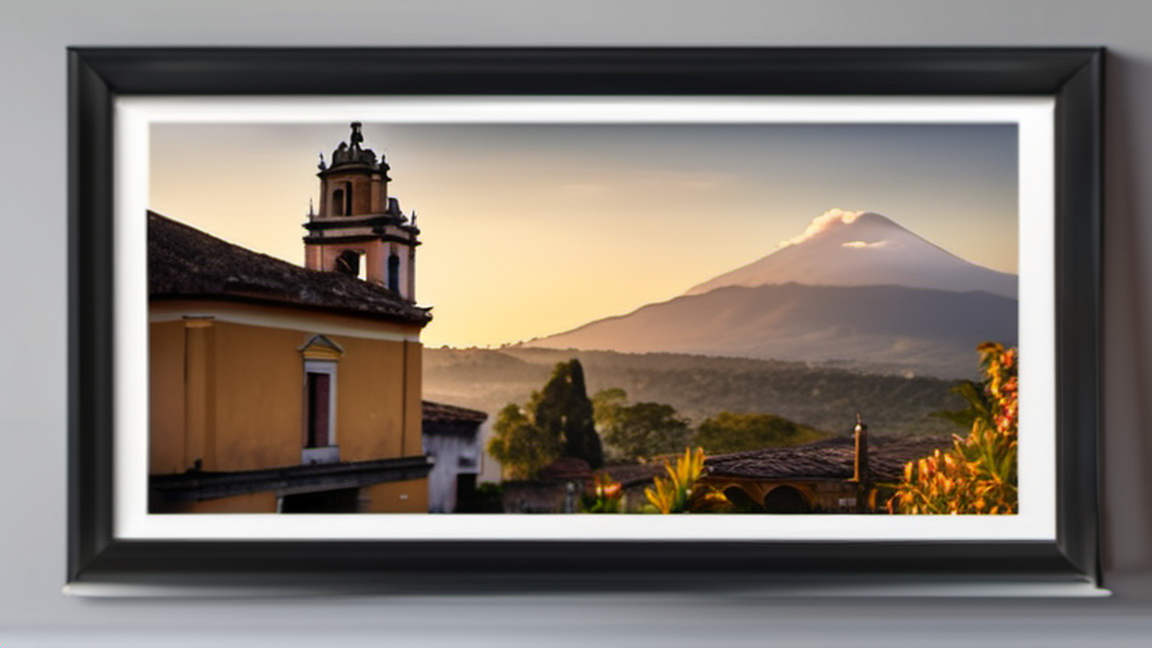
[edit] This section does not cite any sources. Please help improve this section by adding citations to reliable sources. Unsourced material may be challenged and removed. (May 2020) (Learn how and when to remove this message) Arch connecting two parts of old Convent, Volcán de Agua in background Three large volcanoes dominate the horizon around Antigua. The most commanding, to the south of the city, is the Volcán de Agua or "Volcano of Water", some 3,766 m (12,356 ft) high. When the Spanish arrived, the inhabitants of the area, Kakchikel Mayas, called it Hunapú (and they still do). However, it became known as Volcán de Agua after a lahar from the volcano buried the second site of the capital, which prompted the Spanish authorities to move the capital to present-day Antigua. The original site of the second capital is now the village San Miguel Escobar. To the west of the city are a pair of peaks, Acatenango, which last erupted in 1972, 3,976 m (13,045 ft) high, and the Volcán de Fuego, 3,763 m (12,346 ft) high. Fuego is famous for being almost constantly active at a low level. Steam and gas issue from its top almost daily, while a larger eruption occurred in September 2012. Climate[edit] Antigua Guatemala has a subtropical highland climate (Köppen: Cwb). Climate data for Antigua Guatemala Month Jan Feb Mar Apr May Jun Jul Aug Sep Oct Nov Dec Year Mean daily maximum °C (°F) 22.5(72.5) 23.4(74.1) 24.7(76.5) 25.0(77.0) 24.7(76.5) 23.6(74.5) 23.5(74.3) 23.8(74.8) 23.1(73.6) 22.7(72.9) 22.8(73.0) 22.3(72.1) 23.5(74.3) Daily mean °C (°F) 16.6(61.9) 17.2(63.0) 18.3(64.9) 19.1(66.4) 19.5(67.1) 19.4(66.9) 19.0(66.2) 19.0(66.2) 18.7(65.7) 18.3(64.9) 17.7(63.9) 16.8(62.2) 18.3(64.9) Mean daily minimum °C (°F) 10.8(51.4) 11.1(52.0) 11.9(53.4) 13.3(55.9) 14.3(57.7) 15.3(59.5) 14.6(58.3) 14.3(57.7) 14.4(57.9) 13.9(57.0) 12.7(54.9) 11.3(52.3) 13.2(55.7) Average precipitation mm (inches) 1(0.0) 3(0.1) 4(0.2) 25(1.0) 118(4.6) 231(9.1) 170(6.7) 141(5.6) 220(8.7) 131(5.2) 16(0.6) 5(0.2) 1,065(42) Source: Climate-Data.orgInstituto Nacional de Sismología, Vulcanología, Meteorología e Hidrología de Guatemala
[edit] Central square of Antigua Guatemala in 1887. The city had a peak population of some 65,000 in the 1770s; the bulk of the population moved away in the late 18th century after the 1773 Guatemala earthquake. Despite significant population growth in the late 20th century, the city had only reached half that number by the 1990s. At the time of the 2007 census, the city had 34,685 inhabitants. [citation needed]
[edit] Historically, the area was considered to be one of the finest agriculturally in Guatemala. Tourism is the main driver of the present-day economy. Antigua is also a coffee-producing region of Anacafé.Streets and the central park of Antigua Guatemala
[edit] Antigua is served by two main hospitals, Hospital Nacional Pedro de Bethancourt and a Guatemalan Institute of Social Security hospital. Emergency medical services are provided by Bomberos Municipales (Guatemala) and Bomberos Voluntarios (Guatemala), who have both previously worked with LFR International to improve prehospital care.
[edit] Antigua is the most popular tourist destination in Guatemala, with easy access from Guatemala City and La Aurora International Airport. Central Park (Parque Central) is the heart of the city, with the reconstructed fountain there acting as a popular gathering spot. To the north of the Central Park is the Arco de Santa Catalina, one of the most recognizable architectural landmarks of Antigua. Antigua is the jumping-off-point for hikes of the Acatenango (Fuego) and Pacaya volcanos. Spanish colonial monuments[edit] San FranciscoPalaceCity HallCathedralUniversitySanto Domingo MonasteryLa MercedCapuchinsLa Recolección Some of Antigua Guatemala's colonial monuments Before it was declared a National Monument by president Jorge Ubico on March 30, 1944, the city ruins were practically abandoned. The following galleries show images of the destruction of the structures due to earthquakes and abandonment. There were other churches, such as Nuestra Señora del Carmen and the Society of Jesus, that endured the 1773 earthquake relatively well, but they were abandoned and the earthquakes from 1917 to 1918 and 1976 destroyed them. In the particular case of de San Francisco El Grande church, it was in good structural condition after the 1773 and 1917 earthquakes, and it was rebuilt in 1967 when the Franciscans returned to Guatemala. This eventually protected the structure from significant damage in the 1976 earthquake. Finally, La Merced church was practically new in 1773, and it has withstood time and earthquakes since; the church was not abandoned in 1776, but it was indeed abandoned in 1829 when the Mercedarians were expelled from Central America by general Francisco Morazán, along with the rest of regular clergy and the conservative party members and Aycinena family. Name Picture Brief description Captain General Palace Residence of the Captain General of General Captaincy of Guatemala during the Spanish colony. After the Santa Marta earthquake in 1773 it was abandoned and used as a warehouse. In the 21st century the buildings include the offices of Guatemala Institute of Tourisms -INGUAT-, the city National Police headquarters and the Sacatepéquez Governor's office, among others. City Hall Cathedral of Saint JamesSan José Parish The first building was begun in 1545 with rubble brought from the destroyed settlement in the valley of Almolonga. Its construction was hampered by frequent earthquakes. A second sanctuary would be inaugurated in 1680. Cathedral status was obtained in 1743. The first cathedral housed the remains of the conquistador Pedro de Alvarado who had been transferred there at the request of his daughter in 1568, but disappeared following one of the multiple earthquakes that damaged the city over the years. Church and Convent of Capuchins Originally called "Convent and Church of Our Lady of the Pond of Zaragoza", was approved by Felipe V in 1725. Construction work began in 1731 and the building was consecrated in 1736. The daily routine of the professed was governed by strict regulatory rules including the strictest poverty, penance, and fasting; also the discalced nuns had to survive on handouts provided by the faithful. After the Santa Marta earthquake, although the convent was not completely affected, its assets were transferred to the new Guatemala de la Asunción by order of the Captain General. La Recolección In 1685 two "Recoleto" missionaries came to the city of Santiago de los Caballeros, and when some more monks of their order arrived in the following years, asked permission of the City Hall to build a monastery; but in 1695, the City Hall made it known that there was insufficient reason to justify the construction because there were already enough monasteries in the city. Following this refusal, the friars went to the Real Audiencia which authorized construction in 1700, by a royal decree. Construction of the buildings began in 1701, and six years later the first stone of the church was placed. In 1708 the convent, library and infirmary were completed. The church was inaugurated on May 23, 1717. San Francisco This was the first sanctuary built on Santiago de los Caballeros in the 16th century. Since its beginning, it has suffered seismic damage: in 1565 the first building was severely damaged and the tremors continued until 1773. After being abandoned for almost two hundred years, the Franciscans recovered the property, and it has been open for Catholic worship since. The facade of the church is adorned with baroque columns and two bell towers. Adjacent to the church are the ruins of the old Franciscan convent. The temple has a special chapel that houses the remains of Saint Hermano Pedro de San José de Betancur, a missionary from the Canary Islands. La Merced Church Architect Juan de Dios Estrada was in charge of its construction, which began in 1749. The temple was inaugurated in 1767 and is in ultra baroque Guatemalan style with two bell towers. Church and School of the Society of Jesus Created by Royal Decree dated August 9, 1561, it was built with money donated in part by the chronicler Bernal Diaz del Castillo. Originally it consisted of three cloisters and a temple, and eventually hosted up to twelve Jesuits. It worked as "Colegio de San Lucas of the Society of Jesus" from 1608 until the order was expelled in 1767: "The school became famous and was unrivaled in terms of teaching of literature and grammar; it served the elite of Santiago de los Caballeros society, and among its students were chroniclers Francisco Antonio Fuentes y Guzmán and Francisco Vázquez, and priests Pedro Betancourt and Rafael Landívar." The structure remained in relatively good condition after the 1773 earthquake, but it was eventually destroyed by the 1917–18 and 1976 earthquakes. Santo Domingo Monastery Originally one of the most important and largest in the city, the Convent of Santo Domingo was destroyed in 1773 and abandoned by the transfer of the Dominicans to their site in Guatemala City . The ruins were sold to individuals and converted into the Hotel Casa Santo Domingo in 1989. In 2013 the 43rd General Assembly of the Organization of American States was held at their facilities. Escuela de Cristo Church The temple was founded in the parish of the Holy Cross in 1664 and from 1689 it was known as the "Congregation of San Felipe de Neri". Due to the earthquakes in San Miguel in 1717 the building was damaged; the reconstruction was finalized in 1730 under the leadership of Mayor Architect Diego de Porres. In 1784, it was moved to "Our Lady of Remedies" parish, when the clergy of this church moved to Nueva Guatemala de la Asunción. The façade has an architectural renaissance style and is made of stone, like the church of the Capuchins, a characteristic that distinguishes them from the other temples in the city. In this church were originally the remains of Pedro de San José de Betancur. Nuestra Señora del Carmen Church Even though it survived the Santa Marta earthquakes, it was almost destroyed by the earthquakes of 1917-18 and 1976. However, its façade survived in very good condition, and has been admired ever since as an example of Guatemalan Baroque. San Pedro Hospital The monks of San Juan de Dios congregation founded their first hospital and monastery in 1636 and were in charge of the hospitals in the Kingdom of Guatemala ever since.: 63  San Pedro Hospital in particular was exclusively for ecclesiastical people.: 64  La Concepción convent It had been misidentified as the palace of Sister Juana de Maldonado, but recent research has shown that the cloister dates from the 18th century while the famous Guatemalan concepcionista nun lived in the 17th century. Chapel of the Holy Cross Holy Week[edit] Main article: Holy Week processions in Guatemala La Antigua is noted for its very elaborate religious celebrations during Lent (Cuaresma), leading up to Holy Week (Semana Santa) and Easter (Pascua). Each Sunday during Lent, one of the local parishes sponsors a Procession through the streets of Antigua. Elaborate and artistic carpets, predominantly made of dyed sawdust, flowers, pine needles, and even fruits and vegetables, adorn the processions' paths. [citation needed] The most traditional processions are: Holy week traditional processions in Antigua Guatemala Day Picture Church Hours Fifth Sunday of Lent Jesús de la Caída San Bartolomé Becerra 7:00 am – 10:00 pm Friday of Sorrows Viacrucis del Hermano Pedro (varones) San Francisco el Grande 3:00 pm – 6:00 pm Palm Sunday Palm procession Jocotenango Sacatepéquez 6:30 am – 12:00 pm Palm procession (live representation) La Merced, Santa Ana, Escuela de Cristo, San Felipe de Jesús 8:00 am – 12:00 pm Jesús Nazareno de la Reseña La Merced 11:00 am – 11:00 pm Holy Monday Jesús Nazareno Santa Inés del Monte Pulciano N/A Holy Tuesday Jesús Nazareno del Silencio El Calvario 4:00 pm – 11:00 pm Holy Wednesday Jesús Nazareno del Milagro San Felipe de Jesús 2:50 pm – 10:00 pm Jesús Nazareno San Mateo Milpas Altas 4:00 pm – 10:00 pm Holy Thursday Jesús Nazareno de la Humildad San Cristóbal el Bajo 11:00 am – 10:00 pm Jesús Nazareno del Perdón San Francisco el Grande 1:00 pm 12:00 am Good Friday Jesús Nazareno de la Penitencia La Merced 4:00 am – 3:00 pm Crucifixion Antigua Guatemala Cathedral, Escuela de Cristo 12:00 pm – 3:00 pm Señor Sepultado and Virgen de Soledad Antigua Guatemala Cathedral 3:00 pm – 1:00 am Señor Sepultado San Felipe de Jesús 3:00 pm – 1:00 am Señor Sepultado Escuela de Cristo 4:00 pm – 1:00 am Art[edit] Antigua is also home to the National Museum of Guatemalan Art, which is housed in the Palace of the Captaincy General, a UNESCO-designated World Heritage Site dating to the 16th century. Education[edit] Antigua is known as a destination for people who want to learn Spanish through immersion. There are many Spanish language schools in Antigua, and it is one of the most popular and best recognized centers for studying the Spanish language by students from Europe, Asia, and North America. Language institutes are one of the primary industries of Antigua, along with tourism.
[edit] Antigua football club plays in the Liga Nacional, the top division of Guatemalan football. Their home stadium is the Estadio Pensativo, which has a capacity of 10,000. They are nicknamed Los Panzas Verdes ("Green Bellies") and have been successful nationally, having won the league title five times since 2015.
[edit] The New Adventures of Tarzan (1935)[edit] Main article: The New Adventures of Tarzan See also: Tarzan and Edgar Rice Burroughs Puerto BarriosLivingstonQuiriguáChichicastenangoRío DulceAntigua GuatemalaPuerto San JoséSelva PeteneraCiudad de Guatemala Film locations for The New Adventures of Tarzan. In 1935, the film The New Adventures of Tarzan was filmed on location in Guatemala, taking advantage of the help from the United Fruit Company and president Jorge Ubico. The places where the filming was made were: Chichicastenango: scenes of a native town where the explorers first met. Antigua Guatemala: The Green Goddess temple Río Dulce Puerto Barrios: arrival and departure of the boats carrying the explorers Tikal: jungle scenes Quiriguá: Mayan city where they get lectured on the Maya civilization Guatemala City: then luxurious Palace Hotel was used to shoot the scenes of the hotel in the imaginary town of At Mantique The Border: 1982[edit] Main article: The Border (1982 film) The initial earthquake sequences from the Jack Nicholson film The Border were filmed in Antigua Guatemala, specifically in La Recoleccion Architectural Complex.
[edit] ^ This square was also called "Plaza Mayor", "Plaza Real" and "Plaza de Armas". ^ Previously the audience was in the city of "Gracias a Dios" in Honduras, but there it lacked the appropriate conditions for its activities. ^ The Audiencia was called "of the Confines" because it was within the confines of New Spain and Peru. ^ Parts of this construction are still preserved and may be the only ruins dating from the 16th century in the city of Antigua Guatemala. ^ During the Spanish colony, "General Study" was another name for the universities. ^ i.e., Local authorities chosen among the criollo people. ^ Royal emissaries from the Spanish Crown. References[edit] ^ Antigua Guatemala (Municipality, Guatemala) - Population Statistics, Charts, Map and Location ^ "Elevation of Antigua Guatemala, Guatemala". Archived from the original on 2023-08-08. ^ Citypopulation.de Archived 2021-10-26 at the Wayback Machine Population of cities & towns in Guatemala ^ a b "Antigua Guatemala". UNESCO World Heritage Convention. United Nations Educational Scientific and Cultural Organization. Archived from the original on 18 December 2022. Retrieved 10 December 2022. ^ Lutz, Christopher H. (1997) Santiago de Guatemala, 1541-1773: City, Caste, and the Colonial Experience University of Oklahoma Press, pp.10 & 258 ^ Santos 2011. ^ "Agua". Global Volcanism Program. Smithsonian Institution. Retrieved 2008-08-03. ^ "Historia de La Antigua Guatemala". www.cscantigua.org (in Spanish). Archived from the original on 2023-08-08. Retrieved 2022-08-22. ^ Sociedad Estatal Quinto Centenario 1993, p. 13. ^ a b c d e Rodríguez Girón, Flores & Garnica 1995, p. 585. ^ a b c d e f g h i j Melchor Toledo 2011 ^ Calderón 2011. ^ Antigua Guatemala en línea n.d. ^ Cadena 1774, p. 19. ^ a b Johnston Aguilar 2001. ^ Esparza n.d. ^ Tate Lanning 1977, p. 8. ^ a b c d Hernández de León 1928. ^ a b c d e f g Mozas Roca & de León 2008 ^ a b Foster 2000. ^ a b González Davison 2008, p. 4-15. ^ a b Baily 1850, p. 78. ^ a b c d e f g h i j Prins Wilhelm 1922 ^ "Climate: Antigua Guatemala". Climate-Data.org. Archived from the original on 26 September 2015. Retrieved 19 August 2015. ^ Departamento de Investigación y servicios meteorológicos. "Isotermas de temperatura mínima absoluta anual" (in Spanish). Archived from the original on May 17, 2012.; "Isotermas de temperatura máxima absoluta anual". Archived from the original on May 24, 2012.; "Isotermas de temperatura máxima promedio anual". Archived from the original on May 15, 2012.; "Isotermas de temperature mínima promedio annual". Archived from the original on May 29, 2012.; "Sumatoria de días con lluvia promedio anual". Instituto Nacional de Sismología, Vulcanología, Metereología e Hidrología (in Spanish). Guatemala. Archived from the original on May 15, 2012. Retrieved 23 October 2015. ^ Nester Mauricio Vásquez Pimentel (2018). Historia del Organismo Judicial (PDF) (1st ed.). Supreme Court of Justice of Guatemala. p. 8. ^ Samayoa, Christa (10 March 2017). "Lugares para donar sangre en Guatemala" [Places to donate blood in Guatemala]. Hospital Nacional Pedro De Bethancourt Sacatepequez (in Spanish). Archived from the original on 2023-08-08. Retrieved 2019-05-13. ^ LFR International in Guatemala, 2019-08-22, archived from the original on 2021-12-11, retrieved 2019-08-26 – via YouTube ^ Delaney, Peter G.; Figueroa, Jose A.; Eisner, Zachary J.; Andrade, Rudy Erik Hernandez; Karmakar, Monita; Scott, John W.; Raghavendran, Krishnan (2020-04-01). "Designing and implementing a practical prehospital emergency trauma care curriculum for lay first responders in Guatemala". Trauma Surgery & Acute Care Open. 5 (1) e000409. doi:10.1136/tsaco-2019-000409. ISSN 2397-5776. PMC 7254122. PMID 32518836. S2CID 216246185. ^ "Palacio de los Capitanes". Información de La Antigua. Archived from the original on 1 July 2008. Retrieved 13 November 2011. ^ a b Consejo Nacional para la Protección de la Antigua n.d. ^ Anchisi de Rodríguez 2014, p. 24:35. ^ Herrera, Jenny (2023-11-11). "For the First Time Ever: Government Creates a National Art Museum of Guatemala". GTNews - Guatemalan News Agency. Guatemala City. Retrieved 2024-01-04. ^ "Museo Nacional de Arte de Guatemala MUNAG – SIC" [Cultural Information System National Museum of Art of Guatemala MUNAG]. www.sicultura.gob.gt (in Spanish). Retrieved 2024-01-04. ^ "Historia de la Antigua GFC en Liga Nacional" [History of the Old GFC in National League]. Seleccion Guatemala (in European Spanish). June 2014. Archived from the original on 2023-03-25. Retrieved 2023-03-25. ^ a b Barillas, Edgar (2013). "50 películas filmadas en Guatemala y una que no (1935-1996). Apuntes para una cartografía de los lugares filmados en Guatemala". Revista Historia de la Universidad de San Carlos de Guatemala (in Spanish). Guatemala. Archived from the original on October 22, 2015. Retrieved 22 October 2015. ^ "The Border (introduction)". YouTube. 1982. Archived from the original on 2021-12-11. Retrieved 26 October 2015. Bibliography[edit] Anchisi de Rodríguez, Coralia (13 February 2014). "Sor Juana de Maldonado; reescribiendo su historia". Museo Ixchel, Universidad Francisco Marroquín (in Spanish). Guatemala. Archived from the original on 23 December 2014. Retrieved 23 December 2014. Antigua Guatemala en línea (n.d.). "Catedral Metropolitana - 1680". antiguaguatemalaonline.com (in Spanish). Archived from the original on 2 February 2015. Retrieved 5 November 2014. Baily, John (1850). Central America; Describing Each of the States of Guatemala, Honduras, Salvador, Nicaragua, and Costa Rica. London: Trelawney Saunders. Archived from the original on 2023-08-08. Retrieved 2015-03-20. Cadena, Felipe (1774). Breve descripción de la noble ciudad de Santiago de los Caballeros de Guatemala y puntual noticia de su lamentable ruina ocasionada de un violento terremoto el día veintinueve July 1773 (PDF) (in Spanish). Mixco, Guatemala: Oficina de Antonio Sánchez Cubillas. Archived (PDF) from the original on 2021-07-27. Retrieved 2015-03-09. Calderón, Carlos (2011). "Parques de Guatemala". Oscar Calderón y fotodocumentalismo (in Spanish). México. Archived from the original on 18 October 2014. Retrieved 5 November 2014. Conkling, Alfred R. (1884). Appleton's guide to Mexico, including a chapter on Guatemala, and a complete English-Spanish vocabulary. Nueva York: D. Appleton and Company. Archived from the original on 2015-01-23. Retrieved 2015-03-09. Consejo Nacional para la Protección de la Antigua (n.d.). Guía del Consejo Nacional para la protección de la Antigua (Report) (in Spanish). Guatemala. Esparza, José Javier (n.d.). "Navidad, Hispanidad, Identidad". El Manifiesto (in Spanish). Archived from the original on 29 October 2013. Retrieved 23 August 2012. Foster, Lynn V. (2000). A Brief History of Central America. New York: Facts On File, Inc. ISBN 0-8160-3962-3. Fumero, Pedro (11 April 2010). "Genes aborígenes en el Santo Hermano Pedro". El Día (in Spanish). España. Archived from the original on 26 October 2014. Retrieved 23 August 2012. González Davison, Fernando (2008). La montaña infinita; Carrera, caudillo de Guatemala. Guatemala: Artemis & Edinter. ISBN 978-84-89452-81-7. Guatelinda (2014). "La Iglesia del Carmen… otrora esplendorosa y elegante". Mi Guatemala linda en línea (in Spanish). Guatemala. Archived from the original on 19 October 2014. Retrieved 5 November 2014. Hernández de León, Federico (10 April 1928). "Fenómenos de nuestra historia". Nuestro Diario, Guatemala (in Spanish). Hilton, Ronald (n.d.). Who's who in Latin America: A biographical dictionary of notable living men and women of Latin America (3rd ed.). Stanford, California: Stanford University Press. Instituto Nacional de Estadística (2002). "XI Censo Nacional de Población y VI de Habitación". INE.gob.gt (in Spanish). Guatemala. Archived from the original on 10 June 2008. Retrieved 23 November 2012. Los datos se refieren al municipio Johnston Aguilar, Rene (2001). "Proyecto arqueológico en el claustro norponiente de la Compañia de Jesús, Antigua Guatemala". Academia (in Spanish). Archived from the original on 10 February 2015. Martínez Peláez, Severo [in Spanish] (1990). La patria del criollo; ensayo de interpretación de la realidad colonial guatemalteca (in Spanish). México, D.F.: Ediciones en Marcha. Melchor Toledo, Johann Estuardo (November 2011). El arte religioso de La Antigua Guatemala, 1773-1821: Crónica de la emigración de sus imágenes [The religious art of Antigua Guatemala, 1773-1821: Chronicle of the emigration of its images] (PDF) (Doctor en Historia del Arte thesis) (in Spanish). México, D.F.: Universidad Nacional Autónoma de México. Archived (PDF) from the original on 17 December 2014. Retrieved 2024-03-17. Molina Jiménez (2001). "La Polémica de "El problema (1899)", de Máximo Soto Hall". Revista Mexicana del Caribe (in Spanish). VI (12). Red de Revistas Científicas de América Latina, el Caribe, España y Portugal;Sistema de Información Científica. Archived from the original on 2023-08-08. Retrieved 2015-03-09. Moncada Maya, J. Omar (2003). "En torno a la destrucción de la Ciudad de Guatemala, 1773. Una carta del Ingeniero Militar Antonio Marín". Biblio 3W. Revista Bibliográfica de Geografía y Ciencias Sociales (in Spanish). VIII (444). Barcelona: Universidad de Barcelona. ISSN 1138-9796. Archived from the original on 23 June 2003. Retrieved 28 February 2010. Mozas Roca, Luis Angel; de León, Irma Yolanda, eds. (2008). Apuntes sobre las obras de rehabilitación del Colegio de la Compañía de Jesús [Notes on the rehabilitation works of the College of the Society of Jesus] (PDF) (in Spanish). Ximena Chapero, design and layout. Guatemala: Agencia Española de Cooperación Internacional para el Desarrollo. Archived (PDF) from the original on 4 June 2014. Prins Wilhelm (1922). Between two continents, notes from a journey in Central America, 1920. London, UK: E. Nash and Grayson, Ltd. pp. 148–209. Rodríguez Girón, Zoila; Flores, José Alejandro; Garnica, Marlen (1995). Laporte, L.P; Escobedo, H. (eds.). "El real palacio de Antigua Guatemala: arqueología y propuesta de rehabilitación" (PDF). Simposio de Investigaciones Arqueológicas en Guatemala (in Spanish). Guatemala: Museo Nacional de Arquelogía y Etnología. Archived from the original (PDF) on 14 September 2011. Santos, Bairon (2011). "Municipio de Ciudad Vieja" (in Spanish). La Tierra. Archived from the original on March 24, 2012. Retrieved June 12, 2011. Sociedad Estatal Quinto Centenario (1993). Historia general de Centroamérica (in Spanish). España: Sociedad Estatal Quinto Centenario. ISBN 84-86956-28-5. Tate Lanning, J. (1977). La Universidad en el Reino de Guatemala (in Spanish). Guatemala: Universitaria. "La Antigua Guatemala". Viaje a Guatemala (in Spanish) (Special ed.). Archived from the original on 2 March 2008. Retrieved 24 February 2008. "Mapa de Antigua Guatemala". Guate4travel (in Spanish). Archived from the original on 24 October 2008. Retrieved 24 February 2008.