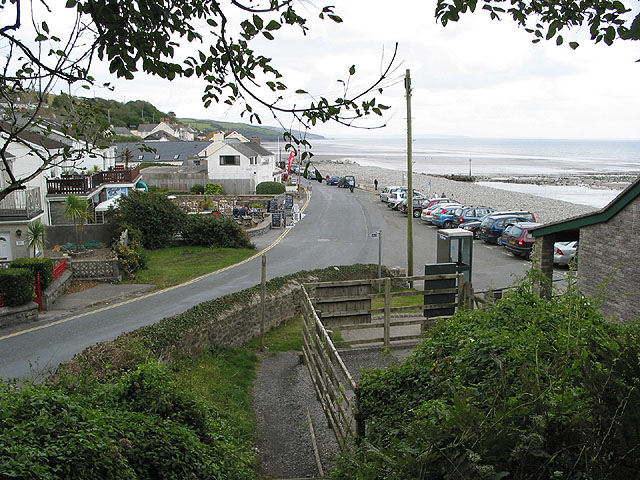
Amroth (Welsh: Amroth or Llanrhath) is village and holiday resort in Pembrokeshire.
While the beach dominates the first impression of this seaside settlement, the most rewarding experiences lie a short inland trek. A modest ascent up the low ridge that skirts the village opens up unexpected views over Carmarthen Bay, where the tide's rhythm becomes a quiet soundtrack to the rolling pasture. Along the path, locals tend small herb gardens—mint, rosemary, and thyme—providing a fragrant backdrop that complements the salty air. Stop at the modest stone chapel tucked away among the hedgerows; its simple architecture reflects centuries of community continuity, and its lone bell still rings on Sundays, signalling a pause in the daily hustle. These peripheral routes showcase how the area balances maritime allure with gentle, agrarian tranquility.
Visiting outside the peak summer months reveals a different character. In early spring, the dunes burst into a subtle colour palette as wild orchids and cornflowers speckle the sand, and the local market stalls begin offering fresh seafood caught just offshore. Autumn brings a crispness to the air, and the long promenade becomes a preferred route for walkers seeking the subtle amber glow of low-lying sun. During these shoulder periods, the village's few cafés extend their menus to include hearty lamb stews and locally brewed ales, aligning their offerings with the changing weather. Timing the trip to these quieter windows allows for authentic interaction with residents, who are less likely to be pressed for time and more inclined to share anecdotes about the tides and traditions.
The community sustains a modest but vibrant craft scene that often escapes guidebooks. In a repurposed barn near the harbour, artisans weave wool from nearby farms into understated scarves and shawls, their patterns echoing the undulating waves. A short drive inland, a family-run bakery specialises in a buttery scone infused with seaweed flakes—a nod to the coastal heritage that balances sweet and briny. Sampling these items in the modest tea rooms offers insight into how the local palate incorporates maritime influences without resorting to gimmickry. Engaging directly with the makers—whether watching a potter at the wheel or learning the hand‑kneading technique for traditional oatcakes—provides a tactile connection to the area’s living culture.
Village, parish and community in Pembrokeshire, Wales This article is about the village. For the electoral ward, see Amroth (electoral ward). Human settlement in WalesAmrothAmroth village and beachAmrothLocation within PembrokeshirePopulation1,232 (2011)OS grid referenceSN1607CommunityAmrothPrincipal areaPembrokeshireCountryWalesSovereign stateUnited KingdomPost townNARBERTHPostcode districtSA67Dialling code01834PoliceDyfed-PowysFireMid and West WalesAmbulanceWelsh List of places UK Wales Pembrokeshire 51°44′N 4°40′W / 51.73°N 04.66°W / 51.73; -04.66 Map of the community Amroth is a village, parish and community 7 miles (11 km) northeast of Tenby, Pembrokeshire, Wales. Located on Carmarthen Bay, Amroth is noted for its long sandy beach which stretches the length of the village. It regularly earns a Blue Flag award. and is the south-to-north start of the Pembrokeshire Coast Path. Amroth is within the Pembrokeshire Coast National Park. The name is Welsh, and probably means "on (the brook called) Rhath".
[edit] The beach stretches the whole length of the village and at extreme low tide, the petrified forest, destroyed when sea levels rose 7,000 years ago, can still be seen. Fossilised antlers, nuts and animal bones and Neolithic flints have been discovered. The parish, which appeared as Amrath on a 1578 parish map of Pembrokeshire, was an important anthracite coal mining area until the end of the 19th century. Slight remains of mines and tramways are still visible. Ruins of Amroth Castle still remain, and one mile inland is the Anglican parish church of St Elidyr, which is a grade II* listed building.
[edit] Main article: Amroth Castle Amroth Castle Amroth Castle stands on the north side of the unclassified coast road east of the village of Amroth. It is surrounded by a high wall with an entrance archway at the south-western corner. The present building is a 19th-century country house built in the style of a mock castle which possibly replaced a small stone castle dating from the 12th century. The gatehouse is much restored. The ruinous remains of the house are a grade I listed building. After passing through several hands the castle was used as a lunatic asylum in the 1850s. Converted back to a private house in the 1880s it was later owned and occupied by Owen Colby Philipps, the shipping magnate who bought the White Star Line and was created Baron Kylsant of Carmarthen and Amroth in 1923. It passed to his daughter Nesta, who had married George Coventry, grandson of the 9th Earl of Coventry. They moved out in 1930 when George inherited the Coventry title and estates.
[edit] The Pembrokeshire Coast Path runs west along the coast from its start at Amroth. This national trail has since 2012 also formed a part of the Wales Coast Path which continues eastwards from Amroth over the headland of Telpyn Point towards Pendine. Amroth is also the southern terminus of the Knights' Way, which runs north to St Davids Cathedral. A section of the Cistercian Way also passes through.
[edit] Amroth is an electoral ward and a community in Pembrokeshire, which includes Amroth, Crunwere, Summerhill, Stepaside, Pleasant Valley, Wisemans Bridge, Llanteg and Llanteglos. The ward elects a councillor to Pembrokeshire County Council and up to twelve community councillors to Amroth Community Council.
[edit] The beach which stretches the length of the village earned a Blue Flag award in 2020 and the eastern end has had a lifeguard for part of the summer. Public toilets are available at either ends of the village. The main car park is managed by Pembrokeshire Coast National Park Authority.