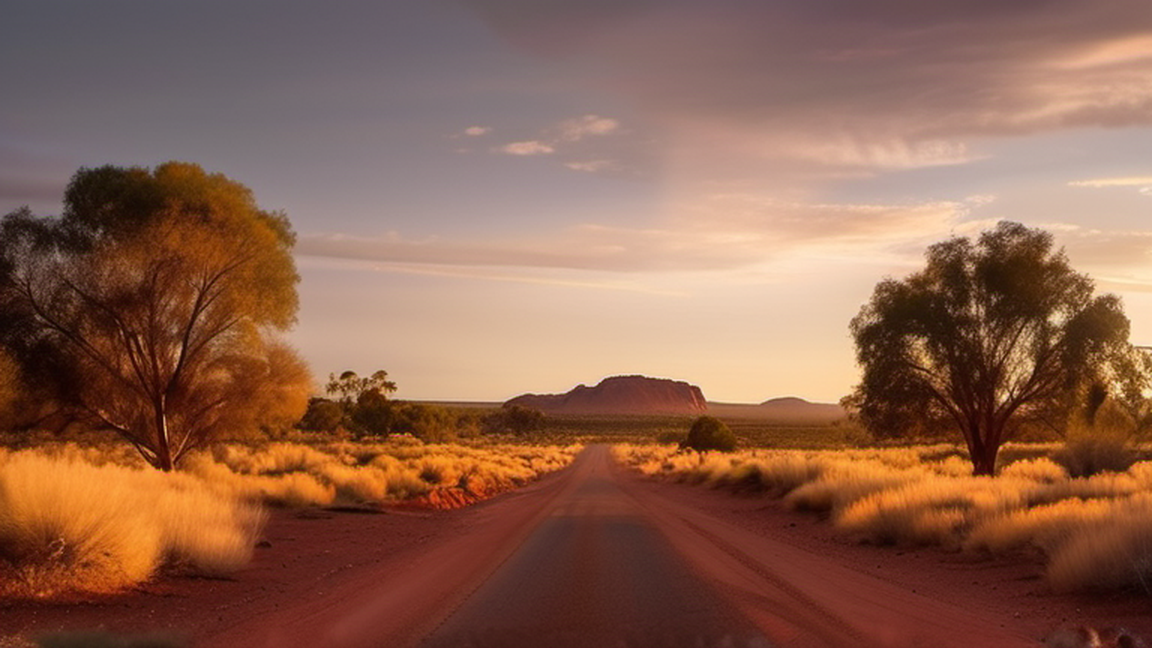
Alice Springs (Arrernte: Mparntwe), sometimes colloquially known as Alice, is the heart of Central Australia and consists of cavernous gorges, boundless desert landscapes, remote Aboriginal communities and a charming pio
Alice Springs (Arrernte: Mparntwe), sometimes colloquially known as Alice, is the heart of Central Australia and consists of cavernous gorges, boundless desert landscapes, remote Aboriginal communities and a charming pioneering history. It embodies the hardy outback of the Northern Territory's Red Centre, and is a travel hub for sights and hikes in the region, such as Uluru (formerly known as Ayers Rock), Kata Tjuta (formerly known as the Olgas) and Kings Canyon. Since the start of the tourist boom in the early 1980s, the population has substantially grown to over 25,000. It is a great town and well worth a visit.
Founded as a telegraph station on the line across Australia, Alice Springs is 1500 km from the nearest major city, being Darwin to the north or Adelaide to the south. As a result, the people that inhabit the town are often quite ingenious when it comes to making things last! Don't expect a quaint rural village though: Alice Springs has more than its fair share of suburban strip malls with big box stores and fast food outlets.
Also, due to this distance, you may find that some things can cost more than in the cities, such as fruit and veg, and some clothing (if you forgot to pack your singlet or jacket!). Over all, however, the town isn't too expensive when it comes to the necessary requirements and it is much cheaper than smaller outback towns, making it an ideal place to stock up before heading to more remote areas.
Something else to remember is that hotels in Alice Springs are rated slightly differently than those in European or North American countries: hotels are rated on their facilities rather than the actual rooms. The reason for that is the distance that Alice Springs is from anywhere and the difficulties involved in getting building materials. Mind you, the star ratings reflect the quality of the establishment.
Most of the town's indigenous population speak the Eastern Arrernte language, often as their first language. For useful phrases, see the Eastern Arrernte phrasebook. Most locals speak English, however, although in small communities outside Alice Springs, Arrernte is mainly spoken.
The Arrernte (pronounced Arrenda) Aboriginal people have made their home in the Central Australian desert in and around Alice Springs for more than 50,000 years. The Aboriginal name for Alice Springs is Mparntwe. Three major groups Western, Eastern and Central Arrernte people live in Central Australia, their traditional land including the area of Alice Springs and East/West MacDonnell Ranges. They are also referred to as Aranda, Arrarnta, Arunta, and other similar spellings.
Arrernte country is rich with mountain ranges, waterholes, and gorges; as a result the Arrernte people set aside 'conservation areas' in which various species are protected. According to the Arrernte traditional stories, in the desert surrounding Alice Springs, the landscape was shaped by caterpillars, wild dogs, travelling boys, sisters, euros (Kangaroo-like creatures) and other ancestral figures.
There are many sites of traditional importance in and around Alice Springs, such as Anthwerrke (Emily Gap), Akeyulerre (Billy Goat Hill), Ntaripe (Heavitree Gap), Atnelkentyarliweke (Anzac Hill), and Alhekulyele (Mt. Gillen). Many Arrernte people also live in communities outside of Alice Springs.
Pronunciation of these Arrernte words can be very difficult. The reason for that is that Arrernte, and indeed every indigenous language of Australia, was not written. When Europeans arrived with their missions to convert people to Christianity, they felt the need to have the language written, and using their own languages put the written form to the language. As a result of the missionaries being mostly German, they used their own language to develop the Arrernte written language.
Don't worry if you can't pronounce it; everyone in town knows the places by their European names.
In 1862, John McDouall Stuart led an expedition into Central Australia and the area where Alice Springs is located. Until the 1930s, however, the town was known as Stuart. The Overland Telegraph Line linking Adelaide to Darwin and Great Britain was completed in 1872. It traced Stuart’s route and opened up the interior for permanent settlement. It wasn’t until alluvial gold was discovered at Arltunga, 100 km east of Alice Springs, in 1887 that any significant settlement occurred.
The telegraph station was sited near what was thought to be a permanent waterhole in the normally dry Todd River and was optimistically named Alice Springs after the wife of the former Postmaster General of South Australia, Sir Charles Todd. The Todd River was named after Sir Charles. The original mode of transportation in the outback were camel trains, operated by immigrants from Pathan tribes in the North-West frontier of the then British India and Pakistan who were misnamed ‘Afghan’ Camellers.
Cattle stations opened up the interior of Australia, with stations the size of small European countries running mostly cattle. Camels were (and still are) farmed in Central Australia - and the exporting of camels to the Middle East is a fast developing industry. This is because the Australian Camels are a purebred of camel, and often free from the diseases which can be prevalent in the Middle Eastern countries.
During the Pacific War, Alice Springs was an important location for the northern defence of Australia, and was a staging point for the allies movements to defeat the Japanese Imperial forces. Alice Springs' importance grew when it was established that coastal shipments to Darwin were no longer safe. Lots of relics from World War II are still in use today in Alice Springs, primarily the Alice Springs Airport, which was constructed as a result of the War.
After the conclusion of the war, there was still a large American influence in the town, and as a result, a number of covert locations were set up in and around Alice Springs to monitor world events. One of these was a Seismic Vault, which was a bunker of sorts, dug into a mound, and which held instruments such as seismographs and other instruments to detect the ground movements of possible nuclear testing in the (at the time) USSR. One of these bunkers was 'discovered' and is now heritage listed.
The Joint Defence Space Research Facility, or as it's locally known, "Pine Gap", began operations in 1970. The facility is the only area in Australia with prohibited airspace, so forget about seeing it up close. You may, however, see it on approach or departure from Alice Springs Airport.
Tourism is a major industry in Alice Springs, with well-developed facilities for travellers. Visit the Alice Springs Visitor Centre at 60 Gregory Terrace, at the south end of Todd Mall, for visitor guides, maps, tour and accommodation bookings, and suggested itineraries. You can even download or view the latest Visitor Guide for Central Australia on their website.
The climate of Alice is mostly hot and dry during the summer months, and cool and dry during the winter months. The sun is up from 7:15AM to 6PM in the winter months, and from 5:45AM to 7:15PM in the summer months. Summer temperatures average around 36 °C (97 °F) during the day and 22 °C (72 °F) at night. Some particularly hot days can see temperatures upwards of 43 °C (109 °F) with nights that remain at 27 °C (81 °F) or higher.
Alice Springs is to the north of the imposing McDonnell Ranges, with all transport links to the south using "Heavitree Gap" - a distinctive narrow gap in the range where the railway, highway and Todd River run through without any climb required. Heavitree Gap was named by William Mills, a surveyor of the Overland Telegraph line. He named it in honour of his former school in Devon (UK).
The roads around Alice Springs are generally flat and tend to skirt a lot of the hills, some of which are sacred sites to the local Indigenous people.
1 Alice Springs Airport (ASP IATA). The airport doesn't have air bridges, so that passengers need to use stairs to get in/out of planes. Qantas has connecting flights from Adelaide, Brisbane, Darwin, Melbourne, Perth, and Sydney. Virgin Australia has flights to Adelaide, Brisbane, and Darwin. Flights in summer cost can cost as little as $200 from major cities like Melbourne or Sydney.
The Ghan is a private all-sleeper tourist train covering the vast distance from Adelaide to Darwin stopping in Alice Springs. Very luxurious, but expect to pay a steep premium over even business class air fares.
Alice Springs is 17 hours drive from Darwin, and 18 hours drive from Adelaide. The Stuart Highway from Adelaide is well-maintained and goes right through Coober Pedy, an underground town famous also for being the opal capital of the world (and therefore well worth stopping off for a visit on the way). It continues through Tennant Creek and Katherine all the way up to Darwin.
If you are driving on the main sealed routes from other Australian capital cities, you will likely not be driving on remote roads, and provided you do not take side trips, there will likely be passing traffic. It is worthwhile reading the safety tips for driving in Australia and always carrying water and ensuring you know the location and opening hours of your fuel and food stops. Mobile phone reception is limited to a few of the larger townships along the Stuart Highway, so be prepared to go for long distances without coverage.
Read the rental car conditions carefully. Rental cars in Alice Springs may not offer unlimited free kilometres and do not cover you if you take your vehicle on unsealed roads. Rental cars rented outside of the Northern Territory may not be able to be driven into it. Driving after dark outside of the city limits may be prohibited. Rental companies in AC do not offer hand-controls for the handicapped.
The official visitor information centre has access to unlimited kilometre rates, so it's worth getting in touch with them if you are going to clock up the km on the car!
Greyhound ply the route to Alice Springs from the north and the south.
There are a couple of public bus lines bringing you around town. Other than that, you can get around by foot or bike, drive or take a taxi. Taxis can be scarce during peak hours. Uber is not available in Alice Springs as of August 2022. A taxi from the airport to the centre of town is around $45.
Alice Springs has quite a few interesting things to see; one of them happens every night. If you don't get out of town and watch a sunset, even just sitting off the main highway, you've missed something special. Other than that:
Alice Show. The annual festival with shopping, fair ground rides, animal displays, fireworks, art and crafts, races and performances.
Henley On Todd Regatta. River sand race poking fun at the British tradition of boat racing, held on the third Saturday of August each year. The "race" is cancelled whenever the Todd River actually has water.
Camel Cup, Blatherskite Park. Camel race day – a fun day out held in early July.
Beanie Festival. Knitting festival including mostly 'beanie' hats knit from every conceivable material in every conceivable pattern, all for sale. Also afternoon teas and art displays and music.
Finke Desert Race. Motorcycles or 4wd buggies racing over the Finke river track.
Alice Masters Games. Sports cup for people of all ages. A week-long event held every 2nd year (even-numbered years).
For a detailed and up-to-date calendar of events in Alice Springs, go to the Alice Springs Town Council website.
1 Reptile Centre. Examples of the local reptiles and one NT croc specially imported, on display by the guy the locals call when something with fangs is in the kitchen.
Stargazing. Alice Springs is in the middle of the largest land area without lights on earth, so the view of the Milky Way is unmatched unless you're on a dark boat in the middle of the ocean. Anyone from the city stopping on the road just out of town at night and tipping their head back is likely to fall over from the sheer shock of all those stars. as a result astronomy is popular in town. (updated May 2015)
2 Alice Springs Desert Park, 871 Larapinta Drive (B6) (10km west of town). 7:30AM-6PM. Truly memorable in its examples of local flora and fauna. They give a number of interesting lectures, such as Aboriginal use of local plants for food. The nocturnal exhibit is excellent, a very low-light building with offset day and night schedule to induce the nocturnal critters to come out during the day so people can see them. The best time to go to the park is early morning, before it gets hot; you can spend a full day walking the trails, going to the birds of prey exhibition where they fly the local aerial predators overhead, and getting the bushfoods and medicine tour. $25. (updated May 2015)
3 Olive Pink Botanical Garden, Tuncks Road (At the north end of Barrett Drive, just across a bridge over the Todd). 8AM-6PM. A desert botanical garden. Doesn't bloom much, but if you happen to get here after a rain, it's a really nice spot. Bring your sunscreen. There's a biography at Dymock's on the life of the lady it's named after, Olive Pink. Free. (updated May 2015)
Old Timer's Museum - located at the Old Timer's Retirement Village, off the South Stuart Highway leading into town from the airport before you get to the Gap. Really cool history of the outback, with a big collection of amazing stuff from the first white folks to hop a camel for the middle of nowhere. Definitely worth a visit.
4 The Residency, Parsons St, ☏ +61 8 8953 6380. Built in 1927 as the residence of the Government Representative to Central Australia, the house was the centre of government and social activity right up to the early 1970s. Visited by foreign dignitaries, government officials, and even royalty, the Residency operates as a museum house where people immerse themselves in the early administrative history of the town and region. Speak with one of the friendly volunteers who are on hand to answer your questions. Located on the corner of Parsons and Hartley Streets. Entry is by gold-coin donation, and opening hours are M-F 10AM-2PM. It's generally closed over the very quiet summer months, December til late March.
5 National Pioneer Women's Hall of Fame, 2 Stuart Terrace, Old Alice Springs Gaol (Next to the Royal Flying Doctor Service), ☏ +61 8 8952 9006. Hundreds of women are recognized for their special contributions to Australia’s heritage. Exhibitions include the 'Ordinary Women, Extraordinary Lives - Women First in Their Field', the Signature Quilt - 'Women at the Heart' and 'Women's Work of yesteryear'. The Old Gaol buildings are open for visitors to look through and gaol stories are told in a complementary booklet. The museum is devoted to the women who picked up stakes, hauled a whole house in a wagon out to the hottest, most dangerous place they could find, plunked themselves down where you couldn't see another house for a thousand miles in any direction and said, "This looks like a nice spot to live." Amazing stories. There is plenty to see and do for all ages with a gift shop, toilets and access for people with disabilities available. entry fees apply.
Hartley Street School
6 Alice Springs Telegraph Station Historical Reserve, Stuart Highway (a few kilometres north of town), ☏ +61 8 8952 3993. 8AM-9PM. Where it all began, this is the original telegraph station, with some exhibits about its history. The area around has walking trails through lovely serene desert scenery, including the actual Alice "springs". The reserve is free if you don't want to access the historical buildings. $15. (updated May 2015)
7 Old Ghan Heritage Railway and Museum, 1 Norris Bell Drive (off Stuart Highway, south of town before the airport), ☏ +61 8 8952 7161, info@roadtransporthall.com. 9AM-4PM. Next to (or part of, but with a separate entrance fee) the Road Transport Hall of Fame, this is a museum about Australia's wildest train line, The Ghan. Old equipment, photos and videos plus several carriages to explore. $12. (updated May 2015)
11 Royal Flying Doctor Service. With School of the Air - a museum and cafe. Famous!
Aviation Museum - a number of older planes, showing the history of aviation in a town which relies on it to survive.
Pyndan Camel Tracks – Take a one-hour or half day journey aboard a "ship of the desert", through the scenic Ilparpa Valley, located in the famous MacDonnell Ranges. Owner and cameleer Marcus has been working with camels since 1982 and his camels are well trained. Pyndan Camel Tracks is the only camel-riding experience based out of Alice Springs, and he also offers a free shuttle service from most hotels and the Alice Springs Visitor Information Centre to help people get to his property.
Outback Ballooning - Take a balloon ride and see the sunrise. Alice Springs has ideal weather for ballooning and the tour operators run almost every day of the year.
Quads & Motorcycles - Some tour groups do quadding through the spinifex, and Harley rides through remote Central Australia - lovely day trips.
Cycle hire - You can hire a bicycle and tour around town the healthy way. Just remember your water!
Golf - Alice Springs GC is an 18-hole desert course that has hosted the PGA Seniors tour, as well as the Masters Games and the NT Open.
1 Pioneer Park Races, Pioneer Park Racecourse, Stuart Hwy, Connellan, ☏ +61 8 8952 4977, info@alicespringsturfclub.org.au. The local racetrack with pretty much guaranteed lovely weather. (updated Jun 2016)
Rugby League - Sport is part of life in Australia - what better way to spend a Saturday afternoon in Winter then at the Rugby League? Matches are held at Anzac Oval from March and finalise in the Grand Final usually held on the first Saturday of September. League was founded in Alice Springs in 1963, and to this day, two of the foundation teams, Wests and United still play, as well as Memo and Vikings. It is a good strong competition and makes for a wonderful day out!
2 Henbury Meteorites Conservation Reserve, Ernest Giles Road (145km south west of Alice Springs), ☏ +61 8 8951 8250. Explore the 12 craters, which were formed when a meteor hit the earth’s surface 4,700 years ago. The Henbury Meteor, weighing several tonnes and accelerating to over 40,000 km/h, disintegrated before impact, and the fragments formed the 12 craters. free entry.
3 Museum of Central Australia, Araluen Cultural Precinct, 4 Memorial Ave (Corner of Larapinta Drive and Memorial Ave), ☏ +61 8 8951 1120. The exhibitions explore the unique features of the region through time and space, following the evolution of the landscape and the creatures that inhabited it. Featured is a replica of a local paleontological dig, an ancient waterhole with some surprising mega fauna including a giant freshwater crocodile and the largest bird that ever lived, Dromornis stirtoni, dated at eight million years old. Other exhibits include present day Central Australian mammals, reptiles, insects and meteorite fragments. Entry fees apply. (updated Aug 2016)
Totem Theatre. Not open to the public unless a play is on - the little local theatre, heritage listed building put up during World War II to entertain the troops after they retreated from Darwin because of the Japanese bombing. Small local theatre groups put on productions on a semi-regular basis; ask at Dymocks if there are any tickets. Theatre on a shoestring budget!
4 Araluen Arts & Cultural Centre, 61 Larapinta Dr, Araluen, ☏ +61 8 8951 1122. An amazing local art museum, with works by Namatjira and other local artists. Regular travelling art shows, plays, and film festivals. The front desk will know what events are ongoing - there's always something ongoing.
Camels Australia, Stuart Wells via Alice Springs, ☏ +61 8 8956 0925. Say hello to one of their friendly camels, take a short ride around the enclosure or browse through the interesting assortment of souvenirs and local Aboriginal art on display in their shop. Sit back, relax and enjoy the view while enjoying a cold drink and something to eat. free entry.
North of Alice - The area stretching north of Alice Springs is known for its serene beauty and as a setting for gem fossicking, bush walking, bush camping and four-wheel-driving. A few hours north are gem fields with Garnet, Zircon, Tourmaline, Apatite and various kinds of Quartz. Contact the Gem Tree for details. Garnet is the easiest to go for on your first try, as the garnet chips are easy to find on the surface and require no digging or special equipment. You do need a permit, though.
Because of the large tourism industry and the small population Alice Springs is an easy place for anyone to find work. Many companies will employ travellers, and wages are comparable to, if not higher than, other parts of Australia.
The big thing to be aware of is that long term accommodation is very scarce, and backpackers/travellers are usually at the bottom of the list for long term accommodation. Renting is very expensive, as there is a high demand for housing in the town, and house shares are not common. If you are looking to stay for 6 months or more, you will probably need to rent a house. It's easiest to find rental accommodation in December/ January and June/ July as people tend to leave during these periods.
During the off tourist season (October - March/April) the hostels will do a good deal on long stay accommodation, but during the busy time (April–October) they will charge their normal rates.
Alice Springs Markets, Todd Mall, 08 8952 9299. Fresh food, jewellery, books, clothing, art, hand-made crafts and other neat merchandise. A market that takes place along the Todd Mall in the centre of town, with local vendors setting up stalls along the mall. The Todd Mall Markets are held on alternate Sundays.
Heavitree Gap Markets, held on the opposite Sundays to the Todd Mall markets, this has a less formal, car-boot sale atmosphere. Just on the other side of Heavitree Gap from the town, it's about 30 mins walk from the town centre, or 5 or 6 minutes drive.
Saturday Morning Lawn Sales - Friday's Centralian Advocate will have a listing of lawn sales in the back; getting a group together with a car and a map and driving around town at 6:30AM on a Saturday morning equipped with coffee, cash and a big trunk to put your stuff in while watching the sun rise is a real pleasure.
Despite its small size, Alice has a good and varied restaurant scene.
There are a fair few options here in Alice Springs for tucker (dinner). Maccas, KFC, Hungry Jack's, and Red Rooster are the main take away chains, but there are also your small family take aways, such as Big Al's, East Side Fish and Chips and Scoff.
Additionally, there are some great pizza shops in town, La Casalinga is a great feed. It's on Gregory Terrace, and it's got a really nice old school atmosphere about it. Has not changed for 20 years, and won't in the near future!
Ling's Supermarket, shop 8 & 9 113 Todd St, ☏ +61 8 8953 3678. M-Th 9AM-5:30PM, F 9AM-6PM, Sa 8:30AM-5PM, Su 10AM-3:30PM. It has a huge range of Asian food available including: noodles, (white, red and black) rice, sauces, kimchi, dried, fresh and frozen products. They have an interesting range of authentic Asian Cooking gear and health products to see and you will find a quality vegetarian range to choose from. Open seven days with very helpful staff . (updated Mar 2020)
The Tea Shrine is on 113 Todd Street - right next to the Greyhound station, and serves a large variety of teas both hot and cold, and some excellent light Asian-style vegetarian meals. The Korean iced tea is really, really good - don't leave without trying it! M-Sa 9AM - 4PM, closed Sunday.
Town and Country. A pub on the Todd Mall. They serve light meals, and it's usually got quite a nice atmosphere about it.
1 Bean Tree Cafe, Tuncks Road (in Olive Pink Botanical Garden). 8AM-4PM. Solid cafe set amidst the trees and birds. (updated May 2015)
2 Loco Burrito, 76 Todd St. 11AM-7:30AM. The first burrito joint in town, it does a reasonable job from a friendly, hole-in-the-wall outlet. $10-$13. (updated May 2015)
On the Todd Mall:
Oscar's is near the movie theatre, and has an ever-changing fusion cuisine Mediterranean menu and a nice wine list.
Sporties has a long history in Alice; it used to be the little casual place owned by and attached to the only 5-star place in town, Puccini's. But Puccini's closed and transferred some of their menu to Sporties, so as rough and tumble as they look, their food is amazing. "I’ve never had a bad meal at Sporties" is a common saying amongst locals. Very good service - surprisingly quick.
The Thai Room is down an alley off the Todd Mall. It has home-style Thai food, from paw-paw salad to beef salad to the best Tom Yum ever and pad Thai. Excellent food, not too pricey, and if you ask for it spicy they will accommodate you. Open for lunch and dinners most days.
Red Ochre Grill is attached to the Aurora Hotel on the Todd Mall, and serves an ever-changing menu of various local things. Tries to use a lot of indigenous ingredients in their menu. The ribs come highly recommended.
Other locations around town:
Overlander's Steakhouse is the classic outback steak restaurant. Excellent beef, but they do nice chicken and barramundi too; home of the "Drover's Blowout" where you try a little crocodile, kangaroo, emu, camel etc. An Amazing wine cellar with some of the best Australian wines available in the cellar. They do the "Tourist Humiliation Routine" for tours, where you participate in some traditional Australian songs with the Wobble Boards ala Rolf Harris and Home Amongst the Gum Trees.
Hanuman, in the Crowne Plaza Hotel. Indian and Thai and it's yummy but expensive. Nice place, good wine. Service can be spotty.
Hong Kong Restaurant next to Yeperenye Shopping Centre on Hartley Street, is one of the best Asian restaurants in town. Delicious food, relatively inexpensive food, with a large upstairs restaurant and an extensive take-away menu. Been in Alice Springs for many years.
La Casalinga, across from Mbantua Gallery, near The Diplomat has truly excellent pizza; they have the old-fashioned pizza bar atmosphere, with dark wood paneling and cold beer. Good steak and lasagna, too.
Casa Nostra, across the river via the causeway from the Todd Tavern. Excellent fresh pizza and some lovely pasta. More of a romantic atmosphere, old-style Italian. BYO.
Southern Spice Authentic Indian Cuisine, a little out of town to the east. Authentic Indian cuisine, great food and very highly rated. Weekly specials such as Dosa night on Wednesday.
Alice Springs, like most of the Northern Territory, has tough liquor laws. It is illegal to drink in public places (parks, streets, etc). The Telegraph Station to the north of the town permits drinking and a lot of families go there for a BBQ and a relax. Regardless of how sorry you may feel, don't purchase alcohol on behalf of people you don't know - if they can't buy it themselves, then there's a reason for that. You will require some form of approved identification (e.g. driver's license) to purchase take-away liquor in the Northern Territory.
Todd Mall is the main street (partly pedestrian only). You will find a couple of options here to get a drink. Starting at the end near Anzac Oval, The Todd Tavern has a bar meant for working blokes and a restaurant with good pub grub. Town & Country and Sporties both have bars and serious addictions to sport of all sorts.
Outside the Todd Mall
Almost all the hotels have bars.
Almost all the bars that aren't in hotels have live music some time or another - check the Advocate (local newspaper) for the "Gig Guide" to see what's playing where.
Non-bar drinking: There are liquor stores in town - Northside Foodland, Coles, Woolies and a few others. These have a decent selection of beer, wine and hard stuff. Bottle Shops, as they are known as, open at 2PM on weekdays until 9PM, and from 10AM to 9PM on Saturdays. No takeout liquor is available on Sundays (except at the 2 drive-thru bottle shops in town.)
The Casino - Lasseters - has a couple bars, including one devoted to *not* gambling called the Juicy Rump. Nice place – tasty food, good beer.
Bojangles, 80 Todd St, ☏ +61 475 228 081. Probably the most popular joint for a beer. Every night people coming or leaving for a tour have some fun here. At the weekend it can get a little bit rowdy. There's a live webcast of the place online, and the local radio station (96.9 Sun FM) broadcasts live from Bo's most nights - and your friends and family from home can go on the internet and buy you a drink voucher!
The Gillen Club - Although it's not in the CBD, it's a very nice club to visit. Good food! Especially fun on a Saturday night during the Football season when the teams based at the club have had a good win!
Alice Springs YHA, ☏ +61 8 8952 8855. Near Todd St in a former cinema. Clean, has a pool but no aircon in the rooms.
Alice's Secret Traveller Inn, 6 Khalick Street, ☏ +61 8 8952 8686, fax: +61 8 8953 7660.
Alice Lodge Backpackers, 4 Mueller St, ☏ +61 8 8953 1975, fax: +61 8 8953 0804.
Chifley Alice Springs Resort, 34 Stott Terrace, ☏ +61 8 8951 4545, fax: +61 8 8953 0995. Check-in: 2PM, check-out: 10AM. (updated Feb 2017)
Crowne Plaza, ☏ +61 8 8950 8000, fax: +61 8 8952 3822.
Alice Motor Inn, 25-27 Undoolya Rd, ☏ +61 8 8952 2322, fax: +61 8 8953 2309.
Alice on Todd Apartments, Corner of South Terrace and Strehlow Street, ☏ +61 8 8953 8033, fax: +61 8 8952 9902.
The All Seasons Oasis, 10 Gap Rd, ☏ +61 8 8952 1444, fax: +61 8 8952 3776.
Alice in the Territory (formerly Comfort Inn Outback, Novotel, the Outback, and Vista), 46 Stephens Rd, ☏ +61 8 8952 6100, fax: +61 8 8952 1988. It has a nice quiet location and a really good view of the ranges, and underwent an extensive overhaul in 2010.
Diplomat Alice Springs, Hartley Street, ☏ +61 8 8952 8977, fax: +61 8 8953 0225.
1 Desert Palms Resort, 74 Barrett Drive, ☏ +61 8 8952 5977, fax: +61 8 8953 4176. Check-out: 10AM. Individual cabins with some kitchen facilities and basic resort facilities. 10 minute walk to town. $99.
Desert Rose Inn, 15 Railway Trace, ☏ +61 8 8952 1411, fax: +61 8 8952 3232.
Best Western Elkira Court Motel, 65 Bath Street, ☏ +61 8 8952 1222, fax: +61 8 8953 1370.
Alice on Todd, Corner of South Terrace and Strehlow Street, ☏ +61 8 8953 8033, fax: +61 8 8952 9902.
2 Aurora Alice Springs Hotel, 11 Leichhardt Terrace, ☏ +61 8 8950 6666, asp@aas.auroraresorts.com.au. Pleasant hotel that opens onto Todd Mall at the rear. (updated Feb 2017)
A Good Rest B&B, 51 Dixon Rd, ☏ +61 8 8952 5272.
Nthaba Cottage B & B, 83 Cromwell Drive, ☏ +61 8 8952 9003, fax: +61 8 8953 3295.
The Gallery Bed & Breakfast, 16 Range Cres, ☏ +61 8 8953 3514, fax: +61 8 8953 3113.
Alice Springs suffers from a relatively high crime rate. Socio-economic tensions which stem from Australia's colonial history have led to the development of impoverished Indigenous communities, known as 'camps', in and around the town, and alcohol-fuelled violence remains a significant problem in the community. Exercise extreme caution when walking around after 10PM, as large groups of inebriated Indigenous youths are notorious for causing trouble in the city. Todd Street is nauseatingly well-policed, so problems in the CBD are less of an issue than they were previously.
From time to time you may be asked for money or other items while in Alice Springs. According to Lhere Artepe Aboriginal Corporation, the organisation which represents the Native Title Holders of Alice Springs, this is not acceptable behaviour, and giving handouts only encourages a begging culture when there is no need for it to exist. Don't give money, cigarettes or food to those who ask. There is a chance that you will get yelled at and cursed at for not giving a handout but ignore this and keep walking. They will have forgotten you in 30 seconds anyway.
There are four main roads leaving Alice Springs: the Stuart Highway, which runs north to Darwin and south to Port Augusta; Larapinta Drive which runs West and splits off to the Namatjira road; and the Ross Highway, which runs East. The Stuart Highway (highway 87) is sealed all the way; this means it's got tarmac and is passable using a normal car. Larapinta Drive and Ross Highway are sealed for a couple hundred kilometres in each direction, but after that they convert to dirt roads which you will need a 4x4 vehicle to access. Wherever you go, be careful not to enter Pine Gap unless you have formal authorisation from the U.S. or Australian military to do so.
There is a web of dirt trails - sometimes called unsealed roads - which surrounds Alice Springs, and some of the nicest places within a few hours drive will require a four-wheel drive vehicle (4x4) to get to. There are two ways to go south. The first is the Stuart Highway, which is sealed and frequently travelled. The second is a dirt track which leads off the Stuart Highway; it's called the Old South Road. A dirt track connects the Old South Road to the modern Stuart Highway, from a point north of the Aboriginal community of Titjikala.
On the side of the old South Road, you will see a narrow track that follows the road - this is the track of the Finke Desert Race which is held every year on the Queen's Birthday Long Weekend in June. Best to just view the track though and not drive on it as it is very tough going, even at low speeds. If you are game and drive on it, have a think about how the competitors race along it at speeds in excess of 150 km/h on race weekend.
Chambers Pillar Historical Reserve - a spectacular solitary column towering 40 metres above the Simpson Desert plain
MacDonnell Ranges - following Ross Highway, you'll find plenty of gaps, rocks and gorges
Ewaninga Conservation Reserve - gain insight into an ancient culture as you explore the small, six hectare Ewaninga Rock Carvings
Jim's Place - an outback roadhouse with Dinky, the singing dingo. Next door to this property is a great camel farm, too
Rainbow Valley - a scenic natural reserve consisting of various formations of sandstones and rocks
Tjoritja / West MacDonnell National Park - Simpson's Gap, Glen Helen Gorge and other stunning gorges and rock formations
Earth Sanctuary World Nature Centre - a nature centre specialising in the field of sustainability in education and eco-tourism
Coober Pedy - the home of opal mining in Australia with underground hotels
Mount Conner - a plateau frequently mistaken for Ayers Rock by travellers
Uluru-Kata Tjuta National Park - home to Australia's most recognisable natural icon
Watarrka National Park - home to Kings Canyon, a mighty chasm reaching a depth of 270 metres with some great options for the less energetic to explore
Tennant Creek - a small town, makes a great base for seeing the Devil's Marbles and the Pebbles.
The Larapinta Trail is a famous hike from here leading 223 km to the West to Mount Sonder.

Alice Springs thrives on a living thread between Indigenous traditions and frontier optimism. While visitors often focus on desert panoramas, the town’s weekly market offers a window into the daily craft of the Central Arrernte people: hand‑spun wool, ochre‑dyed baskets and stories told over tea. The local art galleries, especially the Araluen Centre, favour emerging Aboriginal artists whose work reflects shifting sandscapes and contemporary concerns, giving you a sense of how the desert shapes identity today. A short stroll into the town’s historic precinct reveals mural‑covered laneways that double as informal exhibition spaces, inviting you to pause and read the layered narratives painted by locals on the walls of cafés and pubs.
Because Alice Springs sits at the crossroads of long‑distance highways, planning supplies is part of the experience. Stock up on water and fuel before heading west to the West MacDonnell ranges; petrol stations are sparse and can close early. Night temperatures drop sharply even in summer, so pack a warm layer for any after‑dark stargazing at the Earth Sanctuary. The town’s bus network runs on a limited schedule, so renting a compact 4WD or joining a local tour group provides flexibility for exploring the surrounding gorges. Lastly, respect the local fire bans—dry conditions mean that even a small campfire can become a serious hazard, and authorities enforce fines rigorously.
8 Road Transport Hall of Fame, 1 Norris Bell Drive (off Stuart Highway, south of town before the airport). 9AM-4PM. Huge collection of trucks (with a few buses, cars and motorcycles), some historically-relevant to central Australia. Also a genuine hall of fame with hundreds of bios of notable truckies (Australian slang for truck drivers). $15. (updated May 2015)
9 Adelaide House. The first stone building in Alice, on the Todd Mall and well worth a visit if only for the absolutely amazing early air-conditioning system. Really cool display of old communications technology, like the bike-powered communications radio. Run by a couple old women who serve tea - an excellent place to have a sit-down. Nice and quiet. (updated Jun 2015)
10 Anzac Hill (road access of Stuart Highway/Schwarz Crescent; walking path starts from Wills Terrace). Hill with good views and some history of Alice Springs. (updated Jun 2015)
The Australian winter, from June to August, offers the clearest skies and milder days, ideal for traversing the MacDonnell Ranges without the oppressive heat of summer. During this period, the annual Camel Cup bursts onto the calendar, turning the dusty air into a lively arena of sport and community gathering. If you prefer quieter streets, aim for the shoulder months of October and April; the desert blooms with wild desert roses after rare rains, and the temperature swing remains comfortable for morning hikes and evening drinks on the outback verandas.
Town in the Northern Territory, Australia This article is about the town in Australia. For the local government area, see Town of Alice Springs. For the Australian photographer under the same name, see June Newton. For the racehorse, see Alice Springs (horse). "The Alice" redirects here. For other uses, see The Alice (disambiguation). Town in Northern Territory, AustraliaAlice Springs MparntweTownView of Alice Springs from Anzac Hill, with MacDonnell Ranges and Heavitree Gap in the background FlagSealAlice SpringsShow map of AustraliaAlice SpringsShow map of Northern TerritoryAlice SpringsShow map of OceaniaInteractive map of Alice SpringsCoordinates: 23°42′0″S 133°52′12″E / 23.70000°S 133.87000°E / -23.70000; 133.87000CountryAustraliaStateNorthern TerritoryLGAAlice Springs Town CouncilLocation 1,499 km (931 mi) from Darwin 1,532 km (952 mi) from Adelaide 1,890 km (1,170 mi) from Melbourne 1,990 km (1,240 mi) from Perth 2,026 km (1,259 mi) from Sydney Established1872Government • MayorAsta Hill • Territory electoratesAraluenBraitlingNamatjiraGwoja • Federal divisionLingiariArea (2011 urban) • Total327.5 km2 (126.4 sq mi)Elevation545 m (1,788 ft)Population • Total25,912 (2021) • Density79.121/km2 (204.92/sq mi)Time zoneUTC+9:30 (ACST)Postcode0870-0872Mean max temp28.8 °C (83.8 °F)Mean min temp13.2 °C (55.8 °F)Annual rainfall282.8 mm (11.13 in) Alice Springs (Eastern Arrernte: Mparntwe, [ᵐbaⁿɖʷə], colloquially in English The Alice or Alice) is a town in the Northern Territory, Australia; it is the third-largest settlement in the Northern Territory after Darwin and Palmerston. The name Alice Springs was given by surveyor William Whitfield Mills after Alice, Lady Todd (née Alice Gillam Bell), wife of the telegraph pioneer Charles Todd. The town is situated roughly in Australia's geographic centre, nearly equidistant from Adelaide and Darwin. The area's original inhabitants, the Arrernte, have lived in the Central Australian desert for tens of thousands of years. Alice Springs had a population of 34,783 as of June 2025. The town's population accounts for approximately 10 percent of the population of the Northern Territory. The town straddles the usually dry Todd River on the northern side of the MacDonnell Ranges. The surrounding region is known as Central Australia, or the Red Centre, an arid environment consisting of several deserts. Alice Springs experiences a wide temperature range, with an average maximum in summer of 35.6 °C (96.1 °F) and an average minimum in winter of 5.1 °C (41.2 °F).
[edit] Traditional owners[edit] Todd River spring, the "springs" that give the town its name The Arrernte people are the traditional owners of the Alice Springs area and surrounding MacDonnell Ranges. They have lived in the area for at least 30,000 years. The traditional name for the township area is Mparntwe ("watering place"), referencing Atherreyurre, a waterhole in the Todd River at Old Telegraph Station (known as Alice Springs). Mparntwe refers to the majority of the Alice Springs township, with two additional names: Irlpme covering the south and Antulye the east. Arrernte has been spelt in various forms, including Aranda, Arrarnta, and Arunta. There are five dialects of the Arrernte language: South-eastern, Central, Northern, Eastern and North-eastern. Arrernte country is rich with mountain ranges, waterholes and gorges, which create a variety of natural habitats. According to Arrernte traditional histories, the landscape was shaped by the Yeperenye, Ntyarlke, and Utnerrengatye caterpillars and Akngwelye or wild dogs. Sites of traditional importance include Anthwerrke (Emily Gap), Akeyulerre (Billy Goat Hill), Ntaripe (Heavitree Gap), Atnelkentyarliweke (ANZAC Hill) and Alhekulyele (Mt Gillen). European settlement[edit] In 1861–62, John McDouall Stuart led an expedition through Central Australia to the west of what later became Alice Springs, thereby establishing a route from the south of the continent to the north. The original Alice Springs Telegraph Station was built in 1872 to relay messages between Darwin and Adelaide. A settlement named after Stuart was necessitated ten years later with the construction of a repeater station on the Australian Overland Telegraph Line (OTL), which linked Adelaide to Darwin and Great Britain. The OTL was completed in 1872. It traced Stuart's route and opened up the interior for permanent settlement. The Alice Springs Telegraph Station was sited near what was thought to be a permanent waterhole in the normally dry Todd River, named Alice Springs by W.W. Mills after the wife of the Superintendent of Telegraphs and Postmaster General of South Australia, Sir Charles Todd, who was the driving force for constructing the OTL. The nearby settlement of Stuart was renamed Alice Springs on 31 August 1933. The Todd River and its tributary the Charles River, which meet near the telegraph station, were named after Sir Charles. The historic Adelaide House, built 1926, the town's first hospital It was not until alluvial gold was discovered at Arltunga, 100 kilometres (62 mi) east of the present Alice Springs, in 1887 that any significant European settlement occurred. The town's first substantial building was the Stuart Town Gaol (jail) in Parson's Street; this was built in 1909, when the town had a European population of fewer than 20 people. Many of the jail's first prisoners were first-contact Aboriginal men imprisoned for killing cattle. The first aircraft, piloted by Francis Stewart Briggs, landed in 1921. Central Australia's first hospital, Adelaide House, was built in 1926 when the European population of the town was about 40. It was not until 1929, when the train line to Alice was built, that the town's European population began to grow. Aboriginal Centralians outnumbered European Centralians until the mid-1930s. From 1926 to 1931, Alice Springs was the seat of government for the now-defunct Territory of Central Australia. Until 31 August 1933, the town was officially known as Stuart. Main dispatch centre of the Royal Flying Doctor Service The township in 1935 The original mode of British-Australian transportation in the outback were camel trains, operated by immigrants from Pathan tribes in the North-West Frontier of then-British India (present-day Pakistan), known locally as Afghan cameleers based at Hergott Springs, or Marree as it is now known. Many cameleers moved to Alice Springs in 1929 when the railway finally reached the town. They lived on the block where the town council is now, transporting goods from the rail head to stations and settlements to the north. A gold rush in Tennant Creek in 1932 kept the wheels of the Alice Springs economy turning until the outbreak of World War II. In 1941 Father Percy Smith, an Anglican minister, founded St John's Hostel in Bath Street. The hostel provided accommodation for Aboriginal and non-Aboriginal children from remote areas who were attending school in Alice Springs. He had been concerned at the lack of opportunities for children housed in the government facility for Aboriginal children in Alice Springs, called The Bungalow. Smith went on to found and run St Francis House in Adelaide in 1945, but St John's continued to operate. Children under the care of the Welfare Branch were also placed there, and the building had to be expanded. During World War II, the hostel served as a recreation centre for troops. The new two-storey building was designed to accommodate up to 50 children, with separate dormitories for boys and girls, each with separate study area and library. Several of the children were transferred to St Francis House over time, and St John's Hostel continued to operate until the 1970s. World War II[edit] Army camp in Alice Springs during World War II, photo taken from the top of ANZAC Hill World War II brought significant changes to Alice Springs. Prior to the war, Alice Springs was an isolated settlement of fewer than 500 people. During the war, however, the town was an extremely active staging base, known as No. 9 Australian Staging Camp, and a depot base for the long four-day trip to Darwin. The railway hub in Alice Springs was taken over by military operations, and the number of soldiers posted in Alice Springs grew rapidly, as did the number of personnel passing through on their way to and from Darwin. When Darwin was threatened by Japanese forces, the sea routes—the Northern Territory capital's primary means of transportation and resupply—were cut off. The evacuation of Darwin first brought a large number of civilians including elected officials and many of the territory government's records. Alice Springs became the war-time civilian capital of the Northern Territory. When Darwin was bombed by Japanese air forces, a large number of military personnel and their heavy equipment were rapidly moved south to Alice Springs. The number of soldiers posted in Alice Springs peaked at around 8,000, and the number of personnel passing through totalled close to 200,000. Once the war ended, the military camps and the evacuees departed, and Alice Springs' population declined rapidly. After being visited by nearly 200,000 people, including the American General Douglas MacArthur, Alice Springs gained considerable fame. The war years also left behind many structures. The historically listed Totem Theatre, created for the entertainment of this camp, still exists today. The Australian Army set up the 109th Australian General Hospital at Alice Springs. Seven Mile Aerodrome was constructed by the Royal Australian Air Force. War-related operations necessitated the first sealing of the road between Alice Springs and Larrimah, expansion and improvement of Alice Springs' water supply, and improving the rail head. The war-related operations left behind thousands of pieces of excess military equipment and vehicles and a marked increase in Alice Springs' population. During World War II, Alice Springs was the location of RAAF No. 24 Inland Aircraft Fuel Depot (IAFD), completed on 20 May 1942 and closed in November 1944. Each IAFD usually consisted of four tanks; 31 fuel depots were built across Australia for the storage and supply of aircraft fuel for the RAAF and the US Army Air Forces, at a total cost of £900,000 ($1,800,000).[clarification needed] After World War II[edit] During the 1960s, Alice Springs became an important defence location with the development of the US/Australian Pine Gap joint defence satellite monitoring base, home to about 700 workers from both countries. By far the major industry in recent times is tourism. Almost in the exact centre of the continent, Alice Springs is some 1,200 kilometres (750 mi) from the nearest ocean and 1,500 kilometres (930 mi) from the nearest major cities, Darwin and Adelaide. Alice Springs is at the midpoint of the Adelaide–Darwin Railway. Todd Tavern Alice Springs was connected to Darwin by rail on 4 February 2004, when the first passenger train arrived in Darwin from Adelaide.
[edit] The modern town of Alice Springs has both European and Aboriginal influences. The town's focal point, the Todd Mall, hosts a number of Aboriginal art galleries and community events including the fortnightly Todd Mall Markets. In February 2024, AIATSIS Central Australia information and exhibition centre opened in Todd Mall. Alice Springs' desert lifestyle has inspired several unique events, such as the Alice Springs Camel Cup, the Henley-on-Todd Regatta, the Bangtail muster, Beanie Festival and the Finke Desert Race. In May 2000 the Arrernte people were recognised by the Federal Court as the Traditional Owners of Alice Springs and they are recognised as the native title holders, with non-exclusive rights over their lands. This was the first successful native title claim in an urban area within Australia and the Prescribed Body Corporate for this claim is Lhere Artepe Aboriginal Corporation.
[edit] Alice Springs has many historic buildings, including the Overland Telegraph Station, the Old Courthouse and Residency and the Hartley Street School. Adelaide House, a stone building in the middle of the Mall, Central Australia's first hospital, was designed and built by the Rev. John Flynn, founder of the world's first flying doctor service, in 1926. It was also the site of the world's first successful portable wireless radio experiment conducted by Alf Traeger. Today it is a museum, one of several significant tourist attractions which form part of The Flynn Trail, a self-guided urban heritage trail. Today, the town is an important tourist hub and service centre for the surrounding area. It is a well-appointed town for its size, with several large hotels, a convention centre, and a good range of visitor attractions, restaurants, and other services.
[edit] Panorama of Alice Springs The region around Alice Springs is part of the Central Ranges xeric scrub area of dry scrubby grassland and includes the MacDonnell Ranges, which run east and west of the town and contain a number of hiking trails and swimming holes, such as Ormiston Gorge, Ormiston Gorge Creek, Red Bank Gorge and Glen Helen Gorge. The 223-kilometre-long (139 mi) Larapinta Trail follows the West MacDonnell Ranges and is considered among the world's great walking experiences. The Simpson Desert, southeast of Alice Springs, is one of Australia's great wilderness areas, containing giant, red sand dunes and rock formations, such as Chambers Pillar and Rainbow Valley.[citation needed] Climate[edit] Under the Köppen climate classification, Alice Springs has a subtropical hot desert climate (BWh), featuring very hot, fairly moist summers and short, very dry, mild winters. Located just south of the Tropic of Capricorn, the town of Alice Springs straddles the usually dry Todd River on the northern side of the MacDonnell Ranges. Alice Springs is located in Central Australia, also called the Red Centre, an arid environment consisting of several different deserts. The annual average rainfall is 285.9 millimetres (11.3 in), which would make it a semi-arid climate, except that its high evapotranspiration, or its aridity, makes it a desert climate. Annual precipitation is erratic. In 2001, 741 millimetres (29.2 in) fell and in 2002 only 198 millimetres (7.8 in) fell. The highest daily rainfall is 204.8 millimetres (8.06 in), recorded on 31 March 1988. Temperatures in Alice Springs vary widely, and rainfall can vary quite dramatically from year to year. In summer, the average maximum temperature is in the mid-30s, whereas in winter the average minimum temperature can be 5.5 °C (41.9 °F), with an average of 12.4 nights below freezing every year, providing frost. The elevation of the town is about 545 metres (1,788 feet), which contributes to the cool nights in winter. The highest temperature on record is 47.5 °C (117.5 °F), first recorded on 24 December 1891, whilst the record low is −7.5 °C (18.5 °F), recorded on 17 July 1976. This is also the lowest temperature recorded in the Northern Territory. Climate data for Alice Springs Airport (1991–2020 normals, extremes 1941–present) Month Jan Feb Mar Apr May Jun Jul Aug Sep Oct Nov Dec Year Record high °C (°F) 45.6(114.1) 44.7(112.5) 44.5(112.1) 39.9(103.8) 35.0(95.0) 31.6(88.9) 31.8(89.2) 36.6(97.9) 38.8(101.8) 42.6(108.7) 44.9(112.8) 47.5(117.5) 47.5(117.5) Mean maximum °C (°F) 42.5(108.5) 41.2(106.2) 38.8(101.8) 35.9(96.6) 31.0(87.8) 28.2(82.8) 28.4(83.1) 31.5(88.7) 36.2(97.2) 39.6(103.3) 41.1(106.0) 42.1(107.8) 43.2(109.8) Mean daily maximum °C (°F) 37.1(98.8) 35.8(96.4) 33.5(92.3) 29.3(84.7) 23.6(74.5) 20.1(68.2) 20.7(69.3) 23.5(74.3) 28.8(83.8) 31.9(89.4) 34.4(93.9) 35.7(96.3) 29.5(85.2) Daily mean °C (°F) 29.7(85.5) 28.5(83.3) 25.7(78.3) 21.1(70.0) 15.8(60.4) 12.4(54.3) 12.3(54.1) 14.7(58.5) 20.0(68.0) 23.4(74.1) 26.4(79.5) 28.2(82.8) 21.5(70.7) Mean daily minimum °C (°F) 22.3(72.1) 21.1(70.0) 17.9(64.2) 12.9(55.2) 8.0(46.4) 4.7(40.5) 3.9(39.0) 5.8(42.4) 11.2(52.2) 14.9(58.8) 18.3(64.9) 20.7(69.3) 13.5(56.2) Mean minimum °C (°F) 15.9(60.6) 14.9(58.8) 10.6(51.1) 6.2(43.2) 1.7(35.1) −1.4(29.5) −2.1(28.2) −0.9(30.4) 3.2(37.8) 6.9(44.4) 10.8(51.4) 13.2(55.8) −2.7(27.1) Record low °C (°F) 10.0(50.0) 8.5(47.3) 6.1(43.0) 1.4(34.5) −2.7(27.1) −6.0(21.2) −7.5(18.5) −4.1(24.6) −1.0(30.2) 1.3(34.3) 3.5(38.3) 9.3(48.7) −7.5(18.5) Average rainfall mm (inches) 48.9(1.93) 40.7(1.60) 19.9(0.78) 19.9(0.78) 17.5(0.69) 10.3(0.41) 13.0(0.51) 3.8(0.15) 7.8(0.31) 18.7(0.74) 33.0(1.30) 41.3(1.63) 274.8(10.83) Average rainy days (≥ 1 mm) 3.7 3.2 2.0 1.4 1.9 1.5 1.4 0.9 1.3 2.4 3.9 5.0 28.6 Average afternoon relative humidity (%) 21 26 21 23 30 34 30 22 18 18 20 23 24 Average dew point °C (°F) 6.8(44.2) 8.6(47.5) 5.1(41.2) 3.4(38.1) 2.7(36.9) 2.0(35.6) −0.2(31.6) −2.0(28.4) −0.9(30.4) −0.1(31.8) 3.6(38.5) 5.9(42.6) 2.9(37.2) Mean monthly sunshine hours 316.2 274.0 297.6 291.0 266.6 252.0 285.2 313.3 303.0 316.2 297.0 294.5 3,506.6 Mean daily sunshine hours 10.2 9.7 9.6 9.7 8.6 8.4 9.2 10.1 10.1 10.2 9.9 9.5 9.6 Percentage possible sunshine 76 73 77 81 78 78 85 89 84 80 75 72 79 Average ultraviolet index 14 13 11 8 6 5 5 7 9 11 12 13 10 Source: Australian Bureau of Meteorology
[edit] Historical populationYearPop.±%2001 23,384—    2006 21,622−7.5%2011 24,208+12.0%2016 23,726−2.0%2021 24,855+4.8%Source: ABS (Urban Centres and Localities) According to the 2021 census of population, there were 24,855 people in the Alice Springs Urban Area. Aboriginal and Torres Strait Islander people made up 21.2% of the population. 66.7% of people were born in Australia, 3.9% in India, 3.3% in New Zealand, 2.7% in the United States, 2.4% in England, and 2.3% in the Philippines. 67.6% of people spoke only English at home. Other languages spoken at home included Arrernte 1.8%, Malayalam 1.8%, Punjabi 1.7%, Tagalog 1.1% and Warlpiri 1.1%. 51.6% of the population was irreligious in 2021. The largest religious groups included Christianity (41.1%), Hinduism (2.5%), Sikhism (1.5%), Buddhism (1.5%), and Islam (1.1%).John Flynn Memorial Church Aboriginal population[edit] As Alice Springs is the regional hub of Central Australia, it attracts Aboriginal people from all over that region and well beyond. Many Aboriginal people visit regularly to use the town's services. Aboriginal residents usually live in the suburbs, on special purpose leases (or town camps), or further out at Amoonguna to the south and on the small family outstation communities on Aboriginal lands in surrounding areas.[citation needed] The traditional owners of the Alice Springs area are the Central Arrernte people. As it is the largest town in central Australia, there are also speakers of Warlpiri, Warumungu, Kaytetye, Alyawarre, Luritja, Pintupi, Pitjantjatjara, Yankunytjatjara, Ngaanyatjarra, Pertame, Eastern, and Western Arrernte among others. Foreign and itinerant populations[edit] American population[edit] Prohibited Area sign on the road to Pine Gap Americans have lived in Alice Springs continuously since the establishment of the United States Air Force Detachment 421, in 1954. Currently located on Schwarz Crescent, it is part of a joint American–Australian project called the Joint Geological and Geographical Research Station (JGGRS). The unit is locally known as "Det 421" or "The Det" and has sponsored as many as 25 American families to live as temporary residents of the Alice Springs district. To mark the longstanding friendship with the community, on 1 July 1995, the Alice Springs Town Council granted Detachment 421 honorary Freedom of Entry to Alice Springs. Since the early 1970s, the majority of the American population in Alice Springs has been associated with proximity to Pine Gap, a joint Australian-US satellite tracking station, located 19 kilometres (12 mi) south-west of Alice Springs, that employs about 700 Americans and Australians. Currently, 2,000 residents of the Alice Springs district hold American citizenship. Many of these, joined by some Australians, celebrate major American public holidays, including the 4th of July and Thanksgiving. Americans in Alice Springs are also known to participate in a variety of associations and sporting teams, including baseball, basketball and soccer competitions. Other cultures[edit] Several small immigrant communities of other foreign cultures have found a home in Alice Springs, including Vietnamese, Chinese, Thai, Sudanese and Indian ethnic groups. The most obvious impact of their presence in such a small and isolated town has been the opening of various restaurants serving their traditional cuisines. Itinerant population[edit] Alice Springs has a large itinerant population. This population is generally composed of foreign and Australian tourists, Aboriginal Australians visiting from nearby Central Australian communities, and Australian or international workers on short-term contracts (colloquially referred to as "blow-ins"). The major sources of work that recruit workers into town are the stations, mines, healthcare and law enforcement. Foreign tourists usually pass through on their way to Uluru-Kata Tjuta National Park, whilst Australian tourists usually come through as a part of an event such as the Masters Games and the Finke Desert Race. These events can cause the population of the town to fluctuate by several thousand within a matter of days.
[edit] The Alice Springs Civic Centre is the seat of the Alice Springs Town Council. The Alice Springs Town Council governs the Alice Springs area, which takes in the town centre, its suburbs and some rural area. The Alice Springs Town Council has governed Alice Springs since 1971. The Alice Springs council consists of nine members: the mayor and eight aldermen. The town is not divided up into wards. The current mayor of Alice Springs is Asta Hill. Council Meetings are held on the last Monday of each month. The Alice Springs Region is governed by the newly created MacDonnell Region local government area, for which Alice Springs serves as council seat. Alice Springs and the surrounding region have four elected members to the Northern Territory Legislative Assembly. Araluen and Braitling are entirely within Alice Springs, while the mostly rural seats of Gwoja (known as Stuart before 2020) and Namatjira spill into the town. Historically, Alice Springs has tilted conservative. It was a stronghold for the Country Liberal Party for many years; only the northeast (part of which is in Stuart) leans Labor. However, these trends were dramatically altered at the 2016 election. Former Chief Minister and Alice Springs resident Adam Giles lost Braitling to Labor, Araluen was retained by CLP-turned-independent Robyn Lambley, and Namatjira and Stuart fell to Labor. As a result, the CLP was completely shut out of Alice Springs for the first time ever. The CLP regained Braitling and Namatjira in 2020, while Lambley retained Araluen for her party at the time, the Territory Alliance. In the Australian House of Representatives, Alice Springs is part of the Division of Lingiari, which includes all of the Territory outside the Darwin/Palmerston area. Lingiari is currently held by Labor member Marion Scrymgour.
[edit] Todd Mall is a major commercial and retail area. Alice Plaza Alice Springs began as a service town to the pastoral industry that first came to the region. The introduction of the rail line increased its economy. Today the town services a region of 546,046 square kilometres (210,830 sq mi) and a regional population of 38,749.[citation needed] The region includes a number of mining and pastoral communities, the Joint Defence Space Research Facility at Pine Gap and tourist attractions at Uluru-Kata Tjuta National Park, Watarrka National Park and the MacDonnell Ranges. The largest employer in Alice Springs is the Northern Territory Government, with 8% of employed people working in government administration, 7% in school education, and 4% in the Alice Springs Hospital. The economy of Alice Springs is somewhat reliant on domestic and international tourism, with 4% of its workforce employed providing accommodation. Several major tour companies have a base in Alice Springs, as well as numerous local operators offering tours to sites in the region, including Uluru and the MacDonnell Ranges. A dispatch centre for the Royal Flying Doctor Service operates here.
[edit] Further information: List of schools in the Northern Territory Education is overseen territory-wide by the Department of Education and Training (DET). It works to continually improve education outcomes for all students, with a focus on Indigenous students. Alice Springs is served by a number of public and private schools that cater to local and overseas students. Alice Springs School of the Air delivers education to students in remote areas. There are 10 private schools. Yirara College is a co-educational secondary boarding school catering for around 200 Aboriginal students run by the Finke River Mission. It has another campus in Kintore (Walungurru), which has four rooms and caters for around 30 students. The Alice Springs Campus of Charles Darwin University offers courses in TAFE and higher education. The Centre for Appropriate Technology was established in 1980 and provides a range of services to encourage and help Aboriginal people enhance their quality of life in remote communities.
[edit] Events and festivals[edit] Parrtjima − A Festival in Light[edit] Parrtjima − A Festival in Light (pronounced par-chee-ma) subtitled − A Festival in Light, takes place over 10 days each April in the desert outside Alice Springs. The name means "shedding both light and understanding" in the local Arrernte language, and the festival aims "to celebrate the oldest continuous cultures in the world through the latest technology". It includes light shows, artworks, storytelling, and other manifestations of Aboriginal Australian culture, and both Alice Springs Desert Park and at the Araluen Arts Centre are also venues for interactive workshops, Indigenous music and dance, films by Aboriginal filmmakers, and talks. The festival, which has free admission, has run annually since 2016. In 2022, the festival was curated for the fifth time by Rhoda Roberts. It featured a 2-kilometre (1.2 mi) stretch of light installations; musical acts Dan Sultan, BARKAA, and King Stingray; and a retrospective of the work of Indigenous filmmaker Warwick Thornton. In 2023, Roberts once again curated Parrtjima. The festival featured the artwork which women artists of Mutitjulu had created for the Uluru Statement from the Heart, led by Rene Kulitja, as a huge immersive light installation. The theme of the festival is "Listen with the heart", and musicians performing at the festival include Richard Frankland and JK-47. Other events[edit] Camel Cup, Alice Springs The town's focal point, the Todd Mall, hosts a number of Aboriginal art galleries and community events. Alice Springs' desert lifestyle has inspired several unique events, such as the Alice Desert Festival, the Red Centre NATS, Blacken Open Air music festival, the Camel Cup, the Henley-on-Todd Regatta, the Beanie Festival, and the Finke Desert Race. The Finke Desert Race is a "there and back" challenge from Alice Springs to Aputula (Finke) Community, covering a 460-kilometre (290 mi) round trip. Arts and entertainment[edit] Araluen Centre for Arts and Entertainment Galleries and museums[edit] Alice Springs is home to many local and Aboriginal art galleries. Several galleries showcase Indigenous Australian art. Trade in Aboriginal art soared after the painting movement began at Papunya, a Central Australian Aboriginal settlement, and swept other Indigenous communities. Central Australia is the home of some of the most prominent names in Aboriginal art, including Emily Kngwarreye, Minnie Pwerle, Clifford Possum Tjapaltjarri, Albert Namatjira, and Wenten Rubuntja. Alice Springs Convention Centre The Museum of Central Australia / Strehlow Research Centre features some of the most important natural history and archival materials tied to the history and culture of the region. The Strehlow Archives, containing the work of Carl Strehlow, also contain materials linked to the Arrernte people of Central Australia. The Araluen Centre for Arts and Entertainment presents world-class ballets and orchestras, as well as local performances. The Women's Museum of Australia (formerly National Pioneer Women's Hall of Fame) is located in the grounds of Old Alice Springs Gaol in the Heritage Precinct. Here women's stories from across Australia are presented with the lives of outback women as well as stories from the Old Gaol and Labour Prison. Objects include a large "Signature" quilt with signatures of over 300 women first in their field and a 4.2 m long Aviatrix tapestry celebrating the high flying lives of Australia's women aviators. The town has some excellent small museums. The extensive collection at the Old Timer's Traeger Museum on the North Stuart Highway includes artefacts from the town's early Afghan and German residents, traditional Aboriginal artefacts and objects which show the early fusion of European and Aboriginal cultures, such as a spinifex-handled glass-bladed knife. Included in the collection are soapstone carvings by Arrernte artist Erlikilyika. Alice Springs Public Library Library, archives, and other collections[edit] Alice Springs is home to the Alice Springs Public Library, also known as the Nevil Shute Memorial Library. The library, in addition to its general borrowable collections (including e-resources), is also home to two special, not-for-loan, collections. These are the Alice Springs Collection and the Akaltye Atheme Collection, both of which specifically collect Central Australian content, including Aboriginal language resources (from around 16 local languages) and cultural heritage information. The Alice Springs Collection also holds a significant digital collection, including PDF copies of the Centralian Advocate from 1947 to 2015, and over 6000 images, primarily from the Central Australian Historical Images Collection. Library & Archives NT also has offices in Alice Springs, located at Minerals House on Hartley Street, which holds archival collections relating to Central Australia, including Tennant Creek. Collections held here include community collections and government archives. AIATSIS Central Australia provides access to the major online repositories held by the Canberra-based Australian Institute of Aboriginal and Torres Strait Islander Studies, including family history, photographs, and other publications and artefacts. Other collecting institutions, excluding schools, include: Arid Zone Research Institute (AZRI) Library Batchelor Institute of Indigenous Tertiary Education Library, Desert Peoples Centre Campus Library Central Land Council Library Charles Darwin University Library NT Department of Health Library Strehlow Research Centre Library Outdoors[edit] Leisure and entertainment activities include hiking in the nearby MacDonnell Ranges and driving the four-wheel-drive tracks at Finke Gorge National Park. Parks and gardens[edit] The Alice Springs Desert Park was created to educate visitors about the many facets of the surrounding desert environment. The arid climate botanic garden, Olive Pink Botanic Garden, is a short distance from the town centre. They were named after anthropologist, naturalist and artist Olive Pink, who lived in the town for almost 30 years and died in 1975. She was well known locally and referred to by all as Miss Pink. The Alice Springs Reptile Centre is located in the town centre. Sport[edit] Main article: Sport in the Northern Territory This section needs additional citations for verification. Please help improve this article by adding citations to reliable sources in this section. Unsourced material may be challenged and removed. (December 2022) (Learn how and when to remove this message) Traeger Park, Alice Springs Traeger Park Basketball Stadium, October 2025 Alice Springs has a high rate of participation in many different sports, including Australian rules, baseball, basketball, boxing, cricket, football, golf, hockey, rugby and tennis. Australian rules is a particularly popular sport in Alice Springs in terms of both participation and as a spectator sport. The Central Australian Football League formed in 1947 has several teams. The sport is particularly popular in Indigenous communities. The local stadium, Traeger Park, has a 10,000 seat capacity and was designed to host (pre-season) AFL and was the home to the Northern Territory Thunder until 2019. In 2004, an AFL pre-season Regional Challenge match between Collingwood Football Club and Port Adelaide Football Club attracted a capacity sell-out crowd. Association football is popular among the younger community. A high number of children play the game. It is also played frequently by amateur adults in different divisions. There is also an all-African league in Alice Springs. Both codes of Rugby are played in Alice Springs. Rugby union, managed by the Central Australian Rugby Union Association (CARU) is played in conjunction with the Northern Territory Rugby Union calendar which runs during Darwin's dry season. The Central Australian Rugby Union administers a four team competition based in Alice Springs with matches played between October and March at ANZAC Oval. The First Central Australian Club Competition commenced in 1986. There are four senior teams; Dingo Cubs Rugby Union, Kiwi Warriors Rugby Union, Eagles Rugby Union and Devils Rugby Union. Rugby league has been a part of the local sporting scene since 1963. The Australian Rugby League has held a number of pre-season games in Alice Springs, at ANZAC Oval. The local competition is the Central Australian Rugby League and sanctions both Junior and Senior Rugby League matches. The season usually kicks off around March/April and runs through to Late August. There are four senior teams in Alice Springs: Wests, Memo, United and Vikings. Matches are held during the winter months at ANZAC oval on Saturday afternoons. Cricket is a popular sport in Alice Springs and is primarily played at Traeger Park. The Imparja Cup Cricket Carnival first was played in 1994 and attracts Indigenous teams from all across Australia. The four main clubs are Federal Demons CC, Rovers CC, RSL Works CC and Wests CC. Organized baseball has been played in Alice Springs since the mid-1950s. Currently under the national organisation of the Australian Baseball Federation, the Alice Springs Baseball Association organises baseball competitions for youth players aged 5 to 18 and an adult competition played at Jim McConville Park and on Lyel Kempster Field at Traeger Park. As part of the worldwide Little League network, Alice Springs players and compete in the Australian National Little League competitions. The Alice Springs Golf Course, an 18-hole championship layout golf course designed by the architects Thomson Wolveridge, was opened in 1985 by a challenge match between top professionals Greg Norman and Johnny Miller. The course record of 64 is held jointly by, amateur members, Leigh Shacklady and Kerryn Heaver, beating professional Stuart Appleby's 65. Adam Scott won the Australian Boys Amateur Championship held there in 1997. The Traeger Park sporting complex also hosts tennis, baseball, boxing, swimming, canoe polo, hockey, basketball, squash, badminton, gymnastics and skateboarding. A unique sporting event, held annually, is the Henley-on-Todd Regatta, also known as the Todd River Race. It is a sand river race with bottomless boats and it remains the only dry river regatta in the world. Another unusual sporting event is the Camel Cup. The annual Camel Cup is held in July at Blatherskite Park, part of the Central Australian Show Society grounds. It is a full day event featuring a series of races using camels instead of horses. Every year, on the Queen's Birthday long weekend, the annual Finke Desert Race is held. It is a gruelling off-road race that runs from Alice Springs to the Finke community, then back again the next day. The total length of the race is roughly 500 kilometres (310 mi). It attracts spectators, who camp along the whole length of the track, and roughly 500 competitors, buggies and bikes, every year, making it the biggest sporting event in the Alice Springs calendar. Drag racing is held at the Alice Springs Inland Dragway which in June 2013 hosted a round of the national Aeroflow Sportsman Drag Racing Championship. In September 2017 12 people were injured when burning fuel sprayed from a drag-racing car onto a crowd of spectators at the Red CentreNATS competition. Alice Springs is also home to the Arunga Park Speedway, a 402-metre dirt oval speedway. The speedway runs from August to March and caters to cars, solos and sidecars. Located just off the Stuart Highway on the northern edge of the town, Arunga Park hosted the Australian Sidecar Championship in 1985 and the Australian Solo Championship in 1991.
[edit] Main article: Crime in the Northern Territory § Alice Springs Law Courts building Property crime and violent crime, including domestic violence, often linked to alcohol and drug abuse, has been a significant social issue in Alice Springs in the 21st century, with most of the victims being residents of the town. Many approaches and programs have been tried over the years, with varying levels of success. After crime in the town rose dramatically since the Northern Territory Government lifted alcohol bans for many communities in 2022, the bans were reintroduced in early 2023. In 2024, a series of curfews were introduced to combat crime. However, the crime rate remained high and violent riots occurred in 2026.
[edit] The TV series Pine Gap (2018) is set around the Australian and American joint defence intelligence facility at Pine Gap, located near Alice Springs. Liz Phair included a song called "Alice Springs" on her 1994 album Whip Smart. The group Midnight Oil mention Alice Springs in their songs "Kosciusko" and "Warakurna" ('There is enough in Redfern as there is in Alice'); and they mention Pine Gap in "Power and the Passion". The well-known Australian song "My Island Home" was originally written about the experience of an islander living "west of Alice Springs", and this is mentioned in the lyrics of the original Warumpi Band version of the song. Nevil Shute's novel A Town Like Alice, and the resulting film and television mini-series, take their name from Alice Springs, although little of the action takes place there, because part of the story is set in Willstown (possibly modelled on Burketown) situated north of Alice Springs, near the Gulf of Carpentaria. The heroine, Jean, wants to change Willstown into a town "like" Alice. The local library in Alice Springs is named after Nevil Shute: the Nevil Shute Memorial Library. Lasseters Casino in Alice Springs is the destination for the drag queen protagonists in the Australian road movie The Adventures of Priscilla, Queen of the Desert. The movie became a hit West End show, before transferring to Broadway. The Western genre film Quigley Down Under was filmed on location in Alice Springs. Alice Springs is featured in Bruce Chatwin's 1987 travelogue The Songlines, recounting the author's retreat into the Australian Outback in search of the Aboriginals' Dreaming-tracks. Alice Springs is featured in Bill Bryson's 2000 travelogue Down Under (also known as "In a Sunburned Country"). Bryson visits and describes the scenes of Alice Springs including the Telegraph Office, the Springs, and his trip to Uluru from Alice Springs. Dick Diver released a song called "Alice" on the 2013 album Calendar Days. The opening track of Mystery Jets' 2011 album Serotonin is entitled "Alice Springs", inspired by a tour in Australia. Ian Moss released a song called "Such a Beautiful Thing" on the 1988 album Matchbook, which contains the lyrics "thinking back to Alice Springs". He has stated that he wrote the song as a tribute to the Northern Territory. The 2011 video game Resistance 3 features a multiplayer map set in Alice Springs in a post-apocalyptic alternate history version of 1957
[edit] This section needs to be updated. Please help update this article to reflect recent events or newly available information. (July 2015) Imparja Television studios Alice Springs is served by both local and national radio and television services. The government-owned ABC provides five broadcast radio stations; local radio ABC Alice Springs and the national networks ABC Radio National, ABC News Radio, ABC Classic and Triple J. The national Christian radio network Vision Radio broadcasts on 88.0 FM. Commercial radio stations are 8HA 900 kHz, Sun 96.9 MHz and Gold 98.7 MHz. The sports station TAB Radio can be heard on 95.9 Community radio is provided by 8CCC 102.1 and Indigenous broadcaster CAAMA Radio 100.5 Alice Springs is home to Australia's largest Indigenous media company. The Central Australian Aboriginal Media Association (CAAMA) consists of a radio station (CAAMA Radio), music recording label (CAAMA Music), television and film production company (CAAMA Productions) and CAAMA technical. CAAMA serves to record and promote Indigenous talent across its own radio network (one of the largest transmission footprints in the world), and through sales of CDs and screening of CAAMA movies and documentaries on national broadcasters. Five broadcast television services operate in Alice Springs – commercial stations Imparja Television (callsign IMP-9), Seven Central (QQQ-31) and 10 Central (CDT-5), along with the Government-owned ABC TV (ABAD7) and SBS TV (SBS28). Imparja Television has a commercial agreement with the Nine Network. Seven Central is an owned and operated station of the Seven Network. 10 Central transmits programming from the 10 Network. Imparja Television is operated from studios in Alice Springs. It has a program affiliation contract with the Nine Network. The programming schedule on Imparja is the same as Nine Darwin NTD-8 and Channel 9 Brisbane, with variations in Imparja's schedule for football, cricket, rugby league and Australian rules. The children's show Yamba's Playtime, news, regional weather, and other programs produced in Alice Springs by the station. Infomercials are shown in place of Home Shopping and other programs overnight and in some daytime timeslots. NITV is broadcast on the second channel allocated to Imparja by the Federal Government. Indigenous community TV station ICTV is also broadcast in Alice Springs as retransmitted on digital channel 37. From June 2020 until August 2023 no local newspaper was published in Alice Springs, following the closure of the Centralian Advocate after 76 years of publication. The rival Alice Springs News ceased being printed in 2011, but continues publishing occasional articles online and maintains an article archive. In June 2023 the Today News Group announced it would start publishing a new weekly newspaper serving Alice Springs, and on 31 August 2023 the inaugural edition of The Centralian Today was published.
[edit] Transport[edit] The Ghan at Alice Springs railway station Alice Springs Airport Alice Springs railway station is served by The Ghan on its weekly journey from Adelaide to Darwin. The narrow gauge Central Australia Railway opened to Alice Springs in 1929. It was replaced by the present standard gauge line in 1980 which was extended to Darwin in 2004. Greyhound Australia operate express coach services from Alice Springs to Adelaide and Darwin. Local bus services are operated by CDC Northern Territory. The Stuart Highway, running north from Adelaide to Darwin via Alice Springs, is Northern Territory's most important road. The distance from Alice Springs to Adelaide is 1,530 kilometres (950 mi) and to Darwin is 1,498 kilometres (931 mi). Flights from Alice Springs Airport to Adelaide, Brisbane, Darwin, Melbourne and Sydney are operated by Airnorth, Alliance Airlines, Qantas and Virgin Australia. Alice Springs is a base for the Royal Flying Doctor Service.