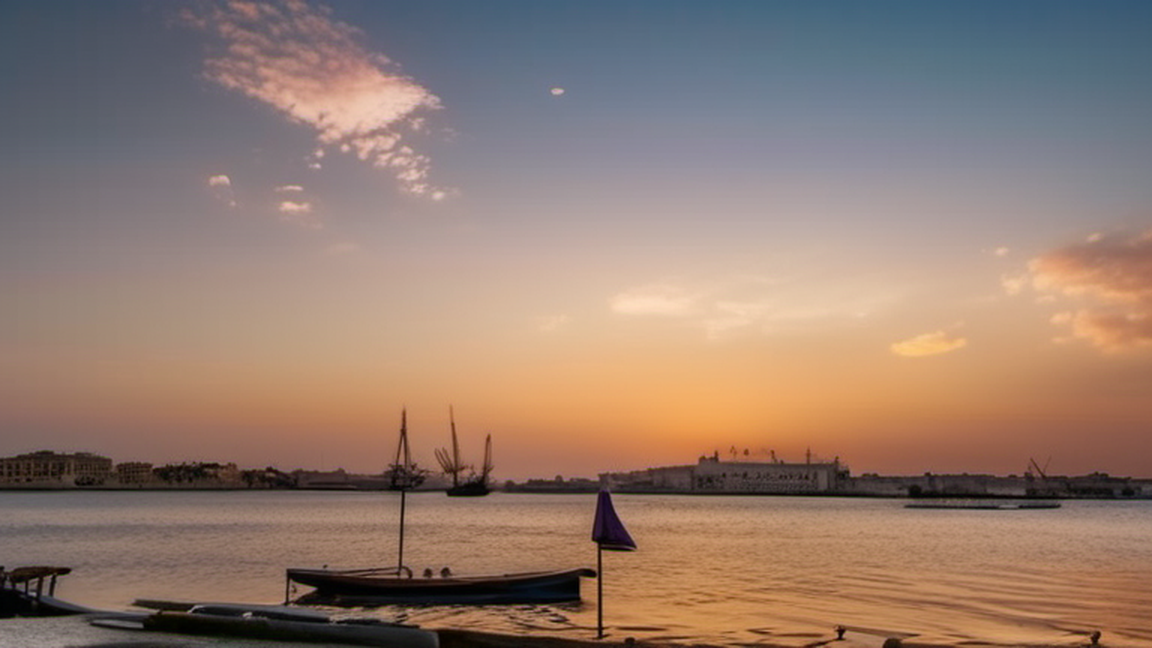
Alexandria (pronounced al-ig-ZAN-dree-uh ; Arabic: الإسكندرية / اسكندرية al-Iskandariyya / Eskendereyya ) is Egypt's second largest city (5.2 million people in 2018), its largest seaport, and the country's window onto t
Alexandria (pronounced al-ig-ZAN-dree-uh ; Arabic: الإسكندرية / اسكندرية al-Iskandariyya / Eskendereyya ) is Egypt's second largest city (5.2 million people in 2018), its largest seaport, and the country's window onto the Mediterranean Sea. The city is a faded shadow of its former glorious cosmopolitan self, but still worth a visit for its many cultural attractions – particularly the new Library of Alexandria – and still-palpable glimpses of its past.
Few cities of the world have a history as rich as that of Alexandria; few cities have witnessed so many historic events and legends. Founded by Alexander the Great (Iskander al-Akbar) in 331 BCE, Alexandria became the capital of Greco-Roman Egypt; its status as a beacon of culture is symbolized by Pharos, the legendary lighthouse.
There had long been a fishing village here, called Rhakotis, but Alexander had greater plans for it. Its strategic value was obvious: it had a great natural harbour, a backing lagoon to prevent land attack, a fertile hinterland, and potential control of trade routes up the Nile and overland to the Red Sea and Arabia. But the approach to the harbour was tricky: the coastline and off-shore islands were low and without landmarks, so sailors could easily take the wrong channel and get wrecked on the shoals. To guide them in, Alexander's successors Ptolemy I & II built a lighthouse on the nearby island of Pharos. It stood just over 100 m tall, so only the Great Pyramids were taller. A bronze mirror atop it reflected sunlight by day, and by night the flames of oil-soaked sheep fleeces. It was one of the Seven Wonders of the Ancient World, and the name of the island "Pharos" came to apply to all subsequent lighthouses, and spawned modern words such as "phares" in French.
A jetty over 1 km long was built to connect Pharos to the mainland, dividing the bay into an eastern and western harbour. Silt and landfill built up along the jetty so it broadened into a peninsula, the present-day district of Anfushi. The lighthouse was badly damaged by earthquakes in 956, 1303 and 1323, then fell into disuse and disrepair. In 1480 Sultan Qaitbey used the ruined stone to build his fortress here. The rest of it was eaten by coastal erosion, and came to lie on the sea-bed. But a combination of ancient descriptions, modern marine archaeology and satellite imaging give us a detailed picture of it.
Alexandria under Ptolemy I & II prospered not just through trading, but as a knowledge economy. They set out to acquire and understand every manuscript they could. Arriving ships were searched, and any manuscripts seized and copied onto papyrus. In the great Library of Alexandria texts were translated, catalogued and studied. Scholars, philosophers and scientists flocked to work on these texts, and to create new material. Just one example of their creative output was the Septuagint, the first Greek translation of Hebrew holy texts that became the Christian Bible Old Testament.
Trade and knowledge made Alexandria cosmopolitan, with the largest Jewish populations and Hellenistic cultures anywhere. It retained its importance, and was capital of Egypt, while power was shifting elsewhere: the rise and decline of Rome, the rise of Byzantium, and growth of Persia. But the city suffered natural disasters (e.g., the tsunami of 365 CE) and a series of wars (particularly against Rome), and the library was destroyed. When the Arabs conquered Egypt in 641 CE they founded a new capital to the south in Fustat, now Cairo. Politically, economically and intellectually, Alexandria was no longer the place to be.
See also: Egypt#Climate
Alexandria has a hot desert climate (BWh), but highly influenced by sea breeze, with sunny hot humid summers and mild moderately wet winters. The daytime can be humid in summer, with summer temperatures averaging 31 °C (88 °F), but evenings are usually cooler and breezy, especially by the Corniche. Winters can get cold, with daytime highs down sometimes to 12 °C (53 °F), with occasional rain and sometimes hail. Humidity is high throughout the year. The best time to visit Alexandria is in spring (March–June) and autumn (September–November). It's at its busiest in summer, when Egyptians flock down to escape the searing heat of Cairo.
Alexandria is a long thin city, pinched between the swampy delta and the sea. Its east-west artery, the Corniche, rolls on for about 30 km. However the advantage to the visitor is that all transport is funnelled along this corridor, so you shouldn't wait more than a minute for a taxi, buses or microbus going your way. The tram line runs parallel a block or two further inland.
At the western tip lies the Citadel of Qaitbey, built near (and from) the ruined ancient lighthouse or Pharos. The Corniche then sweeps around the eastern harbour, with Anfushi the tongue of land behind it, to the central hotel area around Saad Zaghloul; then passes the east end of the harbour at the jetty opposite the new library. Almost all the sights, and the bulk of the accommodation and restaurants, are along this congested 5-6 km strip or nearby. But on and on eastwards rolls the Corniche through rundown beachfront districts of Rushdy, San Stefano and Mandarah. The blingy hotels of Montazah are a bright spot then the tat, burbs and ribbon-development resume, out to Aboukir.
Egyptian Tourist Authority.
Raml Station, Saad Zaghlui Squ, ☏ +20 3 485 1556.
Nuza Airport, ☏ +20 3 4250 526, +20 3 4250 527.
Borg El Arab Airport, ☏ +20 3 4485119.
Marine Passenger Station, ☏ +20 3 4803494.
Misr Railway Station, ☏ +20 3 3925985.
Sidi Gaber Railway Station, ☏ +20 3 4263953.
Alexandria has domestic flights daily from Cairo, Luxor, Hurghada and Sharm el-Sheikh, with Egyptair the main operator. Saudia Airlines fly from Jeddah and the Gulf States, and Turkish Airlines fly from Istanbul. And all of airlines of the country including: Air Cairo Air Arabia Nile Air FlyEgypt and Petroleum air services (PAS).
1 Borg el Arab Airport (HBE IATA). All flights into Alexandria use this airport 45 km southwest of downtown. It's small but modern, ample for the low passenger numbers it now handles. Cafe and clean toilets and that's about all. There is no public transport - a taxi downtown will take 60-90 min, and reckon at least LE400 as they've no competition. (updated Oct 2021)
Cairo (CAI IATA) is the main portal of entry into Egypt and you travel onwards overland. The Cairo-Alex flight only makes sense as a connection with another flight.
Train is the easiest way to travel between central Cairo and Alexandria, with 30 services a day. Best of these are the "Specials", running non-stop and taking 2 hr 40 min; almost as good are the "Express" services taking around 3 hours (usually stopping only in Tanta on the way). These trains are clean and comfortable, air-conditioned, and with snacks available. For foreigners, one-way AC2 tickets cost 35USD and AC1 tickets cost 40USD (+ 1USD if you pay by credit card) (October 2025). The fast trains are sometimes also called Spanish, French or Turbo because of their rolling stock. See "Egypt#get around by train" for how to buy tickets.
Trains from Cairo all depart from Ramses Station. In Alexandria they arrive downtown at 2 Misr station, where taxis and microbuses are waiting, or a 15-min stroll north along Nabi Daniel St brings you onto the Corniche. Nabi Daniel is a street market and closed to traffic, so taxis use the parallel Saad Zaghlool St.
But when your "non-stop" train arrives, and everyone piles out, ask around before following. You may have stopped 3 km east at 3 Sidi Gaber station on Abu Qir St at the top of Mushir Ahmad Ismail St. Only get off here if you're heading for an eastern district such as San Stefano. Otherwise sit tight, and in a couple of minutes the train will rumble on and terminate at Misr Station.
Trains to Alexandria also run from Marsa Matruh and the delta towns. These are slower "ordinary" trains and you buy your ticket at the station. Some trains run directly from Luxor via Cairo, but these too are slow "ordinary" trains, and you're better taking fast trains and changing in Cairo.
Several bus companies offer a bus service into Alexandria at a very low price range: LE100-300 from Cairo. Buses are air-conditioned and come complete with a hostess trolley service. Companies include Go Bus, Golden Arrow, West Delta, Super Jet, Pullman and El Gouna. Operating times vary from one company to another, but there are trips between Cairo and Alexandria virtually every hour from early morning until midnight.
While the buses are perfectly comfortable, the duration of your journey from Cairo to Alexandria (and vice versa) will depend on your pick-up/drop-off point. Most buses start out from the Almaza Bus Station in Heliopolis and stop by Midan Tahrir and Giza before finally setting out to Alexandria; if you join from Heliopolis expect a 4-5 hour trip rather than the average 2-3.
The main bus station is 4 Moharam Bek but there are a number of bus pick-up/drop-off points inside Alexandria. These are usually either at Gedid station (except El Gouna, which uses Sidi Gaber station) which is a bit far from the city of Alexandria. Don't take a taxi with anyone that approaches you right outside of the bus. Walk outside the station and catch a taxi there if you must. There is also a bus from Gedid to Sidi Gaber, and from Sidi Gaber most parts of the city are accessible by minibus or tram if you are looking to save money.
You can take a minibus from Cairo for about LE140 (October 2025). These wait just to the west of Ramsis Station in Cairo; look for the white vans and listen for shouts of “Alexandria!” to find the right vehicle. The minibuses will leave when full. While this is your cheapest option from most departure points, know that the minibuses can be hot and cramped, and your driver will likely drive like a mad person, so take them at your own risk.
There are two roads between Cairo and Alexandria, both taking 3 hours. The usual cautions for driving in Egypt apply; see Egypt#By car.
Agriculture Road has a speed limit of 90 km/hr for private cars and has 4 lanes in each direction. This is the main road, so it can get a little crowded. It also gives access to Damnhour and Tanta.
Desert Road has a speed limit of 100 km/hr for private cars and has 4 lanes in each direction. True to the name, this crosses the desert and is less crowded and faster. There are cafes every few km.
Alex remains a major sea port, but all international passenger services are axed because of this region's turmoil and loss of tourist traffic. It may still be possible to arrange freighter travel, but with so many migrants trying to reach Europe from the Middle East by sea in the 21st century, they will be very wary about taking you. So your best bet may be to call in a favour from a friend with a gin-palace private yacht.
The Med cruise liners seldom visit here nowadays. Nile cruises still call at Alexandria, Cairo and the ancient Egyptian sites up to Luxor and Aswan. But all of these are package tourist itineraries, and not available to book as point-to-point ferries.
Alexandria is a long, long city but there's good transport along the Corniche. It also extends several km inland past the lagoons, but you've no reason to go that way.
Alexandria's yellow and black taxis are a good way to travel in the city, and a cheap one as well. Be careful though: taxis will uniformly refuse to use meters (the rates haven't been adjusted in years) and drivers love to take advantage of non-Alexandrians (both foreign and Egyptian), so it's best to agree on the fare before you get in. If you are on a day trip to Alexandria, hire a taxi outside the railway station for the day.
To get into a taxi, wave at the driver and yell the name of your destination. If the driver agrees they would park at the side of the road as soon as possible. Some taxis will stop to pick you up even if they already have a passenger, but such offers are best refused. Furthermore, always check back once you get out of the taxi, there is no number to call if you lose anything of value, and nearly no chances of having it returned.
Careem and Uber operate in Alexandria. Careem requires an Egyptian phone number.
Alexandria has a creaky, slow but very cheap tram system that dates back to 1860 and looks the part — it's the oldest one still running in Africa. The route map is remarkably confusing and changes on a regular basis, but one factor stays constant: the network is split into the interurban Ramleh Lines (Tram el-Raml), which use blue-and-cream trams and run across the city a few blocks back from the sea towards the eastern suburbs, and the City Lines (Tram el-Madina), which use bright yellow trams and run west and south of central Alex. The two meet at Raml Station (محطة الرمل Mahattat el-Raml), right at the heart of Alex. In general, the Ramleh Lines are relatively quick despite their age, as they have substantial stretches of dedicated and uninterrupted right-of-way; the City Lines, however, frequently get stuck in traffic.
For both lines, the flat fare is LE1, bought on board. Note that the first car (out of three) in the blue trams is reserved for women only. The lines run until 1AM, every 10-30 min or so.
Probably the most useful service for tourists is yellow tram #25, which runs from Raml Station to Ras el-Tin and Fort Qait Bey. You can also hop on any blue tram west from Sidr Gabr bus/railway station to get to Raml, but not all eastbound trams stop there.
There are a variety of local bus services which have improved significantly in the past few years, but they are rather confusing for those who haven't lived in Alexandria for a while. Apart from city buses, you will also find "mini-buses", which work on hop-and-go basis. They are easily recognizable 14-person buses, which will stop when you wave and stop where you need to get off. The drivers rarely speak English, so make sure you know the Arabic name of your destination or that you already know where to stop. The routes are usually along the main streets, with drivers following well-known routes. The routes are written in Arabic on the sides of the vehicle, but even if you speak Arabic this may not be helpful; the drivers sometimes change routes without changing their signage. However, if you remain in Alexandria for some time you may learn the somewhat elaborate system of hand signals the locals have devised to indicate the desired destination.
1 Citadel of Qaitbay, Ras el-Tin (yellow tram or microbus to Anfushi), ☏ +20 3-4809144. Daily 9AM-8PM. Set on the tip of the Anfushi/Pharos promontory, looking back over the eastern harbour and downtown Corniche. It was built by Mameluke Sultan Abdul-Nasser Qa'it Bay in 1477 CE, by re-cycling the stone of the ruined lighthouse. It tried (with limited success) to defend the city against invaders, from crusaders to Napoleon, and was in military use as late as 1882, when the British bombarded it. There are two entrances and admissions. West, facing your approach along the Harbour mall, is the ground-floor Maritime Museum, which is of little interest. (Its collection continues in a building on the mall.) Come round to the south flank facing the Corniche for the main entrance into the Citadel. There's a fortified courtyard, then a 4-storey bastion. Citadel LE150 for foreigners and LE60 for Egyptians and Arabs. (updated Oct 2024)
2 Mostafa Kamel Necropolis (Mustafa Kamel Cemetery/Tombs). The cemetery includes four tombs dating from the 2nd century BC, all of which are in excellent condition and beautifully decorated. The cemetery bears the name of Mostafa Kamel, one of 20th century Egyptian politics' greatest legends. It was he who pronounced the famous phrase: "If I were not born an Egyptian, I would like to be an Egyptian." As of October 2025, the site is closed for renovations. (updated Oct 2025)
3 Catacombs of Kom el Shoqafa, Carmouz district, south of Anfushi. Daily 9AM-4PM. These catacombs were probably carved out to be a single wealthy family's mausoleum, and later expanded to take other elite funerals, from the 2nd to 4th century CE. The name "Kom el-Shoqafa" means "mound of shards" as people brought offerings to the dead here in earthenware bowls, then smashed the empties before returning home. They are composed of a ground level construction that probably served as a funerary chapel, a deep spiral stairway and three underground levels (the lowest now flooded by groundwater) for the funeral rituals and entombment. The place was discovered in 1900 when the ground gave way under a donkey. Built as a separate (and older) catacomb, the Hall of Caracalla became linked when energetic tomb-robbers tunnelled through. It seems to have been a burial place for the Roman emperor's horses, as horse bones predominate. No, not the donkey's. The catacombs are interesting for their plan and for their decoration, as the last of the pharonic burials transitioned into Grecian and Roman styles. But if you've seen the richly decorated burial chambers around Luxor, this one will suffer by comparison. LE150 for foreigners and LE30 for Egyptians. (updated Oct 2024)
10 Alexandria National Museum, 110 Tariq el-Horreyya in Latin quarter (in Latin Quarter 10 min walk east off Saad Zaghloul Street), ☏ +20 3-4835519, +20 3-4838035. Daily 9AM-4:30PM. Small but absorbing, well-presented museum with more than 1800 archaeological pieces. The basement is devoted to Prehistoric and Pharonic times, first floor to the Graeco-Roman period, second floor to the Coptic and Islamic era. Especially interesting are artefacts raised during underwater excavations: there's a sense of a new window opening on history. LE100, students LE50. (updated Jan 2019)
11 Graeco-Roman Museum, Latin quarter, graecoromanmuseum@mota.gov.eg. Daily 9AM-5PM. A history museum with a vast collection mostly dating from the 3rd century BC to the 3rd century CE, spanning the Ptolemaic and Roman periods. The square in front of it is a popular place for taking marriage pictures and as a hang-out for young people in the evenings. LE150 for foreigners and LE40 for Arabs and Egyptians. (updated Oct 2024)
12 Museum of Fine Arts, Moharram Bey, ☏ +20 3-3936616. Mostly modern and Orientalist paintings (updated Jan 2018)
13 Royal Jewelry Museum, Zizenia district, ☏ +20 3-5828348. Royal jewelry from the Egyptian monarchy of 1805 to 1952 displayed in the former palace of Princess Fatma Al-Zahra'. (updated Jan 2018)
14 Cavafy Museum. Museum in the house of the poet Cavafy (1863–1933) where he spent the last 25 years of his life. Closed as of 02/2024. (updated Apr 2022)
15 Arabic Calligraphy Museum. The museum was inaugurated in 2015. On two levels with three rooms each the museum presents manuscripts, but also paintings, ceramics, sculptures and miniatures with calligraphic scripts. (updated Apr 2022)
16 El-Mursi Abul-Abbas Mosque, Anfoushi. Built in 1775 by Algerians, the mosque was built over the tomb of the famous 13th century Sufi saint, Ahmed Abu al-Abbas al-Mursi. The walls of the mosque are dressed in artificial stone, while the minaret, on the south side, stands at 73 m.
17 Attarine Mosque. Built as a church dedicated to the Saint Athanasius in 370 AD and was converted into a mosque following the Muslim conquest of Egypt. (updated Jan 2022)
18 Eliyahu Hanavi Synagogue (معبد إلياهو هانبي اليهودي). There has been a synagogue at this site since 1348, the current Neo-Gothic building has been standing since 1850. The interior can be visited on some weekdays in the morning. (updated May 2024)
19 Menasce Synagogue (كنيس منشا). Built in 1872. (updated Jul 2025)
20 Bibliotheca Alexandrina (Alexandrina), Shatby / Silsia (enter from the small street facing the university), ☏ +20 3-4839999. Su-Th 9:30AM-5PM, Sa 10AM-2PM. A huge modern library and research centre constructed on the site of the ancient Library of Alexandria. Wonderful display of ancient texts of the Middle East. Includes four museum areas, exhibition space, and a planetarium. Regular tours in English and other languages. The Antiquities Museum costs (LE100 extra and is particularly well worth visiting if you're into artefacts from the Pharonic to the Islamic period. LE150 for foreigners and LE10 for Egyptians - buy tickets from the office on Dr. Abd Al Hamid Dayed St. facing the university. (updated Oct 2024)
Sunbathe at the Maa'moura Beach or Montazah Beach. During summer the beaches are packed with Egyptian tourists, parasols and plastic chairs and it will cost to get in. At this time the sand and water may have some throwaway plastic floating around.
1 Double decker bus ride along the Corniche, Al-Anfushi Bus Station (at the corner of Al Geish Road and Al Captain Abd Al Qader Koura Street). The Corniche stretches from the Citadel in the west about 30 km along the seaside to the east. Its core is a 15 km promenade along the bay dotted with restaurants, markets and historic sights. Take one of the red double decker buses that start from Al-Anfushi Bus station and enjoy the ride along the promenade. LE25. (updated Oct 2024)
2 Montazah Royal Gardens. Though the gardens are a part of the more than three hundred and fifty acre grounds (61 ha) of the large royal home known as the Muntazah Palace, the Montazah Royal Gardens take up more than half of the property. Montazah Royal Gardens are situated along the shore as well, which means access to the lovely beaches and warm Mediterranean Sea waters nearby. The Montazah Royal Gardens are a bit unique where city parks and public spaces are concerned as they are rigorously landscaped, and well-stocked with benches and wading or swimming pools that are open for the public to enjoy. (updated Feb 2020)
Also in Montazah, Montazah Water Sports, provide various water sports, from waterskiing to wake-boarding, even Banana Boat and Donuts.
Hire a boat and go cruising at Ras el-Tin.
Have a long walk by the beautiful Corniche by the Mediterranean Sea.
3 Renaissance Royal Cinema, 22E Al Bakht, Al Mesallah Sharq. This movie theater in Alexandria is owned by the same people who run the Renaissance theaters in Cairo. There are three screens, with surround sound and all options. Midnight shows are daily. (updated Feb 2020)
Cineplex, 14th of May Bridge Rd (by Hilton at Green Plaza, Smouha, see Sleep). 10 screens, 3D movies available. Tickets LE25. (updated Oct 2021)
4 Amir. (updated Apr 2022)
Football: Alexandria has two soccer teams in the Premier League, Egypt's top tier. Smouha SC and Al Ittihad are both based at Alexandria Stadium (capacity 20,000), 500 m east of the railway station. Haras El Hodoud are in the Second Division, playing in the western suburb of El Max. Pharco in the Premier League play at Borg el Arab (aka El-Geish) Stadium 25 km west towards the airport.
5 Alexandria Sporting Club (right in the heart of Alexandria). Built in 1898 and used during the British occupation, the Alexandria Sporting Club is one of the oldest sporting clubs in Egypt. Today, the golf course stands on 97 feddans, 97 percent of which constitutes the total club area. It is a flat course with tricky bunkers and can be played by beginners as well as experts. The club also features four restaurants, the Club House Restaurant being the most luxurious, and the Happy Land restaurant serving the children's playground. It also offers party catering.
6 Smouha Sporting Club, Smouha. International Hockey Stadium, many swimming pools, a number of soccer fields, two running tracks. Members and guests only.
Scuba dive with Alexandra Dive, based on the Corniche. It's historic wreck-diving, year-round, interesting but distinctly cold and gloomy compared to the Red Sea. The standard one-day, two-dive trip takes you to the "Palace of Cleopatra" immersed off Antirodos Island, and around the old harbour and lighthouse remnants off Pharos point. They also venture out to wrecks from ancient Greece, the Napoleonic era, and the Great War. They offer training courses, but beginners will do much better to train in the Red Sea. (They run trips there but you're probably going anyway.) All these trips depend not only on weather, but on having viable diver numbers.
Go swimming in the Country Club or Lagoon Resort, in front of Carrefour.
1 Goethe-Institut, ☏ +20 3 4879870, Info-Alexandria@goethe.de. (updated Apr 2022)
2 Institut Français d’Egypte à Alexandrie. Cultural centre with a media center in a 19th-century palace. Temporary art exhibitions are displayed in the hall at the first floor. The institute offers French language courses. In the institute's courtyard, the French café Le Boudoir is situated. (updated Apr 2022)
3 Instituto Cervantes Alexandria, cenalej@cervantes.es.
4 Jesuit Cultural Center of Alexandria, info@jesuitalex.org. Cultural centre founded in 1953. It offers cultural and educational events, concerts, theatre performances, dance and more. Its courtyard contains a sitting area with a small kiosk. (updated Apr 2022)
5 Russian Cultural Center in Alexandria, rcnk-alexandria@list.ru.
6 Ahlan Egypt - Alexandria, 8, El-Ghorfa El-Togareya Street (next to the French Consulate close to Mansheya Square and one street behind the Corniche), alexandria@ahlan-egypt.com. Language school with native teachers for Modern Standard Arabic and Egyptian Colloquial Arabic teaching since 2005. Because of the COVID-19 pandemic and fewer students than before the pandemic teaching mainly consists of one-to-one lessons as of April 2022. The atmosquere is familial. Quite some information on the website is outdated. Contact is very responsive though. (updated Apr 2022)
7 TAFL Center, tafl@alexu.edu.eg. Center for Teaching Modern Standard Arabic and Egyptian Colloquial Arabic of the University of Alexandria with bigger number of students from a lot of foreign universities and higher prices. Apart from the fixed programmes one-to-one lessons can probably be arranged. Online information is scarce, mainly on their Facebook page. (updated Apr 2022)
Alexandria has a tiny industrial section, mainly centered around the natural gas industry. A few expatriates work in this section. This section is increasing now as many new factories are built in Borg el Arab.
Other than that, there are some but not many international schools that employ expatriate teachers. Generally they pay less than the much more lucrative educational section in Cairo.
Alexandria has got quite a large number of language schools. You can find girls-only, boys-only and mixed schools. Also international certificates -like the IGCSE or the American SAT I and SAT II- could be completed in most of these schools. Moreover, study is available in English, French and also German.
Standard shop hours are daily until 10PM or later, but in summer they take a siesta from noon to 4PM. Ramadan hours also vary.
Typically, vendors of a particular product cluster along a street.
Nabi Daniel, the street between the railway station and Corniche, has many booksellers with titles in several languages. Prices negotiable. Further inland has vendors of electrical components (e.g. plug adapters) that may be useful to a traveller. "Nabi" means prophet so the street refers to the Biblical figure.
Bibliotheca Alexandrina Bookshop (in the new library). Daily 9AM to 7PM. Good for general and tourist literature in different languages.
1 Deeb Mall, 1 Syria St, Roushdy. 10:30AM-10:30PM. Mid-range shopping mall, mostly clothing but with IT section. Plus cinema and food court. (updated Oct 2021)
Green Plaza (by Hilton Hotel). 9AM-1AM. Big modern open-air mall with many shops, restaurants, cinema and a court for video games and bowling. (updated Oct 2021)
2 Maamoura Plaza Mall, Maamoura. 24 hours. Small mall in the tract east of Montazah, has some restaurants. (updated Oct 2021)
San Stefano Grand Plaza Mall. By the Four Seasons Hotel, see #Sleep. Large mall with upscale shopping, 10 cinemas and large food court.
3 Zahran Mall, Smouha. Daily 10AM-11PM. Popular mall with cinema and coffee shops. (updated Oct 2021)
4 Carrefour City Center, Gate 4 - 1st Alexandria Cairo Desert Road. Daily 10AM-midnight. If this is "city centre", you'll need camels to reach "edge of town". It's a big mall with huge hypermarket, coffee shops and cinemas. Take a taxi to get here. (updated Oct 2021)
Seafood restaurants line the waterfront.
Alexandrian ice cream is similar to the typical soft-serve ice cream, but it is described as being a little bit 'stretchy'. It is available in numerous flavors, and according to the locals, this type of ice cream is only made in Alexandria and Greece. Try it at Bahary near Qait Bey, where popular shops include Makram, El-Sheikh Wafik, Azza and El Se'eedy.
Corn on the cob (dorra mashwey) is sold by street vendors along the Corniche.
Koshary, the Egyptian national dish, is a mixture of noodles, rice, lentil and more noodles topped with a tomato sauce. Koshary topped with kibda Iskandarani — Alexandria-style fried liver with cumin, onion, and hot peppers — is a local tradition.
1 Tawn Coffe Shop. Yes, "Coffe". Great place on the Corniche, with a decent pizza and chairs in front of the café for "enjoying" the traffic and view. (updated Jan 2018)
2 Kushari Bondok, Smouha (beside Fathalla supermarket). Well known kushari joint, value for money. (updated Oct 2021)
3 Meto, 273 Gamal Abdel Nasser St, ☏ +20 3 550 7774. Daily 9AM-midnight. Fast food: pizza and its Arabic equivalent fateer. (updated Oct 2021)
4 Asmak Shabaan, El Hana Tower, Al Max, Corniche, ☏ +20 120 424 2551. 24 hrs. Great place for seafood. (updated Oct 2021)
5 Foul Mohamed Ahmed, 17 Shakour Street (off Saad Zaghloul Street, opposite Metropole Hotel). Legendary joint for fuul and falafel, clean, friendly and inexpensive. According to a personal memory by an Alexandrian lady it was in Jewish ownership and called Binyamin before the Revolution of 1952. (updated Mar 2022)
6 Mostafa Gad, Al Iskandar Al Akbar Street (just opposite the Raml Station building). Takeaway only branch of the Egyptian cuisine fast food chain. (updated Mar 2022)
7 Mostafa Gad, Mahmoud Azmy Tousoun Street (close to the Bank of Egypt building). Takeaway and eat-in branch of the Egyptian cuisine fast food chain. (updated Mar 2022)
8 Mostafa Gad, El-Horeya Road (opposite Cinema Amir). Takeaway only branch of the Egyptian cuisine fast food chain. (updated Mar 2022)
9 Fayrouz. Fast food restaurant with Levantine and Egyptian plates. Slightly more expensive than Gad. (updated Apr 2022)
Mid-priced by Egyptian standards, Western fast-food chains like Pizza Hut, McDonald's and KFC can all be found in the city's larger malls, but there are more interesting options as well.
10 Abou Shakra, El Geish 424 (Smouha Green Plaza), ☏ +20 3 426 1777. Daily 10AM-midnight. Popular Egyptian chain for shwarms, similar grills and set meals of kebab, kofta, fries and salad. (updated Oct 2021)
11 Hosny, Gamal Abd El-Nasser St (El Mandara), ☏ +20 3 550 6655. 24 hr. Good fresh Middle Eastern food. (updated Oct 2021)
12 Patisserie Délices, 46 Saad Zaghloul. It is now part of La Veranda, see below. (updated Mar 2022)
13 L’Apéro Bistrot, 30 Al Naby Daniel Street, ☏ +20-122-507-0555, bistrotapero@gmail.com. Café and restaurant of the French Institute (Institut français) serving alcohol. There is a larger quiet outdoor seating area and a small indoor area. In May 2022, the restaurant reopened under a new name after a change of operator and renovations. (updated Apr 2024)
14 Trianon, 54 Saad Zaghloul Street, info@trianon1905.com. Historic, posh cafe and restaurant in the heart of Alexandria dating back to 1905, this is where the creme de la creme of Alexandrian society like singer Om Kolthoum and Cavafy used to hang around. The glory days are long over, but Trianon remains famous for what is said to be the country's best om ali, a rich Egyptian take on bread pudding. (updated Mar 2022)
15 Chicken Tikka (Tikka Grill), 11, 26th of July St., Bahary (Eastern Port, beside Diving Club), ☏ +20 3 5832470. Daily 11AM-2AM. Delicious Egyptian food, with views of the harbour and Fort Qait Bey. Try the shish kebab and the wara' el enab (stuffed vine leaves). There is a second restaurant of this chain in 426 El-Gaish Rd., Luran. (updated Jan 2022)
16 Balbaa, 4 Al Manteka Al Shamalea, Mustafa Kamel WA Bolkli, Sidi Gaber (Sidi Bishr, corner with El Gaish). Daily 10AM-4PM. Popular place for Egyptian meat and seafood. Their outlet at Carrefour City Center has closed. (updated Oct 2021)
17 Elite. (updated Apr 2022)
Many of Alexandria's high-end restaurants are within its hotels.
18 Athineos, 21 Saad Zaghloul Sq (on the Corniche), ☏ +20 110 285 5557. 24 hrs. The "Mermaid of Alexandria" is a local legend frequented by both Durrell and Cavafy, but alas, it has fallen far since its glory days. The views are still amazing, and the Greek motifs in the gilded friezes and stenciled frescoes give some character, but the food is, despite the Greek names on the menu, almost entirely Arabized: order souvlaki and you'll get kebab. (updated Oct 2021)
Byblos is the swish Middle Eastern restaurant within Four Seasons Hotel, open daily 2 PM to midnight. Stefano's their Italian restaurant is closed in 2021.
19 Chez Gaby au Ritrovo, 22 El Horreya Rd (Near Raml Station), ☏ +20 3 487 4404. Tu-Su 2PM-midnight. Possibly the best Italian restaurant in town, serving pizza and pasta since 1979. (updated Oct 2021)
20 Ibn El-Balad Gleem, Mustafa Kamel (behind El-Salam Theatre), ☏ +20 122 855 5909. 24 hours. Two-storey restaurant, now part of THM chain. First floor has grilled meats featuring their famous Ibn al-Balad fattah. The second floor serves seafood. Both get great scores for food, service and ambiance. (updated Oct 2021)
21 La Veranda, 46 Saad Zaghloul. (inside Patisserie Delices), ☏ +20 3-4861432. Very central downtown, near the Metropole, Cecil and Sofitel hotels. Within, most of the floor space is the cafe-patisserie Jardin Delices. About a quarter is La Veranda restaurant, with good European/East Med cuisine. Serves alcohol. Atmospheric with the old posters, but nowadays not a spy or dilapidated duchess to be found. (updated Jan 2018)
22 Ole Cafe, Kafr Abdou Street, Roushdy. Daily 8AM-10PM. A reasonably priced restaurant with Spanish cuisine. Try the Beef Madrid. (updated Oct 2021)
23 Ottimo, Kafr Abdou 3. Daily 9AM - 1AM. Nice restaurant with veranda. (updated Oct 2021)
24 White and Blue restaurant (Greek Club), on Harbour Mall near Qaitbey Fortress. The Greek Club (ENOA: Ellenika Nautikos Olimnos Alexandria) is a private club but with two public restaurants, and something of an Alex institution. Ride the elevator up to Olive Island Restaurant on the third floor: the place is dark and piled high with old furniture. So ride back down to the second floor which has White and Blue Restaurant out on the terrace, overlooking the eastern harbour. A few civilities like "Kalispera sas" go a long way as they clearly don't speak Greek themselves. Traditional East Med specialities such as kebabs, stews, and lots of fish. Clean, and inexpensive by western standards. (updated Jan 2018)
Traditional coffee shops or ahwa serve coffee, tea and shisha water pipes. Play a little backgammon or dominoes and watch the world pass by. They remain a male bastion.
Brazilian Coffee Stores are a chain with several city outlets. Western chains such as Starbucks or Costa have only a handful of outlets. The chain's best known branch is the one in Saad Zaghloul Street:
1 Brazilian Coffee Stores, 44 Saad Zaghloul St., Raml Station (next to Délices Patisserie/La Veranda). Daily 7AM-11PM.
2 Clay Cafe, 156 Omar Lotfy St (near Small Sporting Tram station). Daily 11AM-midnight. Coffee and stuff are only just okay for the price, you come for the laidback atmosphere and the wi-fi. (updated Oct 2021)
3 Trianon 1905, 52 Saad Zaghlul Square (Metropole Hotel building, see #Sleep), ☏ +20 128 583 9731. 8AM-midnight. Posh cafe and dessert restaurant, you're paying for the ambiance. (updated Oct 2021)
4 Cafe de la Paix, 202 El Geish, Raml Station. 24 hours. Relaxing place on the waterfront. (updated Oct 2021)
5 Club21, 5 Mo'askar Elroumany St, Roushdy, ☏ +20 3 523 2929. Daily 9AM to 1AM. Friendly inexpensive place for food and drink, plus shisha in the garden. (updated Oct 2021)
6 Le Boudoir, 30 Al Naby Daniel Street, Al Attarin East, ☏ +20 3 4974151, boudoir.alexandria@gmail.com. Cafe and small restaurant of the Institut français. Large and calm outdoor seating area, small indoor seating area. Entry via the security check of the Institut français. (updated Jan 2022)
7 Lail. 10AM-4AM. Spacious cafe and restaurant on a rooftop offering shishas. (updated Apr 2022)
Time was, way back, when a maze of bars and nightclubs filled the city. They're now mostly confined to the hotels, with few free-standing bars. Still, enough remain for visitors to get squiffy recalling their days on General Auchinleck's staff, eyes swivelling independently upwards to recreate the effect of an old ceiling fan.
8 Spitfire Bar, 7 Old Borsa Street, Mansheya (off Saad Zaghloul Street before Cherry Maryski Hotel). Daily 4PM-midnight. Cheerful bar with food a short block off the main downtown street. "Atmospheric", meaning the building looks derelict, but persevere. (updated Oct 2021)
9 Mermaid Bar, Mahatat el Raml (near Athineos). Little and nice bar with good view to the sea. Prices on beer are moderate; hard liquor is more expensive. At night the upper floor has a dance floor featuring Western and Arabic music. The bar is frequented by foreign (particularly American) Arabic language students at the Teaching Arabic as a Foreign Language (TAFL) Center at Alexandria University. (updated Feb 2020)
10 Sheikh Ali, Adib Bek Ishak Street off Sa'ad Zaghloul. Better known among travellers as the Cap d'Or and one of Alexandria's oldest bars. (updated Feb 2020)
Drinkie's is a chain of liquor stores with a dozen city branches. The most central branch on Saad Zaghloul Square is open daily noon-2AM.
San Giovanni Club within that hotel has live music, singers and oriental dancers until late.
Accommodation in Alexandria has quite a different feel due to the old buildings with sometimes nice colonial style lobbies. There is a good selection of hotels in all price ranges.
For stays of a month or more, consider renting. Apartments are easy to come by, in a range of prices (LE180-1000 per week) and states of repair. Landlords/ladies tend to live in the same blocks and will be willing to haggle the rates. It's definitely worth visiting an apartment before placing any money down, preferably in late afternoon so you see how well the lighting works and the worst of any insect problems. (It's very unlikely to find any accommodation near the coast that's completely roach-free!)
It is mostly not necessary to reserve ahead online, this is in general more expensive. Just check around where many hotels are—there are at least 7 or so near Triomphe Hotel, where you can walk in and ask for a price. One will definitely have the required budget and standard.
1 Ithaka Hostel. 4-dorm hostel just at the sea front with very friendly staff. Not the quietest place. There used to be just one shower for the whole hostel. The installation of a second is planned for December 2021. Shared kitchen and spacious common area, smoking permitted in one half of it. Warm water. Lockable drawers under the beds, locks are provided. Sockets at the beds, but no lamps. Wi-Fi isn't very stable. 24/7 reception, hostel is in the 2nd floor. LE230 without and LE250 with sea view and tiny balcony in a dorm. LE100 deposit are returned upon checkout. (updated Dec 2021)
2 Alexandria Youth Hostel, 13 Sharia Port Said (1 km east of the Bibliotheca), ☏ +20 3 5974559. A decent budget option and close to the sea and Bibliotheca Alexandrina. LE82 in 4-bed dorm and LE56 in a 8-bed dorm, including breakfast. (updated Dec 2020)
3 Triomphe Hotel, 26 El Ghorfa El Togaria Street, ☏ +20 34807585. Check-in: noon, check-out: 11:30AM. Decent choice with impressive (smoking area) lobby and nice staircase, elevator also available. The rooms are clean. The bathroom is clean and has warm water. WiFi is free. Single from LE150. (updated Jan 2018)
4 Normandy Hotel, 8 Gamal el-Din Yassen (near Raml Station), ☏ +20 3-4806830, elrume4ever5@hotmail.com. The Normandy hotel is good value for money, but a little run down. It is a one-floor hotel on the Corniche, with unbeatable views of the city's Eastern Harbor. It is the building behind the famous Cecil Hotel, on the fourth floor. The rooms are well-appointed, large and clean, but spare. The bathrooms are down the hall, and also clean. Staff are very friendly, helpful, and honest. The staff speak both English and Arabic, with limited knowledge of a few other random languages. Single from LE100. (updated Jan 2018)
Welcome House are basic apartments within the same block as Normandy Hotel.
5 Union Hotel. On the fifth floor right at the Corniche. Great views from the lobby. The rooms are just ok, but the bathroom however is new and comfortable. If this is full, try Triomphe, or vice-versa. Single from LE150. (updated Jan 2018)
6 Nile Excelsior Hotel, 16 Borsa Kadema Street, Manshyia, ☏ +20 3 480 0799. Cheap downtown hotel, cleaning erratic but value for what you're paying. (updated Oct 2021)
9 Holiday Manshya Hotel, 6 Ourabi Sq, ☏ +20 3 4801559. A no-frills two-star hotel with private bathrooms and hot water, popular with overland trucks setting off down into the heart of Africa. Not far from the shore and within walking distance from the center of town. Watch out for bedbugs. It wasn't open in 2021. (updated Oct 2021)
10 Hotel Delta, 14 Champollion Street, Mazarita (corner of Omar Lotfy), ☏ +20 3 486 5188, info@hoteldeltaalex.com. Modern concrete block with 63 basic rooms, some overlooking the sea. Aircon, cable TV. Not far from the Alexandria Library. B&B double LE1800. (updated Oct 2021)
11 San Giovanni Hotel, 205 El Gaish Rd (at Stanley Bridge), ☏ +20 3 546 7774. Old-style hotel with 32 rooms and the traditional Egyptian reek of cigarette smoke. Looks onto the beach restaurant strip. (updated Oct 2021)
Most of Alexandria's top-end hotels are along the coast to the east, several km from the historic city centre.
12 Four Seasons San Stefano, 399 El Geish Road, ☏ +20 3 581 8000, fax: +20 3 581 8080. Upscale resort hotel scores highly for comfort and service. With private beach, the public Med beaches are filthy. B&B double LE5000. (updated Oct 2021)
13 Helnan Palestine, Montezah Park, El Saa Square, ☏ +20 3 547 3500, alexandria@helnan.com. Boxy modern place facing Montaza Royal Palace, comfort, cleanliness and internet erratic. B&B double LE5000. (updated Oct 2021)
14 Hilton Alexandria Green Plaza, 14th of May Bridge Road (within Green Plaza mall), ☏ +20 3 420 9120, fax: +20 3 420 9140. Decent mid- to upmarket hotel, clean and well-run. B&B double LE1500. (updated Oct 2021)
15 Hilton Alexandria Corniche. This is their other city offering. "Hilton Kings Ranch" is away out towards Borg El Arab Airport. (updated Oct 2021)
16 Le Metropole, 52 Saad Zaghloul St (near el-Raml station), ☏ +20 3 486 1465. Opened in 1902, this is one of Alexandria's two grand old hotels (the Cecil is the other). It has been partly renovated, keeping the turn-of-the-century style. It's on Alexandria's main street, handy for sightseeing but lower floor rooms (especially at the back) can be noisy. The food is nothing special but the views from the rooftop restaurant make it special. B&B double LE1500. (updated Oct 2021)
17 Sheraton Montazah Hotel, Corniche Road, ☏ +20 3 548 0550. It's at the far east end of the Corniche. Small, shabby and in need of renovation and a good clean. The beach (across a very busy road) is grubby. B&B double LE1800. (updated Oct 2021)
18 Steigenberger Cecil Hotel, 16 Saad Zagloul Square, ☏ +20 3 487 7173. Alexandria's other grand old hotel, many of whose rooms are named after famous guests like Agatha Christie and Winston Churchill. Great central location, clean and comfy, helpful staff. The old wire-cage lift conjures period charm but it's basically a modern hotel, though some furnishings (e.g. bathroom) are kinda tired. Good sound-proofing, which you'll appreciate given the swirling Corniche traffic and many wedding parties held here. Decent Jardin restaurant for breakfast but the Chinese restaurant has closed. Service sometimes slow. B&B double LE2700. (updated Oct 2021)
19 Radisson Blu Hotel Alexandria, Mehwar El Taameer Northern Coast Road km 23, Alex West, ☏ +20 3 589 6000, fax: +20 3 589 6020. The km 23 in the address indicates how far out this is, in the part-built, part abandoned Alex West district. Visitors have enjoyed the clean spacious rooms (with a/c) and away-from-the-city feel, but there's some construction noise. B&B double LE2000. (updated Oct 2021)
Although crime is rarely violent, beware of pickpockets and don't flash your valuables or wear a bum bag or fanny pack. Street kids, taxi drivers, and others may harass tourists. They will usually desist after a stern "La!" or two. Or you can say "la shukran!" (no thanks) or "emshi" (go!).
Alexandria is a conservative city, so women should cover their shoulders, midriffs, cleavage and legs. Even still, women can expect to be heckled or harassed in the street, especially if walking alone. The best response is to ignore the offender and pretend you don't hear anything. Cover your head when entering places of worship.
Emergency number: 123
Police number: 122
Fire HQ number: 180
Military Police hotline: 16039 or 19039
Central Ambulance, Kom El Dekka (opposite Alexandria Station), ☏ +20 3-4922257.
8 El Moassa Hospital, El Horreya Rd., El Hadara, ☏ +20 3-4212885, +20 3-4212886, +20 3-4212887, +20 3-4212888.
El Shatby Hospital, Dr. Hassan Sobhy St., El Shatby, ☏ +20 3-4871586.
Medical Research Institute, El Horreya Rd. (beside Gamal Abdel Nasser Hospital), ☏ +20 3-4215455, +20 3-4212373.
Bacos Ambulance, Mehatet El Souk St., Bacos, ☏ +20 3-5703454.
Poison Center Main University Hospital, ☏ +20 3 4862244.
Many consulates have closed and centralized in Cairo: this includes the American, Italian, Irish, Chinese and Greek.
9 France, 2 Ahmed Ouraby, ☏ +20 3 484 7950. Su-Th 9:30AM-4PM. (updated Oct 2021)
UK, Abu an Nawatir, ☏ +20 3 546 7001. (updated Oct 2021)
Alexandria and the airport have 5G from all Egyptian carriers.
Abu Mena is a Christian pilgrimage site 45 km south of Alexandria, inscribed on the UNESCO World Heritage list.
El Alamein is a small town on the coast 120 km west of Alexandria. In 1942 the Axis forces under Rommel had swept this far across Libya towards Cairo and Suez. They were halted in June 1942 by Allied forces under Auchinleck, and sent retreating by Montgomery in November. The town has memorials, museums and war graves commemorating all nations. It's usually done as a day trip from Alexandria.
Marina El Alamein is the upmarket beach resort 20 km before El Alamein main town.
Marsa Matruh is start of the desert road to Siwa Oasis, but check if the highway is open. The oasis towns are usually reached via Cairo.
Cairo can be done as a day-trip, but needs longer, and you'll probably pass through on your way to Luxor, Aswan or the Red Sea resorts.

Beyond the grand boulevards, Alexandria lives to the tide. Early mornings see local fishermen hauling in the day’s catch at the bustling fish market near the corniche, where the scent of fried calamari mingles with salty air. Walk the promenade at sunrise and you’ll hear the call to prayer echoing over the harbour, a reminder that the city’s daily pulse is set by both sea and faith. In summer, families flock to the historic Montaza Gardens, not for the palace itself but for the modest tea stalls that serve mint‑sweetened hibiscus, a cooling ritual that has endured through generations. This subtle choreography of work, worship and leisure defines the city’s character more convincingly than any monument.
Most guidebooks point to the famous seafood restaurants, yet the true flavour of Alexandria can be traced through its street fare. Venture into the narrow lanes of the old market (souq) and you’ll find koshary served from battered metal carts, a dish that blends rice, lentils, pasta and caramelised onions—an immigrant’s legacy turned local staple. For a more nuanced taste, try a cup of ‘sahlab’, a thick, rose‑scented milk drink, traditionally enjoyed during cooler evenings on the waterfront. Pair it with a slice of ‘basbousa’, a semolina cake soaked in syrup, and you’ll experience a dessert narrative that marries Ottoman influence with Egyptian hospitality, far removed from the polished menu of tourist hotels.
Alexandria survived as a trading port; Marco Polo described it around 1300 as one of the world's two busiest ports, along with Quanzhou. However, its strategic location meant that every army on its way to Egypt passed through: Napoleon's troops stormed the city in 1798, but the British conquered it in the Siege of Alexandria in 1801. The Egyptians under Mohammed Ali took control of the city and rebuilt it, but the Orabi Rebellion in 1881 and massacres of Europeans in the city led the British to strike back and hammer the rebels with the three-day Bombardment of Alexandria, reducing much of the city center to rubble.
Once again, Alexandria rose from the ashes. Its cosmopolitan and decadent lifestyle before and during World War II gave birth to its greatest poet, Constantine P. Cavafy, and was chronicled in Laurence Durrell's Alexandria Quartet and a series of works by E.M. Forster including Alexandria: A History and Guide (1922), described by some as the best travel guide ever written.
Yet this world, too, took a shattering blow in the 1950s when Egypt's new fiercely nationalist leader Gamal Abdel Nasser nationalized vast swathes of the economy and forbade foreigners from owning or running companies. This forced tens of thousands of foreigners out of the country, including virtually all of Alexandria's once 150,000-strong Greek community. Alexandria thus ceased to be a cosmopolitan city.
Today's Alexandria is a dusty seaside Egyptian town with miles of tatty low-rise and 'burbs holding its population of 5 million, yet its status as Egypt's leading port keeps business humming, and tourists still flock to the beaches in the summertime. And while much of the city is badly in need of major repair, its history is still evident: the French-style parks and the occasional French street sign survive as a legacy of Napoleon, and the few remaining Greek restaurants and cafés still do a good trade.
4 Pompey's Pillar, Karmouz. An ancient monument, this 25-m-high granite column was constructed in honor of the Emperor Diocletian in AD 297. The confined area where the column stands also has other ruins and sculptures such as the Serapium oracle. Also beside this area is a very big shopping center for cloth and furniture called "El-Saa3a," where you can find many types of cloth or clothes. LE150, students LE75. (updated Aug 2024)
5 Kom el-Dikka (Roman amphitheatre) (just north of the railway station), ☏ +20 3-3902904. Daily. "Kom el-Dikka" means "pile of rubble" - so much for the grandeur of the Roman Empire. In Ptolemaic times this area was the Park of Pan, a pleasure garden surrounded by villas and baths. Highlights built in the 2nd century CE are the Villa of the Birds, with fine mosaics, and Egypt's only Roman amphitheatre. This has 13 semicircular tiers made of white and grey marble, with seats for up to 800 spectators, galleries and sections of mosaic-flooring. Excavations continue, and in 2010 a Ptolemaic temple was unearthed. You can see the amphitheatre well enough just by peering through the railings, but you'll have to pay to get inside to see the mosaics and other small artefacts. LE150 for foreigners. (updated Oct 2024)
6 Montaza Palace, El Montazah, ☏ +20 3-5477153, +20 3-5473056. Built in 1892 by Abbas II of Egypt Abbas Hilmi Pasha, the last khedive (Ottoman viceroy) of Egypt. One of the palace buildings, the Haramlek, now contains a casino on the ground floor and a museum of royal relics on the upper levels, while the Salamlek has been converted into a luxury hotel (see Sleep). Parts of the extensive gardens (over 80 ha/200 acres) are open to the public. There is an entrance fee for the park. LE25. (updated Mar 2019)
7 Alexandria Naval Unknown Soldier Memorial (Ismail Monument), Mansheya. Tomb of the Unknown Soldier honoring its military. Besides its meaning it is a picturesque neoclassical monument worth a photo during the day or when illuminated in the evening. The structure was built in 1927 to 1938 as a memorial to Khedive Ismail. After the revolution its dedication was changed. (updated Apr 2022)
8 Ras el-Tin Palace (Presidential Palace), Ras el-Tin (Just west of Anfushi on promontery). Admire the exterior but it's now part of a naval base and not open to visitors. (updated Jan 2018)
9 Taposiris Magna. Remains of a city established by Pharaoh Ptolemy II Philadelphus between 280 and 270 BCE, with two monuments that were partly restored in the 1930s. One is a tower that has been used in the reconstruction of the lighthouse of Alexandria and the other is the remains of a temple of Osiris that is also believed to be the last resting place of Mark Antony and Cleopatra. (updated Aug 2020)
7 Hotel Queen Transit Alexandria, 21 Hasan El Shiekh Street, ☏ +20 3-4815556. Mansheya, downtown, sea side Corniche 1st Floor, in the heart of Alexandria, very new and clean amazing sea view. LE100 for single rooms, LE150 for double room with bathroom + breakfast + Wi-Fi. (updated Feb 2020)
8 Acropole Hotel, 27 El Ghorfa El Togaria Street (+20 1200111170), reservation@acropolehotel.com. (updated Apr 2022)
20 Cherry Maryski Hotel, ☏ +20 3 488 1111, info@cm-alex.com. (updated Apr 2022)
Alexandria’s layout reflects centuries of conquest, and a savvy visitor treats it as a series of overlapping maps. Begin in the European‑styled downtown, where wide avenues hint at the city’s early 20th‑century cosmopolitan ambitions. Then cross the historic Kazma district, where winding alleys reveal Ottoman‑era hammams now repurposed as art studios. Finally, head south to the newer developments along the Corniche, where glass towers cast reflections onto the Mediterranean, offering a contemporary counterpoint to the ancient citadel. Using a combination of tram, shared taxis and occasional river ferries lets you experience each zone’s distinct tempo, turning transit into a study of how the city continuously rewrites its own identity.
City in Egypt This article is about the city in Egypt. For other uses, see Alexandria (disambiguation). City in EgyptAlexandria الإسكندريةCityAlexandriaThe Alexandria Skyline as seen from the MediterraneanBibliotheca AlexandrinaCitadel of QaitbayMuseum of Fine ArtsMontaza PalaceSan Stefano Grand PlazaStanley BridgeAlexandria Opera House FlagEmblemNicknames: Mediterranean's Bride, Pearl of the Mediterranean, AlexAlexandriaLocation in EgyptShow map of EgyptAlexandriaAlexandria (Africa)Show map of AfricaCoordinates: 31°11′51″N 29°53′33″E / 31.19750°N 29.89250°E / 31.19750; 29.89250CountryEgyptGovernorateAlexandriaFounded331 BCFounded byAlexander the GreatGovernment • GovernorAyman Mohammed Ibrahim Ahmed AteyyaArea • Urban1,108 km2 (428 sq mi) • Metro1,661 km2 (641 sq mi)Elevation−1 m (−3.3 ft)Population (2023) • Rank2nd • Urban5,362,517 • Urban density4,840/km2 (12,540/sq mi) • Metro6,100,000 • Metro density3,700/km2 (9,500/sq mi)DemonymsAlexandrian, Alexandrine, Iskandarani (Male, Arabic: إسكندراني), Iskandaraniah (Female, Arabic: إسكندرانية)GDP (nominal, constant 2015 values) • Year2024 • Total (Metro)$26.7 billion • Per capita$4,306Time zoneUTC+2 (EET) • Summer (DST)UTC+3 (EEST)Postal code21xxxArea code(+20) 3Websitealexandria.gov.eg Alexandria is a major city in Egypt. Lying at the western edge of the Nile River Delta, it extends about 40 km (25 mi) along the country's northern coast. It is Egypt's principal seaport, the second largest city after Cairo, and the largest city on the Mediterranean coast. Founded in 331 BC by Alexander the Great, Alexandria is one of the largest and most important cities of antiquity and a leading hub for science, culture, and scholarship. Nicknamed the "Bride of the Mediterranean" and "Pearl of the Mediterranean Coast", the city is a popular tourist destination and a major industrial centre. It is the sixth-largest city in the Arab world, seventh-largest city in the Middle East, and the eleventh-largest city in Africa. The capital of the Alexandria Governorate, Alexandria is considered an industrial hub and is home to the Alexandria Shipyard. The city also has a large financial sector, and its ancient port Alexandria is one of the busiest ports in the country. Alexandria is the host city of the annual Alexandria Mediterranean Countries Film Festival, held at the Bibliotheca Alexandrina. The city is also the home of the Alexandria Opera House, the Alexandria Museum of Fine Arts and the Alexandria National Museum. The city hosts many sporting events, and is the home of the association football club Al Ittihad. Alexandria extends beyond its administrative municipal city limits as well as its urban agglomeration, with a population of 6,100,000 in 2023 over an area of 1,661 square kilometres (641 sq mi). Alexandria was originally established near an ancient Egyptian settlement named Rhacotis, which later became its Egyptian quarter. The city was made the capital of the Ptolemaic Kingdom and became the foremost commercial, intellectual, and cultural centre for much of the Hellenistic age and late antiquity; at one time, it was the most populous city in the ancient world. Alexandria was best known for the Lighthouse of Alexandria (Pharos), one of the Seven Wonders of the Ancient World; its Great Library, the largest in the ancient world; and the Catacombs of Kom El Shoqafa, one of the Seven Wonders of the Middle Ages. Alexandria retained its status as one of the leading cities of the Mediterranean world for almost a millennium, serving as the Egyptian capital until a new capital was founded at Fustat, now part of Cairo. The city was a major hub of early Christianity and hosted the Patriarchate of Alexandria, one of the leading Christian centers in the Eastern Roman Empire; the modern Coptic Orthodox Church and the Greek Orthodox Church of Alexandria both lay claim to this ancient heritage. By the mid-seventh century, the city continued to serve as a trading hub and naval base. From the late 18th century, it was a major centre of the international shipping industry and one of the most important trading centers in the world, owing to the easy overland connection between the Mediterranean and Red Seas and the lucrative trade in Egyptian cotton. Alexandria's rebirth began in the early 19th century under Muhammad Ali, considered the founder of modern Egypt, who implemented infrastructure projects and modernisation efforts.
[edit] r-ꜥ-qd(y)t (Alexandria)in hieroglyphs Era: Ptolemaic dynasty(305–30 BC) Alexandria was located on the earlier Egyptian settlement, which was called Rhacotis (Ancient Greek: Ῥακῶτις, romanized: Rhakôtis), the Hellenised form of Egyptian r-ꜥ-qd(y)t (Bohairic Coptic: ⲣⲁⲕⲟϯ, romanized: Rakoti). As one of many settlements founded by Alexander the Great, the city he founded on Rhacotis was called Alexándreia hḗ kat' Aígypton (Ἀλεξάνδρεια ἡ κατ' Αἴγυπτον), which some sources translated as "Alexandria by Egypt", as the city was, at that time, in the periphery of Egypt proper (the area beside the Nile). Some of the Alexandrian and Greek populaces, e.g., Hypsicles, also referred to the city as Alexándreia hḗ prós Aígypton (Ἀλεξάνδρεια ἡ πρός Αἴγυπτον, "Alexandria near Egypt"). In the course of Roman rule in Egypt, the city's name was Latinised as Alexandrēa ad Aegyptum. In Coptic, the city continued to be referred to by its earlier name (Rakoti), with only a few exceptions. After the capture of Alexandria by the Rashiduns in AD 641, the name was Arabicised: initial Al- was re-analysed into the definite article; metathesis occurred on x, from [ks] to [sk]; and the suffix -eia was assimilated into the feminine adjectival suffix -iyya (ـِيَّة), finally rendering the name al-ʔiskandariyya (الْإِسْكَنْدَرِيَّة).
[edit] Main article: History of Alexandria For a chronological guide, see Timeline of Alexandria. Ancient era[edit] Radiocarbon dating of seashell fragments and lead contamination show human activity at the location during the period of the Old Kingdom (27th–21st centuries BC) and again in the period 1000–800 BC, followed by the absence of activity after that. From ancient sources it is known there existed a trading post at this location during the time of Rameses the Great for trade with Crete, but it had long been lost by the time of Alexander's arrival. A small Egyptian fishing village named Rhakotis (Egyptian: rꜥ-qdy.t, 'That which is built up') existed since the 13th century BC in the vicinity and eventually grew into the Egyptian quarter of the city. Just east of Alexandria (where Abu Qir Bay is now), there were in ancient times marshland and several islands. As early as the 7th century BC, there existed important port cities of Canopus and Heracleion. The latter was recently rediscovered underwater. Alexandria was founded by Alexander the Great in April 331 BC as Ἀλεξάνδρεια (Alexandreia), as one of his many city foundations. After he captured the Egyptian Satrapy from the Persians, Alexander wanted to build a large Greek city on Egypt's coast that would bear his name. He chose the site of Alexandria, envisioning the building of a causeway to the nearby island of Pharos that would generate two great natural harbours. Alexandria was intended to supersede the older Greek colony of Naucratis as a Hellenistic center in Egypt and to be the link between Greece and the rich Nile valley. A few months after the foundation, Alexander left Egypt and never returned to the city during his life.Plan of Alexandria (c. 30 BC) After Alexander's departure, his viceroy Cleomenes continued the expansion. The architect Dinocrates of Rhodes designed the city, using a Hippodamian grid plan. Following Alexander's death in 323 BC, his general Ptolemy Lagides took possession of Egypt and brought Alexander's body to Egypt with him. Ptolemy at first ruled from the old Egyptian capital of Memphis. In 322/321 BC he had Cleomenes executed. Finally, in 305 BC, Ptolemy declared himself Pharaoh as Ptolemy I Soter ("Savior") and moved his capital to Alexandria. Although Cleomenes was mainly in charge of overseeing Alexandria's early development, the Heptastadion and the mainland quarters seem to have been primarily Ptolemaic work. Inheriting the trade of ruined Tyre and becoming the centre of the new commerce between Europe and the Arabian and Indian East, the city grew in less than a generation to be larger than Carthage. In one century, Alexandria had become the largest city in the world and, for some centuries more, was second only to Rome. It became Egypt's main Greek city, with Greek people from diverse backgrounds. The Septuagint, a Greek version of the Tanakh, was produced there. The early Ptolemies kept the city in order and fostered the development of its museum into the leading Hellenistic centre of learning (Library of Alexandria, which faced destruction during Caesar's siege of Alexandria in 47 BC), but were careful to maintain the distinction of its population's three largest ethnicities: Greek, Egyptian and Jewish. By the time of Augustus, the city grid encompassed an area of 10 km2 (3.9 sq mi), and the total population during the Roman principate was around 500,000–600,000, which would wax and wane in the course of the next four centuries under Roman rule. According to Philo of Alexandria, in the year 38 AD, disturbances erupted between Jews and Greek citizens of Alexandria during a visit paid by King Agrippa I to Alexandria, principally over the respect paid by the Herodian nation to the Roman emperor, which quickly escalated to open affronts and violence between the two ethnic groups and the desecration of Alexandrian synagogues. This event has been called the Alexandrian pogroms. The violence was quelled after Caligula intervened and had the Roman governor, Flaccus, removed from the city. The Lighthouse of Alexandria on coins minted in Alexandria in the second century (1: reverse of a coin of Antoninus Pius, and 2: reverse of a coin of Commodus)In 115 AD, large parts of Alexandria were destroyed during the Diaspora revolt, which gave Hadrian and his architect, Decriannus, an opportunity to rebuild it. In 215 AD, the emperor Caracalla visited the city and, because of some insulting satires that the inhabitants had directed at him, abruptly commanded his troops to put to death all youths capable of bearing arms. On 21 July 365 AD, Alexandria was devastated by a tsunami (365 Crete earthquake), an event annually commemorated years later as a "day of horror". Alexandria was an important city in the early history of Christianity, and played a key role in the development of Christian theology. Islamic era[edit] In 619, Alexandria fell to the Sassanid Persians. The city was mostly uninjured by the conquest and a new palace called Tarawus was erected in the eastern part of the city, later known as Qasr Faris, "fort of the Persians". Although the Byzantine emperor Heraclius recovered it in 629, in 641 the Arabs under the general 'Amr ibn al-'As invaded it during the Muslim conquest of Egypt, after a siege that lasted 14 months. The first Arab governor of Egypt recorded to have visited Alexandria was Utba ibn Abi Sufyan, who strengthened the Arab presence and built a governor's palace in the city in 664–665. In reference to Alexandria, Ibn Battuta speaks of a number of Muslim saints that resided in the city. One such saint was Imam Borhan Oddin El Aaraj, who was said to perform miracles. Another notable figure was Yaqut al-'Arshi, a disciple of Abu Abbas El Mursi. Ibn Battuta also writes about Abu 'Abdallah al-Murshidi, a saint that lived in the Minyat of Ibn Murshed. Although al-Murshidi lived in seclusion, Ibn Battuta writes that he was regularly visited by crowds, high state officials, and even by the Sultan of Egypt at the time, al-Nasir Muhammad. Ibn Battuta also visited the Pharos lighthouse on two occasions: in 1326 he found it to be partly in ruins and in 1349 it had deteriorated to the point that it was no longer possible to enter. Throughout the late medieval period, Alexandria re-emerged as a major metropolis and the most important commercial port in Egypt and one of the most important in the Mediterranean. The Jewish traveller Benjamin of Tudela even described it as "a trading market for all nations". Indeed, Alexandria was the outlet for all goods coming from Arabia, such as incense, and from India and South-East Asia, such as spices (pepper, cloves, cinnamon, etc.), precious stones, pearls and exotic woods like brazilwood. But it was also the outlet for goods from Africa, such as ivory and precious woods. These goods arrived in Alexandria after passing through Aden on their way to the Red Sea, then headed up the Red Sea to be unloaded in the port of Aydhab. From Aydhab, a caravan took the goods to the Nile, probably to the town of Qus. From there, the goods sailed to Alexandria. These goods then found their way to the Alexandria market alongside Egyptian products. This route was the cheapest and fastest in comparison with the land routes that reached the Mediterranean from Syria or Constantinople. Latin merchants (Venetians, Genoese, Pisans, Catalans, Provençals, etc.) thus entered this market. As early as the 12th century, the major trading cities had funduqs and consuls in Alexandria. A funduq, in this context is an area, often fortified, within the city dedicated to the community of a trading nation under the authority of a consul. The consul was responsible for adjudicating disputes between merchants of his nation, and also when a subject of the sultan lodged a complaint against a merchant of their nation.The terms of this installation were often set out in treaties between the sultans and the consuls. These treaties were part of a policy pursued by the early Mamluk sultans, who encouraged the arrival of merchants from Europe in Alexandria, since this trade not only brought the sultan considerable revenue, but also enabled him to obtain supplies of wood and iron from Europe. Later, in the 14th century, the Latin trade in Alexandria was also important for the sultans, as it enabled them to obtain supplies of mameluks (slave-soldiers) often sold by Genoese merchants. As this trade was very important to the sultans, they were keen to control the city's institutions. Indeed, in Alexandria, in addition to an Emir (governor), the sultan sent a customs inspector who answered directly to the nazir al-khas (person in charge of managing the sultan's patrimony). Customs was not only responsible for collecting customs duties, but also for the security of the port and its warehouses. Alexandria customs also played a role in commercial arbitration and was the preferred circuit for the sale of products brought in by the merchants, which took place at auction. These sales were set up to encourage the merchants to sell their products to or through the sultan, rather than selling them freely on the city's markets. Latin merchants also had jurisdictional privileges : in addition to being judged by their consul if a subject of the sultan lodged a complaint against them, Latin merchants could not be judged by the qadis (civil judges) but had to be judged by the mazalim (the sultan's courts).Alexandria in the late 18th century, by Luigi MayerAlexandria lost much of its importance in international trade after Portuguese navigators discovered a new sea route to India in the late 15th century. This reduced the amount of goods that needed to be transported through the Alexandrian port, as well as the Mamluks' political power. After the Battle of Ridaniya in 1517, the city was conquered by the Ottoman Turks and remained under Ottoman rule until 1798. Alexandria lost much of its former importance to the Egyptian port city of Rosetta during the 9th to 18th centuries, and it only regained its former prominence with the construction of the Mahmoudiyah Canal in 1820.[citation needed]Map of the city in the 1780s, by Louis-François Cassas Alexandria figured prominently in the military operations of Napoleon's expedition to Egypt in 1798. French troops stormed the city on 2 July 1798, and it remained in their hands until the arrival of a British expedition in 1801. The British won a considerable victory over the French at the Battle of Alexandria on 21 March 1801, following which they besieged the city, which fell to them on 2 September 1801. Muhammad Ali, the Ottoman governor of Egypt, began rebuilding and redevelopment around 1810 and, by 1850, Alexandria had returned to something akin to its former glory. Egypt turned to Europe in their effort to modernise the country. Greeks, followed by other Europeans and others, began moving to the city. In the early 20th century, the city became a home for novelists and poets.Bombardment of Alexandria by British naval forces (1882)In July 1882, the city came under bombardment from British naval forces and was occupied. In July 1954, the city was a target of an Israeli bombing campaign that later became known as the Lavon Affair. On 26 October 1954, Alexandria's Mansheya Square was the site of a failed assassination attempt on Gamal Abdel Nasser. Europeans began leaving Alexandria following the 1956 Suez Crisis that led to an outburst of Arab nationalism. The nationalisation of property by Nasser, which reached its highest point in 1961, drove out nearly all the rest.
[edit] Alexandria is located in the country of Egypt, on the southern coast of the Mediterranean. It is in the Far West Nile delta area. It is a densely populated city; its core areas belie its large administrative area. The city's geology consists of soil sediments, oolitic sand and clay, oolitic limestone (from the Middle Miocene), grey shelly dolomite, marly dolomite, oncolitic limestone and dolomite, and as well as shelly limestone. Region (Population) Areakm2 Densityper km2(2020) 1996 2020 proj* Alexandria, 14 kisms (contiguous) 2,199,000 4,439,000 203.57 21,805 Notes: 2020 CAPMAS projection based on 2017 revised census figures, may differ significantly from 2017 census preliminary tabulations. The 14 kisms were reported simply as Alexandria city by CAPMAS in 2006 but given explosive growth definitions, likely informal, may have changed or may be set to change. Same area with 12 kisms existed in 1996. Kisms are considered 'fully urbanised' Climate[edit] Alexandria has a borderline hot steppe and hot desert climate (Köppen climate classification: BSh/BWh). Like the rest of Egypt's northern coast, the prevailing north wind, blowing across the Mediterranean, gives the city a less severe climate than the desert hinterland. Rafah and Alexandria are the wettest places in Egypt; the other wettest places are Rosetta, Baltim, Kafr el-Dawwar, and Mersa Matruh. The city's climate is influenced by the Mediterranean Sea, moderating its temperatures, causing variable rainy winters and moderately hot and slightly prolonged summers that, at times, can be very humid; January and February are the coolest months, with daily maximum temperatures typically ranging from 12 to 18 °C (54 to 64 °F) and minimum temperatures that could reach 5 °C (41 °F). Alexandria experiences violent storms, rain and sometimes sleet and hail during the cooler months; these events, combined with a poor drainage system, have been responsible for occasional flooding in the city in the past though they rarely occur anymore. July and August are the hottest and driest months of the year, with an average daily maximum temperature of 30 °C (86 °F). The average annual rainfall is around 211 mm (8.3 in) but has been as high as 417 mm (16.4 in) Port Said, Kosseir, Baltim, Damietta and Alexandria have the least temperature variation in Egypt. The highest recorded temperature was 45 °C (113 °F) on 30 May 1961, and the coldest recorded temperature was 0 °C (32 °F) on 31 January 1994. Climate data for Alexandria (El Nouzha Airport) 1991–2020, extremes 1957–present Month Jan Feb Mar Apr May Jun Jul Aug Sep Oct Nov Dec Year Record high °C (°F) 29.6(85.3) 33.0(91.4) 40.0(104.0) 40.8(105.4) 45.0(113.0) 43.9(111.0) 40.7(105.3) 39.8(103.6) 39.0(102.2) 38.3(100.9) 35.7(96.3) 31.0(87.8) 45.0(113.0) Mean daily maximum °C (°F) 18.4(65.1) 19.0(66.2) 21.1(70.0) 24.1(75.4) 26.9(80.4) 29.1(84.4) 30.5(86.9) 31.0(87.8) 30.2(86.4) 27.8(82.0) 24.0(75.2) 20.1(68.2) 25.2(77.4) Daily mean °C (°F) 14.0(57.2) 14.4(57.9) 16.4(61.5) 19.0(66.2) 22.2(72.0) 25.2(77.4) 27.1(80.8) 27.8(82.0) 26.4(79.5) 23.6(74.5) 19.6(67.3) 15.6(60.1) 20.9(69.6) Mean daily minimum °C (°F) 9.5(49.1) 9.7(49.5) 11.8(53.2) 14.3(57.7) 17.8(64.0) 21.7(71.1) 23.9(75.0) 24.4(75.9) 22.5(72.5) 19.3(66.7) 15.1(59.2) 11.1(52.0) 16.8(62.2) Record low °C (°F) 0.0(32.0) 1.2(34.2) 2.3(36.1) 3.6(38.5) 8.5(47.3) 11.6(52.9) 17.0(62.6) 17.8(64.0) 14.0(57.2) 10.7(51.3) 4.6(40.3) 1.2(34.2) 0.0(32.0) Average precipitation mm (inches) 61.4(2.42) 35.2(1.39) 12.8(0.50) 2.6(0.10) 1.0(0.04) 0.0(0.0) 0.0(0.0) 0.0(0.0) 0.8(0.03) 8.3(0.33) 36.8(1.45) 52.7(2.07) 211.6(8.33) Average precipitation days (≥ 1.0 mm) 8.2 5.4 2.8 1.2 1.4 0.5 0.4 0.4 0.2 1.2 3.5 5.9 31.1 Average relative humidity (%) 69 67 67 65 66 68 71 71 67 68 68 68 67.9 Average dew point °C (°F) 7.8(46.0) 7.8(46.0) 9.1(48.4) 11.3(52.3) 14.4(57.9) 17.9(64.2) 20.1(68.2) 20.4(68.7) 18.6(65.5) 15.9(60.6) 12.6(54.7) 9.0(48.2) 13.7(56.7) Mean monthly sunshine hours 192.0 210.3 247.0 273.9 316.8 353.2 362.2 345.3 296.7 281.7 224.1 195.7 3,298.9 Source 1: NOAA (humidity, dew point, sun 1961–1990) Source 2: Meteo Climat (records) Alexandria mean sea temperature Jan Feb Mar Apr May Jun Jul Aug Sep Oct Nov Dec 18 °C (64 °F) 17 °C (63 °F) 17 °C (63 °F) 18 °C (64 °F) 20 °C (68 °F) 23 °C (73 °F) 25 °C (77 °F) 26 °C (79 °F) 26 °C (79 °F) 25 °C (77 °F) 22 °C (72 °F) 20 °C (68 °F) Climate change[edit] A 2019 paper published in PLOS One estimated that under Representative Concentration Pathway 4.5, a "moderate" scenario of climate change where global warming reaches ~2.5–3 °C (4.5–5.4 °F) by 2100, the climate of Alexandria in the year 2050 would most closely resemble the current climate of Gaza City. The annual temperature would increase by 2.8 °C (5.0 °F), and the temperature of the warmest and the coldest month by 2.9 °C (5.2 °F) and 3.1 °C (5.6 °F). According to Climate Action Tracker, the current warming trajectory appears consistent with 2.7 °C (4.9 °F), which closely matches RCP 4.5. Due to its location on a Nile river delta, Alexandria is one of the most vulnerable cities to sea level rise in the entire world. According to some estimates, hundreds of thousands of people in its low-lying areas may already have to be relocated before 2030. The 2022 IPCC Sixth Assessment Report estimates that by 2050, Alexandria and 11 other major African cities (Abidjan, Algiers, Cape Town, Casablanca, Dakar, Dar es Salaam, Durban, Lagos, Lomé, Luanda and Maputo) would collectively sustain cumulative damages of US$65 billion for the "moderate" climate change scenario RCP 4.5 and US$86.5 billion for the high-emission scenario RCP 8.5, while RCP 8.5 combined with the hypothetical impact from marine ice sheet instability at high levels of warming would involve up to US$137.5 billion in damages. Additional accounting for the "low-probability, high-damage events" may increase aggregate risks to US$187 billion for the "moderate" RCP4.5, US$206 billion for RCP8.5 and US$397 billion under the high-end ice sheet instability scenario. In every single estimate, Alexandria alone bears around half of these costs. Since sea level rise would continue for about 10,000 years under every scenario of climate change, future costs of sea level rise would only increase, especially without adaptation measures. Recent studies published in Earth's Future by the American Geophysical Union indicate that rising sea levels are causing increases in coastal aquifer levels, reaching building foundations and accelerating their corrosion and potential collapse. The study predicts that in 2025, more than 7000 buildings in Alexandria will be at risk of collapse due to these groundwater processes.
[edit] Macedonian Army, shown on the Alexander SarcophagusThis section needs additional citations for verification. Please help improve this article by adding citations to reliable sources in this section. Unsourced material may be challenged and removed. (July 2023) (Learn how and when to remove this message) Greek Alexandria was divided into three regions: Rhakotis Rhakotis (from Coptic Rakotə,[contradictory] "Alexandria") was the old city that was absorbed into Alexandria. It was occupied chiefly by Egyptians. Brucheum Brucheum was the Royal or Greek quarter and formed the most magnificent portion of the city. In Roman times, Brucheum was enlarged by the addition of an official quarter, making four regions in all. The city was laid out as a grid of parallel streets, each of which had an attendant subterranean canal. Jewish quarter The Jewish quarter was the northeast portion of the city. Engraving by L. F. Cassas of the Canopic Street in Alexandria, Egypt, made in 1784 Two main streets, lined with colonnades and said to have been each about 60 m (200 ft) wide, intersected in the centre of the city, close to the point where the Sema (or Soma) of Alexander (his Mausoleum) rose. This point is very near the present mosque of Nebi Daniel; the line of the great East–West "Canopic" street is also present in modern-day Alexandria, having only slightly diverged from the line of the modern Boulevard de Rosette (now Sharae Fouad). Traces of its pavement and canal have been found near the Rosetta Gate, but remnants of streets and canals were exposed in 1899 by German excavators outside the east fortifications, which lie well within the area of the ancient city.One of the pair of Cleopatra's Needles in Alexandria, which were relocated to London and New York in the late 19th centuryAlexandria consisted originally of little more than the island of Pharos, which was joined to the mainland by a 1,260 m-long (4,130 ft) mole and called the Heptastadion ("seven stadia"—a stadium was a Greek unit of length measuring approximately 180 m or 590 ft). The end of this abutted on the land at the head of the present Grand Square, where the "Moon Gate" rose. All that now lies between that point and the modern "Ras al-Tin" quarter is built on the silt which gradually widened and obliterated this mole. The Ras al-Tin quarter represents all that is left of the island of Pharos, the site of the actual lighthouse having been weathered away by the sea. On the east of the mole was the Great Harbour, now an open bay; on the west lay the port of Eunostos, with its inner basin Kibotos, now vastly enlarged to form the modern harbour. In Strabo's time (latter half of the 1st century BC), the principal buildings were as follows, enumerated as they were to be seen from a ship entering the Great Harbour. The Royal Palaces, filling the northeast angle of the town and occupying the promontory of Lochias, which shut in the Great Harbour on the east. Lochias (the modern Pharillon) has almost entirely disappeared into the sea, together with the palaces, the "Private Port", and the island of Antirrhodus. There has been a land subsidence here, as throughout the northeast coast of Africa. The Great Theater, on the modern Hospital Hill near the Ramleh station. This was used by Julius Caesar as a fortress, where he withstood a siege from the city mob after he took Egypt after the battle of Pharsalus.[citation needed][clarification needed] The Poseidon, or Temple of the Sea God, close to the theater The Timonium built by Marc Antony The Emporium (Exchange) The Apostases (Magazines) The Navalia (Docks), lying west of the Timonium, along the seafront as far as the mole Behind the Emporium rose the Great Caesareum, by which stood the two great obelisks which became known as "Cleopatra's Needles" and were transported to New York City and London. This temple became, in time, the Patriarchal Church, though some ancient remains of the temple have been discovered. The actual Caesareum, the parts not eroded by the waves, lies under the houses lining the new seawall. The Gymnasium and the Palaestra are both inland, near the Boulevard de Rosette in the eastern half of the town; sites unknown. The Temple of Saturn; site unknown. The Mausolea of Alexander (Soma) and the Ptolemies in one ring-fence, near the point of intersection of the two main streets. The Musaeum with its famous Library and theater in the same region; site unknown. The Serapeum of Alexandria, the most famous of all Alexandrian temples. Strabo tells that this stood in the west of the city; and recent discoveries go far as to place it near "Pompey's Pillar", which was an independent monument erected to commemorate Diocletian's siege of the city. The names of a few other public buildings on the mainland are known, but there is little information as to their actual position. None, however, are as famous as the building that stood on the eastern point of Pharos island. There, The Great Lighthouse, one of the Seven Wonders of the World, reputed to be 138 m (453 ft) high, was situated. The first Ptolemy began the project, and the second Ptolemy (Ptolemy II Philadelphus) completed it, at a total cost of 800 talents. It took 12 years to complete and served as a prototype for all later lighthouses in the world. The light was produced by a furnace at the top and the tower was built mostly with solid blocks of limestone. The Pharos lighthouse was destroyed by an earthquake in the 14th century, making it the second longest surviving ancient wonder, after the Great Pyramid of Giza. A temple of Hephaestus also stood on Pharos at the head of the mole. In the 1st century, the population of Alexandria contained over 180,000 adult male citizens, according to a census dated from 32 AD, in addition to a large number of freedmen, women, children and slaves. Estimates of the total population range from 216,000 to 500,000, making it one of the largest cities ever built before the Industrial Revolution and the largest pre-industrial city that was not an imperial capital.[citation needed]
[edit] Pompey's Pillar[edit] Main article: Pompey's Pillar (column) "Pompey's Pillar, a Roman triumphal column, is one of the best-known ancient monuments still standing in Alexandria today. It is located on Alexandria's ancient acropolis—a modest hill located adjacent to the city's Arab cemetery—and was originally part of a temple colonnade. Including its pedestal, it is 30 m (99 ft) high; the shaft is of polished red granite, 2.7 m (8.9 ft) in diameter at the base, tapering to 2.4 m (7.9 ft) at the top. The shaft is 88 ft (27 m) high and made out of a single piece of granite. Its volume is 132 m3 (4,662 cu ft) and weight approximately 396 tons. Pompey's Pillar may have been erected using the same methods that were used to erect the ancient obelisks. Roger Hopkins and Mark Lehrner conducted several obelisk erecting experiments including a successful attempt to erect a 25-ton obelisk in 1999. Catacombs of Kom El Shoqafa[edit] Main article: Catacombs of Kom el Shoqafa Catacombs of Kom El Shoqafa Alexandria's catacombs, known as Kom El Shoqafa, are a short distance southwest of the pillar, consist of a multi-level labyrinth, reached via a large spiral staircase and featuring dozens of chambers adorned with sculpted pillars, statues, and other syncretic Romano-Egyptian religious symbols, burial niches, and sarcophagi. The catacombs were long forgotten by the citizens until they were discovered by accident in 1900. Kom El Deka[edit] Main article: Kom El Deka The most extensive ancient excavation currently being conducted in Alexandria is known as Kom El Deka. It has revealed the ancient city's well-preserved theater, and the remains of its Roman-era baths. Alexandria Naval Unknown Soldier Memorial[edit] Main article: Alexandria Naval Unknown Soldier Memorial Rear view of the Alexandria Naval Unknown Soldier Memorial The Alexandria Naval Unknown Soldier Memorial is a prominent historical monument located in the Manshaya district along the corniche. Built in 1933 to honor Khedive Ismail, and a statue of him was erected at the top of the monument. It was later transformed into the Monument to the Unknown Soldier in 1965, and the statue of Khedive Ismail was removed. The monument is distinguished by its location overlooking the Mediterranean Sea, which has witnessed the glories and heroic deeds of the Egyptian Navy throughout history, and serves as a memorial to its martyrs. Temple of Taposiris Magna[edit] Main article: Taposiris Magna The temple was built in the Ptolemy era and dedicated to Osiris, which finished the construction of Alexandria. It is located in Abusir, the western suburb of Alexandria in Borg el Arab city. Only the outer wall and the pylons remain from the temple. There is evidence to prove that sacred animals were worshiped there. Archaeologists found an animal necropolis near the temple. Remains of a Christian church show that the temple was used as a church in later centuries. Also found in the same area are remains of public baths built by the emperor Justinian, a seawall, quays and a bridge. Near the beach side of the area, there are the remains of a tower built by Ptolemy II Philadelphus. The tower was an exact scale replica of the destroyed Alexandrine Pharos Lighthouse. Citadel of Qaitbay[edit] Main article: Citadel of Qaitbay The Citadel seen from the Mediterranean Citadel of Qaitbay is a defensive fortress located on the Mediterranean sea coast. It was established in 1477 AD (882 AH) by the mamluk Sultan Al-Ashraf Sayf al-Din Qa'it Bay. The Citadel is located on the eastern side of the northern tip of Pharos Island at the mouth of the Eastern Harbour. It was erected on the exact site of the famous Lighthouse of Alexandria, which was one of the Seven Wonders of the Ancient World. It was built on an area of 17,550 square metres.
[edit] This section needs additional citations for verification. Please help improve this article by adding citations to reliable sources in this section. Unsourced material may be challenged and removed. (July 2023) (Learn how and when to remove this message) Persistent efforts have been made to explore the antiquities of Alexandria. Encouragement and help have been given by the local Archaeological Society and by many individuals. Excavations were performed in the city by Greeks seeking the tomb of Alexander the Great without success. The past and present directors of the museum have been enabled from time to time to carry out systematic excavations whenever opportunity is offered; D. G. Hogarth made tentative researches on behalf of the Egypt Exploration Fund and the Society for the Promotion of Hellenic Studies in 1895; and a German expedition worked for two years (1898–1899). But two difficulties face the would-be excavator in Alexandria: lack of space for excavation and the underwater location of some areas of interest. Since the great and growing modern city stands immediately over the ancient one, it is almost impossible to find any considerable space in which to dig, except at enormous cost. Cleopatra VII's royal quarters were inundated by earthquakes and tsunami, leading to gradual subsidence in the 4th century AD. This underwater section, containing many of the most interesting sections of the Hellenistic city, including the palace quarter, has been explored since 1992 and is still being extensively investigated by the French underwater archaeologist Franck Goddio and his team. It raised numerous artefacts, among them a noted head of Caesarion. The remains of a temple to Isis on the sunken island of Antirhodos in the eastern port of Alexandria have been gradually discovered, excavated and identified over a period of 30 years by Goddio's team and published by the Oxford Centre for Maritime Archaeology in 2025. Some parts of the city's port being opened up to tourists, to some controversy. The spaces that are most open are the low grounds to northeast and southwest, where it is practically impossible to get below the Roman strata. The most important results were those achieved by Dr. G. Botti, late director of the museum, in the neighbourhood of "Pompey's Pillar", where there is a good deal of open ground. Here, substructures of a large building or group of buildings have been exposed, which are perhaps part of the Serapeum. Nearby, immense catacombs and columbaria have been opened which may have been appendages of the temple. These contain one very remarkable vault with curious painted reliefs, now artificially lit and open to visitors. The objects found in these researches are in the museum, the most notable being a great basalt bull, probably once an object of cult in the Serapeum. Other catacombs and tombs have been opened in Kom El Shoqafa (Roman) and Ras El Tin (painted). The German excavation team found remains of a Ptolemaic colonnade and streets in the north-east of the city, but little else. Hogarth explored part of an immense brick structure under the mound of Kom El Deka, which may have been part of the Paneum, the Mausolea, or a Roman fortress. The making of the new foreshore led to the dredging up of remains of the Patriarchal Church; and the foundations of modern buildings are seldom laid without some objects of antiquity being discovered.
[edit] The fertilizer industry represents one of Alexandria's most strategically important economic sectors. Major producers supply both the domestic agricultural market and international customers. The city's ammonia and nitrogen fertilizer plants have historically relied on natural gas as a feedstock for hydrogen production. These facilities have become central to Egypt's ambitions to develop lower-carbon industrial exports while preserving existing industrial infrastructure. During the 2020s, Alexandria increasingly became part of Egypt's national strategy to establish itself as a leading producer of green fuels and clean industrial products. A major milestone occurred in 2026 when a memorandum of understanding was signed between the Chinese company UEG, Orascom Construction, Abu Qir Fertilizers, and Alexandria Fertilizers Company (AlexFert) during the Egypt Energy Conference. The agreement outlined plans to integrate green hydrogen into existing fertilizer production facilities in Alexandria. Under the proposal, renewable energy capacity of up to 500 megawatts from wind and solar sources would be developed to power water electrolysis systems for green hydrogen production. Instead of constructing entirely new ammonia complexes, the project would utilize existing fertilizer plants and gradually replace part of the natural-gas-derived hydrogen currently used in production. This approach allows the city to leverage its established industrial base while reducing carbon emissions. The project is expected to support the production of approximately 480 tons of green ammonia per day, positioning Alexandria among emerging centers for low-carbon ammonia production in the Mediterranean region. The initiative reflects broader global demand for low-emission industrial products, particularly in European markets where environmental standards increasingly influence purchasing decisions. By incorporating green hydrogen into fertilizer manufacturing, Alexandria's producers aim to access premium export markets and strengthen Egypt's competitiveness in the global energy transition. One of the most significant recent industrial expansions involves Prometeon, the global tire manufacturer owned by a Chinese industrial group. The company already operates a heavy-duty tire factory in the Amreya district, with annual production capacity reaching approximately 1.2 million truck and bus tires. A large share of this output is exported to international markets, highlighting Alexandria's role as a manufacturing platform for global supply chains. In 2026, the company announced plans for a major expansion program valued at nearly US$400 million. The project includes increasing heavy-duty tire production and constructing a new passenger-car tire factory adjacent to the existing facility. The new plant is planned to occupy approximately 180,000–200,000 square meters and is expected to produce around 1.5 million passenger-car tires annually.
[edit] Colleges and universities[edit] Collège Saint Marc Alexandria has a number of higher education institutions. Alexandria University is a public university that follows the Egyptian system of higher education. Many of its faculties are internationally renowned, most notably the Faculty of Medicine and the Faculty of Engineering. In addition, the Egypt-Japan University of Science and Technology in New Borg El Arab city is a research university set up in collaboration between the Japanese and Egyptian governments in 2010. The Arab Academy for Science, Technology & Maritime Transport is a semi-private educational institution that offers courses for high school, undergraduate level, and postgraduate students. It is considered the most reputable university in Egypt after the AUC American University in Cairo because of its worldwide recognition from board of engineers at UK & ABET in US. Université Senghor is a private French university that focuses on the teaching of humanities, politics and international relations, which mainly recruits students from the African continent. Other institutions of higher education in Alexandria include Alexandria Institute of Technology (AIT) and Pharos University in Alexandria. In September 2023, The Greek University of Patras announced that it is opening a branch in Alexandria, in a first-of-its-kind move by a Greek higher education institution. The Greek university of Patras branch will operate two departments, one Greek-speaking and one English-speaking in the subjects of Greek culture, Greek language and Greek philosophy. Schools[edit] Lycée Français d'Alexandrie Alexandria has a long history of foreign educational institutions. The first foreign schools date to the early 19th century, when French missionaries began establishing French charitable schools to educate the Egyptians. Today, the most important French schools in Alexandria run by Catholic missionaries include Collège de la Mère de Dieu, Collège Notre Dame de Sion, Collège Saint Marc, Écoles des Soeurs Franciscaines (four different schools), École Girard, École Saint Gabriel, École Saint-Vincent de Paul, École Saint Joseph, École Sainte Catherine, and Institution Sainte Jeanne-Antide. As a reaction to the establishment of French religious institutions, a secular (laic) mission established Lycée el-Horreya, which initially followed a French system of education, but is currently run by the Egyptian government. The only school in Alexandria that completely follows the French educational system is Lycée Français d'Alexandrie (École Champollion). It is usually frequented by the children of French expatriates and diplomats in Alexandria. The Italian school is the Istituto "Don Bosco". English-language schools in Alexandria are the most popular; those in the city include; Riada American School, Riada Language School, Forsan American School, Forsan International School, Alexandria Language School, Future Language School, Future International Schools (Future IGCSE, Future American School and Future German school), Alexandria American School, British School of Alexandria, Egyptian American School, Pioneers Language School, Egyptian English Language School, Princesses Girls' School, Sidi Gaber Language School, Zahran Language School, Taymour English School, Sacred Heart Girls' School, Schutz American School, Victoria College, El Manar Language School for Girls, Kawmeya Language School, El Nasr Boys' School (previously called British Boys' School), and El Nasr Girls' College (previously called English Girls' College). There are also two German schools in Alexandria which are Deutsche Schule der Borromäerinnen (DSB of Saint Charles Borromé) and Neue Deutsche Schule Alexandria. The Montessori educational system was first introduced in Alexandria in 2009 at Alexandria Montessori. Women[edit] Around the 1890s, twice the percentage of women in Alexandria knew how to read compared to Cairo. As a result, specialist women's publications like al-Fatāh by Hind Nawal, the country's first women's journal, appeared.
[edit] Air[edit] Main article: Alexandria International Airport (Egypt) Alexandria International Airport The city's principal airport is currently Alexandria International Airport, which is located about 25 km (16 mi) away from the city centre, which is now composed of 2 Terminals. Terminal 1 is the old terminal which was opened in February 2010 whereas Terminal 2 is the Brand New Terminal and was inaugurated in 2025. Roads[edit] Among the most important are three main roads that run parallel and connect the city center to its eastern parts: Alexandria Corniche (or El-Geish Road), which is approximately 17 km long and connects the Bahary area in the west to the Mandara area in the east; Al-Horreya Road (or Abu Qir Road), about 10 km long, linking the Shallalat area in the west to the Victoria area in the east; and Al-Mahmoudia Axis, which is 23 km long and connects the El Qabary area in the west to the Abis villages in the southeast. In addition to these, the city include other major roads such as Fouad Street, considered the oldest street in Alexandria, Suez Canal Street, El-Nabi Daniel Street, Port Said Street, Sultan Hussein Street, and the Ring Road. Alexandria also include several highways, such as the Cairo–Alexandria Desert Road, the Cairo–Alexandria Agricultural Road, and the International Coastal Road. Port[edit] Main article: Alexandria Port Alexandria has four ports; namely the Western Port also known as Alexandria Port. Also the Dekhela Port is located in the west of the Alexandria Port. The Eastern Port which is mainly used as a yachting harbour, and Abu Qir Port at the northern east of the governorate. It is a commercial port for general cargo and phosphates.[citation needed] Rail[edit] Alexandria's intracity commuter rail system extends from Misr Station (Alexandria's primary intercity railway station) to Abu Qir, parallel to the tram line. The commuter line's locomotives operate on diesel, as opposed to the overhead-electric tram.[citation needed] Alexandria plays hosts to two intercity railway stations; Misr Station and Sidi Gaber railway station (in the district of Sidi Gaber in the centre of the eastern expansion in which most Alexandrines reside), both of which also serve the commuter rail line. Intercity passenger service is operated by Egyptian National Railways. Bus system[edit] Alexandria double decker bus Alexandria also includes a public bus transport network operated by the Alexandria Passenger Transport Authority, in addition to other private companies. The number of bus routes belonging to the Alexandria Passenger Transport Authority in July 2023 was 103 routes, and they operate various types of medium, large, regular and air-conditioned buses, and are divided into four areas: sixteen routes for Moharam Bek buses, twenty routes for Central buses, twenty-nine routes for East buses, and thirty-eight routes for West buses, in addition to microbus routes and taxis distinguished by the colors yellow and black. Muharram Bek station is considered the main bus station that includes all means of transport that connect with neighboring cities and governorates. Metro[edit] Construction of the Alexandria Metro was due to begin in 2020 at a cost of $1.05 billion. Trams[edit] Main article: Trams in Alexandria An Alexandria tram An extensive tramway network was built in 1860 and is the oldest in Africa. The network begins at the El Raml district in the west and ends in the Victoria district in the east.
[edit] Libraries[edit] The Bibliotheca Alexandrina The Royal Library of Alexandria, in Alexandria, Egypt, was once the largest library in the world. It is generally thought to have been founded at the beginning of the 3rd century BC, during the reign of Ptolemy II of Egypt. It was likely created after his father had built what would become the first part of the library complex, the temple of the Muses—the Museion, Greek Μουσείον (from which the Modern English word museum is derived). It has been reasonably established that the library, or parts of the collection, were destroyed by fire on a number of occasions (library fires were common and replacement of handwritten manuscripts was very difficult, expensive, and time-consuming). To this day, the details of the destruction (or destructions) remain a lively source of controversy. The Bibliotheca Alexandrina was inaugurated in 2002, near the site of the old Library. The library hosts annually the Alexandria International Film Festival. Museums[edit] The Alexandria National MuseumGraeco-Roman MuseumRoyal Jewelry MuseumMuseum of Fine Arts The Alexandria National Museum was inaugurated 31 December 2003. It is located in a restored Italian style palace in Tariq El Horreya Street (formerly Rue Fouad), near the centre of the city. It contains about 1,800 artifacts that narrate the story of Alexandria and Egypt. Most of these pieces came from other Egyptian museums. The museum is housed in the old Al-Saad Bassili Pasha Palace, who was one of the wealthiest wood merchants in Alexandria. Construction on the site was first undertaken in 1926. The Graeco-Roman Museum was the city's main archeological museum, focused on artifacts from its Greco-Roman period. It was opened in 1892 and was closed in 2005 for extensive renovations and expansion. The museum re-opened to the public in October 2023. The Alexandria Museum of Fine Arts is a museum for Egyptian and Middle-Eastern fine art situated in the Moharam Bek neighborhood of Alexandria, Egypt. The museum houses a collection of works by Egyptian artist and a selection of works from Baroque, Romanticism, Rococo and Orientalism. In addition, noteworthy examples of carving, printing and sculpture from Egyptian and European artists. Other museums in the city include the Cavafy Museum, the Museum of Fine Arts, and the Royal Jewelry Museum. Theaters[edit] Alexandria Opera House hosts performances of classical music, Arabic music, ballet, and opera. Poetry[edit] During the Hellenistic period, poets evolving in the court of Ptolemy II Philadelphus (Philiscus of Corcyra, Lycophron, Alexander Aetolus, Sositheus,...) are currently known as the Alexandrian Pleiad. In modern times, Constantine P. Cavafy, a major Greek poet who was born and lived in Alexandria used several themes associated with this city in his work: "Alexandrian Kings", "In Alexandria, 31 B.C.", "Myres: Alexandria 340 A.D", "Kaisarion" and "The God Abandons Antony".
[edit] This section needs additional citations for verification. Please help improve this article by adding citations to reliable sources in this section. Unsourced material may be challenged and removed. (July 2023) (Learn how and when to remove this message) Islam[edit] See also: List of mosques in Alexandria Abu al-Abbas al-Mursi Mosque The most famous mosque in Alexandria is Abu al-Abbas al-Mursi Mosque in Bahary. Other notable mosques in the city include Ali ibn Abi Talib mosque in Somouha, Bilal mosque, al-Gamaa al-Bahari in Mandara, Hatem mosque in Somouha, Hoda el-Islam mosque in Sidi Bishr, al-Mowasah mosque in Hadara, Sharq al-Madina mosque in Miami, al-Shohadaa mosque in Mostafa Kamel, Al Qa'ed Ibrahim Mosque, Yehia mosque in Zizinia, Sidi Gaber mosque in Sidi Gaber, Sidi Besher mosque, Rokay el-Islam mosque in Elessway, Elsadaka Mosque in Sidibesher Qebly, Elshatbi mosque and Sultan mosque. Alexandria is the base of the Salafi movements in Egypt. Al-Nour Party, which is based in the city and overwhelmingly won most of the Salafi votes in the 2011–12 parliamentary election, supports the president Abdel Fattah el-Sisi. Christianity[edit] Saint Mark's Coptic Orthodox Cathedral Alexandria was once considered the third-most important city in Christianity, after Rome and Constantinople. Until 430, the Patriarch of Alexandria was second only to the bishop of Rome. The Church of Alexandria had jurisdiction over most of the continent of Africa. After the Council of Chalcedon in AD 451, the Alexandrian Church split between the Miaphysites and the Melkites. The Miaphysites went on to constitute what is known today as the Coptic Orthodox Church. The Melkites went on to constitute what is known today as the Greek Orthodox Church of Alexandria. In the 19th century, Catholic and Protestant missionaries converted some of the adherents of the Orthodox churches to their respective faiths. Today the Patriarchal seat of the Pope of the Coptic Orthodox Church is Saint Mark Cathedral (though in practice the Patriarch has long resided in Cairo). The most important Coptic Orthodox churches in Alexandria include Pope Cyril I Church in Cleopatra, Saint George's Church in Sporting, Saint Mark and Pope Peter I Church in Sidi Bishr, Saint Mary Church in Assafra, Saint Mary Church in Gianaclis, Saint Mina Church in Fleming, Saint Mina Church in Mandara and Saint Takla Haymanot's Church in Ibrahimeya. The most important Eastern Orthodox churches in Alexandria are Agioi Anárgyroi Church, Church of the Annunciation, Saint Anthony Church, Archangels Gabriel and Michael Church, Taxiarchon Church, Saint Catherine Church, Cathedral of the Dormition in Mansheya, Church of the Dormition, Prophet Elijah Church, Saint George Church, Saint Joseph Church in Fleming, Saint Joseph of Arimathea Church, Saint Mark and Saint Nektarios Chapel in Ramleh, Saint Nicholas Church, Saint Paraskevi Church, Saint Sava Cathedral in Ramleh, Saint Theodore Chapel and the Russian church of Saint Alexander Nevsky in Alexandria, which serves the Russian speaking community in the city. Saint Catherine's Latin Catholic Cathedral The Apostolic Vicariate of Alexandria in Egypt-Heliopolis-Port Said has jurisdiction over all Latin Catholics in Egypt. Member churches include Saint Catherine Church in Mansheya and Church of the Jesuits in Cleopatra. The city is also the nominal see of the Melkite Greek Catholic titular Patriarchate of Alexandria (generally vested in its leading Patriarch of Antioch) and the actual cathedral see of its Patriarchal territory of Egypt, Sudan and South Sudan, which uses the Byzantine Rite, and the nominal see of the Armenian Catholic Eparchy of Alexandria (for all Egypt and Sudan, whose actual cathedral is in Cairo), a suffragan of the Armenian Catholic Patriarch of Cilicia, using the Armenian Rite. The Saint Mark Church in Shatby, founded as part of Collège Saint Marc, is multi-denominational and holds liturgies according to Latin Catholic, Coptic Catholic and Coptic Orthodox rites. In antiquity Alexandria was a major centre of the cosmopolitan religious movement called Gnosticism (today mainly remembered as a Christian heresy). Judaism[edit] Eliyahu Hanavi Synagogue Alexandria's Jewish community declined rapidly following the 1948 Arab–Israeli War, after which negative reactions towards Zionism among Egyptians led to Jewish residents in the city, and elsewhere in Egypt, being perceived as Zionist collaborators. Most Jewish residents of Egypt moved to the newly settled Israel, France, Brazil and other countries in the 1950s and 1960s. The community once numbered 50,000 but is now estimated at below 50. The most important synagogue in Alexandria is the Eliyahu Hanavi Synagogue.
[edit] Borg El Arab Stadium Alexandria Stadium The main sport that interests Alexandrians is football, as is the case in the rest of Egypt and Africa. Alexandria Stadium is a multi-purpose stadium in Alexandria, Egypt. It is currently used mostly for football matches and was used for the 2006 African Cup of Nations. The stadium is the oldest stadium in Egypt, being built in 1929. The stadium holds 20,000 people. Alexandria was one of three cities that participated in hosting the African Cup of Nations in January 2006, which Egypt won. Sea sports such as surfing, jet-skiing and water polo are practiced on a lower scale. The Skateboarding culture in Egypt started in this city. The city is also home to the Alexandria Sporting Club, which is especially known for its basketball team, which traditionally provides the country's national team with key players. The city hosted the AfroBasket, the continent's most prestigious basketball tournament, on four occasions (1970, 1975, 1983, 2003). Alexandria has four stadiums: Alexandria Stadium Borg El Arab Stadium El Krom Stadium Harras El Hodoud Stadium Other sports like tennis and squash are usually played in private social and sports clubs, like: Alexandria Sporting Club – in "Sporting" Smouha Sporting Club – in "Smouha" Al Ittihad Alexandria Club Olympic Club Haras El Hodoud SC Club Koroum Club Lagoon Resort Courts Alexandria Country club Alexandria is also known as the yearly starting point of Cross Egypt Challenge and a huge celebration is conducted the night before the rally starts after all the international participants arrive to the city. Cross Egypt Challenge is an international cross-country motorcycle and scooter rally conducted throughout the most difficult tracks and roads of Egypt.
[edit] Twin towns and sister cities[edit] See also: List of twin towns and sister cities in Egypt Alexandria is twinned with: Almaty, Kazakhstan Baltimore, United States Bratislava, Slovakia Catania, Italy Cleveland, United States Constanța, Romania Durban, South Africa Incheon, South Korea Kazanlak, Bulgaria Limassol, Cyprus Novi Sad, Serbia Odesa, Ukraine Paphos, Cyprus Port Louis, Mauritius Saint Petersburg, Russia Shanghai, China Thessaloniki, Greece
[edit] Ahmed Asmat Abdel-Meguid (1923–2013), Egyptian diplomat Soheir Bakhoum (1947–2003), Egyptian numismatist Constantine P. Cavafy (1863–1933), Greek poet Youssef Chahine (1926–2008), Egyptian filmmaker Hassan Fathy (1900–1989), Egyptian architect Mohamed Al-Fayed (1929–2023), Egyptian businessman Nagwa Fouad, Egyptian actress and dancer Nelly Karim, Egyptian actress Ahmed El Kass, Egyptian footballer Pope Michael I of Alexandria, Egyptian patriarch Gamal Abdel Nasser (1918–1970), Egyptian politician, former President of Egypt Tewfik Saleh (1926–2013), Egyptian filmmaker Omar Sharif (1932–2015), Egyptian actor Ahmed Zaki Pasha (1867–1934), Egyptian politician Ramey Dawoud, Sudanese-American rapper
Famagusta (Turkish: Gazimağusa or Mağusa, Greek: Αμμόχωστος Ammochostos) is a city in Northern Cyprus, with a population of 55,648 in 2019. It's a seaport and tourist resort and has a walled old centre created in the 13t