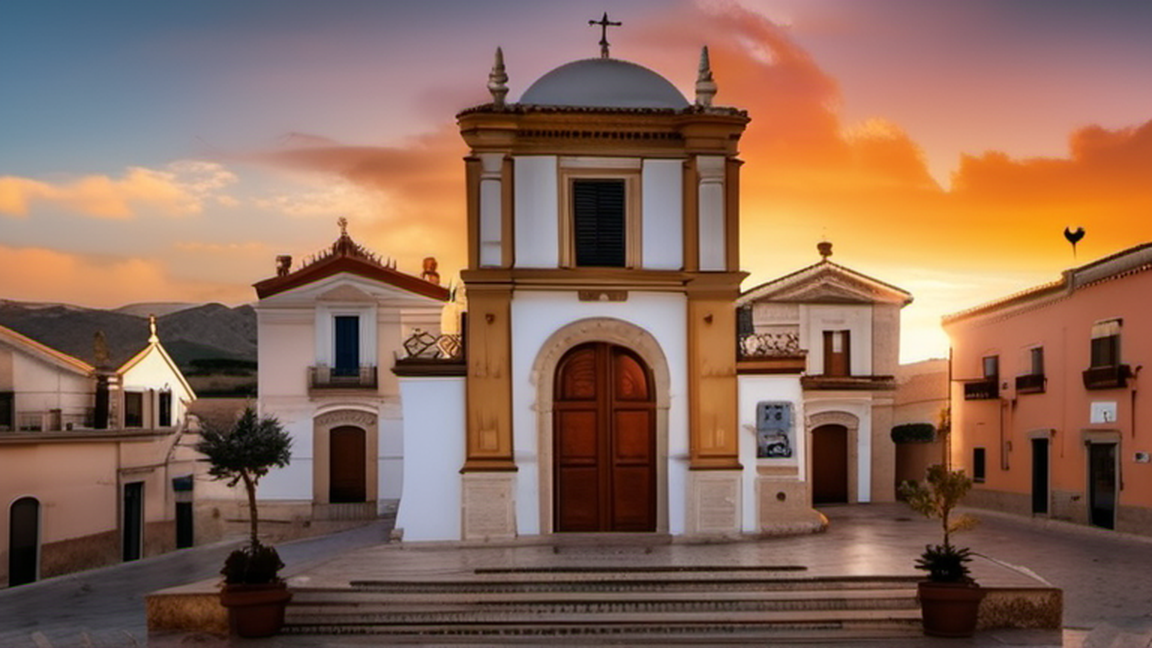
Alcamo is a town in the Trapani province of western Sicily.
The climate is mild and its central position on the Gulf of Castellammare offers views of Mount Bonifato and the vineyard-covered rolling hills of the surroundi
Wikivoyage guide · 33 sections
▸Introduction404 chars
Alcamo is a town in the Trapani province of western Sicily.
The climate is mild and its central position on the Gulf of Castellammare offers views of Mount Bonifato and the vineyard-covered rolling hills of the surrounding countryside. If you are at Alcamo Marina it is still possible to behold sand dunes.
The combination of town, mountain, country, beach and sea makes for a vacation full of contrasts.
▸When to go608 chars
Alcamo is practically full of opportunities all the year round: in winter you can take advantage of Christmas events to visit the monuments in the town centre and the places of its "movida" (pubs, bars and pizzerias in particular), while in summer it is possible to walk along the promenade full of very good pizzerias too.
It is also a good idea to visit the town in June so you can take part in the celebrations in honour of Madonna of Miracles (Most Holy Mary of Miracles) or in spring if you wish to take advantage of the mild climate and visit the Nature Reserve and the ancient ruins on Mount Bonifato.
▸History1,301 chars
Though people think that Alcamo were founded by Arabs during the Middle Ages, the excavations in the surrounding territory confirm that there were already settlements near the present town in prehistoric times. Before the arrival of Arabs there were two villages: the first one, Longuro, was on Mount Bonifato, while the second, called Longarico, was near the present built-up areas.
When the Arabs arrived at the village, they saw it was semi-desert and so they founded Alcamo. Afterwards the town passed under the dominion of Normans and Swabians. In time the old mosques were substituted by Catholic churches and only the ancient Arab fountain, still running, and the name of the town, whose meaning is uncertain, remained.
The built-up areas became a well fortified feud thanks to the construction of the Castle of the Counts of Modica and the walls surrounding the present town centre.
In the following centuries Alcamo progressively developed from the cultural point of view, both for literature (whose most important representative is the poet Cielo d’Alcamo) and the artistic production; in fact there are very important sculptures and paintings inside its churches, especially in the Cathedral (Chiesa Madre) where an art museum has been opened in order to collect some of these masterpieces.
▸Districts3,037 chars
Owing to its particular geographical position (with Mount Bonifato in the south and the Gulf of Castellammare in the north) a lot of streets have an inclination from the mountain, in the south, towards the sea, in the north. Mount Bonifato and the coastline are also two excellent points of reference because they can be seen from any place in town.
Corso 6 Aprile is very important: it is known by its citizens as “il Corso”(or lu Cassaru in dialect). This main street starts from the Church of Santa Maria delle Grazie and finishes at Porta Palermo; on the way you will also pass the Church of Saints Paul and Bartholomew baroque church with its rich interior and Piazza Ciullo, which is full of young people at night.
In Piazza Ciullo (called “the Square” or “la Chiazza” in dialect), you can see the Town Hall, the Church of the Jesuits' College (Chiesa del Collegio) which is in the middle of the square and has a big round clock, Saint Olivia’s Church, restaurants and sandwich bars. Going towards Chiesa del Collegio and turning on the left, you will arrive at Piazza della Repubblica, where you can admire the Castle of Counts of Modica and find also a large car park.
At Piazza Ciullo the main street (Corso) has a sudden narrowing: starting from this point it is called the “Narrow Corso” (“Cassaru Strittu" in dialect). The Cathedral (Chiesa Madre) is here; if you go straight on, you will reach the Church of Saint Francis of Assisi and finally the end of the Main Street coinciding with Porta Palermo which opens onto Piazza Bagolino, called the "Bastione" (or "lu Bastiuni"in dialect) owing to its high walls of defence surrounding the square. This is delimited by a sidewalk from where you can admire, above all at sunset, a very striking view, together with the coastline of Alcamo Marina. Going down Piazza Bagolino, after two turnings, you will get to a large square where you can admire the ancient Arab fountain. On its right there is a paved pathway leading to the Sanctuary of the Most Holy Mary of Miracles, which can be reached on foot through this paved road, or by car through a narrow street nearby.
Starting from Piazza Pittore Renda, with Corso 6 Aprile behind, you can go round a roundabout (with the small Church of Our Lady of Graces in its middle) and arrive at Viale Italia which ends with another roundabout (known as "La Rotonda" par excellence). If you turn left you will get to Viale Europa where there are several interesting bars in which it is possible to taste some typical local recipes. By taking one of the right streets (Via Monte Bonifato in particular) you will arrive at the Nature Reserve on Mount Bonifato, while if you go ahead you will get to a crossroads, and by turning left you will first meet the Church of Saint Mary of Jesus (Chiesa di Santa Maria di Gesù) and then a small roundabout with a statue of Saint Francis in the middle.
▸Tourist information567 chars
1 Ufficio Turistico (Info Point Turistico), Corso VI Aprile,60 (100 metres from Piazza Ciullo, opposite the Basilica), ☏ +39 0924 590219, infoturismo@comune.alcamo.tp.it. Tu Th-F 09:00-13:00, M W 09:00-13:00 and 15:30-18:30. You can also ask for information at the MACA (ex Collegio dei Gesuiti in Piazza Ciullo), phone +39 0924 24592.
2 Citizens' Relations Office (U.R.P.), Via XI Febbraio,14 (in the street opposite Chiesa Madre), ☏ +39 0924 510307, +39 0924 27062, toll-free: 800 011 539, urp@comune.alcamo.tp.it. Tu-F 09:00-13:00, M 09:00-13:00 and 16:00-18:00.
▸By plane1,146 chars
3 Palermo-Punta Raisi Airport (Aeroporto Falcone e Borsellino), ☏ +39 091 7020273. You can reach Alcamo, at about 42 km, through the A29 Motorway (towards Trapani, junction for Alcamo Est). The airport is linked by train or shuttle bus to Alcamo. You can get the train going from Punta Raisi to Castellammare del Golfo railway station. From this airport there are home and international flights and several low cost connections; many touristic and charter flights in summer. (updated May 2016)
4 Trapani-Birgi Airport (Aeroporto Vincenzo Florio), contrada Birgi, Trapani (54 km from Alcamo), ☏ +39 0923 610111, info@airgest.it. You can get to Alcamo through the A29 Motorway Trapani-Punta Raisi and going out at the junction for Alcamo. Shuttle bus services are carried out by Terravision and Salemi for Trapani and Palermo. From and to Trapani Birgi there are home, European and "low cost" flights. Seasonal touristic flights also in summer. (updated May 2016)
There are also taxi and shuttle bus services from Palermo and Trapani airports as far as Alcamo (for information phone: Gabellone Viaggi e turismo, Viale Italia, 31, ☏ +39 0924 505955.
▸By ship494 chars
Grandi Navi Veloci (from Naples, Civitavecchia, Leghorn, Genoa, Tunis to Palermo), ☏ +39 010 2094591. 08:00-21:00.
Linea Tirrenia (Cagliari-Trapani), ☏ +39 0923 545433.
Linea Grimaldi (Tunis-Trapani), ☏ +39 0923 542470.
Linea Ustica Lines (Leghorn-Trapani), ☏ +39 0923 873813.
Siremar (Egadi islands and Pantelleria), ☏ +39 0923 24968.
Traghetti delle Isole, ☏ +39 0923 22467.
Ustica Lines (Hovercraft for the Egadi Islands, Pantelleria, Ustica and Naples), ☏ +39 0923 873813.
▸By car633 chars
From Palermo: you can reach Alcamo by taking the Autostrada A29 Palermo-Mazara del Vallo (a motorway) as far as the junction Alcamo Est (about 64 km).
From Trapani: along a branch of A29 (direction Palermo and as far as the motorway junction Alcamo Ovest) or the highway 113 (about 52 km).
Between the junction Alcamo Est and Alcamo Ovest there is another motorway junction, for the neighbouring town of Castellammare del Golfo.
These motorways have two lanes and an emergency carriageway; people don't have to pay any toll but there are no petrol stations in these motorways. However, you can refuel in the towns near the motorways.
▸By train218 chars
The nearest railway stations are Alcamo Diramazione (at about 7 km from the town, near the junction Alcamo ovest) and the station of Castellammare del Golfo (located at Alcamo Marina, about 5 km from the town centre).
▸By bus799 chars
AST (Azienda Siciliana Trasporti), via Virgilio, 20 Trapani, ☏ +39 0923 21021, +39 0923 872939, fax: +39 0923 872939, info@astsicilia.it.
1 Atlassib, Via Mazzini,22 Alcamo, ☏ +39 0924 515561. (updated Oct 2019)
Flixbus. Buses from Rome, Puglia, Basilicata and Villa San Giovanni
Segesta autolinee (Palermo-Trapani), Via Libertà, 171, Palermo, ☏ +39 091 346376, +39 06 164 160 (Call center). Bus service from Palermo, Trapani, Partinico and Terrasini.
Tarantola bus, Via Marina Petrolo, 39/1, Castellammare del Golfo, ☏ +39 0924 31020, info@tarantolabus.it. Buses from nearby Castellammare del Golfo, Calatafimi-Segesta and Vita.
▸Get around423 chars
In the town centre you can easily move on foot, leaving the car in the large car parks at Piazza Bagolino and Piazza della Repubblica. If you want to visit the near hamlet of Alcamo Marina or the Nature Reserve on Mount Bonifato, it is possible to use a taxi or car rent services. You can visit the ruins of the Ventimiglia Castle, the Sanctuary of the Most Holy Mary from the Height and the remains of the old settlement.
▸By taxi1,357 chars
5 Io guido, Piazza Bagolino, ☏ + 38848 810000 (extra charge), carsharingpalermo@gmail.com. Car-sharing: one-way or standard bookings. With access to ZTL areas and no limits to antipollution measure, free parking on blue areas, authorized to transit in the lanes reserved to public transport.
Noleggio Pullman Reginella, ☏ +39 0924 23335, +39 360 439620. Town bus service and for Alcamo Marina and the railway station. Town service: €1.10, for Alcamo Marina: €1.50.
Taxi:
6 Agosta.info transfer Ncc Low cost, Via Corrado Avolio,12 (Near Via Kennedy), ☏ +39 333 482 4148. Open 24 hours. (updated Mar 2015)
7 Taxi Transfer Gaetano Bonventre, Via Magarotto, 2 (Corso dei Mille, left turning), ☏ +39 339 3014593. Taxi Transfer Gaetano Bonventre (updated Mar 2015)
Nstonline Taxi & Transfer, Contrada Foce Molinello, 844, ☏ +39 339 409 8743. Taxi, shuttle service to and from Trapani Birgi Airport and San Vito Lo Capo. (updated Mar 2015)
Serviziotaxi, Piazza della Repubblica, 104, ☏ +39 3388379569, taxicittadialcamo@virgilio.it. (updated Mar 2015)
Taxi Service di Massimo Catania, Via Giorgio La Pira,20, ☏ +39 339 2341981, +39 328 6876416. (updated Mar 2015)
8 Taxi Service Trasfert di Sandro Carrara, Via Giacomo Serpott, 26, ☏ +39 338 639 0445, sandrocarrara@libero.it. Car rental with driver. Airports, hospital and other services by arrangement.
▸By car1,167 chars
Car rental service:
2 Adap, Via Carlo Goldoni s.n.c. (at the end of Corso dei Mille), ☏ +39 0924 1862802, +39 0924 4935249, info@adapitalia.com. €40-70. (updated Aug 2022)
9 Autonoleggio del Golfo, Stazione Ferroviaria di Castellammare del Golfo (Alcamo Marina), ☏ +39 0924 531871 (sede), +39 338 2208282 (Ezio). (updated Apr 2015)
10 Francesco Rent Srl, Via Mazzini, 12 (next to Piazza Ciullo), ☏ +39 389 9322401, +39 338 8397983, info@francescorent.it. Car rental for Palermo, Trapani and Catania airports; rental cars at Balestrate/Trappeto, Scopello, Castellammare del Golfo. Cerimony cars hiring in Alcamo, Trapani, Palermo, Castellammare del Golfo. Without a credit card or deposit.
LPR rent a car, Corso dei Mille, 153, ☏ +39 328 3149022, lprrent@gmail.com. (updated Apr 2015)
12 Noleggio Pullman Reginella, Via Domenico La Bruna,18 (between Via Maria Riposo and Viale Europa), ☏ +39 0924 23132, +39 388 8987 413, +39 338 2185 710, +39 360 439620, info@reginellabus.com. Bus and minibus. (updated Apr 2015)
▸Arab buildings1,054 chars
1 Arab fountain, Via Discesa Santuario (200 m from Piazza Bagolino). It is an ancient structure for providing fresh water to people and livestock still working, built during the period of Arab rule. (updated Apr 2015)
2 Arab Watchtower, Corso 6 Aprile (next to the Church of Santa Maria del Soccorso, opposite the Mother Church). Ancient watchtower built by Saracens at about 980 AD. Inside it there are a characteristic stone winding staircase with 85 steps and a big cistern. (updated Dec 2015)
3 Funtanazza, Mount Bonifato. A very old architectonic work which was probably used as a water reservoir, but according to some people it was a thermal plant. It has a rectangular plan with pillars sustaining a barrel vault, similar to the Moorish fountains of the northern coasts in Africa. free entrance. (updated Apr 2015)
4 Cuba delle Rose, Contrada Calatubo (at about 300 m from the Castle of Calatubo). A cistern built by Arabs, about one thousand years ago, which served the inhabitants of Calatubo. It was restored some years ago. (updated Feb 2020)
▸Castles1,471 chars
5 The Castle of the Counts of Modica, Piazza della Repubblica, 12, ☏ +39 0924 22915. W-Su 09:00-13:00, 15:30-19:30. Probably built in the 14th or 15th century by the Peralta family, and then completed by the feudatories Enrico and Federico Chiaromonte. In 1535, the emperor Charles V lodged here. It was a possession of the Cabreras and then of the Counts of Modica, until 1812. Later, during the Italian Kingdom and until 1960, it was used as a prison. It has a rhomboidal shape, with four towers: two quadrangular ones at the corners and the other two are connected by curtains and are cylindrical. In each tower there was a torture room for prisoners, the rooms for sentinels and for passing guest sovereigns. One of the particular characteristics of the castle is given by the thick walls which bound it and defended from enemies' attacks in old times . Free. (updated Jun 2018)
6 Castle of Ventimiglia (Torre Saracena) (on the top of Mount Bonifato). A medieval castle; as of 2020, there are only some parts of the walls, the primary tower and the dungeons. It took the name from Enrico Ventimiglia, who had built it only for defence. (updated Apr 2015)
7 The Castle of Calatubo (at about 3 km outside the town.). A fortress built in the early Middle Ages. The village of Calatubo stood nearby and its commerce was based on the exportation of cereals and millstones. In the same place there is an old necropolis, dating back to the 6th century BC. (updated Apr 2015)
▸Other historical buildings4,175 chars
There are several historical civil buildings in Alcamo:
8 Casa De Ballis, Via Mariano De Ballis (opposite the Post Office in Corso 6 Aprile, in the pedestrian area). It was built in the 16th century and has a square tower with battlements, adorned with a round arch that contains two windows, one twin lancet and one triple lancet; probably designed in 1490 by brothers Tommaso and Pietro Oddo. (updated Apr 2015)
9 House of Cielo d'Alcamo, Piazzetta Leopardi, 3 (50 m from the Church of Saint Francis of Assisi). A popular legend says that here lived the famous poet Ciullo d'Alcamo, a native writer of this city. On the façade, there is the main door and an arched window, realized with limestone travertinoide. Above the door you can see a decoration in high relief, with a compass and a delineator in its middle, between two big drakes ridden by two small angels with a trident in their hands.
10 Pia Opera Pastore, Via Pia Opera Pastore (next to Porta Trapani). Designed by the architect Giovan Battista Palazzotto in 1872, the building is in a neoclassical style, with triangular windows. On the main door, there is the family coat of arms represented with a sheperd's crook, three stars and a tower. (updated Apr 2015)
11 Palazzo Fraccia, Via XI Febbraio, 8 (opposite the Basilica Maria Assunta). In baroque style, it was built about the year 1700. Above the balcony, there is the family coat of arms: an injured heart surmounted by a crown. (updated Apr 2015)
12 Palazzo Rocca, Corso VI Aprile (next to Saints Paul and Bartholomew's church). It was built about the year 1629. Its portals and brackets are made with carved stones. (updated Apr 2015)
13 Palazzo Rossotti-Chiarelli, via Rossotti,30 (300 m from the Basilica). Built in the 18th century, it has a portal, railings and balconies in a baroque style. (updated Apr 2015)
14 Palazzo Peria, corso VI Aprile (opposite Centro Congresso Marconi). Built in about the year 1700; this palace has two floors and has been restored with the Livigni method. (updated Apr 2015)
15 Palazzo Di Gregorio, via Dante Alighieri (200 m from Piazza Ciullo). It was built about the 17th century in a neoclassical style. (updated Apr 2015)
16 Palazzo Patti, Piazza Ciullo. Built in the 18th century, it has been totally restored internally. On the ground floor, there are three entrances, today leading into three shops, and an arch at the beginning of via Pipitone Cangialosi. The portal has two decorated lenses. The openings in the balconies are surmounted by a stone fronton. (updated Apr 2015)
▸Museums2,622 chars
21 Monument to Cielo d'Alcamo (Villa Cassarà), Via Monte Bonifato,141 (turning right from Viale Europa, near the hillock)), ☏ +39 328 615 2700. Visits only for groups of people by appointment. Inside Mariano Cassarà's garden (a sculptor), now his heirs' property, you can see the monument (with a fountain) realized in 1990 for the Town of Alcamo and that, after various vicissitudes, postponements and missing payments by all the civic administrations, has remained in the ownership of the artist.The work faithfully represents the scene of the famous love Contrasto "Rosa Fresca Aulentissima" written in 1240 by Cielo d'Alcamo, considered the first Italian poet who used the vernacular. The central body includes the two bronze statues representing the poet and his beloved; they are surrounded by an artistic marble fountain (travertine, completed with the insignia of Alcamo in the back part of the monument).In the garden you can also admire other works realized by Mariano Cassarà.
22 Sacred Art Museum, Corso 6 Aprile (inside Chiesa Madre (Basilica Maria SS. Assunta)), ☏ +39 0924 21578. M-F 09:30-12:45. The museum hosts a lot of paintings, sculptures and jewels coming from churches, dating back to the period from the 13th and 19th centuries, for a total of 150 works that are exhibited in an area of about 400 m2 (4,300 ft²). These works had been sheltered there after the 1968 Belice earthquake by monsignore Vincenzo Regina, archpriest from 1944 to 1991. €3, reduced €2. (updated Apr 2015)
23 Museum of Multiethnic Musical Instruments "Fausto Cannone", Via Commendatore Navarra,75 (inside the Ex church of Saint James of the Sword, near the castle). Daily 16:30-19:30. There are 202 musical instruments: rebab, sarinda, gansira, swarpeti, bansuri, takita, marambao, vojnica, iakir and many others collected all over the world by the music teacher Fausto Cannone from Alcamo; there are instruments and sounds coming from different peoples: from Thailand to Tibet, from New Guinea to South America, from Polynesia to China, from Australia to Argentina, South Africa and various European countries. Free. (updated Apr 2015)
24 Museum of Contemporary Art (MACA), Piazza Ciullo (inside the ex Collegio dei Gesuiti), ☏ +39 0924 24592. 09:30-12:30, 16:30-19:30. The museum is divided into various sections: you can see the paintings of Turi Simeti, Vito Bongiorno, Gisella Giovenco, the plaster casts of Nicola Rubino and other works. free entrance. (updated Apr 2015)
25 Regional Vinotek of Western Sicily (Enoteca Regionale), Piazza Castello, 9 (at 300 metres from Piazza Ciullo), nfo@enotecaregionalesicilia.it.
▸Natural areas2,416 chars
26 The Nature Oriented Reserve, Via per Monte Bonifato, ☏ +39 0924 202626, info@boscoalcamo.it. 09:00-13:00, 15:00-18:00. A protected area on Mount Bonifato with remarkable natural, historical, archeological and geological interest. Inside it there are the ruins of an ancient hamlet (among which are "Funtanazza" and "Porta Regina"), the remains of the Castle of the Ventimiglia and the Sanctuary of the Most Holy Mary from the Heights (Santuario della Madonna dell'Alto). You can also use a picnic area near the “Funtanazza”. They carry out several and different activities in the reserve such as Nordic walking, mountain biking, trekking, birdwatching, and creative and didactic research. (updated Apr 2015)
27 Parco Suburbano San Francesco, Piazza Bagolino (below the Belvedere), ☏ +39 320 8598098, laurus.ambiente@gmail.com. 09:30-13:00, 15:30-18:30. The park is managed by the Association "Laurus" of Alcamo. Thanks to its volunteers, this green lung with hundreds of plants of the Mediterranean flora, gives the chance to children and adults to relax in the middle of its green. Inside there are a children's playground and a small zoo farm. free.
28 Geosite Travertino della Cava Cappuccini, Piazza Padre Pio (next to the Church of Saint Anne). In the Geosite, dating back to Pleistocene, they discovered the fossilized shell of a tortoise, Geochelone sp, the skeleton of a dwarf elephant, dating back to 260,000 years ago, and some specimens of the giant edible dormouse, red deer and wild boar, kept at the Civic Museum Torre di Ligny of Trapani .
29 Roman furnaces, Contrada Foggia-Magazzinazzi (Alcamo Marina) (SP 47, 300 m before the SS 187). The site is about 2,500 square metres wide; in 2000 they discovered three furnaces, built between the 1st century AD and the second half of the 5th century AD. They have a circular shape, with a diameter of about 3 m and with an unusual state of preservation. At the moment it cannot be visited.
30 Archeological Site of Mount Bonifato (or Longuro), on Mount Bonifato (50 m from the path leading to the Sanctuary of the Most Holy Mary of the Height). Founded by a colony of Greeks escaped from Troy, and probably inhabited from the 7th century BC until the 12th century AD, it was discovered in the second half of the 16th century. They found lanterns and stamps of bricks dating back to the Roman age, some tomb caves, several ceramic and bronze fragments.
▸Churches7,813 chars
31 Basilica di Santa Maria Assunta (Chiesa Madre), Piazza IV Novembre, 2 (100 m from Piazza Ciullo), ☏ +39 0924 21578, chiesamadrealcamo@virgilio.it. 08:30 – 12:30, 16:00 – 19:00. Realized during the 14th century and rebuilt in 1669; the portal and the bell tower are the only remains from the original church of the 14th century. It is located in the centre of the town, near piazza Ciullo. The interior contains frescoes by Guglielmo Borremans. In the apse and in the side chapels there are works by Antonello Gagini, free. (updated May 2016)
32 Church of Saint Francis of Assisi (Chiesa di San Francesco d'Assis), Corso 6 Aprile, 2 (50 m from Piazza Bagolino), ☏ +39 0924 22397. It was built between the years 1224-1226, demolished and rebuilt between 1608-1648. Inside it there are a marble ancon, probably by Domenico Gagini, and two sculptures reproducing the Maddalena and Saint Mark, both ascribed to Antonello Gagini. (updated May 2016)
33 Church of the College of Jesuits (Chiesa del Collegio dei Gesuiti), Piazza Ciullo. It was built between 1684-1767. (updated May 2016)
34 Church of Saint Olivia (Chiesa di Sant'Oliva), Piazza Ciullo. It was built in 1533 and renovated in 1724. Inside there are a picture by Pietro Novelli on the main altar ("Sacrificio della Messa" dated 1639) and works by the Gagini. (updated May 2016)
35 Church of Saints Paul and Bartholomew (Chiesa dei Santissimi Paolo e Bartolomeo), Corso VI Aprile, 183 (300 m from Piazza Ciullo). Built between 1615 and 1689: it has got characteristic baroque features and holds a very ancient and valuable picture, the Madonna del Miele (made about the year 1300). (updated May 2016)
36 Church of Saint Mary of Jesus (Chiesa di Santa Maria di Gesù), Piano Santa Maria, 28 (300 m from Piazza della Repubblica). Built in the 15th century and enlarged in 1762. It holds the body of Beato Arcangelo Piacentini from Calatafimi. (updated May 2016)
37 Sanctuary of Madonna of Miracles (Santuario di Maria Santissima dei Miracoli), Via Massimiliano Kolbe (500 m from Piazza Bagolino). The sanctuary, dedicated to the patroness of Alcamo, was built in 1547 by order of the governor and captain of justice Fernando Vega, and following the discovery of an icon of Madonna of Miracles in a small chapel which had been abandoned. Afterwards the sanctuary was modified several times, with a restoration in the first years of the 18th century. (updated May 2016)
38 Church of Saint Thomas (Chiesa di San Tommaso), Corso VI Aprile, 31 (200 m from Piazza Bagolino). The date of its construction is uncertain, probably the first half of the 15th century. It is faced by a great portal with geometrical decorations. (updated May 2016)
▸Do3,850 chars
Associazione Culturale Musikè, Via Mariano De Ballis, 25 (opposite the Central Post Office), ☏ +39 3328 285 0926, adangelo883@gmail.com. Exhibitions, concerts, courses of music and singing; they also organize dinners and guided visits to the Palazzo de Ballis and its tower. (updated Mar 2017)
Associazione Laurus cultura ambiente, Via per Monte Bonifato, 102, ☏ +39 3208598098, laurus.ambiente@gmail.com. Guided tours by bike, on foot, trekking: Castle of Calatubo, Mount Bonifato, Alcamo Town Centre. (updated Jul 2015)
1 Centro Congressi Marconi, Corso 6 Aprile, 119 (100 m from Piazza Ciullo), ☏ +39 0924 21920. Classical music concerts, meetings and exhibitions. (updated Apr 2015)
2 Centro Ippico Lo Sperone, Contrada Sasi, ☏ +39 0924 26638. Restaurant and riding school. free entrance. (updated Apr 2015)
3 Cinema Esperia, Corso 6 Aprile, 19 (50 m from Piazza Bagolino), ☏ +39 0924 21766, info@cinemaesperia.it. There is a hall with comfortable seats on two levels (the stalls on the ground floor and the balcony on the first floor). (updated Apr 2015)
4 Cittadella dei Giovani and Anfiteatro Orto di Ballo, Via Ugo Foscolo (next to Chiesa di S. Anna Cappuccini). M-F 16:00-20:00; Sa 09:00-13,00 and 16:00-21:00. There is a recording hall: teenagers have also rooms and equipments at their disposal, in order to exploit their own natural, artistic, musical and scientific inclinations.
5 Civic Library "Bagolino", Piazza Ciullo (inside Collegio dei Gesuiti), ☏ +39 0924 590287, bibliotecacivica@comune.alcamo.tp.it. M-Sa 08:30-13:30 and 15:30-20:00. There are about 81,000 books and important old documents on art, tradition, craftmanship and religiosity of people in Alcamo. Some books come from ex convents and friaries and from the section of the History of Alcamo's territory. Inside it there is also the Multimedia Library with a lot of newspapers, film and music collections. You can also use the Internet for free. You can consult its OPAC. (updated Apr 2015)
6 La Fenice, Via San Leonardo, 13 (100 m from Piazza Falcone e Borsellino), ☏ +39 0924 505911, fax: +39 0924 504147, info@lafenicecenter.it. Swimming pool, acquatic park, gym club. (updated Apr 2015)
7 Opera dei Pupi (Gaspare Canino), Castello dei Conti di Modica, ☏ +39 349 106 2418. Possibility of visiting the theatre of puppets and seeing some of them, working tools and posters. The shows are given in some periods of the year and they give notice.
8 Rush Speed Arena, SS 113 km 323, Contrada Molinello (3 km from Alcamo, on the road for Partìnico), ☏ +39 327 578 4618, info@rushspeedarena.com. W-Th 17:00-midnight, Fr e Sa 17:00-01:30, Su 16:00 – midnight. Multilevel indoor track for electric karts. The track is 564 m long, 7 m wide with straightway and large bends. Takeaway food. Outdoor seats. €16-18.
▸Festivals3,621 chars
14 Saint Joseph, Saint Olivia's church (Piazza Ciullo). 19 March. Celebration in honour of this Saint with novena and procession. (updated Apr 2015)
15 Passion of Christ (Via Crucis), Piazza della Repubblica (accanto al Castello dei Conti di Modica). w:Palm Sunday. The pageant of Via Crucis, formed by 143 characters in historical costume, leaves at 16:00 from the Church of Saint Anne, then in Piazza della Repubblica there is the representation of the Last Supper, the process, the flagellation, etc. The pageant moves along Corso VI Aprile and Viale Italia, and stops at about 21:00 at Piazza Caduti di Nassiriya; here they represent the Crucifixion and Resurrection. This event is organized by the Pro Loco Città di Alcamo in collaboration with the Assessorato for Culture of the Comune.
16 Good Friday. Procession of the Dead Jesus and Our Lady of Sorrows. (updated Apr 2015)
17 Gesù Cristo Redentore Feast. On the first Sunday after Easter they organize different cultural and religious events in honour of the Divine Mercy. (updated Apr 2015)
18 San Francis from Paola, Via Crispi. Second Sunday after Easter (cultural and religious events). (updated Apr 2015)
19 Feast of Patrocinio, Piazza Ciullo. Third Sunday after Easter. In honour of the Holy Family (procession and lunch with the living Holy Family). (updated Apr 2015)
20 Saint Joseph the Worker. 1st May. Celebration in honour of Saint Joseph the Worker with a novena and procession. (updated Apr 2015)
21 Saint Anthony of Padua. (13th June). Celebration in honour of him (novena and procession) (updated Apr 2015)
22 Maria Santissima dei Miracoli. 19-21 June. Celebrations in honour of the patroness saint of Alcamo: cultural and religious events. During the feast there are a solemn procession of Madonna’s simulacrum, fireworks from the "bastione" in Piazza Bagolino, and the descent of civil and political authorities to the sanctuary of Madonna dei Miracoli. Until the early 21st century, there were horse races along Corso 6 Aprile; the last two times they took place in Viale Italia. (updated Apr 2015)
23 Saint Ann's Feast, Piazza Padre Pio (below the Hospital). 26 July. Novena, procession and cultural, recreative and religious activities.
24 Maria Santissima Assunta (Stella Maris), Alcamo Marina. 14 and 15 August: celebrations and procession on the beach. (updated Feb 2020)
25 Madonna dell'Alto. 8 September. Celebrations on the top of Mount Bonifato (dialect poems recitation and procession). (updated Apr 2015)
▸Buy1,905 chars
1 Adragna il Caseificio (Cheese and other Sicilian food), Via Pietro Lombardo, 11, ☏ +39 0924 24130, +39 0924 510956.
2 Bontà rossa di Sicilia, Via Pietro Montana 4 (Provincial Road (S.P.) 10 to Camporeale at km 6, opposite Cantina Paladino), ☏ +39 334 8030135, +39 331 457 4911, salvatore.fil72@gmail.com. Biological production of pomegranates (juice and fruit).
3 Bottega del Cioccolato, Corso VI Aprile, 205 (100 m past Chiesa di San Paolo e Bartolomeo, at the corner of Via Crispi), ☏ +39 392 060 7376, +39 338 108 7851, info@isidorostellino.com. Chocolate maker: using cocoa that comes from Ecuador, Costa Rica, Guatemala and Venezuela; production of chocolate bars (milk or dark), pralines, cakes and single portion sweets.
5 Delizie, Via Kennedy, 13, ☏ +39 0924 508508, deliziedicarne@gmail.com. closed on Sunday. Delicatessen, local cheeses, takeaway gastronomy and butcher's shop.
6 Farmer's Market, Piazza Bagolino. on Friday morning. There are a lot of farm products: fruit and vegetables. (updated Apr 2015)
7 Ficodindidia Ceramiche, Via Mazzini,19 (a 100 metres from Piazza Ciullo), ☏ +39 328 859 7165. Handicraft laboratory of Sicilian ceramics and sale of articles made with ceramics.
8 Galleria del Corso, Corso 6 Aprile, 40. There are some shops selling clothes, shoes and sport items. (updated Apr 2015)
9 La Baronessina Ceramiche (Artistic Ceramics), Corso 6 Aprile,59-61 (100 metres from the Duomo), ☏ +39 333 9480 746. Artisan's laboratory and sale of local artistic ceramics.
10 Mercato Rionale, Via Tre Santi (100 m from Viale Italia). Wednesday morning. You can find clothes, shoes, fruit, vegetables, fish and cheese. (updated Apr 2015)
11 Vini Manfre' Enoteca, Via Maria Riposo, 43, ☏ +39 0924 26596. They sell different types of wine and liquors. (updated Apr 2015)
▸Budget3,436 chars
Most part of them serve pizza only in the evening: they sell it by the slice. You can have it on the spot or take away. It is a cheap way of having dinner.
1 L'Arcova, Piazza Mercato (below Piazza Ciullo), ☏ +39 0924 22670. Pizzas by slices. Very frequented especially at night by teenagers, attracted by the smell of just-cooked pizza. There are outdoor tables. (updated Apr 2015)
2 Bar Grazia, Corso 6 Aprile, 330, ☏ +39 0924 21232. Very famous for its snacks, especially arancini (filled with minced meat or ham). They also make very good sweets such as sfince di San Giuseppe (Saint Joseph’s fried sweets with ricotta inside). (updated Apr 2015)
3 Bar La Preferita, Via John Kennedy, 71, ☏ +39 0924 502774. Good pastry. Its cassatelle with ricotta are excellent! (updated Apr 2015)
4 Bar '900, Corso VI Aprile, 105 (50 metres from Piazza Ciullo), ☏ +39 0924 21505, info@bar900.net. closed on Tuesday. Famous for the high quality of its sweets, snacks and ice creams (among which the hazelnut ice cream, fried iris and ricotta bocconcini stand out). On the first floor there are tables and a terrace with tables and large sunshades; from here you can appreciate a beautiful view of Corso 6 Aprile. (updated Apr 2015)
5 Bis Bar, Viale Europa, 167 (at the corner with Via Vittotio Veneto), ☏ +39 0924 24525. Very appreciated for its sweets production, snacks and ice creams. The interior is very cosy and has comfortable seats and large glass walls. Very good if you want to spend a relaxing evening with your friends. (updated Apr 2015)
6 Cafè Termine (maestri pasticcieri), Viale Italia,48, ☏ +39 0924 22900, bartiffanyborgetto@libero.it. Bar, pastries, ice-creams, snack-bar. (updated May 2016)
7 Dolce e Gustoso, Via Salvo D'Acquisto,24 (100 metres from the weekly market site), ☏ +39 0924 1915420, +39 347 2620197, dolceegustoso@libero.it. Self-service, pizzeria, snack bar, coffee bar, sweets. Dinners for any occasions. €12. (updated May 2017)
8 Esko Burger, Piazza Bagolino, 30 (inside the garden) (at 300 metres from Piazza Ciullo), ☏ +39 0924 040689, +39 342 4489. Wedn-Mon, closed on Tuesday (18:30-23:00). Fast food and snacks. Located inside a charming garden, there are outdoor tables too. Italian and American cuisines. Take away service. Excellent food both in variety and quality. Waiters are kind and helpful. Also suitable for people who like outdoor evenings with friends. (updated Apr 2015)
9 Locanda dei Matti, Piazza della Repubblica, 65, ☏ +39 333 233 2122, +39 391 419 6273. 19:00-24:00. Appetizers, brasserie, restaurant. Open during summer. €25.
▸Mid-range1,356 chars
14 Cibus Ristorante Self-service, Corso Generale Medici, 15, ☏ +39 0924 23170, +39 339 1882268. (updated Apr 2015)
15 Il Gattopardo, Via 11 Febbraio, 1 (100 metres from Piazza Ciullo), ☏ +39 0924 24498, +39 33 981 09820, apigattopardo@gmail.com. Tu-Su, only in the evening. Restaurant and pizzeria in the town centre, very near the Chiesa Madre and 18th century Palazzo Fraccia in a characteristic paved street. Its pizzas are cooked in a wood-burning oven. (updated Apr 2015)
16 La Faranna, Strada Statale 113, km 322 (Alcamo-Partinico), ☏ +39 0924 506603, +39 338 1023622. Restaurant and pizzeria. On Saturday night you can dance here for free! (updated Apr 2015)
17 La Giara Ristorante Pizzeria, Corso dei Mille, 105, ☏ +39 0924 507979. 12:00-15:00, 19:00-23:30, closed on Tuesday. (updated Apr 2015)
18 Lo Sperone, Contrada Sasi (or Valle Nuccio), ☏ +39 0924 26638, +39 334 8982818, losperonetp@tiscali.it. Restaurant and riding school. (updated Apr 2015)
19 Salsapariglia Ristorante Pizzeria, Via Libertà, 1 (Behind Chiesa Madre), ☏ +39 0924 508302. Open only for dinner, closed on Mondays. (updated Apr 2015)
20 Via Vivaldi, Via Antonio Vivaldi, 21 (100 metres from Srada Statale 113, under Piazza Falcone e Borsellino), ☏ +39 0924 040764, +39 3288442052. Restaurant and pizzeria. There is a children's area where they can play. (updated Apr 2015)
▸Splurge240 chars
21 Hotel Centrale, Via G. Amendola, 24 (200 metres from Piazza Ciullo), ☏ +39 0924 507845, info@hotelcentrale.sicilia.it. Daily fixed menu or a particular one with meat or fish. Typical dishes prepared on request. €25/30. (updated May 2015)
▸Pubs and clubs926 chars
1 Alter Ego, Via Tenente Pietro de Blasi, 2 (opposite the Castle of the Counts of Modica), ☏ +39 339 784 8553, +39 388 160 5731. (updated Oct 2019)
2 Graal Wine Bar, Piazza della Repubblica,71, ☏ +39 3297993538. Tu-Su 18:30-24:00. (updated May 2015)
3 Habituè drink & bistrot, Corso VI Aprile, 93 (at the corner with Piazza Ciullo), ☏ +39 389 505 3285. (updated Oct 2019)
4 Old Street, Via Barone San Giuseppe, 20-22 (200 metres from the Castle of the Counts of Modica), ☏ +39 333 725 1995, +39 09 2453 4759, oldstreetalcamo@gmail.com. Tu-Su 18:00-3:00. GastroPub and Wine Bar. The place, in Mediterranean style, has several rooms and a fine courtyard in the middle. The menu is diversified and there are excellent wines and cocktails. The waiters are kind and quite fast. Free W-Fi, tables outdoor, booking not compulsory. (updated Feb 2020)
5 45 giri, Piazza Ciullo, ☏ +39 380 781 8639. Bar, risto-pub. (updated Feb 2018)
▸Budget2,500 chars
1 Affittacamere Windsurf, Zona Aleccia (Contrada Calatubo) Alcamo Marina (on the main road for Balestrate, at 30 metres from the beach), ☏ +39 0924 597900, vacanze@affittacamerewindsurf.com. There are flats and rooms air conditioned and a free private beach. The rooms have internal bathrooms, kitchen and TV, some have a balcony. It is 10 minutes' travel by car from Balestrate or Castellammare, and 20 minutes from the Nature Reserve "Lo Zingaro". €280-550 per week. (updated Apr 2015)
3 B & B Costapicca, C.da Costa, 37 (on the National Road 119 for Gallitello), ☏ +39 333 8474825, +39 339 2699039, costapicca@hotmail.it. At the foot of Mount Bonifato, the B&B Costapicca has a garden and offers free Wi-Fi connection. The rooms are air conditioned, with central heating, TV and a bathroom with a shower. A buffet continental breakfast, including hot coffee or cappuccino, sweets and other food will be served every morning. €34. (updated Apr 2015)
4 B & B Rahal, Via Marco Polo (100 metres from the Hospital), ☏ +39 333 1813 479, +39 334 3008 334, ignaziolongo@gmail.com. The flats of B&B Rahal include air conditioning, kitchen, dining room, bathroom with a shower, Breakfast is based on coffee, croissants and biscuits. The structure is at about 8 km from the beaches of Alcamo Marina and Castellammare del Golfo, 40 km from Palermo Airport and 50 km from Trapani Birgi. €35-59. (updated Apr 2015)
5 Casaulente (Flats, rooms, holiday houses), Via Discesa Santuario, 44 (200 metres from Piazza Ciullo), ☏ +39 338 6067197, info@casulente.com. Its flats are air-conditioned and have an independent kitchen and a living area with sofa and TV. The private bathroom has a hairdryer and the car-park is free. The bed and breakfast is 500 m away from the Castle and about 50 km from Palermo and Trapani airports. €35. (updated Apr 2015)
6 Residence Ideal, Via Ludovico Ariosto, 20 (100 metres from Chiesa of Saint Paolo and Bartolomeo), ☏ +39 0924 24429, +39 329 1335 676, +39 328 8782 832, residenceideal.alcamo@gmail.com. At the Residence Ideal in the town centre in Alcamo, the rooms are air conditioned, with free Wi-Fi and TV. The flats include a sitting room area with sofas and TV, Kitchen with an oven and a bathroom with as hower and a bidet. in some of them there is a terrace with an outdoor furnishings. €40. (updated Apr 2015)
▸Mid-range4,768 chars
7 Affittacamere Francesca, Contrada Magazzinazzi,165 (at Alcamo Marina, about 1 km from the railway station of Castellammare del Golfo, 6 km from Alcamo), ☏ +39 0924 597739, info@affittacamerefrancesca.it. It has a free car park. All rooms have conditioned air, Wi-Fi, TV and private bathroom. At dinner you can have Sicilian home-made specialities. €56. (updated Apr 2015)
8 Agriturismo Fattoria Manostalla (Villa Chiarelli), Contrada Manostalla, Balestrate (near the Castle of Calatubo), ☏ +30 091 8787033, info@fattoriamanostalla.com. The farm is an ancient baglio of the 19th century, belonging to Jesuits and used for praying. It is located in one of the most characteristic landscapes of rural Sicily, near the Castle of Calatubo. Its restaurant suggests typical products such as: olive oil, milk, cheese, ricotta, vegetables and milk, sheepmeat, beef and veal used to prepare old recipes and dishes.
9 Angimbè Relais Hotel, A29 Motorway Alcamo Ovest Junction S.S. 113 km 338.4 (on the SS 113, between Alcamo and Calatafimi-Segesta), ☏ +39 0924 0924 38156, +39 328 7043347, infoangimbe@gmail.com. It is an old baglio that has been restored. The rooms are air conditioned and have Wi-Fi, TV, Sky channels and a private bathroom. In the morning, it offers a rich breakfast and at dinner you can taste some typical Sicilian food at the restaurant. There is an outdoor swimming pool you can use in summer and a free car park. Double room €60-75. (updated Apr 2015)
10 Baglio della Luna, Strada Statale 113 km.318,200 (Opposite Borgo degli Angeli, in contrada Bosco Falconeria-Partinico), ☏ +39 091 8789106, +39 345 0736 557, + 39 320 6654 196, + 39 329 2249 129, info@ilbagliodellaluna.it. An old baglio with rooms that are all elegantly furnished and in a different way. (updated May 2015)
11 Baglio Fastuchera, SS 119, turn at km 5, ☏ +39 338 8316832, +39 334 3356060, info@bagliofastuchera.it. Baglio Fastuchera is on an old farm on the S.S. 119 (National Road 119) Alcamo-Gibellina. The rooms are furnished in a simple way and air conditioned, with TV and private bathroom with a hairdryer. At the restaurant they serve Sicilian dishes and a good breakfast. €70. (updated Apr 2015)
12 Enny Camere, Via San Gaetano, 16 (SP55 for Alcamo Marina) (Opposite the A29 Alcamo Est Junction), ☏ +39 0924 21942, info@camereenny.com. €69-89. (updated Apr 2015)
13 Grand Hotel La Batia, Via Porta Palermo,106 (100 metres from the S.S.113 Junction for Partinico), ☏ +39 0924 514160, +39 0924 25554. It's in the outskirts of Alcamo and was a convent restored some years ago. The exclusive rooms are furnished with free Wi-Fi, TV and air conditioner. You can also choose Sicilian specialities and a continental breakfast. There are two outdoor swimming pools, a terrace, free outdoor parking and a garage. €80-160. (updated Apr 2015)
▸Splurge447 chars
Villa 2 Pini, SS 119 Km 319, 700 (between Alcamo and Partinico). It's in Alcamo, and has an outdoor pool. This self-catering accommodation offers free Wifi, a patio and a seating area. There is also a kitchen with a dishwasher and a microwave oven. The bathrooms have a bath or a shower and a hairdryer. You can enjoy pool view and garden view. A barbecue and a free parking facilities are included. €240 (4 rooms for 8 people). (updated Apr 2015)
▸Stay safe565 chars
13 Police Station (Commissariato di Polizia), Via Libertà, 1 (300 metres from Piazza Bagolino), ☏ +39 0924 500311. (updated Apr 2015)
17 Post Office (Poste Italiane), Piazza Giovanni XXIII, 1 (in Corso 6 Aprile, 200 metre from Piazza Ciullo), ☏ +39 0924 503578. (updated Apr 2015)
18 Post Office (Poste Italiane), Via John Kennedy, 6 (300 metres from Viale Italia), ☏ +39 0924 24575. (updated Apr 2015)
19 Post Office (Poste Italiane), Corso Generale Medici, 1 (300 metres from Porta Trapani), ☏ +39 0924 23203. (updated Apr 2015)
20 Posta Centrale (Private Post Office), Via Pietro Maria Rocca, 68 (100 metres far from Piazza Pittore Renda), ☏ +39 0924 511365, alcamo@postacentrale.com. Services: mails, registered letters, deliveries, telegrams, faxes, payments, money transfer, etc. (updated Dec 2022)
▸Internet385 chars
21 Breaking Bet, Piazza Bagolino, 18. Every day 09:00-21:00. Inside there is an automatic dispenser of soft and hot drinks. €0.50 per hour.
22 Internet Point Lupin, Corso San Francesco di Paola,48 (300 metres from the Hospital), ☏ +39 0924 21383. €2 per hour, €6 all day.. (updated Apr 2015)
There is a free Wi-Fi service in Piazza Ciullo, Piazza Mercato and Piazza della Repubblica.
▸Go next1,783 chars
Alcamo Marina is a seaside resort very crowded during summer thanks to its wonderful sandy beach. It’s better you go there in the morning or in the afternoon. In the evening you can have dinner in one of its very appreciated pizzerias.
Balestrate: in the main square there are frequent cultural and musical events. You can’t miss a walk along the near Via Madonna del Ponte, where there are often a lot of stands (“bancarelle”). In the same street you can also find very good bars, ice-cream parlours, pizzerias and restaurants with outdoor tables.
Castellammare del Golfo: here you have to visit the beach (with several lidos which are also open in the evening), the seaport dominated by the big Castle at sea (Castello a mare) and its outskirts with a lot of pizzerias, restaurants and pubs.
Scopello: you can admire its Baglio (inner courtyard inside a farm) and the near Tonnara (the place where tunas were caught).
The Oriented Nature Reserve at Zingaro (near Scopello): if you love trekking, nature and uncontaminated beaches you must go there. The reserve houses vegetal and animal species that are typical of the Mediterranean macchia such as the palmet. Inside there is a characteristic cave where hundreds of bats nidify.
San Vito Lo Capo: very famous for its long beaches and sea, with crystal clear water. There are lots of restaurants and hotels near the sea-shore and you can also hire bikes to move easily along the coastline.
Terrasini: you have to visit Piazza Duomo, very crowded with tourists, and its beach surrounded by a very attractive background . In the nearby streets, full of people even in the first night hours, there are a lot of places where you can taste the local specialities, particularly in pizzerias, restaurants, bars and ice cream parlours.
Alcamo’s reputation for wine runs deeper than the annual festivals; the surrounding vineyards have nurtured a network of small, family‑run enotecas where producers still age their reds in underground cellars hewn from tuff. Visitors who venture beyond the main piazza can sample a "casa" tasting, often paired with local pecorino that has been aged in the same cool stone chambers. The practice of blending indigenous Corvo and Nero d'Avola grapes creates a profile that is fruit‑forward yet retains a Mediterranean mineral edge, offering a nuanced alternative to the more commercial wines of nearby Trapani.
Cycling the Granite Ridge
While Alcamo is frequently approached by road, the surrounding limestone ridges offer a quiet, undulating circuit that cyclists of moderate fitness will appreciate. Starting from the historic centre, a short ascent leads to the old stone quarries, where the scenery opens onto cultivated olive groves and the distant shimmer of the Tyrrhenian. The route is punctuated by waypoints marked by centuries‑old chapels, providing natural rest stops. Unlike the crowded coastal lanes, this inland track offers a measured rhythm and an authentic glimpse of the agrarian landscape that defines the town’s hinterland.
When the town lights up
More in cities0
From this roundabout you can go to Piazza Bagolino (by turning right and through Via Florio) or to Piazza della Repubblica, turning on the left.
17 Town Hall (Palazzo Conunale), Piazza Ciullo. Built in 1843, its façade is in neoclassical style: on the ground floor, there are two windows with arches and the main door. On the first and second floor, there are three balconies with stone brackets and galleries. On both sides of the central balcony of the second floor, there are two tondos: on the right one there is an eagle, which represents the coat of arms of the town. (updated Apr 2015)
18 Palazzo Ferrara, via Francesco Crispi (opposite the Hospital). In a classical style, it was built in 1909 by the brothers Benedetto and Graziano Ferrara. The main façade is rusticated, with three round-arched openings. The main balcony is supported by brackets of limestone travertinoide, and has a wrought iron railing. (updated Apr 2015)
19 Palazzo Pastore, Corso VI Aprile (100 m from Piazza Ciullo). Built at the end of the 18th century in neoclassical style: some elements of the façade are similar to those of the Basilica and Palazzo Di Gregorio in via Dante. (updated Apr 2015)
20 Villa Luisa, Via Rossotti (at about 200 m from Piazza Bagolino). Built in 1903, it is an elegant villa probably in Liberty style; it took the name of his owner’s wife, Stefano Chiarelli Peria. It is very similar to Villa Paino in Palermo, also belonging to the family Chiarelli Rossotti, and whose plan is assigned to the engineer Francesco Naselli of Ernesto Basile school.The mansion has been used as a dance hall and for wedding parties in the 1970s, then as a nursery school in the 1980s. Today, after the restoration made in 1980, it has become a refined household. (updated Apr 2015)
39 The Convent of Saint Francis of Paola (Monastero di San Francesco di Paola or "Badia Nuova"), Via Commendatore Navarra (300 m from Piazza Bagolino). Not to be confused with the church of the same name, it was built in 1531, demolished in 1699 and rebuilt in the first half of the 18th century. There are a picture by Pietro Novelli and some allegorical representations by Giacomo Serpotta. (updated May 2016)
40 Saints Cosma and Damiano's Church (Chiesa dei Santi Cosma e Damiano or Santa Chiara), Corso 6 Aprile (200 m from Piazza Bagolino). Built in 1500 and rebuilt between 1721-1725.It has a baroque style and inside there are two sculptures by Serpotta. (updated May 2016)
41 Ex Church of the Annunciation (Chiesa dell'Annunziata o del Carmine), Piazza Libertà (next to the Police Station, 300 m from Piazza Bagolino). Built in the 14th century, in 16th and 17th centuries it was rebuilt in the Catalan Gothic style, but collapsed in 1866. Today, only some chapels and columns remain. (updated May 2016)
42 Church of Saint Francis of Paola (Chiesa di San Francesco di Paola), Via Francesco Crispi (next to the Hospital). The church was built in 1550, with one nave and has five altars. The façade, dated 1695, has a convex form, a typical characteristic of Rococo style. in 1750 it was embellished with stuccoes by Nicolò Curti. On the high altar there is the Crucifix, a wooden sculpture made by Francesco Marino from Trapani in the 19th century. (updated May 2016)
43 Church of Saint Anne (Chiesa di Sant'Anna), Piazza Padre Pio. The church was built between 1630 and 1634, and the Capuchine friary between 1633 and 1636. In 1866 the friary was abolished. The church has a single nave, a baptistry and seven chapels, embellished by frescoes by Leonardo Mirabile and Giovanni Dato. The frescoes on the nave and the vault are by Eugenio Ligotti and Salvatore Gagliano from Palermo. There are several paintings by Fra Felice da Sambuca. (updated May 2016)
44 Church of the Guardian Angel or Sheltered People (Chiesa del S.Angelo Custode or Chiesa delle Riparate), Corso 6 Aprile (100 m from the Basilica). The church is with one nave and was built in 1659 in Baroque style, with the adjoining "Convent boarding school for sheltered women", built in 1684. It was enlarged and embellished in the 18th century by the architect Giovanni Biagio Amico, and restored again in the 19th century. (updated May 2016)
45 The Holy Trinity's Church (Chiesa della Santissima Trinità), Piazza Trinità (200 m from Piazza Ciullo). The present church was buikt between 1746 and 1757, in substitution of an older one: it was consecrated in 1757. In 1771 it was embellished with stuccoes; it has one nave, three altars and a small chapel. (updated May 2016)
46 Church of the Holy Souls in Purgatory (Chiesa delle Anime Sante del Purgatorio), Via Anime Sante (100 m from Porta Trapani). Built in 1813, demolished and rebuilt in 1958. It has one nave: inside it there was a painting, dating back to 1854 and later missing, made by Raffaele Genovese from Palermo, representing the Holy Souls of Purgatory with Our Lady of Miracles above them, Saint Rocco and Saint Sebastian at the two sides. (updated May 2016)
47 The Holy Heart's Church (Chiesa del Sacro Cuore), Viale Europa, opposite Bis Bar (opposite the Bis Bar). The real construction of this church started in 1982, it was completed in 1991 and consecrated in 1993. It has a single nave with a semicircular apse; the vault has the shape of an overturned boat. There are some mosaics and colorful stained glass windows. (updated May 2016)
48 Church of Jesus Christ the Redeemer (Chiesa di Gesù Cristo Redentore), Via Kennedy, 128, ☏ +39 0924 514842, +39 0924 082438. Built in 2006. It is the most recent church in Alcamo; there are three original works realized by the sculptor Massimiliano Apicella: Jesus Christ the Redeemer, the altar made with Carrara white marble and the red marble ambo. (updated May 2016)
49 Ex College of Jesuits (ex Collegio dei Gesuiti), Piazza Ciullo. Built in the 17th century, in the 18th century they added an arcade. Inside the oratory, there are some 18th-century frescoes by Domenico La Bruna. Today it is the seat of the Museum of Contemporary Art of Alcamo (MACA) and of the Civic Library. (updated May 2016)
50 Church of the Holy Family. (Chiesa della Sacra Famiglia), Piazza Ciullo (next to the ex College of Jesuits). The church has a single navy with three altars: the high altar (in white marble and adorned by red stucco columns) and two side altars, in polychromatic marble, realized and inaugurated in 1937. Until 1952 on the high altar there was a painting made by Giuseppe Renda, now in the sacristy, substituted by a wooden statue of the Holy Family, realized by the firm Luigi Santifaller. (updated May 2016)
51 Church of Saint Joseph the Worker (Chiesa di San Giuseppe Lavoratore), Via Monte Bonifato (200 m from Piazza Pittore Renda). Built in 1947, it has one nave with a barrel lowered vault; the church has an elegant façade, in the neo-Romanesque style, with a rose window in the middle and a portal below it. (updated May 2016)
9 Stadio Comunale Lelio Catella, SP47 Provincial Road (at about 1.6 km away). Football ground, tennis court and athletics track. free entrance. (updated Apr 2015)
10 Starplace Multisala (Multiplex Cinema), Via San Gaetano, 22 (SP55 Alcamo-Alcamo Marina, opposite Alcamo Est junction). 18:30, 20:30, 22:30. Multiplex cinema, convention center, cultural center. (updated Nov 2019)
11 Teatro Comunale Cielo d'Alcamo (Civic Theatre), Piazza Castello (opposite the Castle), ☏ +39 0924 500139. There is a hall with comfortable seats on two levels (the stalls on the ground floor and the balcony on the first floor). (updated Apr 2015)
12 Terme Gorga, Alcamo Diramazione (near A29 Motorway junction Alcamo Ovest), ☏ +39 0924 23842, termegorga@libero.it. Its sulphuric thermal waters are used to treat respiratory, rheumatic and skin diseases. (updated Apr 2015)
13 Whisky a Gogò, Via Pietro Galati, 41/A (100 m from Viale Europa), ☏ +39 0924 1861542, +39 342 6130928, danzawagg@virgilio.it. Classical dance, hip pop, break dance, Caribbean dance. (updated Mar 2017)
26 the Immaculate Conception. 7-8 December. Celebration in honour of Immacolata Concezione with a novena, pastoral melodies and procession. (updated Apr 2015)
Alcamo Christmas. Concerts, outdoor performances, preparation of traditional Christmas cribs and pipers' passing. (updated Apr 2015)
Alcamo Estate (Alcamo Summer). Sagre, "Calici di Stelle", "Blues Festival", "Festival of Nuove Impressioni" (updated Apr 2015)
27 Alcart: legality and culture, Parco Suburbano San Francesco (Piazza Bagolino). Second half of August. Concerts, book presentations and photo exhibitions. (updated Apr 2015)
28 Cortiamo, Chiesa of Santi Paolo and Bartolomeo (Corso 6 Aprile). Second or third weekend of December. Short Film International Contest. (updated Apr 2015)
Costa Gaia International Trophy. 2-6 January. International football tournament for the young. (updated Apr 2015)
29 Alcamo Carnival, Piazza della Repubblica (100 metres from the Castle). This event takes place on Saturday, Sunday and Tuesday of Carnival. The carts parade in this large square, and there's also music, dancers, masks and street food. (updated Feb 2020)
10 Madre Pizza, Viale Europa, 46, ☏ +39 0924 201543. There are very different types of pizza by the slice, made with mother yeast (lievito madre).
11 Mondo Pizza, Via Florio, 19, ☏ +39 0924 509111. Here you can taste pizzas by the slice, calzoni, sandwiches and snacks. You can also buy "pizza al metro" if you are not satisfied with some centimetres of pizza. (updated Apr 2015)
13 Salato Polli (Salato Gastronomia), Piazza della Repubblica, 80 and Via Sant'Ippolito,1 (right turn off Corso dei Mille), ☏ +39 0924 21706, +39 0924 21871, +39 334 6014887. They make grilled chicken and gastronomy. Try the chicken with salmorigano (a special sauce with olive oil, garlic, oregano and lemon juice) with fried or roast potatoes. Simple and tasteful! (updated Apr 2015)
14 Hotel Centrale, Via Amendola,24 (200 metres from Piazza Ciullo), ☏ +39 0924 507845, info@hotelcentrale.sicilia.it. It's near the town centre and the places of movida. It has large rooms air-conditioned with TV and free Wi-Fi connection. The buffet breakfast includes sweet or salted food and you can taste Sicilian dishes at dinner. The structure is about 6 km from Alcamo Marina and about 20 km from Scopello and Zingaro. €59-89. (updated Apr 2015)
15 La Battigia, Lungomare La Battigia - Alcamo Marina, ☏ +39 0924 597259, fax: +39 0924 598804, info@labattigia.it. It's in the middle of Alcamo Marina's beach, and has a wonderful view of the Gulf of Castellammare. It lodged the actors Brad Pitt and Catherine Zeta-Jones during the shooting of Ocean's Twelve, filmed in 2004 near Castellammare del Golfo. It has a swimming pool and private beach. In the menu there are fresh fish and local meat.There is also a large selection of typical sweets and wines. It's a 4-star hotel. €60-100.
16 Villa Maruggi, Via per Camporeale, 140. It is at the foot of Mount Bonifato and is surrounded by a garden with very old trees. From its large terrace you can admire the Gulf of Castellammare. There are a living room, a kitchen, bathroom and a veranda on the ground floor. On the first floor there are: 3 double rooms, 1 single room and a bathroom. The house is furnished with conditioned air, oven, refrigerator, TV and ironing set; outside there are tables, chairs and a barbecue. The area is very tranquil and near Viale Europa (at 700 m distance) and to shops, bars and chemist. €80-140. (updated Apr 2015)
17 Villa Vaiasuso, Via Gammara. Check-in: 08:00-20:00, check-out: 10:00-12:00. The rooms are in a house with a garden, at about 7 km from the beach and 3 km from Alcamo. There are a terrace, shared kitchen and bathrooms, a barbecue, a free car park. Breakfast included in the price. No animals allowed. €80 (5 people). (updated Apr 2015)
Alcamo’s calendar is punctuated by a series of evening rituals that escape the typical guidebook listings. On summer evenings, the main square becomes a venue for impromptu serenades by local folk groups, accompanied by the soft clatter of castagnette. In late autumn, a modest procession winds through the streets, ending at the church of Santa Maria, where locals light candles in a collective gesture of gratitude. These nocturnal gatherings, rooted in community tradition, afford travellers an unfiltered sense of the town’s rhythm beyond its daytime market stalls.
Introduction
Municipality in Sicily, Italy
For other uses, see Alcamo (disambiguation).
Comune in Sicily, ItalyAlcamo
Àrcamu (Sicilian)ComuneComune di AlcamoAlcamoLocation of Alcamo in ItalyShow map of ItalyAlcamoAlcamo (Sicily)Show map of SicilyCoordinates: 37°58′40″N 12°57′50″E / 37.97778°N 12.96389°E / 37.97778; 12.96389CountryItalyRegionSicilyProvinceTrapaniFrazioniAlcamo MarinaGovernment • MayorDomenico SurdiArea • Total130.79 km2 (50.50 sq mi)Elevation256 m (840 ft)Population (31 October 2020)Data Table Istat • Total44,925 • Density343.49/km2 (889.63/sq mi)Demonym(s)Alcamese (Italian)Àrcamisi (Sicilian)Time zoneUTC+1 (CET) • Summer (DST)UTC+2 (CEST)Postal code91011Dialing code0924Patron saintMadonna of the MiraclesSaint day21 JuneWebsiteOfficial website
Alcamo (Italian: [ˈalkamo]; Sicilian: Àrcamu [ˈaɾkamʊ]) is the fourth-largest town and municipality of the Province of Trapani, Sicily, with a population of 44,925 inhabitants. It is in the north-west of the island, on the border of the Metropolitan City of Palermo, about 50 kilometres (31 mi) from Palermo and Trapani.
The current municipality covers an area of 130.79 km2 (50.50 sq mi) and it is the second most densely populated in the province of Trapani, after Erice.
Alcamo is bounded by the Tyrrhenian Sea on the north, Balestrate and Partinico on the east, Camporeale on the south and Calatafimi-Segesta and Castellammare del Golfo on the west. Its main hamlet is Alcamo Marina, about 6 km (4 mi) from the town centre.
Together with other municipalities is a participant in the Associazione Città del Vino, the Patto dei Sindaci movement, the Progetto Città dei Bambini project, Rete dei Comuni Solidali and Patto Territoriale Golfo di Castellammare.
Geography
[edit]
Territory[edit]
Alcamo is situated in the middle of the Gulf of Castellammare, at 258 m (846 ft) above sea level at the foot of Mount Bonifato, a calcareous complex 825 m (2,707 ft) high. At an altitude of 500 m (1,600 ft), near the "Funtanazza", there is the Nature Reserve of Monte Bonifato.
The territory of Alcamo includes Alcamo Marina, mainly used as a summer resort.
Climate[edit]
The climate is mild, with higher rainfall during winter than summer.
The average annual temperature is 16.9 °C (62.4 °F), with higher temperatures in August (24.8 °C (76.6 °F)) and lower ones in February (10.3 °C (50.5 °F)).
The average annual rainfall is 558 mm (22.0 in), driest in July (4 mm (0.16 in)) and wetter in December (83 mm (3.3 in)).
Climate data for Alcamo
Month
Jan
Feb
Mar
Apr
May
Jun
Jul
Aug
Sep
Oct
Nov
Dec
Year
Mean daily maximum °C (°F)
13.1(55.6)
13.2(55.8)
14.8(58.6)
17.5(63.5)
21.5(70.7)
25.4(77.7)
28.5(83.3)
28.7(83.7)
25.9(78.6)
21.7(71.1)
17.7(63.9)
14.4(57.9)
20.2(68.4)
Daily mean °C (°F)
10.4(50.7)
10.3(50.5)
11.7(53.1)
13.9(57.0)
17.6(63.7)
21.4(70.5)
24.5(76.1)
24.8(76.6)
22.4(72.3)
18.6(65.5)
14.8(58.6)
11.8(53.2)
16.9(62.3)
Mean daily minimum °C (°F)
7.7(45.9)
7.5(45.5)
8.6(47.5)
10.4(50.7)
13.8(56.8)
17.5(63.5)
20.5(68.9)
21.0(69.8)
18.9(66.0)
15.5(59.9)
12.0(53.6)
9.2(48.6)
13.6(56.4)
Average precipitation mm (inches)
72(2.8)
60(2.4)
52(2.0)
48(1.9)
21(0.8)
9(0.4)
4(0.2)
14(0.6)
37(1.5)
78(3.1)
80(3.1)
83(3.3)
558(22.1)
Source: Climate-Data.org
Part of the beach of Alcamo Marina in summer
The countryside around Alcamo in spring
One of the rare snowfalls in Alcamo (8 January 1981)
Seismic classification
zone 2 (medium-high seismicity), Ordinance PCM 3274 (20 March 2003)
Climatic classification
zone B, 1140 degree day
Köppen climatic classification
CSa
Atmospheric diffusivity
low, Ibimet CNR 2002
History
[edit]
Etymology[edit]
There is no agreement about the etymology of the name "Alcamo". According to some scholars, it is derived from caccamu, a dialectal word referring to the plant Citrullus colocynthis.
Prehistory[edit]
Though there is little information about it, there are evidences that territory of Alcamo was inhabited in prehistoric times; in one of the most ancient sites, near Molinello (a country district), remains have been discovered dating back to the Mesolithic, approximately 9,000–6,000 BCE, with others dating back to the Neolithic found during the archaeological excavations by Paolo Orsi (1899) and the marquis Antonio De Gregorio (1917) near the river Fiume Freddo. An axe from the Neolithic is kept at the Museo archeologico regionale Paolo Orsi of Syracuse.
Longuro and Longarico[edit]
Lycophron describes an inhabited centre called "Longuro" on Mount Bonifato. Supposedly, this settlement was founded by Greeks who had escaped from the destruction of the town of Troy.
During the Roman period, the inhabitants of Longuro moved to Longaricum at the foot of the mountain to farm the surrounding area. The settlement's name appears in the Itinerary of Antoninus Pius (Italian: Itinerario di Antonino Pio) from in the 3rd century AD and coincides with the Latin name of Longuro.
It is possible that the two hillocks appearing on the gonfalon of Alcamo represent the two towns of Longaricum and Longuro.[citation needed]
Origins[edit]
The first document mentioning Alcamo dates from 1154, in a paper written by the Berber geographer Idrisi, who was given this task by Roger II of Sicily in order to get a collection of geographic maps. From over a mile away, the writer describes the position of Alcamo viewed from the Castle of Calatubo (visible today from the town) and defines it as a hamlet or a group of houses with rich soil and a flourishing market.
Medieval age[edit]
Arab fountain of Alcamo
Alcamo was divided into four hamlets named San Vito, San Leonardo, Sant'Ippolito and San Nicolò del Vauso. but a series of revolts between 1221 and 1243 led Frederick II to move most of the population to a colony at Lucera, while Christians from Bonifato came to inhabit the town. The poet Ciullo or Cielo d'Alcamo was born in the town.
In 1340 Raimondo Peralta acquired the feud and barony of Alcamo from Peter II of Aragon. The barony passed to his son Guglielmo Peralta Sclafani, called "Guglielmone", then to the Ventimiglia family (up to 1397), Giaimo de Prades (1407), the Cabrera family, the Speciale family, Pietro Balsamo prince of Roccafiorita (1618) and finally to Giuseppe Alvarez (1777).
By the 14th century Alcamo had several thousand inhabitants; many immigrated from different parts of Sicily and Italy (in particular Pisa, Amalfi, Bologna, Calabria and Liguria), and some also from Spain. During this period, Antonello da Messina moved to Alcamo for three years (around 1438–1441) to learn tanning techniques from the tanner master Guglielmo Adragna di Alcamo; the town was an important pole of development for commerce and handicraft. There was a considerable wheat and wine trade with nearby towns, with artisans such as bakers, blacksmiths, tanners and weavers. During this century Alcamo was an important centre for wheat storage and sorting. In the same period Giacomo Adragna transcribed Commentarii in Persium and Pietro d'Alcamo many works from the library of San Martino.
Modern age[edit]
Porta Palermo in a print of 1900
Around 1500, Alcamo was under the jurisdiction of captain of justice Ferdinando Vega, who fought against raiding Turkish pirates. The town was surrounded by defensive embattled walls provided with four gates:
Porta Palermo (afterwards called Porta Saccari), at the end of the present Via Rossotti;
Porta Corleone, at the end of the present Via Commendatore Navarra;
Porta di Gesù, opposite the church of Saint Mary of Jesus, next to the Franciscan friary;
Porta Trapani (later called Porta del Collegio), at the beginning of Via Commendatore Navarra.
During this period, the town was divided into four-quarters, each one associated with the name of the main church in its area:
San Giacomo de la Spada
San Calogero
San Francesco d'Assisi (or "Terra nuova")
Maggiore Chiesa.
The division between these quarters coincided with the main streets of the town, now the present Corso 6 Aprile and Via Rossotti and its continuation Via dei Baroni Emanuele di San Giuseppe (called incorrectly "Via Barone di San Giuseppe").
In 1535, with the visit of the emperor Charles V coming back from Tunisia, the old Porta Trapani was closed and four gates were opened:
new Porta Trapani, near the beginning of the present Corso 6 Aprile (that was called "Corso Imperiale");
new Porta Palermo (initially called Porta San Francesco), at the end of today's Corso 6 Aprile;
Porta Stella, at the corner between Via Stella and Piazza Ciullo; this name derives from the name of the Church of Our Lady of the Star (Italian: Madonna della Stella), near there;
Porta Nuova, between the present Discesa al Santuario and Piazza della Libertà.
The Sanctuary of Madonna of Miracles
During the 16th century education in Alcamo improved with the construction of new schools and employment of expert teachers, in particular the poet and scholar Sebastiano Bagolino (1562–1604). In 1547 the Madonna appeared to some women of the people and an image of Madonna Fons Misericordiae was discovered and worshipped as "Our Lady of Miracles".
In the late 16th century, the population was decimated by an infectious disease. The victims were buried in the cemetery of Saint Ippolito.
In 1667 Mariano Ballo ordered the construction of a theatre, called "teatro Ferrigno". It was later demolished, but rebuilt during the 1960s when it was named "cine-teatro Euro", later "Teatro Cielo d'Alcamo".
Map of Alcamo in a painting of 1725
During the 18th century, pestilence and popular rebellions occurred in Alcamo again. On the other hand, this age was important for art because of the construction of the Basilica of Our Lady of the Assumption (1699), designed by the architects Angelo Italia and Giuseppe Diamante. Its interior was decorated with 38 frescoes from 1736 to 1737 by the Flemish painter Guglielmo Borremans. In the same period the Church of Saint Olivia was renovated, Saint Paul and Bartholomew's Church was rebuilt (1689), and the Church of the Holy Crucifix (or saint Francis of Paola) was completed (1699) together with the monumental church of College some decades later in 1767.
Between 1752 and 1780, Ignazio De Blasi, an Alcamese nobleman, wrote the first book on Alcamo's history, entitled Discorso storico della opulenta città di Alcamo situata a piè del Monte Bonifato, e dell'antichissima città di Longarico ossia Lacarico, dopo detta Alcamo, su di esso monte.
The population of the town gradually recovered from earlier pestilence and had increased to 13,000 by 1798.
Contemporary age[edit]
In 1812, Alcamo's feudal status was abolished and the town became a direct royal possession.
The archpriests Stefano Triolo Galifi and Giuseppe Virgilio, together with the baron Felice Pastore, were members of the Sicilian Parliament as representatives of Alcamo. In 1820, during a revolt, there were different murders, sacks, releases of criminals from prison and a fire in the municipal archives. In 1829 many people died of cholera.
In 1843 the construction of the present town hall started, on land owned by baron Felice Pastore.
On 6 April 1860, Stefano and Giuseppe Triolo let the Italian Tricolour wave on the town hall, creating groups of volunteers to help Giuseppe Garibaldi in the battle of Calatafimi, and from Alcamo some edicts on Victor Emmanuel II's behalf were issued. Some time later Francesco Crispi prepared the constitution for lands set free. To commemorate this event, Corso Imperiale was named Corso 6 Aprile.
In 1860, during the Unification of Italy the brothers Triolo of Sant'Anna and Giuseppe Coppola of Monte San Giuliano enlisted many citizens to fight with the "Garibaldians".
The Great War Memorial (1915–1918), inaugurated in 1929
At the end of the 19th century, in 1897, public lighting was inaugurated in Alcamo during the traditional feast of Our Lady of Miracles. Giuseppe Rizzo, a priest, founded the "Cassa Rurale e Artigiana Don Rizzo" bank in 1902.
At the beginning of the 20th century (1901–1911) the number of citizens in Alcamo diminished abruptly, partially because of the emigration of a recorded 36,718 Sicilians abroad, in particular to the United States, although an unreliable census makes the figure questionable. In the same period cultivation in the territory of Alcamo were affected by phylloxera, and two banks ("Cooperativa" and "Segestana") went bankrupt with subsequent economic difficulties for its citizens.
Events linked to the Mafia, such as the murder of Gaspare Cottone, a carter (1899) and the death of the 19-years-old Benedetto Guastella during an armed conflict with carabinieri in 1900 became notable.
As the Mafia took power in the districts of Trapani and Alcamo, the commissary Cesare Mori intervened with a series of arrests and charges against the suspects and finally they arrested brothers Vincenzo and Michele Tedesco and Baldassare Adragna, considered the heads of the gangs in Trapani's territory.
Façade of the cinema-theatre Marconi; today a congress centre
During the First World War, four hundred citizens from Alcamo died. The following period was characterized by poverty caused by monetary inflation and banditry. In 1918 about five hundred people died from Spanish flu. In the Second World War 213 citizens from Alcamo died or were lost. In 1927, Don Vincenzo Giovenco (1880–1954) operated and opened the first cinema in Alcamo, "Cinema Marconi". It closed less than ten years after opening after a fire.
The entrance to Società Generale Elettrica della Sicilia (SGES) in Alcamo (in the '40s)
The foundation of Società Elettrotecnica Palermitana, whose name was changed to Società Generale Electrica della Sicilia (SGES), which installed an electric workroom in the district of Saint Augustine in Alcamo, dates back to the 1920s. Jobs inside the company were sought after: it was the only firm in Trapani Province which had a health insurance fund and granted holidays. The electric workroom existed until 1963, when it was acquired by Enel and demolished. During the years in which SGES operated, there was an improvement in the electric services in Alcamo's territory, contributed to by the construction of several artificial lakes.
During the Italian Fascism period, citizens asked the government to appoint Alcamo as the capital of the province (1930), but this request was denied.
The old theatre Ferrigno in Alcamo (early 20th century)
On 19 August 1937, fascist leader Benito Mussolini visited the town, crossing Corso 6 Aprile in an open car and parading through the crowd of his supporters. The visit marked the inauguration of the railway line between Trapani and Alcamo, completed in the same year. Some weeks later, prince Umberto visited Alcamo.
On 21 July 1943 American troops entered Alcamo without any opposition, freeing the town from Italian Fascism.
On 18 December 1944, with economic and social disruption, the citizens rose up, occupied the town hall and set its archives on fire.
Since 1960 the town has expanded, particularly at the foot of Mount Bonifato, with the construction of Viale Europa, a main street in Alcamo.
From the end of the 1980s and into the 1990s there was a bloody Mafia war between the Greco clan (related to the Rimi family) and members of the emergent Mafia of Corleone, led by Vincenzo Milazzo in the territory of Alcamo. Vincenzo Milazzo received orders from Totò Riina to eliminate members of the old Mafia (in particular the member of the clan Greco) and put only his trusted men in command.
The threat to the Greco clan from the Cosa Nostra led to five years of bloody conflict and resulted in tens of victims. The new Corleone Mafia prevailed, but came at the cost of a large number of its members' lives.
During the same period of armed clashes between the Mafia families, the biggest heroin refinery in Sicily was discovered at contrada Virgini in Alcamo. (1985)
The Church of Jesus Christ the Redeemer
While the crimes of the Mafia went on and tens of people disappeared as victims of "lupara bianca", there was a religious revival which led to the birth of several Catholic associations such as Rinnovamento nello Spirito Santo, Neocatechumenal Way and the movement of Comunione e Liberazione. From the latter came the parish community of the Church of Jesus Christ the Redeemer, originating in the district of Sant'Anna (2006). This religious revival was followed by a new interest in the town's old traditions, mentioned in the works of Roberto Calia and Carlo Cataldo, historians from Alcamo. Carlo Cataldo has been recognized several times both for his historical works and for his dialectal poems of Alcamo's folklore.
The Cuba delle rose after its restoration
In the 21st century there was a renovation of Alcamo's architecture, thanks to the restoration of some important historical buildings such as the Castle of the Counts of Modica, the Theatre Cielo d'Alcamo, the Cine-Theatre Marconi, the Ex Jesuits' College, the Cuba delle rose (in 2013), the church of College (in 2014), the façade of Badia Nuova (in 2014) and the old Arab fountain (in 2016). Restoration of the Castle of Calatubo is planned with the support of Fondo Ambiente Italiano; its chapel and the path leading to the castle have already been cleaned by the volunteers' association "Salviamo il Castello di Calatubo" (in 2015).
Urban areas have been improved, including the restoration of Piazza Ciullo by the architect Gae Aulenti (1996) and the construction of an underground car park in Piazza Bagolino, together with the creation of the near suburban park San Francesco.
Environmentally, Alcamo has been considered an example to be followed for the results between 2010 and 2013 in the waste sorting (raccolta differenziata).
Coat of arms
[edit]
Stucco representing the coat of arms of Alcamo near Porta Palermo (1750)
The Coat of arms of Alcamo, used since the kingdom of Frederick II of Swabia, is a black flying Eagle, crowned by Gold in a Silver range, with three hills below and two Golden Oaks.
A sculpture of the coat of arms is on a side wall of the Church of Saint Francis of Assisi, near Porta Palermo.
Main sights
[edit]
Civil buildings[edit]
The tower of Palazzo De Ballis
There are several historical civil buildings in Alcamo:
House of Ciullo d'Alcamo (3, Piazzetta Leopardi, near the Church of Saint Francis of Assisi)
Palazzo De Ballis (Via Mariano de Ballis): built in the 16th century with a square tower with battlements, adorned with a round arch that contains two windows, a double lancet and one triple lancet; it was probably designed in 1490 by Tommaso and Pietro Oddo
Ex Loggia Comunale (junction of Corso 6 Aprile and Via Barone di San Giuseppe): built in 1500 after the design of the architect Domenico Vitale, it has a base made with travertine and the upper part in calcarenite; it was used as a loggia from 1525 to 1767
Palazzo Aversa (48, Via Porta Stella): it has balconies in carved stone and the coat of arms, with a red lion looking at a red comet
Palazzo D'Angelo (between Corso 6 Aprile and Via Fratelli sant'Anna): built in 1768
Palazzo D'Angelo (12, Piazza Ciullo): 19th century
Palazzo De Stefani (Via Commendatore Navarra, opposite Badia Nuova): in Liberty style, built in the 19th century
Palazzo Diana (or Termine) (junction of Via Ignazio de Blasi and Corso 6 Aprile): two small columns at the corner, one double lancet window in Via De Blasi, with the Diana's coat of arms and a cornice similar to Gothic style above the door
Palazzo Di Gregorio (Via Dante): built around the 17th century
Palazzo Ferrando-Mistretta (between Via Diaz and Via Sant'Oliva)
Palazzo Ferrara (junction of Via Francesco Crispi and Via Ruggero Settimo): in classical style, built in 1909
Palazzo Fraccia (Via 11 Febbraio): Baroque style, built in 1700 by the baron Agostino Fraccia
Palazzo Guarrasi (15, Via 15 Maggio): built in the early 18th century
Palazzo Mistretta Galati (between Piazza Bagolino and Corso 6 Aprile): earlier palazzo Fracciain Liberty style
Palazzo Morfino (17, Via Giuseppe Fazio): built in the 18th century
Palazzo Palmerini (junction of Via Madonna dell'Alto and Via Buonarroti)
Palazzo Pastore (Corso 6 Aprile, near Piazza Ciullo): built at the end of the 18th century in neoclassic style; some elements of the façade are similar to those of Basilica and Palazzo Di Gregorio in Via Dante
Palazzo Patti (24, Piazza Ciullo): built in the 18th century
Palazzo Peria (102, Corso 6 Aprile, opposite Centro Congressi Marconi): built in 1700, it has two floors, restored with the system Livigny; in 1806 it was the seat of the municipality
Palazzo Pia Opera Pastore, designed by the architect Giovan Battista Palazzotto in 1872
Palazzo Polizzi (between Corso 6 Aprile and Via Don Rizzo)
Palazzo Quattrocchi (47, Via 15 Maggio): built in the 18th century
Palazzo Rocca (Corso 6 Aprile): built in 1629; garden
Palazzo Rossotti-Chiarelli (in Via Rossotti): built in the 18th century in baroque style; it has an artistic main door and some balconies with iron railings
Palazzo Speciale (51, Corso 6 Aprile, at the corner with Via Mariano de Ballis): built at the end of the 18th century; its balconies have wrought iron railings.
Palazzo Triolo (between Corso 6 Aprile and Via Fratelli Sant'Anna): built at the end of the 18th century, it belonged to the barons of Sant'Anna
Palazzo Velez (Via Buonarroti, behind the Basilica of Our Lady of the Assumption): built between 1600 and 1700, it has an internal garden
Palazzo Virgilio (between Corso 6 Aprile and Via Stefano Polizzi): built at the end of the 18th century
Town Hall (Piazza Ciullo): built in 1843 in Neoclassic style
Villa Luisa (between Via Madonna Alto Mare, Via Rossotti and Via Federico II): built in 1903 in Liberty style with a Moorish trend, after a project of the architect Francesco Naselli
Religious buildings[edit]
14th century[edit]
The portal of the Church of Our Lady of the Star
The portal of the Ex Church of Saint James of the Sword
The Church of our Lady of the Star (Chiesa di Santa Maria della Stella): now abandoned, it was the first Mother Church of Alcamo since 1313. It was located in the old district of San Vito and inside it there was the painting of Our Lady of Honey (Madonna del Miele) dated 1300 and believed to be the oldest in Alcamo; this was later moved into the Saints Paul and Bartholomew's Church.
Ex Church of Saint James of the Sword (Ex Chiesa di San Giacomo de Spada): built before 1529, it was enlarged between 1625 and 1636.
15th century[edit]
Portal of the Church of Saint Thomas
Church of Saint Thomas (Chiesa di San Tommaso): the date of its construction is uncertain, probably the first half of the 15th century. It is faced by a great portal with geometrical decorations.
Church of Saint Mary of Jesus (Chiesa di Santa Maria di Gesù): built in the 15th century and enlarged in 1762. It holds the body of the Blessed Arcangelo Placenza from Calatafimi.
Ex Church of Ex Church of Our Lady of Rescue (Saint Maria del Soccorso): built in the 15th century.
Church of Saint Vito (Chiesa di San Vito): it gave the name to the ancient district of San Vito and to the street where it is located. It was built before 1492 and, according to Ignazio de Blasi (a historian from Alcamo), it was founded by a member of the Confraternity of the Annunciation, together with a hospital for poor people next to it. It was restored in 1922 and again some decades ago; there is nothing old in it and today is used by Eastern Orthodox Church Christians.
Church of the Holy Spirit: quoted in a deed dated 1491, as it is affirmed by the historian Ignazio De Blasi. It is located next to the first cemetery, on the North side.
16th century[edit]
The façade of Church of the Holy Saviour
Church of the Holy Saviour (Chiesa del Santissimo Salvatore or "Badia Grande"): built in the 14th century baroque style and rebuilt around the middle of the 15th century and again between 1690 and 1697. Inside there are pictures by Novelli dated to the mid-17th century.
Church of Saint Olivia (Chiesa di Sant'Oliva): built in 1533 and renovated in 1724. Inside there is a picture by Pietro Novelli on the main altar (Sacrificio della Messa dated 1639) and works by the Gagini.
Sanctuary of Madonna of Miracles (Santuario di Maria Santissima dei Miracoli): built in 1547
Church of the Holy Crucifix (or Saint Francis of Paola) (Chiesa del Santissimo Crocifisso): built in 1550, and now the parish of Saint Francis of Paola
Church of the Annunciation (Chiesa dell'Annunziata o del Carmine): built in the 14th century, and rebuilt in 16th and 17th centuries; collapsed in 1866
ex Church of Saint Nicholas from Bari (Ex Chiesa di San Nicolò di Bari): built in 1430, demolished and rebuilt in 1558
Church of Saint Augustine: built 1589
17th century[edit]
The façade of Basilica di Santa Maria Assunta in a photo of the early years of the 20th century
Basilica of Our Lady of the Assumption was built during the 14th century and rebuilt in 1669; the present façade was added in 1786; the portal and the bell tower are the only remains of the original 14th century church. It is in the centre of the town, near Piazza Ciullo. The interior is tripartite and contains frescoes by Guglielmo Borremans. In the apse and side chapels there are works by Antonello Gagini, called "Madonna with the Saints Philip and James", Crucifix and Transit of the Virgin; there are also other works made by his apprentices. In a chapel there is The Holy Thorn. In 2010 the Sacred Art Museum was opened: it contains many works from other churches. In the first chapel, there is a modern architectural work dedicated to Don Rizzo (founder of the homonymous bank), designed by the architect Paolo Portoghesi.
Church of Saint Francis from Assisi (Chiesa di San Francesco d'Assisi): built 1224–1226, demolished and rebuilt between 1608 and 1648. Inside it there is a marble ancon, probably by Domenico Gagini, and two sculptures reproducing the Maddalena and Saint Mark, both ascribed to Antonello Gagini.
Church of Saints Paul and Bartholomew (Chiesa dei Santissimi Paolo e Bartolomeo): built between 1615 and 1689, it has characteristic baroque features and holds "Madonna del Miele" (made about the year 1300).
Church of Our Lady of Graces (Santa Maria delle Grazie): built in 1619 and enlarged between 1626 and 1636
Church of Saint Anne (Chiesa di Sant'Anna): built 1630–1634
Church of Saint Peter (Ex Chiesa di San Pietro): 19, Via Barone di san Giuseppe. It was built in 1367 and reconstructed in 1645–1649, then enlarged in 1742 after a design by Giovanni Biagio Amico, an architect. The artistic portal (1649) is on the main door. The roof collapsed during the 1968 Belice earthquake; it was rebuilt 20 years later, costing 300 millions lira from Genio Civile.
Church of the Saint Guardian Angel or Sheltered People (Chiesa del S.Angelo Custode or Chiesa delle Riparate): built 1647
Church of the Holy Family: built in the 16th century in Piazza Ciullo
ex Collegio dei Gesuiti (Ex Collegio dei Gesuiti): built in the 17th century; in the 18th century an arcade was added
Church of the College of Jesuits or Church of Jesus (Chiesa del Collegio dei Gesuiti or Chiesa del Gesù ): built between 1684 and 1767
Church of Our Lady with a Chain (Chiesa Maria della Catena): built in 1661, it hosts a portrait of Our Lady with a Chain, ascribed to Giuseppe Renda (18th century)
Ex Church of Saint Catherine of Monte di Pietà (Ex Chiesa di Santa Caterina del Monte di Pietà): in Corso 6 Aprile, at the corner of Via Barone di San Giuseppe. Its façade, with a simple portal, was made in 1608 and the painting of Saint Catherine of Alexandria (1621), by Giuseppe Carrera or Giacomo Lo Verde, is now kept at the Sacred Art Museum.
18th century[edit]
The façade of the Church of the Most Holy Trinity, Alcamo
Saints Cosma and Damiano's Church (Chiesa dei Santi Cosma e Damiano or Santa Chiara): built in 1500 and rebuilt between 1721 and 1725. It has a baroque style and inside it there are two sculptures by Serpotta.
Badia Nuova (Monastero di San Francesco di Paola), not to be confused with the homonymous Church, was built in 1531, demolished in 1699 and rebuilt in the first half of the 18th century. There is a picture by Pietro Novelli and some allegorical representations by Giacomo Serpotta.
Church of the Most Holy Trinity (Chiesa della Santissima Trinità): built 1746–1757
Ex Church of Ecce Homo (Ex Chiesa dell'Ecce Homo): built 1750
Church of Our Lady of the Rosary (Chiesa di Santa Maria del Rosario): built in 1660 and reconstructed in 1761
20th–21st centuries[edit]
Sanctuary of Most Holy Mary of the Height (Santuario di Maria Santissima dell'Alto): built in 929 and reconstructed in the 20th century
Sanctuary of Maria Santissima del Fiume, on Strada Statale 113, just after Autostrada A29 junction Alcamo Ovest. Built in the 1920s, it is frequented by believers in May.
The small Church of the Most Holy Saviour: already known in 1379, last restored in 1942; its façade was rebuilt in gothic style
The small Church of Madonna del Riposo: built in 1656 and restored in 1939; located at the end of the homonymous street
Church of Saint Joseph the Worker (Chiesa di San Giuseppe Lavoratore): built in 1947
Church of the Holy Souls in Purgatory (Chiesa delle Anime Sante del Purgatorio): built in 1813, demolished and rebuilt in 1958
Church of the Holy Heart (Chiesa del Sacro Cuore): built in 1967
Church of Jesus Christ the Redeemer (Chiesa Gesù Cristo Redentore): built in 2006
Church of Madonna of the Good Thief
Military buildings[edit]
Military buildings in Alcamo include:
The Calatubo Castle by night
The Castle of the Counts of Modica (or "Castle of Alcamo"): probably built in the 14th or 15th century by the Peralta family and then completed by the feudatories Enrico and Federico Chiaromonte. In 1535 the emperor Charles V lodged there. It was a possession of the Cabreras and then of the Counts of Modica, until 1812. Later, during the Reign of Italy and until 1960, it was used as a prison. It has a rhomboidal shape, with four towers: two quadrangular at the corners and the other two are connected by curtains and are cylindrical. In each tower there were a torture room for prisoners, rooms for sentinels and for passing guest sovereigns. One of the particular characteristics of the castle is given by the thick walls which bound it and that in old times defended it from the enemies' attacks extremely well.
Castle of Ventimiglia: situated on the top of Mount Bonifato. It is a medieval castle and today there are only some parts of the walls, the primary tower and the dungeons. It took the name from Enrico Ventimiglia, who declared he had built it just for defence, though according to some interpretations, it would date back to a previous period.
The Calatubo Castle, outside the town but inside its territory and on the road leading to Palermo, is a fortress built in the early Middle Ages. The homonymous village of Calatubo stood nearby and its commerce was based on the exportation of cereals and millstones. In the same place there is an old necropolis dating back to the 6th century BC.
The watchtower located in the town centre, in Corso 6 Aprile, next to the Church of Saint Maria del Soccorso, opposite the Mother Church. Its construction dates back to 980 A.D. and is the oldest architectural work existing in Alcamo, in perfect preservation conditions. Later the tower was bought by the diocese (1400) and used as a bell tower for the near Mother Church which, at the time, didn't have one. They put then two bells on its top, the remaining one is on the west, while the smaller one on the north side was dismounted at about 1950 for safety reasons. Inside the building you can see a stone winding staircase with 84 steps, 50 of them are original ones.
Archaeological sites[edit]
The interior of Funtanazza, on Mount Bonifato
In the territory of Alcamo there are several and interesting archaeological sites:
The ruins on Mount Bonifato include Funtanazza (probably used as a water reservoir), Porta Regina, the Castle of Ventimiglia, the snowfields and the remains of the ancient village of Bonifato;
The ruins in the area of Calatubo, which include the Castle of Calatubo, the necropolis near it and the ruins of the surrounding village.
The Cuba delle Rose, an ancien Arab cistern near the Castle of Calatubo
The ruins of the ancient Roman furnaces at Alcamo Marina, used to produce tiles and bricks;
The archaeological site in Contrada Mulinello, where they have discovered finds dating back to the Mesolithic period;
The area near Fiume Freddo where archaeological finds from the Neolithic have been found.
The Geosite Travertino della Cava Cappuccini dating back to Pleistocene: they discovered here the fossilized shell of a turtle, Geochelone sp, the Skeleton of a dwarf elephant, dating back to 260,000 years ago, and two specimens of the giant edible dormouse, red deer, and wild boar, kept at the Civic Museum of Ligny Tower of Trapani
Natural areas[edit]
See also: Alcamo Marina and Nature Reserve Bosco di Alcamo
The beach of Alcamo Marina
Among the areas of naturalistic interest near Alcamo there are the beaches of Alcamo Marina, the Nature Reserve Bosco di Alcamo on Mount Bonifato and the Segestan thermal baths.
The hot springs are produced by the reclimbing of water of meteoric origin which meets the water of Fiume Caldo. They are seven kilometres far from Alcamo and next to the boundary with the territory of Castellammare del Golfo, a small town which shares this naturalistic attraction with Alcamo.
According to the narration given by Diodorus Siculus, they were created by the nymphs to favour Eracle's rest during his trip from Piloro to Erice.
Hinterland[edit]
The surrounding areas include interesting touristic and historical locations like Segesta and Gibellina. The old fishing village of Scopello, 20 kilometres (12 miles) from Alcamo, has been referred to as having a remarkable seaside. Another small town considered worth visiting is Castellammare del Golfo which is between these two places.
Society
[edit]
Demographical evolution[edit]
This section is empty. You can help by adding to it. (February 2015)
Historical populationYearPop.±% 1861 19,531—     187120,934+7.2% 188137,497+79.1% 190151,798+38.1% 191132,211−37.8% 192163,765+98.0% 193151,687−18.9% 193638,396−25.7% 195141,815+8.9% 196143,097+3.1% 197141,596−3.5% 198142,339+1.8% 199142,621+0.7% 200143,890+3.0% 201145,314+3.2%Source: Statistiche I.Stat ISTAT  URL consultato in data 28 December 2012.
Ethnic groups and foreign minorities[edit]
According to the ISTAT data of 1 January 2013, the foreign people resident in Alcamo were 1,258 people corresponding to the 2.58% of the residing population. The most represented nationalities, according to the percentage on the total residing population, were:
 Romania 727 (1.62%)
 Morocco 155 (0.34%)
 Tunisia 118 (0.26%)
 Albania 60 (0.13%)
 China 31 (0.07%)
 Poland 22 (0.05%)
 Serbia 15 (0.03%)
Culture
[edit]
Presumed house of Cielo d'Alcamo
The poet Cielo d'Alcamo (known also as "Ciullo d'Alcamo") was the author of the contrasto "Rosa fresca aulentissima". He wrote in vernacular in the 12th century and was from Alcamo.
Many important places of the town, such as the main square, the theatre and the Classical Lyceum founded in 1862, have been named after the famous poet.
Puppet theatre of Alcamo
From the cultural point of view, in the following centuries Alcamo saw the rise of activities connected with arts such as the construction of churches and buildings, first in the baroque and then Renaissance style, with the coming of several artists of international level: painters (like Guglielmo Borremans and the very talented Pietro Novelli from Monreale), sculptors (Antonello Gagini and Giacomo Serpotta) and other various artists who embellished the town's image.
Inside the Castle of the Counts of Modica there is a puppet theatre: it has born again thanks to the engagement of Salvatore Oliveri, the grandson of the puppet master Gaspare Canino, who worked in Alcamo for about 50 years, continuing the work of Luigi, his father.
They often give performances inside the castles or in the square.
It is also noteworthy the activity of Compagnia Piccolo Teatro, a theatre company founded in 1976, which has seen the rise (and success) of some actors and theatre directors.
During the feasts in Alcamo there are often streets entertainers and pedlars selling sweets, dried fruit and different objects in their stands called "baracchelle".
Museums[edit]
Inside Alcamo churches there are several artistic works.
Apart from foreign artists, there were painters Giuseppe Renda and Gino Patti; among the living artists Turi Simeti, Vito Bongiorno and Gisella Giovenco; sculptors were Giuseppe Bambina, Pietro Montana and Nicola Rubino.
The monument to Cielo d'Alcamo, realized by Mariano Cassarà
Museum of Contemporary Art, located inside the Ex Jesuits' College in Piazza Ciullo.
Museum of Multiethnic Musical Instruments "Fausto Cannone": it is located inside the Ex Church of Saint James of the Sword near the Castle of the Counts of Modica and Piazza della Repubblica. It hosts a collection of 202 multiethnic instruments (collected by Professor Fausto Cannone in different parts of the world) such as: rebab, sarinda, gansira, swarpeti, bansuri, takita, marambao, vojnica e iakir.[what language is this?]
Sacred Art Museum: inside the Basilica of Our Lady of the Assumption There are many paintings, sculptures and other works coming from the town churches, dating from the 13th century to the 20th.
Monument to Cielo d'Alcamo: the work, realized by the sculptor Mariano Cassarà, is a faithful representation of the scene of the famous Contrasto entitled "Rosa fresca aulentissima", written in 1240 by Cielo d'Alcamo, the first Italian poet who made use of lingua volgare. The two bronze statues represent the poet and his beloved; it is completed by the artistic fountain made with Travertine, and the coat of arms of Alcamo.
Regional Vinotek of Western Sicily: located inside the Castle of the Counts of Modica.
Media[edit]
There is a local radio, Radio Alcamo Centrale, which operates in the territory since 1976.
The oldest periodical in Alcamo is "Il Bonifato".
The networks in Alcamo are Alpa Uno (since 1976) and Video Sicilia (since 1987).
Music[edit]
Exhibition of the Choir "Mater Dei" inside the garden of Palazzo Rocca
There are various musical associations in Alcamo:
the Premiato Complesso Bandistico "Città di Alcamo", which is the oldest band in the province of Trapani, was founded in 1880 . In the first years it was led by the baron Giuseppe Triolo di Sant'Anna. In 1892, during a contest with the other Sicilian musical bands (and under the direction of the Maestro Raffaele Caravaglios), it won the honour Diploma and the golden Medal, that is why it is named premiato(=prized).
The Brass Group, has been the promoter of the "Summertime Blues Festival", which was held for various consecutive years in Piazza Ciullo and where blues singers and musicians from different parts of the world took part.
The Associazione Amici della Musica (Association of Friends of Music), founded in 1986, organizes an annual season of classical and contemporary music concerts held in Alcamo and surrounding localities. Since 1998 it has run an annual singing competition open to young opera singers of all nationalities. In 2001 the association also established the international cultural prize known as "Vissi d'Arte-Città di Alcamo". An annual prize, the "Vissi d'Arte" is awarded to individuals who have made exceptional contributions to art and society.
The Associazione Jacopone da Todi, is a chorus founded in 1989: it has the objective of spreading the knowledge of holy art, in its different expressions; the director is Gaetano Stellino, a school teacher.
The Coro Mater Dei is a musical association born in 1998 and made up of about 30 members; it has held various concerts (especially during the Christmas holidays) in Alcamo and in the province of Trapani. The chorus master is Baldo Barone.
The Coro Francesca Adragna was founded in 2008 under the direction of the chorus master Maria Messana. It has a very varied repertory: arias from operettas, opera melodies, church music, Sicilian popular tunes and Neapolitan songs.
A live concert during XXI edition of the Summertime Blues Festival, in piazza Ciullo
Dance[edit]
There are different school dances in Alcamo, such as:
Whisky a Gogò: it has organized for 20 years the Concorso Nazionale coreografico Danzalcamo: Sara Renda, the ètoile at the Opéra National de Bordeaux, started his career as a dancer in this school.
Religious traditions and folklore[edit]
The simulacrum of Madonna of the Miracles during a traditional procession
19 March: celebration in honour of Saint Joseph (novena and procession)
Good Friday: procession of the Dead Jesus and Our Lady of Sorrow.
First Sunday after Easter: Feast of Jesus Christ the Redeemer (cultural and religious event).
Second Sunday after Easter: celebration in honour of Saint Francis of Paola (cultural and religious event).
Third Sunday after Easter: Feast of Patrocinio in honour of the Holy Family (procession and lunch with the Holy Family).
1 May: celebration in honour of Saint Joseph the Worker (novena and procession)
13 June: celebration in honour of Saint Anthony of Padua (novena and procession)
19–21 June: Celebration in honour of Maria Santissima dei Miracoli (Saint Mary of Miracles, the patron saint of Alcamo): cultural and religious events. During the feast there are a solemn procession of the Madonna's simulacrum, fireworks from the "bastione" in Piazza Bagolino and the descent of civil and political authorities to the Sanctuary of Madonna of Miracles. In the past (until 8–10 years ago) there were horse races along Corso 6 Aprile; the last two times they took place in Viale Italia.
End of July: Saint Anne's feast with novena, procession and cultural-recreational activities.
8 September (Nativity of Mary): celebrations at the Sanctuary of Most Holy Mary of the Height (Madonna dell'Alto) on the top of Mount Bonifato with dialect poems recitation and procession.
7–8 December: celebration in honour of Immacolata Concezione (the Immaculate Conception): novena, pastoral melodies and procession.
Alcamo Christmas (concerts, outdoor performances, preparation of traditional Christmas cribs and pipers' passing).
Recreational activities[edit]
July–August: Alcamo Estate ("sagras" or festivals, "Calici di Stelle", "Blues Festival", "Festival di Nuove Impressioni")
July–August: Concorso Nazionale Coreografico Danzalcamo
Second half of August: "Alcart – legalità e cultura" (Legality and Culture) a series of events (exhibitions, seminars, music, theatre etc.).
October: Concorso Internazionale per Cantanti Lirici “Città di Alcamo”, organized since 1998 by the Associazione Amici della Musica of Alcamo.
Second or third week-end of December: Cortiamo – International Contest of short films organized since 2006 by "Segni Nuovi" (a club of cinematographic culture within the Church of the Saints Paul and Bartholomew).
Sport events[edit]
2–6 January: International Costa Gaia Trophy (youth soccer tournament).
European lightweight title (professional boxing) was contested in Alcamo on 14 August 1991. Defending champion Antonio Renzo (from Calabria) stopped British challenger Paul Charters in the 11th round.
Local market[edit]
The local market in Alcamo (called "mercatino") takes place every Wednesday morning in Via Tre Santi, near Viale Italia.
Cuisine
[edit]
"Mustazzola" (in front) and "cuddureddi" (behind)
Some specialities of cuisine of Alcamo are:
Handmade maccheroni
Pasta con le sarde: Pasta with "finocchi and sarde" (wild fennel and sardines)
Sausages with cavuliceddi (a typical Alcamo vegetable)
Dried filled tomatoes
Cuddureddi (Christmas fig sweets)
Tetù (mixed spice chocolate biscuits)
Sciù (cream sweets)
Muffulette (A bread roll with ricotta or other fillings)
People
[edit]
Marble bust of Cielo d'Alcamo inside Villa Giulia
A bust of Don Giuseppe Rizzo, kept inside the Civic Library of Alcamo
Cielo d'Alcamo (13th century), poet
Arcangelo Placenza from Calatafimi (1390–1460), presbyter and Franciscan friar
Sebastiano Bagolino (1560–1604), poet and painter
Guglielmo Borremans (1672–1744), Flemish painter
Ignazio De Blasi (1717–1783), historian
Giuseppe Renda (1772–1805), painter
Felice Pastore Cambon (1786–1862), baron of Rincione, politician and benefactor
Girolamo Caruso (1842–1923), agronomist and teacher at university
Pietro Maria Rocca (1847–1918), historian
Francesco Maria Mirabella (1850–1931), historian, school teacher, poet
Giuseppe Rizzo (1863–1912), presbyter, founder of the homonymous Cassa Rurale ed Artigiana
Nino Navarra (poet) (1885–1917) poet, writer, gold medal for his military value
Vito Fazio Allmayer (1885–1958), philosopher, pedagogist and university teacher
Pietro Montana (1890–1978), sculptor, painter and teacher
Peter H. Ruvolo (1895–1943), lawyer and politician
Gaspare Canino (1900–1977), puppeteer
Nicola Rubino (1905–1984), sculptor and painter
Vincenzo Regina (1910–2009), historian, presbyter
Salvatore Asta (1915–2004), Catholic archbishop and diplomat
Gino Patti (1925–1993), painter
Ludovico Corrao (1927–2011), politician and senator
Turi Simeti (1929–2021), painter
Carlo Cataldo (1933–2021), historian and poet
Vincenza Bono Parrino (1942), Minister of Cultural and Environmental Heritage in De Mita's government and teacher
Giacomo Romano Davare (1945), writer, stage director and teacher.\
Gisella Giovenco (Ferrara, 1946) painter, stylist and publicist
Franca Viola (1947), the first Italian woman who refused the repairing wedding
Antonino Raspanti (1959), Catholic bishop
Benedetto Lo Monaco (1960), actor
Vito Bongiorno (1963), painter
Calandra & Calandra (Maurizio 1960, Giuseppe 1969), Folk singers
Christian Rocca (1968), journalist and writer
Stefano La Colla, tenor
Domenico Piccichè (1970), pianist and teacher
Ignazio Corrao (1984), politician and eurosceptic eurodeputy
Sara Renda (1991), singer at the Opéra National de Bordeaux
Economy
[edit]
An oil mill in Alcamo (Antico Frantoio Vallone)
The stone quarry in Piano Santa Maria (1953)
Alcamo is one of the most important centres in Sicily for wine production, especially Bianco Alcamo D.O.C., produced from vineyards in the western Sicilian Val di Mazara wine region, using espalier or "tendone" structures and using white common or bright catarratto vines, eventually associated with damaschino, grecanico and trebbiano.
Besides the wine activity there are cattle and sheep breeding, olive growing (for the extraction of extra virgin olive oil), cereals (particularly wheat) and the typical oval melon, with a green wrinkled peel, locally called "miluni purceddu", which has the peculiarity that can be kept longer than other kinds of melon.
In the primary sector it is also significant quarrying (of different marbles and mostly travertino), though the tertiary sector (more or less advanced) has however got the majority of employed people.
Transports and infrastructures
[edit]
Railway route between Alcamo and Trapani
There are two motorway junctions from A29 motorway Palermo-Mazara del Vallo: Alcamo Est and Alcamo Ovest, apart the junction of Castellammare del Golfo which links up with the north entrance to Alcamo. Another motorway junction is from Alcamo Ovest (A29 motorway, diramazione Alcamo-Trapani).
Alcamo is crossed by two National Roads: strada statale 113, connecting Trapani with Messina, and strada statale 119, connecting Alcamo with Castelvetrano.
The Railway line doesn't pass through the town centre but along the coast, then inland on the west side. The railway station of Alcamo Diramazione is located near the motorway junction of Alcamo Ovest and the station of Castellammare del Golfo is situated in the territory of Alcamo, precisely at Alcamo Marina.
These State Highways (or National Roads) pass through Alcamo:
SS 113 Settentrionale Sicula;
SS 119 of Gibellina;
SS 187 of Castellammare del Golfo;
SS 731 Link Road (Bretella) of Castellammare del Golfo;
SS 732 Link Road (Bretella) of Alcamo Est;
SS 733 Link Road (Bretella) of Alcamo Ovest.
These Regional Roads (SR) of Sicily:
SR 2 Parti Piccolo-Quaranta Salme-Croce di Fratacchia;
SR 3 Alcamo-Giardinaccio-Rocche Cadute-San Nicola;
SR 5 Bivio Quaranta Salme-Bivio Sant'Anna;
SR 6 of Calatubo;
SR 8 Amburgio-Morfino-Rincione-Coda di Volpe.
And also these Provincial Roads (SP) of the province of Trapani pass through Alcamo:
SP 10 for Camporeale;
SP 33 of Fiumefreddo
SP 47 for Alcamo-Station of Castellammare del Golfo;
SP 49 for Passofondo;
SP 55 Alcamo-Alcamo Marina.
SP 64 Quattrovie.
In the area of Alcamo there are also the following draining roads of the province of Trapani:
SB 21 Bisurdo-Stracciabisacce;
SB 22 Case di Piraino;
SB 23 Maruggi-Montelongo.
Along the National Road Palermo-Sciacca (SS 624) there is the exit "Alcamo" in both directions and is about 30 km from on the south-west side of the town. This exit, wholly located in the territory of Poggioreale, connects with the National Road of Gibellina (SS 119) near the ex railway station and motorway junction of Gallitello through the Provincial road SP9 (of the series n.182 Macchia-Sella-Bonfalco) and the SB0 (a local link road of Gibellina), to the border between the territories of Poggioreale and Monreale.
Alcamo is about 40 km from the airport "Falcone-Borsellino Airport" of Palermo-Punta Raisi and about 50 km from the "Vincenzo Florio Airport" of Trapani-Birgi.
Sport
[edit]
See also: Basket Alcamo
Alcamo football team during a match in 1928
The most popular and practised sport in Alcamo, as in most Italian towns, has always been soccer; the greatest team is the Alcamo team, which was in the past a protagonist in some football seasons in League C (Italian Serie C), for its victories against Bari and Crotone, and in League D. Apart various regional trophies, it has won the Coppa Italia Dilettanti in 1996 and the subsequent Supercoppa Italiana Dilettanti. Together with the golden period in League C, these were the most notable pages of the football history in Alcamo.[citation needed] A recent[when?] society crisis has caused bankruptcy and the team which played in League D had to restart from the First Category League. Today it competes in the regional Eccellenza championship following the 2010 refoundation.
The activity of juvenile soccer is very active, and the Adelkam football school emerges among the various youth teams because it has launched different football players and has won a lot of national and international competitions. Alcamo is also the principal centre of the Costa Gaia International Trophy, a youth football kermess in which a lot of titled teams take part and where many great players of the bigger championships have been the protagonists.
Basket Alcamo against CUS Cagliari Pallacanestro
Basketball is also popular, today with better results than football anyway.[citation needed] The female team Basket Alcamo (Gea Magazzini) which has obtained important results in its history (a long participation in A1 League and the final match in the Ronchetti Cup), has played in the A2 League for eleven years, and has regained the major league in the season 2011–2012. The male team has also obtained good results, but not at the same levels.
The local handball team, Pallamano Alcamo plays its home matches at the Palasport Enzo D'Angelo.
Sports facilities[edit]
The town has several sports facilities, the most important are the stadium Lelio Catella (with a capacity of about 10,000 people) for football and athletics, the Palazzetto dello Sport (sports hall) Tre Santi for Basket and the Palasport Enzo D'Angelo (an indoor stadium) for handball.
There is a private swimming pool open to public use (La Fenice) where young boys (who have won National prizes) train regularly. In the same facility there is an ice-skating rink.
When Alcamo football team played in League C, the home matches were played at stadium Don Rizzo, which together with Sant'Ippolito stadium, is now used by juvenile and minor teams.
Sports personalities[edit]
Gino Colaussi (1914–1991), national football player and trainer for Alcamo team
Charley Fusari (1924–1985), US boxer
Cynthia Cooper (1963), ex player for Basket Alcamo
Jean Alesi (1964), ex French car-racer
Antonino Asta (1970), ex football player and trainer.
Lisa Leslie (1972), ex player for Basket Alcamo
Giuseppe Scurto (1984), ex football player and trainer.
Giacomo Di Donato (1988), ex football player